Category Archives: European Cuisine

Pole Position

Posted on

Welcome to another edition of Mastication Monologues!  I just keep on chugging along on here churning out one great review after another.  In fact, I just recently passed my 200th post on my blog, so if this is your first time coming to my page, check it out here.  It showcases the variety of cultures and native dishes I’ve sampled throughout the years and my travels.  I hope you enjoy it.  Today’s post hits a little closer to home culturally since I’m going to be talking about Polish food.

Chicago occupies a special place in Polish history given that it has long been a hub for Polish immigrants coming to America due to the need for cheap labor in the Union Stockyards starting in the latter half of the 19th Century.  So many immigrants ended up coming to my hometown that it now has more people of Polish descent than the Polish capital of Warsaw.

The Pope approves this message

The Pope approves this message

I am one of those people of Polish descent, and my family enjoys many aspects of the culture from the music to the food.  I’ve been trying to learn more Polish, but I have a long way to go to master the extremely difficult language that seems to be an alphabet soup with special vowels and an avalanche of consonants rammed together. 350px-PolishDumskis However, it doesn’t take much to love the cuisine.  I can only describe it as a mix between German and Russian food with some Polish ingenuity and heartiness to endure very hard times.  Typically, my family and I enjoy classic Polish dishes like pierogis, kielbasa, kapusta, and kolaczki at family celebrations, and I’ve visited some great Polish restaurants in my grandparents’ neighborhood by Midway Airport.  However, they seemingly can never make (insert food here) as well as babcia (grandmother), but I recently visited a Polish restaurant that made it feel like you’re sitting in your babcia’s  kitchen.  The place in question is called Podhalanka located in the Polish Triangle area on Division.

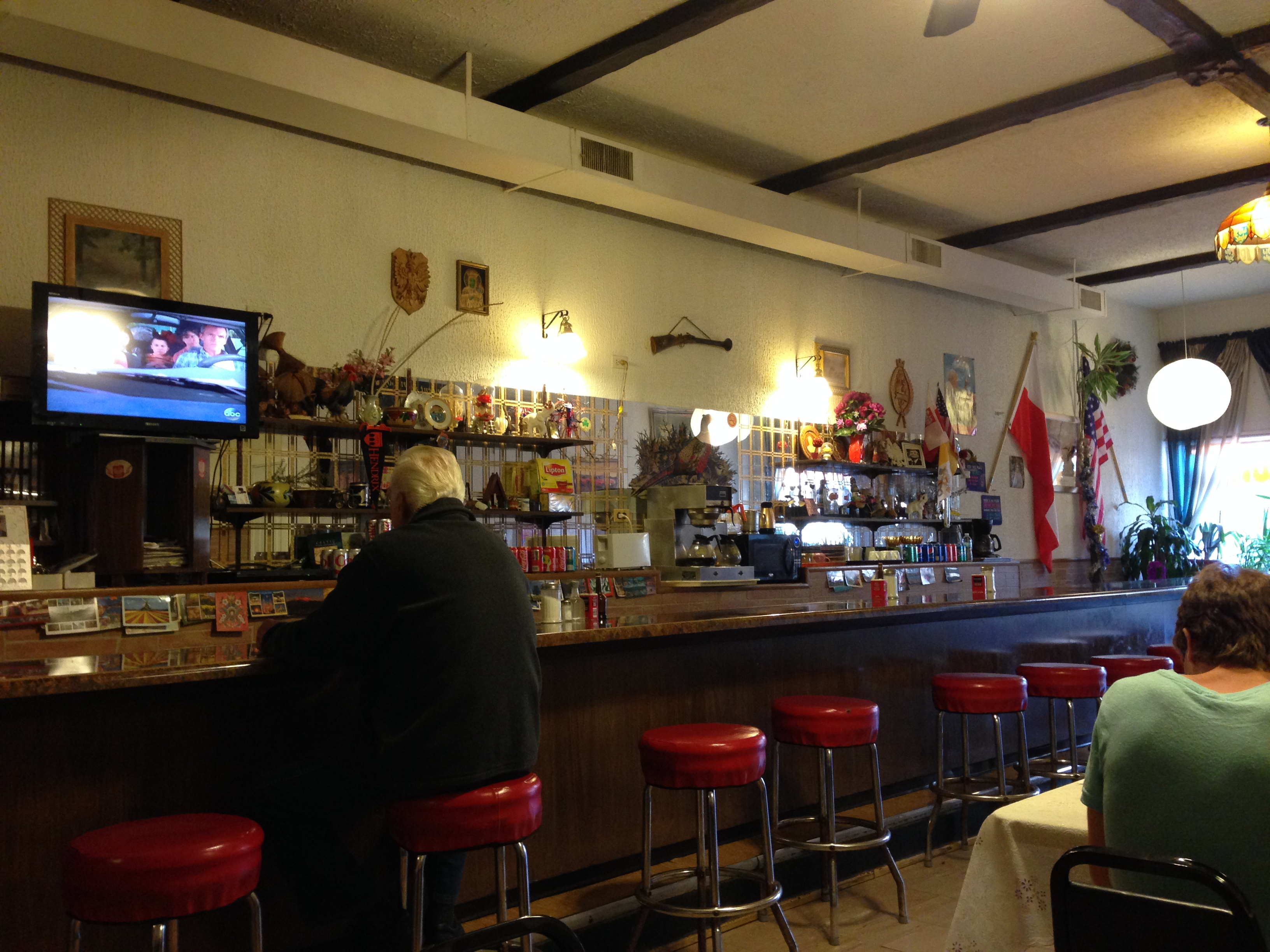
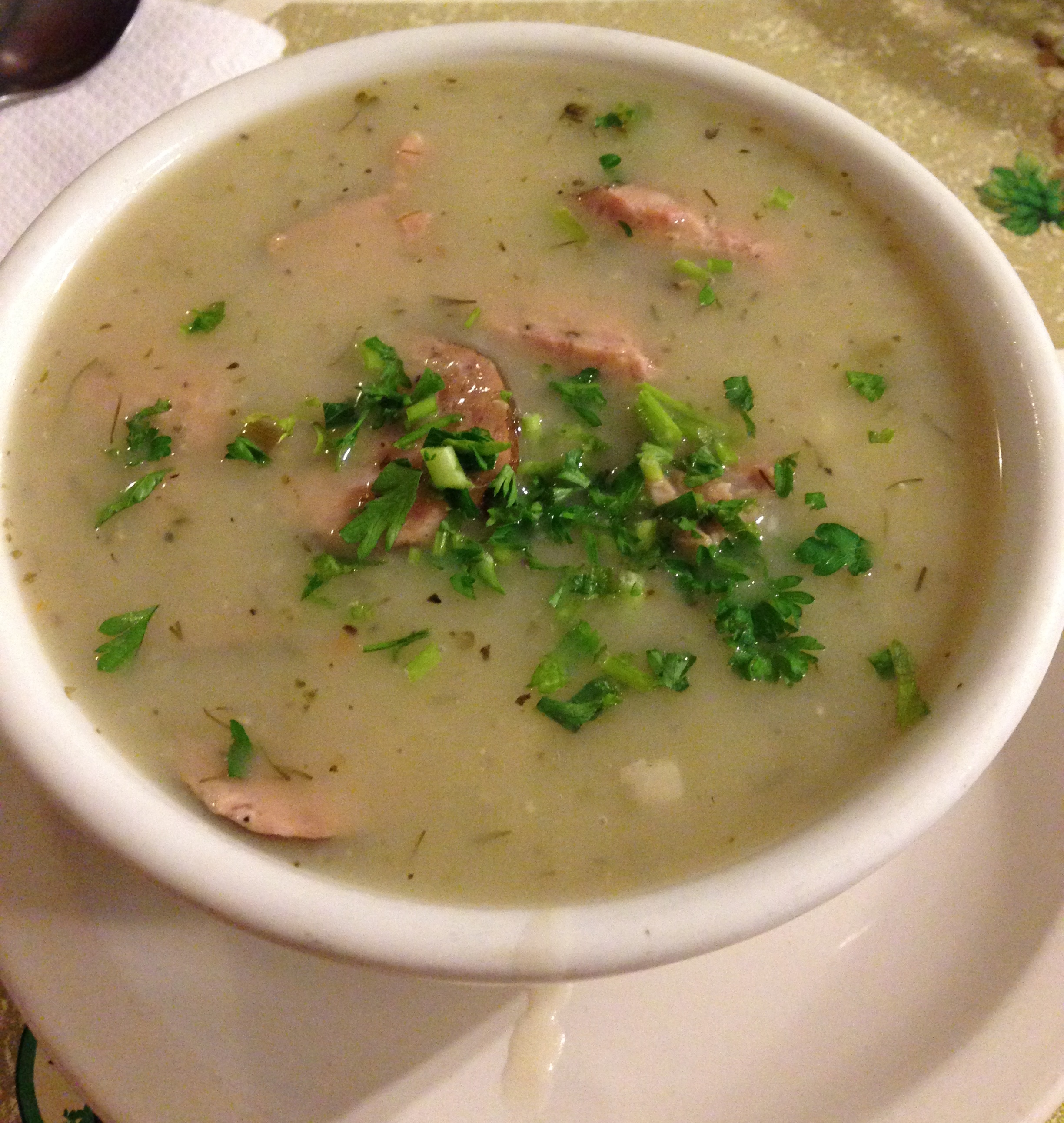
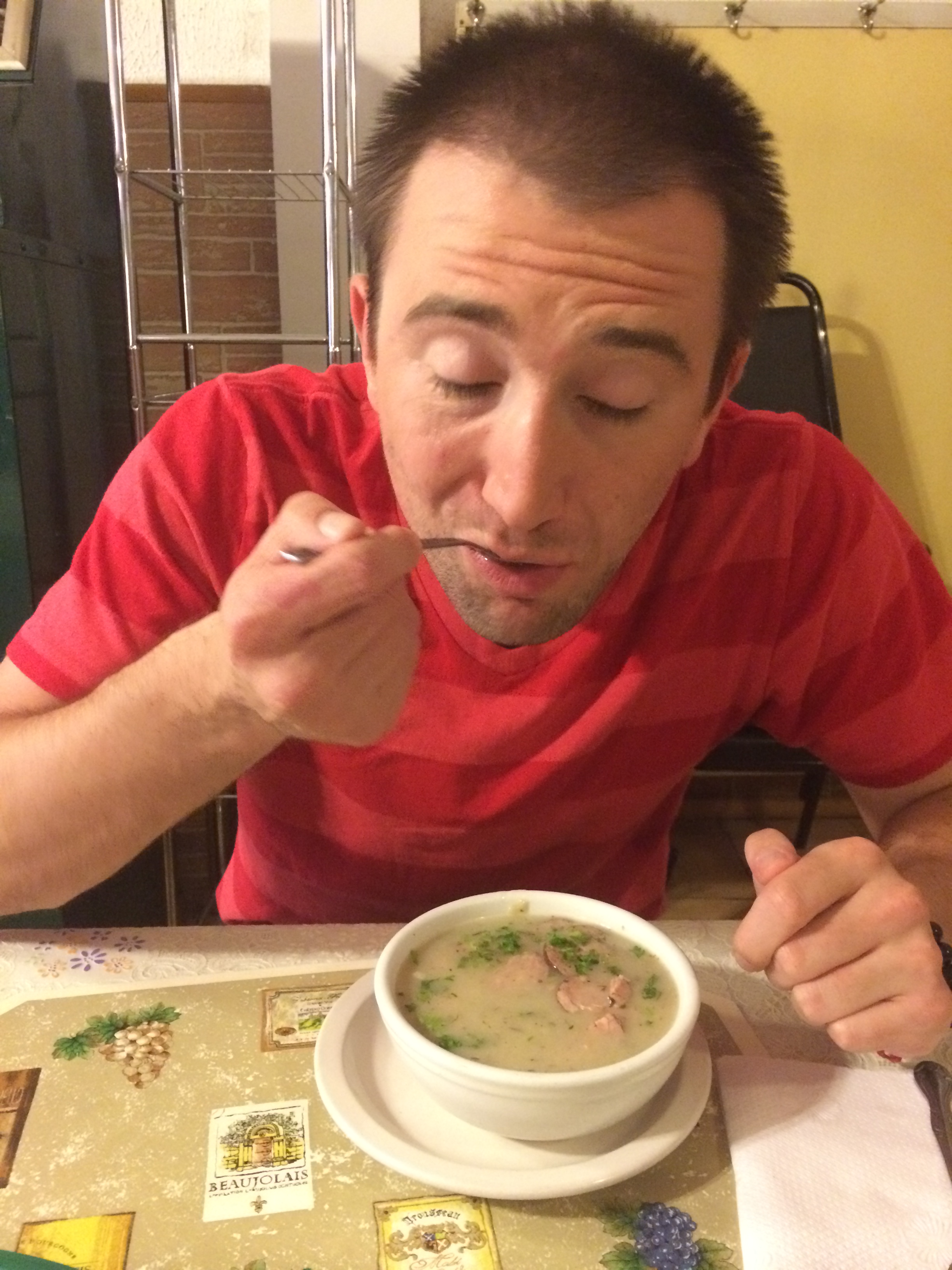
The outside looks more like a place you’d come to get keys made than a restaurant.  IMG_3793My girlfriend had never been to a Polish restaurant, so I was honored to bring her somewhere to get a taste of my culture.  We walked through the door to find a spartan interior that had a bar and plenty of long tables covered in plastic, Kmart tablecloths. IMG_3788 In typical Polish fashion, there was no inanely grinning hostess at the front to greet us.  Instead, there was a gruff looking woman in an apron who mumbled something when we walked in.  We then scanned each other to see if she spoke English and I Polish.  I just said “Table for two”, and we had our pick of seats.  She gave us menus slower than other customers for some reason.  Looking over the selection, I could tell that this stuff was no-frills and just like what I saw in the motherland when I visited Krakow.  While I wanted to go for my comfort zone with a dish like gołąbki (literally:  pidgeons, really stuffed pork cabbage rolls) or kotlet schabowy (breaded pork cutlet), I knew I had to get the zurek (white borscht) ($3.80) and sztuka miesa w sosie chrzanowym (boiled beef with horseradish sauce) ($10.50).  The curmudgeon of a woman who greeted us at the door, who I assumed was the owner, took our orders quite quickly.  Janice ordered her food, the pieczen wieprzowa (roast pork) ($10.50), but then the old woman was suddenly aglow when I properly pronounced each of the choices for my order.  Looks like I still got skillz.  The old woman said ok, and I thanked her in Polish which she appreciated.  While we were waiting, I looked at all of the random Polish souvenirs and cultural artifacts referencing various parts of Polish culture like the newly sanctified Karol Wotyla a.k.a. Pope John Paul II, the Polish white eagle, and the black Madonna or Our Lady of Czestochowa.  My zurek came out first, and I was pumped.  It was a translucent broth punctuated with small bits of dill floating on the surface and large chunks of sausage bobbing in the tasty sea.IMG_3789  From the first to the last gulp, I loved this piping hot bowl of goodness.  IMG_3794The broth itself was sour and meaty yet tinged with a dill bite I really enjoyed. IMG_3797 As for the disks of kielbasa, they were substantial, flavorful, and plentiful throughout the bowl.  While I was enjoying this super soup, we also got a basket filled with slices of white rye bread.  It was a slice (pun intended) of the restaurants in my grandparents’ neighborhood complete with the little packages of butter.  The bread crusts were especially helpful when used to mop up some of the soup.  While I was midway through my soup, she brought out a salad complete with the basic vegetables used in 90 percent of Polish recipes bar cabbage and potatoes. IMG_3790 It wasn’t anything spectacular with the cucumbers and tomatoes slathered in a semi-sweet dressing and a purple pile of pickled beets on the side, but all of the ingredients were really fresh.  My personal favorite were the pickled beets since they were super tangy.  Right as we finished the salad, our main entrees finally emerged.  Both of our dishes looked similar in the fact that they were large pieces of meat slathered in a gravy or sauce with a side of mashed potatoes.  After that, the commonalities ended.  Janice’s roast pork didn’t taste like much, but my boiled beef had a life of its own.IMG_3791  The beef was extremely tender and thankfully enhanced with the feisty horseradish sauce with a slight sinus-clearing kick in each forkful.IMG_3792  Said sauce extended to the mashed potatoes, and I use the term “mashed” in the loosest sense.  It was more like semi-clumped potatoes, but like the beef, there were no seasonings to be had here aside from the horseradish sauce.  Either way, it was a hearty meal that made me think of home.  I’d like to go back there to try some of the pierogi or perhaps some potato pancakes.
I paid the bill, and I saw that I got charged for the soup and salad, but Janice did not for her salad.  Perhaps the old lady was kind hearted after all and made my visit complete.  So, if you’re on the northside and want to try some great, down-home Polish cooking at reasonable prices, check out Podhalanka.  The service might be a bit brusque, but you’ll just have to trust babcia on this one.

Podhalanka on Urbanspoon

A Berry Good Breakfast

Posted on

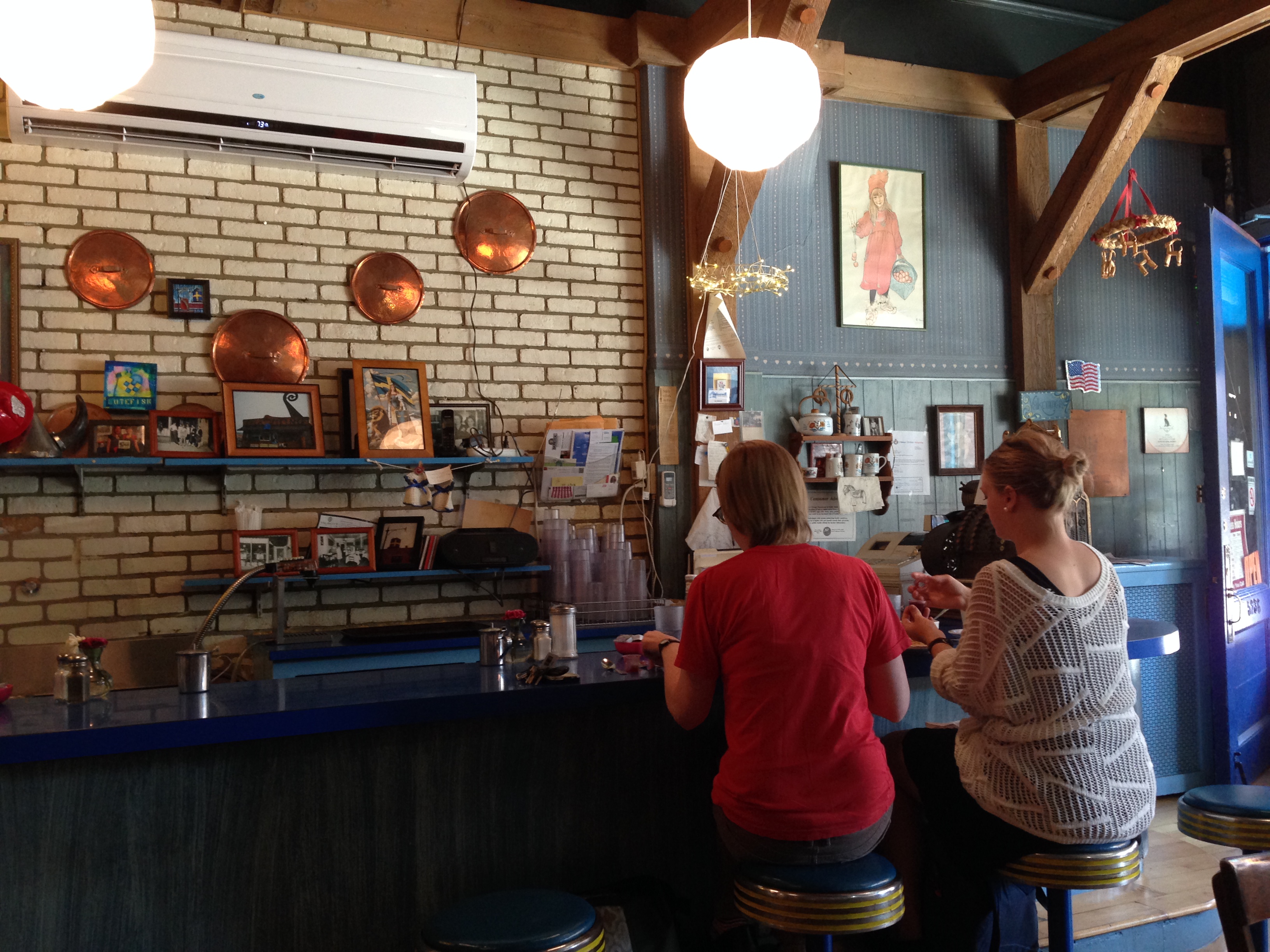
Sweden.  It is a country with many different faces.  While they are more well known for their vikings, gorgeous women, and a certain incomprehensible Muppet chef, Swedish cuisine in general isn’t very well known or as popular as other European countries’ foods like Italy, France, or Spain.  The reason being, I think, is that Sweden’s food culture reflects the cold and often times harsh environments the various Nordic tribes originally encountered when emigrating to modern day Norway, Sweden, and Denmark.  I mean, the frigid winters aren’t going to cut any slack to a Swedish farmer who wants to emulate his Spanish neighbors by planting an olive farm or attempting to emulate the wine culture of the Mediterranean.  However, that is not to say that Northern European cuisine is worse than the rest of Europe, it just has different ingredients that might not agree with such a wide array of palates.  Historically, the Swedish people have emigrated en masse to America especially to the Northern Midwest region, and today they still have their own little corner of the homeland in Chicago in the Andersonville neighborhood.  You can find plenty of blue and yellow flags flying in front of storefronts, and of course there are diners offering Swedish fare.  Enter Svea’s, an 80 year old diner that is a symbol of the shrinking Swedish community that once was the second largest in the world outside of Stockholm.IMG_3782

Before walking in, the proprietors invoked their links to old Sverige with the three crowns of the royal coat of arms along with a tall ship that could have fit in with King Gustavus Adolphus‘ navy.IMG_3779  After going through their screen door, I was greeted with a small but cozy diner.IMG_3778  Surprisingly, it wasn’t too busy in the morning for breakfast, so I got to sit wherever I wanted. IMG_3771 IMG_3772 All around I could see little Swedish knicknacks and artifacts like horned viking helmets, a “God jul” or “Merry Christmas” sign on the kitchen, and a horse patterned table cloth that took me back to when I visited Stockholm.IMG_3774

A typical day in Stockholm

A typical day in Stockholm

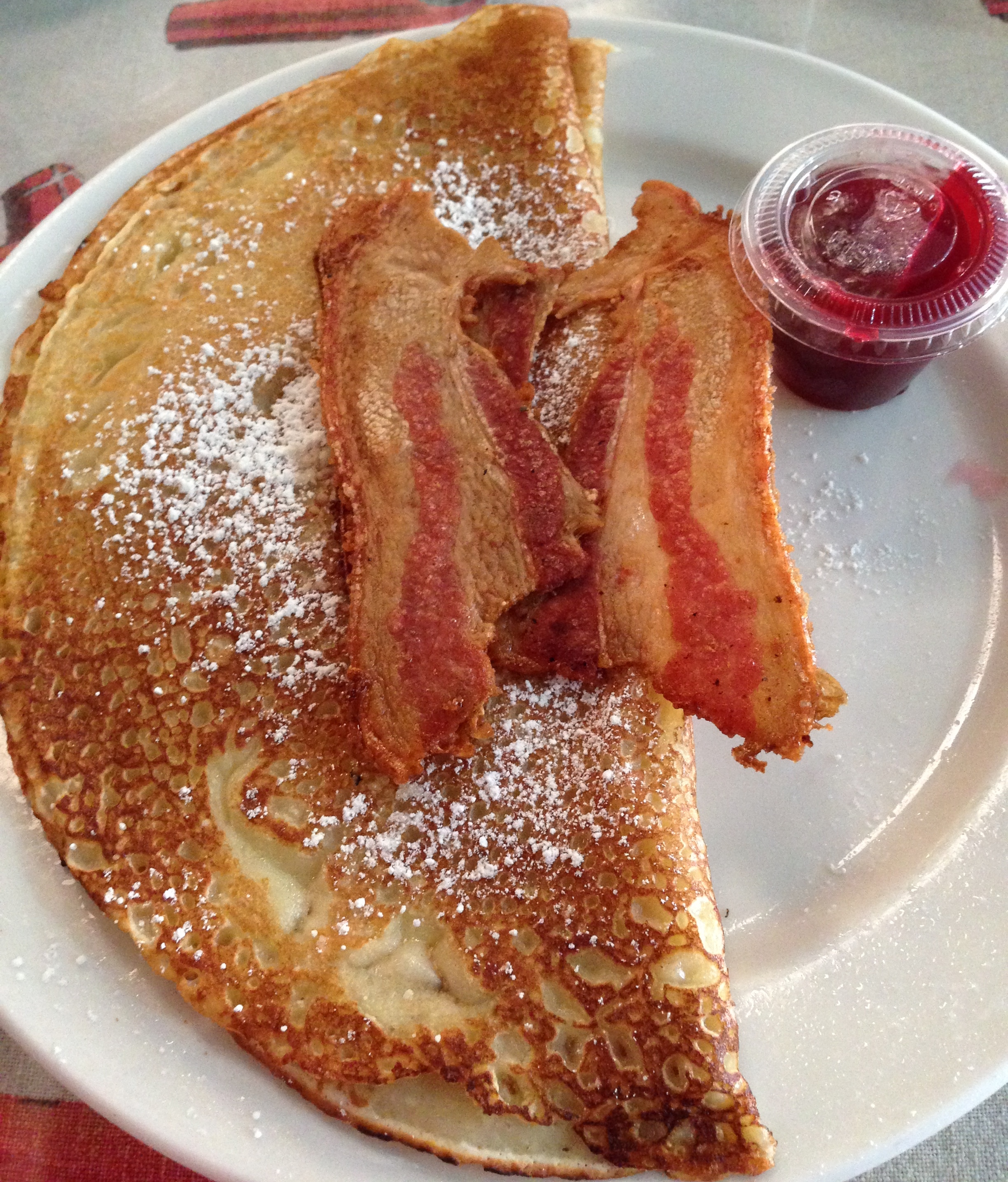
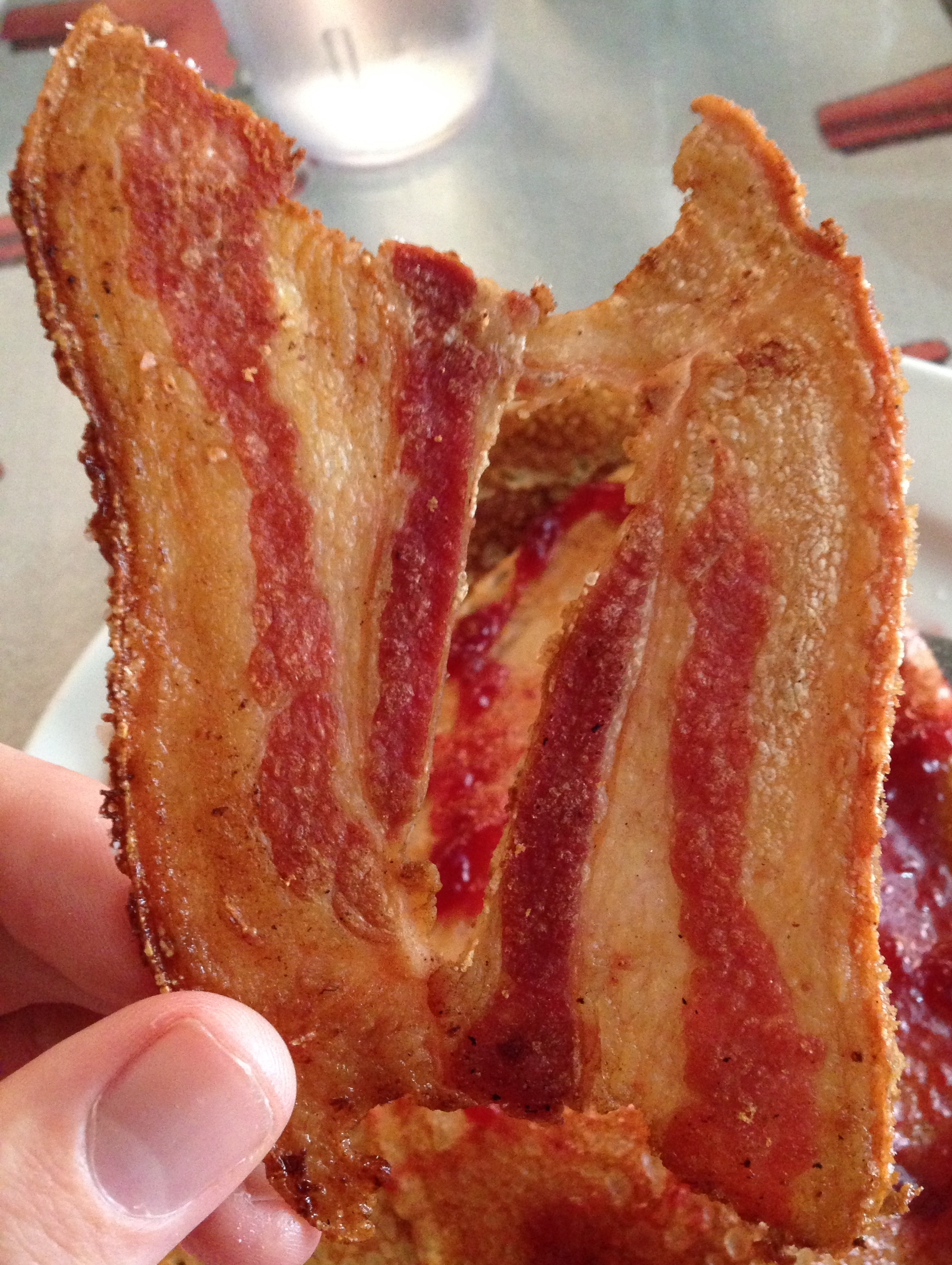
I looked over the menu with the left side sporting more American selections like omelets and bagels, but then there were Swedish options like smorgasar (open face sandwiches), the famed “Viking” breakfast, and my choice:  Swedish pancakes with imported lingonberry sauce ($6) with a side of salt pork ($3).  The prices overall ranged anywhere from $5-$10 which is a bargain compared to other brunch places in the area.  There are dinner options as well that have the same American/Swedish split, but I’ll have to leave that for another day.  My cakes made their appearance soon thereafter and looked perfect.IMG_3775  Portion-wise, they were quite large.  I found them to be between a ‘Murikan pancake and a French crepe in terms of thickness.  Amid the sprinklings of powdered sugar, the salt pork was placed atop the pockmarked surface and strangely looked like two of the rosy horses on the table sharing a smooch.  Budding food romances aside, I placed it aside for later.  I focused first on smearing the small container of lingonberry jelly all over these wonderful pancakes and quickly tucked in since I was starving.  However, I think they could have given me a bit more jelly to actually cover both pieces instead of just one.IMG_3776  It was a simple but very well done meal.  The pancakes were substantial yet light on the stomach.  It didn’t feel like I had swallowed a bowling ball by the end of breakfast.  As for the jelly, it was sweet yet more on the tart side which gave the blander pancakes a potent punch with every forkful.  I then turned my full attention toward the salt pork.IMG_3777  I used some of the maple syrup on the side for dipping, but I could only liken the meat to a super thin and crunchy version of bacon.  It wasn’t unbearably salty and only got better with some of the gooey, sweet syrup on top.

As I went to settle the check at the front, I noticed their sign on the cash register that said, “CASH ONLY”.  In this era of credit cards, it seems a bit archaic, but luckily I’m a man of the past.  I paid for my reasonably priced and lip-smacking good breakfast that was like Ikea furniture:  cheap, functional, simple, pleasing to the eye, but way more delicious.  I highly recommend visiting Svea’s to experience an unraveling ethnic patch of Chicago’s cultural quilt.

Svea on Urbanspoon

The Upper Crust

Posted on

Italy is a country known for many cultural exports that range from supercars, beautiful people, political corruption with a real flourish, and a culinary legacy without equal.  From my own backyard to the other side of the world, I have seen variations on some well known Italian specialties like pizza along with some new inventions like the Italian beef sandwich.  A new food superstore called Eataly arrived in Chicago a few years ago and is the figurative baby of famed, Croc-donning chef Mario Batali.  There are currently locations all over the world in Chicago, NYC, Japan, Istanbul, Dubai, and of course, Italy. I had previously spoken with friends and family about their experiences within the establishment, and I heard nothing but rave reviews.  After waiting way too long to finally see what all the hubbub was about, I finally made the trek with my lovely girlfriend, Janice.

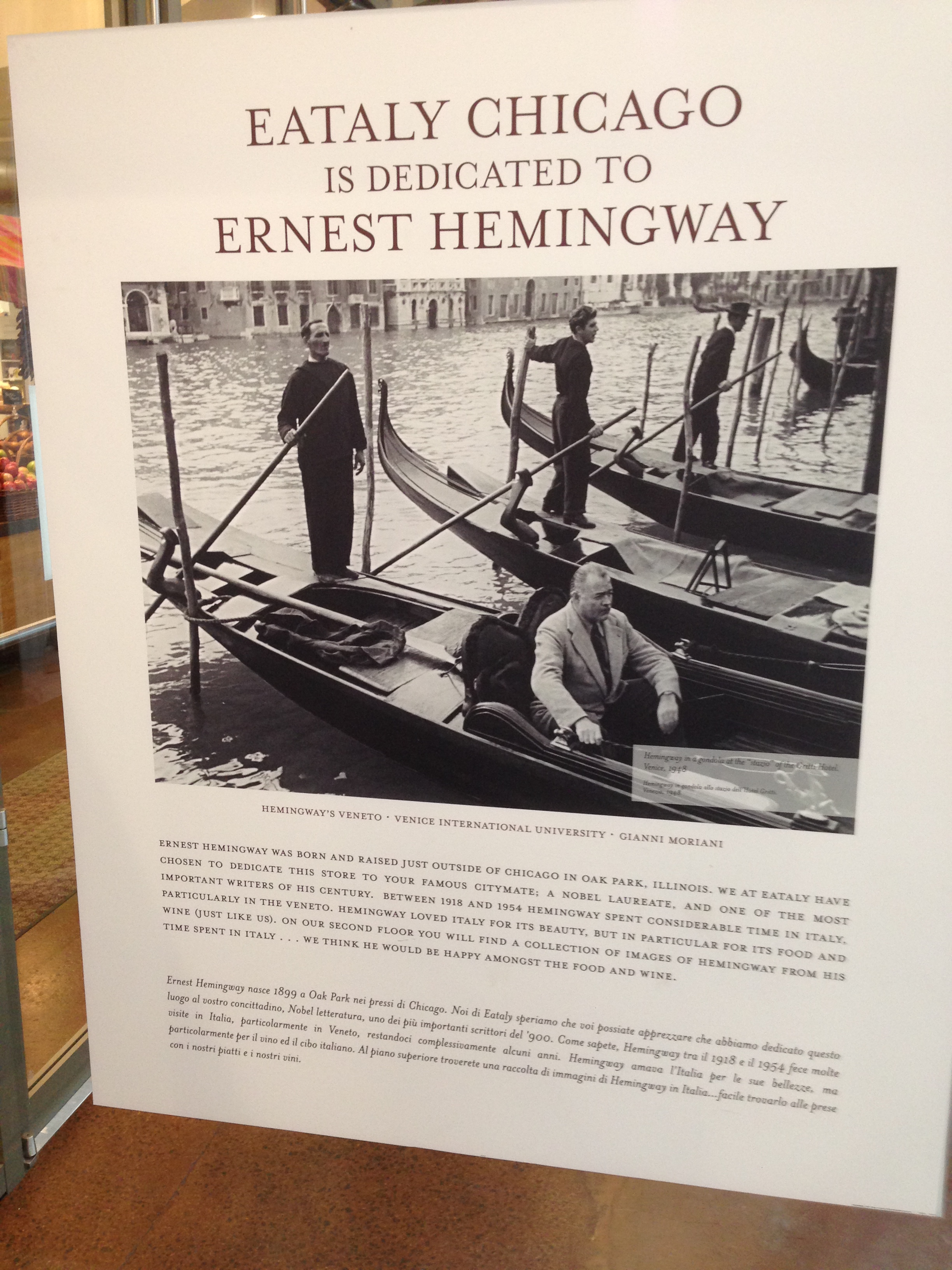
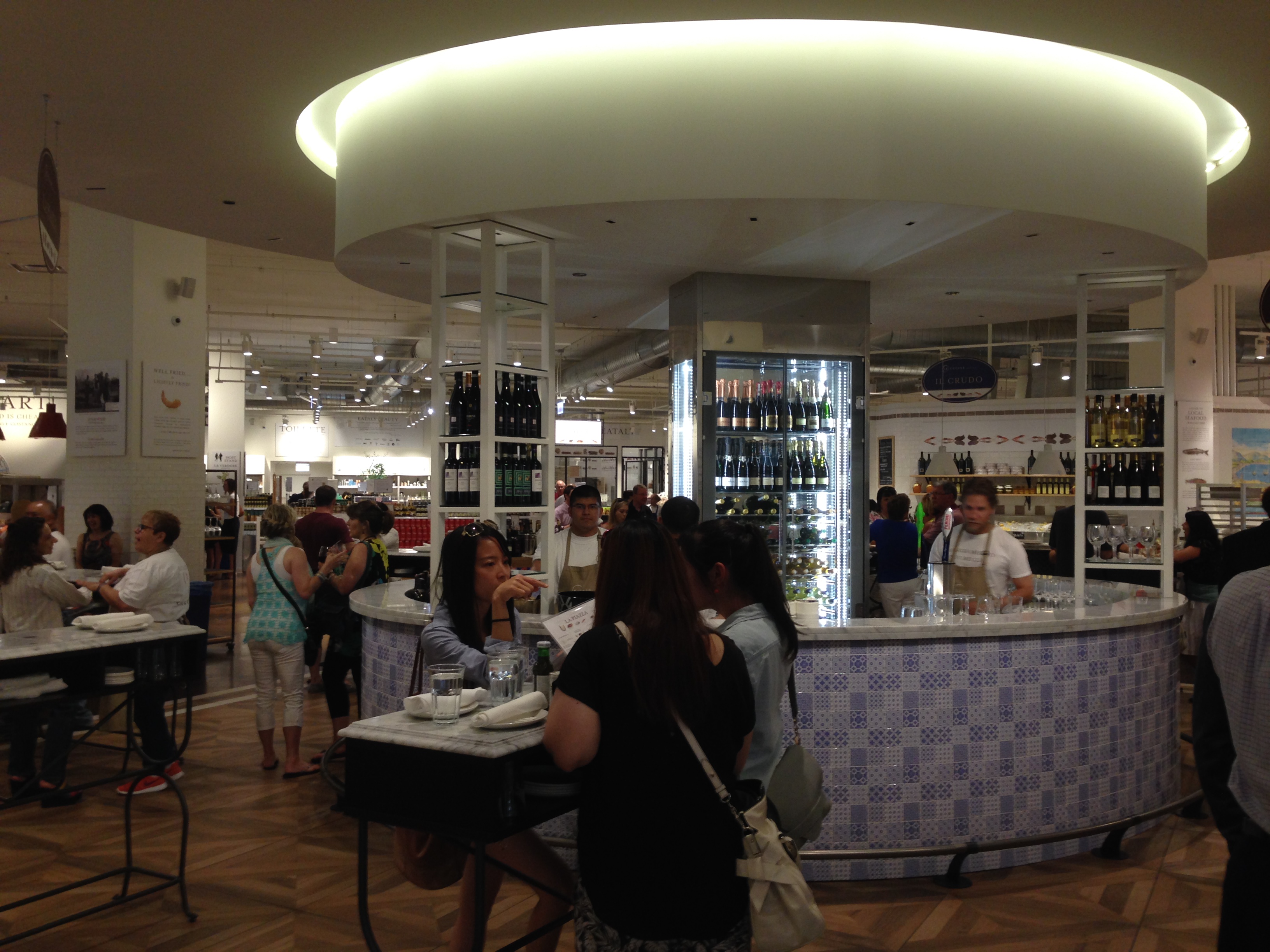
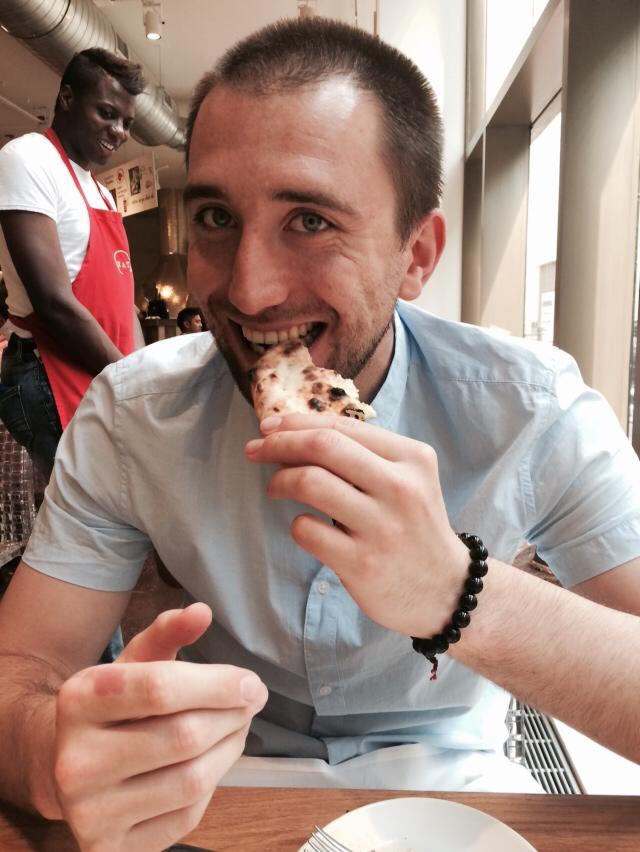
It was overwhelming right from the beginning as we walked through the monstrously large glass doors. IMG_3569 Not only that, but Eataly was dedicated to the one and only Ernest Hemingway.  Apparently Papa spent a good amount of time in the Veneto region of Italy which is known for its bountiful food and drink.IMG_3586  Then again, it made me think of the litany of restaurants and watering holes throughout the world that try to cash in on Hemingway’s legacy. IMG_3572 Oh well, I don’t think Eataly was having many problems with business as hordes of people were streaming through the doors and buzzing about the interior as I looked in awe at the cathedral of food that towered before me.  Fresh plums and nectarines lay in front of me as we passed them to the escalator to start on the second floor.  We passed each section that was devoted to a certain part of the Italian culinary landscape like pasta, fish, fried food, bread, cheese, meat and wine.  IMG_3570It looked like all of the produce was kept to the first floor while the second floor was solely devoted to the restaurant portion of the store.  It was like an elite food court where you could go from counter to counter and pay for top notch service and foodstuffs, way too many to enumerate here.IMG_3571  So, I’ll just tell you about what Janice and I tried during our visit.  We settled on the popular pizza and pasta section of the second floor and were immediately seated in front of one of the expansive windows over looking Rush Street.  It was a perfect seat for our date, so hint hint to all you couples out there.10392551_10104334278063879_9013471860543625337_n10425370_10104334278323359_9161369142543183651_n  Our waiter was quite helpful in explaining the menu options while supplying us with complimentary pieces of bread and a plate of olive oil.IMG_3573  This definitely wasn’t Papa Joe’s in terms of the pre-meal munchies, but the bread was delicious.  The edges were crusty and crunchy, and the dough was pliable and had a slightly nutty flavor.  The olive oil was quite smooth on the palate.  I wish they brought out some balsamico as well.  After looking over the menu with lots of deliberation, we settled on sharing the Genovese pizza ($18).

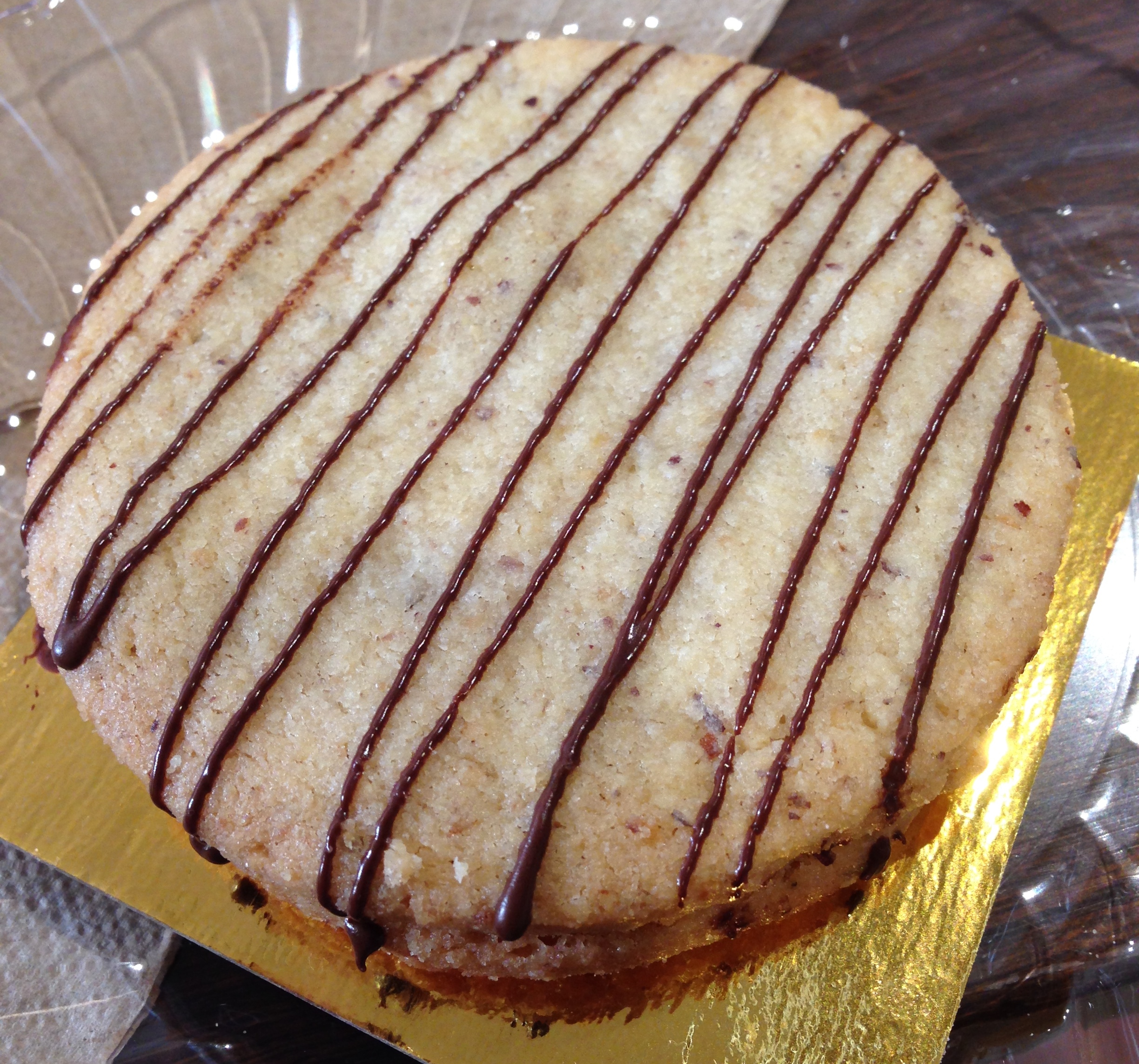
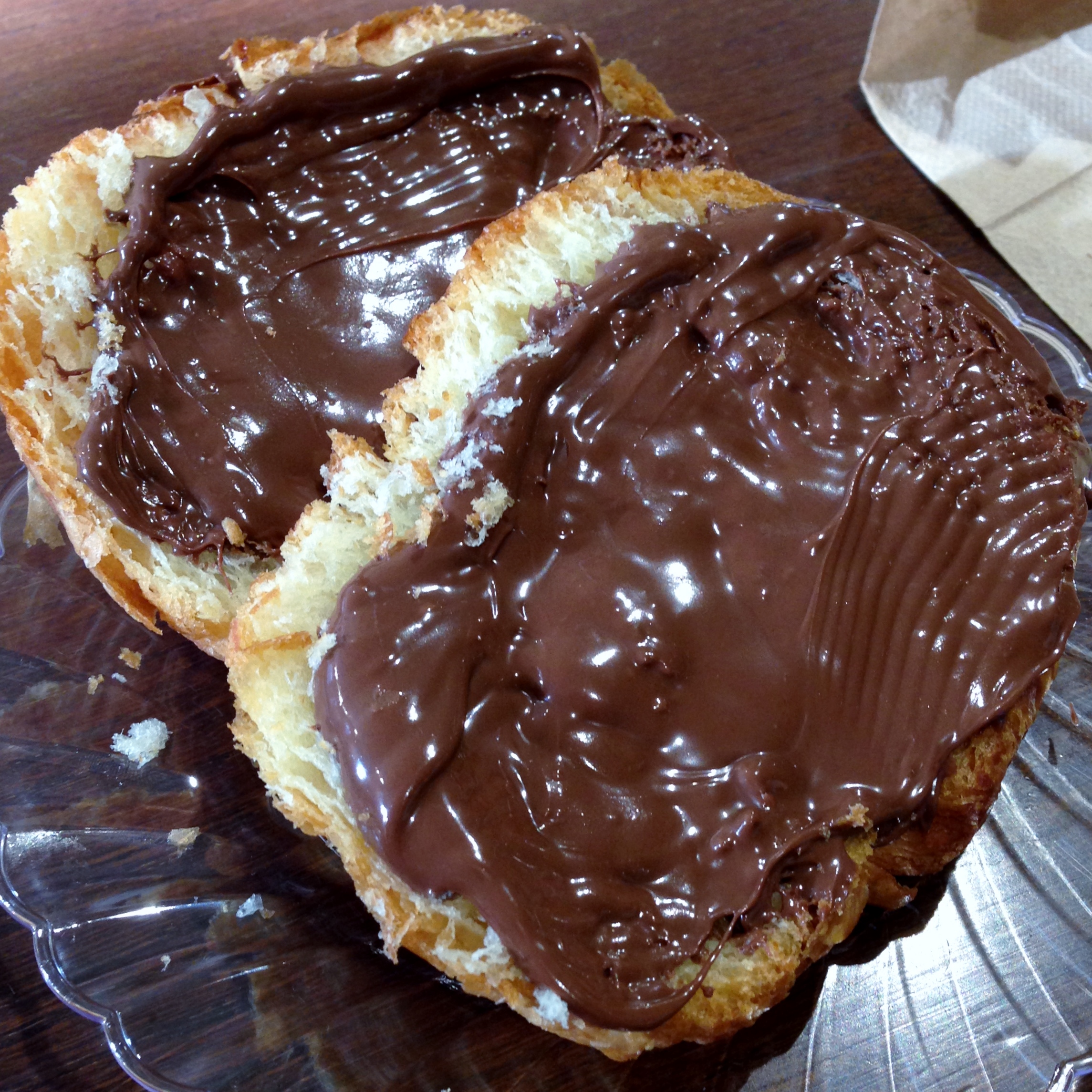
According to the website, at Eataly they only utilize Neapolitan pizza making techniques that one can watch before it comes to the table.  We decided to take in the view instead before as our 12″ pie was delivered to our table. IMG_3574 Looking at it, it was more reminiscent of the pizzas I had in Italy or even New York.  Our waiter said that due to the delicate crust, it was recommended that we use knives and forks to consume the mouth-watering looking pieces.  So we naturally obliged, but we still thought you could eat it with your hands if you don’t feel like putting on airs.  Regardless of others perceptions, we tucked into our meal.  The dough was delicate but with plenty of artisanal flour flavor with a slightly buttery hint.  IMG_3578As for the toppings, there was a generous layer of mozzarella cheese across said crust and topped with a mix of the aforementioned olive oil, tidbits of salty and slightly fatty Parma ham, rich and zesty pine nut pesto, bits of aromatic basil, and diced garlic cloves.  All of these elements came together to make one of the best thin crust pizzas I’ve ever tried.  I normally don’t like crusts, but this pizza’s end pieces were light and chewy which I prefer over their crunch counterparts (this also applies to my cookie affinities).10464354_10104334278473059_7202246310904679489_n  Once we finished that, we moseyed down to the first floor for dessert at, where else?, the Nutella bar. IMG_3580 If you don’t know what Nutella is, it’s the choice snack spread of the gods.  While the British have marmite and Australians have vegemite, once again the Italians outcook them with this sweet, molto chocolately, hazelnut-based topping for bread, toast, and other items.  We could have gone for the gelato or candy counter, but the Nutella bar landed us with their large tubs of the dark chocolate nectar and circular griddles for nutella stuffed crepes.IMG_3581  They had a good amount of Nutella inspired items, but I knew what I wanted:  il bacio di dama ($4.80; literally:  the lady’s kiss).  Fitting for my date.  Janice got the saccottino con Nutella ($3.80).  When we got our individual noms, we couldn’t find a spot to sit down since it was so jammed, but luckily a guy who reminded me of Bill Cosby offered to scoot down so we could sit at the communal tables.  My plate consisted of two hazelnut cookies with a thin layer of Nutella in between. IMG_3584 From the first to last nibble, it was a flavorful pleasure like shifting through the gears on a Murcielago through the hills of Tuscany.  The cookies were soft, fresh, and nutty which balanced out the sweet innards. IMG_3585 As for Janice’s saccottino, it was a pastry made with croissant dough that had an extremely thick schmeer of the hazelnut topping that bordered on the obscene. IMG_3583 I’d recommend they cut down on the Nutella, or you get a drink to go with this dessert.  Perhaps that is all part of their scheme for you to buy more merchandise since half way through it it felt like I was eating a ball of glue coated in chocolate.  It was tasty nevertheless.

In summary, Eataly is a wonderful place for foodie and tourists alike, but it’s not the cheapest place in the world to experience all of Chicago’s culinary potential.  That is not to say though that you will be ripped off since everything is extremely high quality for the price.  I finally visited it, but I don’t know if it will be a regular haunt on my food list in Chicago.

Eataly on Urbanspoon

That’s a Wrap!

Posted on

Although today’s post is about a very unique yet not very unique food, it’s going to be on the shorter end since it’s just about one food item, not an entire restaurant review like you’re used to on Mastication Monologues.

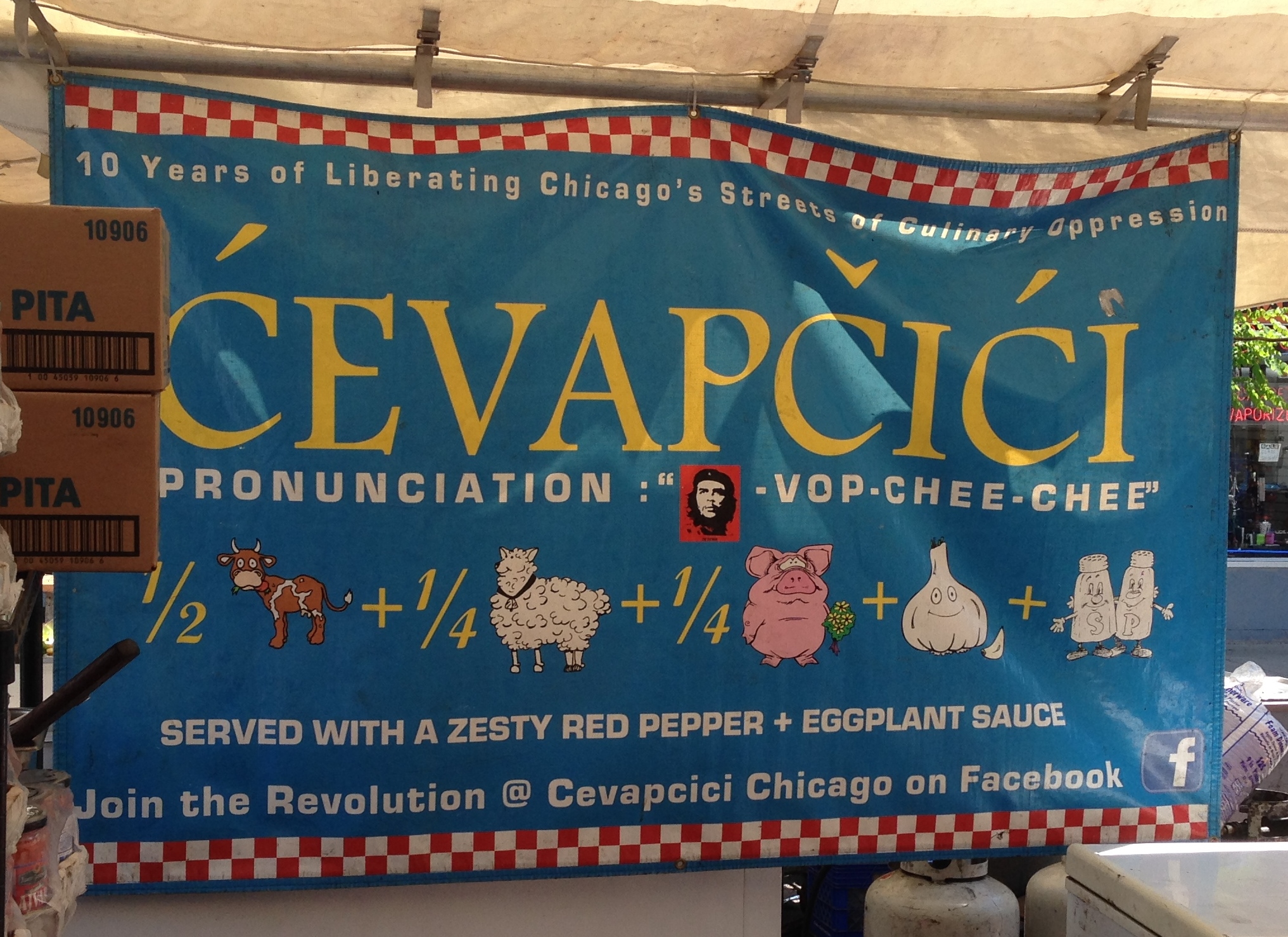
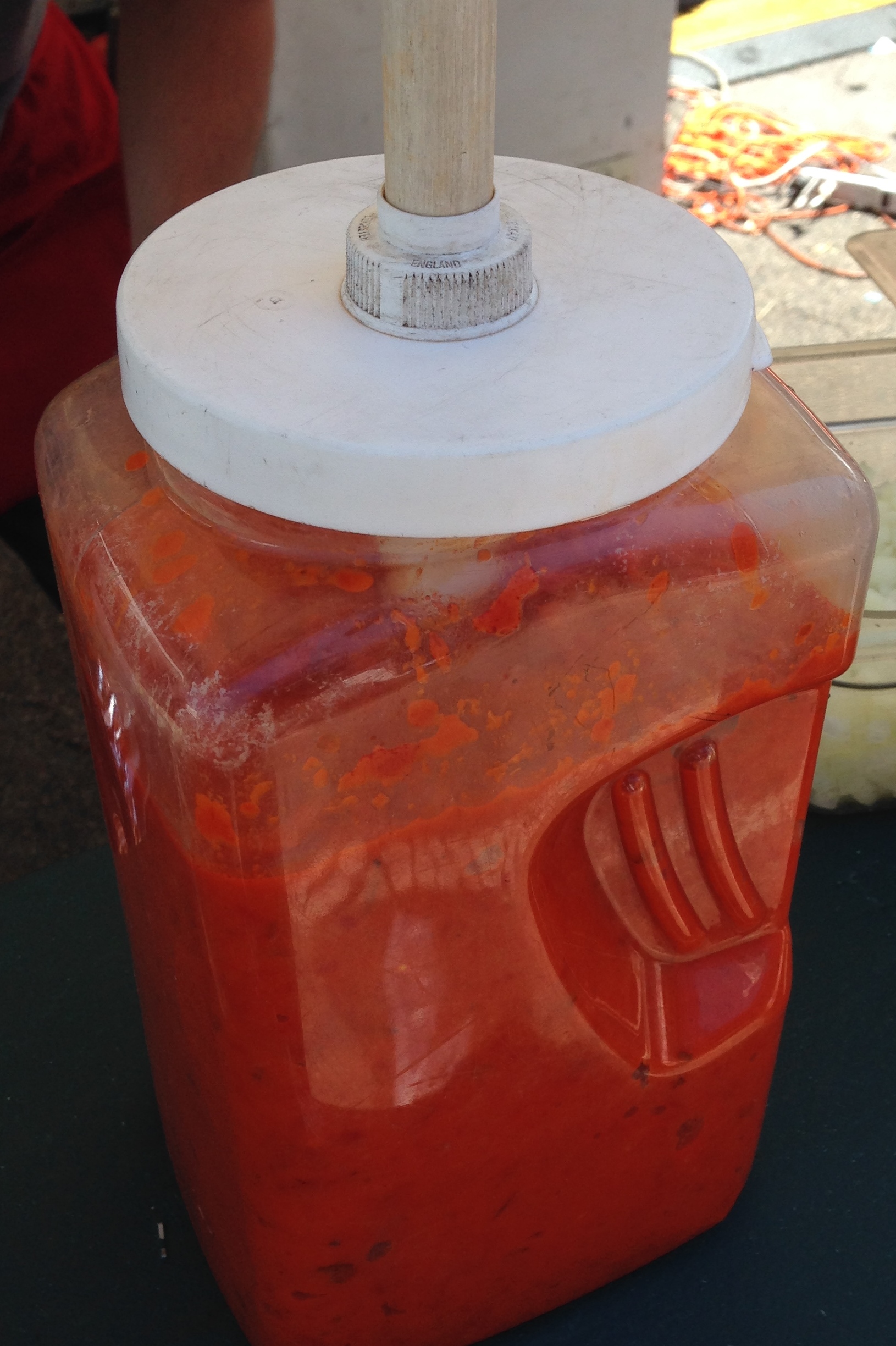
While I’ve tried my fair share of different types of Mediterranean cuisine, I encountered a new and strange entry to my encyclopedic knowledge of all things consumable.  Janice and I were at Midsommar Fest in the Swedish Andersonville neighborhood on the north side of Chicago.  While I was expecting plenty of classic Swedish foods such as meatballs, lutefisk, and ammonia chloride treated licorice, I instead was greeted with corn dogs, tacos, and gyros…kind of a negative effect of increased globalization, I think.  However, one tent at the entrance made me come back after stuffing myself silly with free bags of sour gummi worms at the button booth.  Their poster of a long word filled with lots of accent marks along with a pronunciation guide that included a famous Communist guerrilla fighter only drew me in further. IMG_3351 Upon first examining the cooks’ setup, I could smell the smoke coming off the grill on the side that quickly enveloped us with a heady mix of general grilled meats and charred wood. I could somewhat see what the guys in front of me got.  It was some sort of flatbread in tin foil where they put this mysterious red sauce on top.  So, I got to the front of the line, and ordered one ćevapčići or “little kebab”.  I asked the cook if this meal was Romanian based on the formation of the word, and he said it was Croatian.  However, the Romanians do have their own version of it called mici which is why there was a tub of mustard there next to the red tub of mystery condiment.  Apparently the Romanians like the meat without pita but with mustard and beer.   The word “ćevapčići ” in Croatian breaks down into “ćevap or “kebab” originally from Persian and the Croatian diminutive suffix ” čići” which combines with the previous element to say “little kebabs”.  So I bought one sandwich which translated into a two of these compact beef, pork, and lamb nuggets nestled into a grilled pita with the option of chopped onions put on by the cook. IMG_3353 Obviously I said yes, and then I asked them what the sauce was?  It was a red pepper and eggplant sauce called ajvar which was brought in from Serbian cooking. IMG_3352 I gave my pita a good couple squirts from the pump, and I proceeded to down the kebab.IMG_3354  It was unlike any other Mediterranean meat I’ve tried in a pita.  They were slightly charred on the outside yet had a semi spicy seasoned crumbly interior.  I think the chef got a little buck wild with the onion pieces, but I enjoyed the pepper sauce that was subtly sweet that complimented the dry meat.  All of this was wrapped up in an extremely fresh and soft yet substantial pita.  Thankfully I didn’t spill any of the red pepper sauce on me, but Janice was the unfortunate victim of a pepper attack.  For once it wasn’t me!  Poor girl though…

Anyway, long story short.  If you ever have the chance to try a ćevapčići, I highly recommend it even if you won’t know how to pronounce it.  I personally would still pick a gyro over it, but the pepper sauce brings a certain je ne sais quoi to the table that this xeno loves.

Aiming to Cheese

Posted on

“The trouble with eating Italian food is that five or six days later you’re hungry again.”

– George Miller

While many different countries have certain culinary stereotypes that may or may not be true like the British being terrible cooks (try a pasty and get back to me) or Indians only serving spicy food, one interesting cultural interaction in the kitchen is between Italian and Italian American cooking.  While both emphasize fresh ingredients that often times circle around staples like olive oil, tomatoes, and a feisty nonna (grandmother) who’ll put you in your place if you mess around in the kitchen, there is a clear difference in presentation and dishes that exist in the USA that would never happen in Italy.

Made in America

Made in America

 Italians have always enjoyed big meals, and when large waves of Italian immigrants initially came to America, they couldn’t really afford much food or had to stretch their resources to make do.  Thus, one icon of Italian American food culture in Chicago was born, the Italian beef sandwich.  However, as time went on, the concept of abbondanza or “abundance” came to the fore as more and more Italian immigrants and their children were able to integrate into American society and earn a decent wage.  With extra money, came extra ingredients to classic Italian plates to show to the world that these often times poor Southern Italians had finally made it in America, i.e. more cheese, sauce, and meat.  Their legacy survives today from coast to coast especially in Chicago  and New York City.  I do love my Italian food, aside from pasta (yes, I know I’m a weirdo), and Papa Joe’s in Orland Park is a good family restaurant serving down-home Italian cooking.

Upon walking into the establishment, we were greeted by the strains of Old Blue Eyes and Deano.  We went there for my cousin’s graduation party (congrats, Jen!), and there seemed to be an initial confusion with the reservation.  It was a mere hiccough as we were quickly suited at the far end of the lower section by the wrap-around bar.  I wouldn’t recommend sitting there since the some of the air vents on the ground might make it harder to roll your chair back when getting up and down from your table.  Floor plans aside, the wait staff was competent and started us off with baskets of fresh bread.IMG_3343  These piping hot bread orbs were wrapped up in cloth, and were pre-sliced which I enjoyed.  The crust was a bit thick for my liking, but it had a nice crunch and an almost pretzel-esque flavor.  My favorite part was the warm, white interior that was ideal for mopping up the olive oil and Parmesan cheese dust on my plate.  Using butter on such a loaf wouldn’t be too Italian of me now.  After that, we had a few salads places along our table including a typical mixed green salad, a pasta salad, and then a cucumber salad I was especially fond of.  IMG_3345It was soaked in a vinaigrette that also had flecks of pungent goat cheese to counter the tangy and smooth cukes.  The tomato pieces also added a bit of color to the mainly green plate.  Once we moved beyond these antipasti, we ordered our main dishes.  The menu was long and filled with Italian favorites like a plethora of pastas, meat dishes, chicken dishes, paninis, pizzas, fish dishes, and appetizers.  I went for the chicken parmigiana ($14.95) since it was another dish I missed from home while I was in Korea.  We also got a free cup of soup on the side, and that day’s choices were either cream of chicken or minestrone.  I plumped for the former.

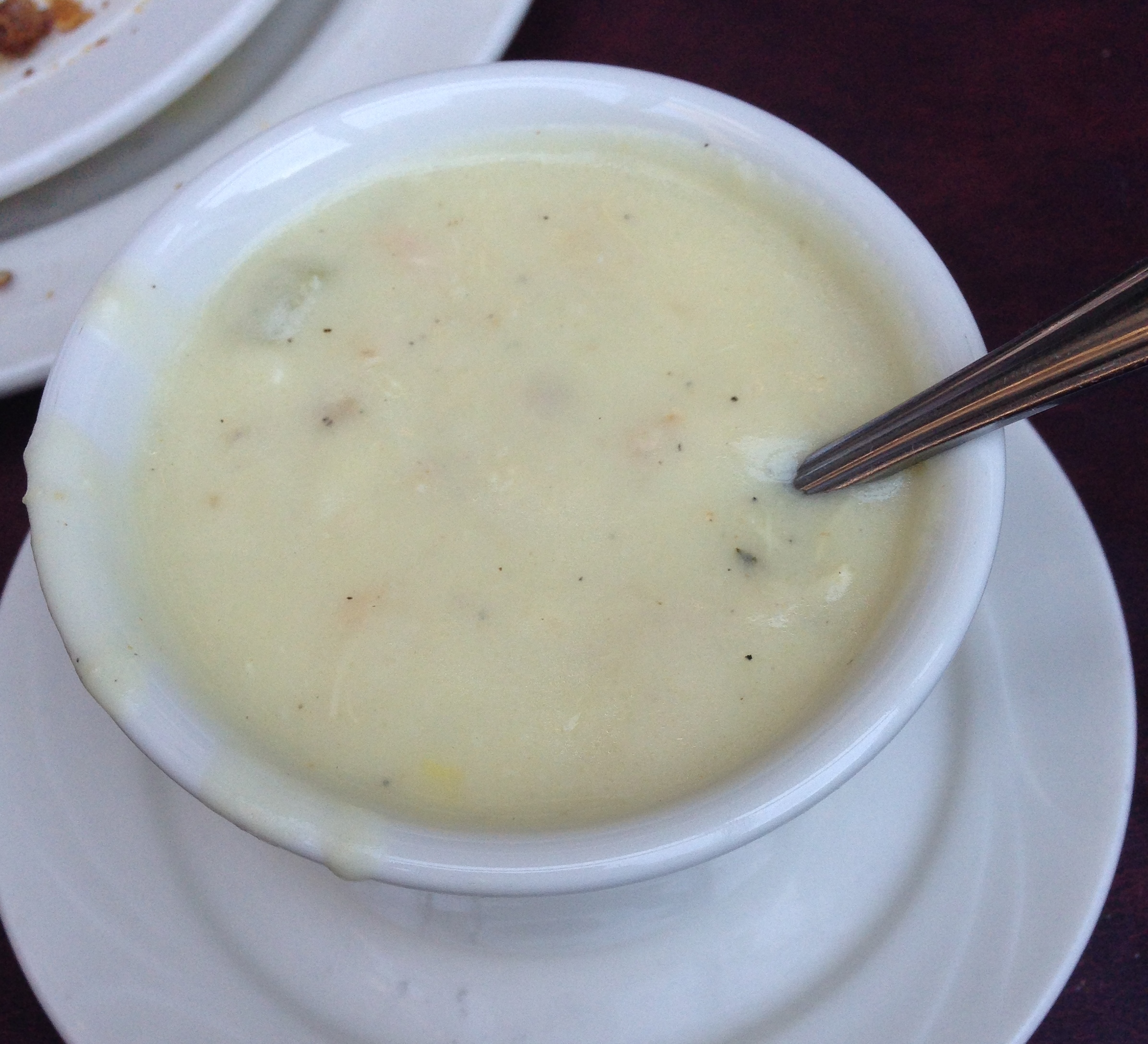
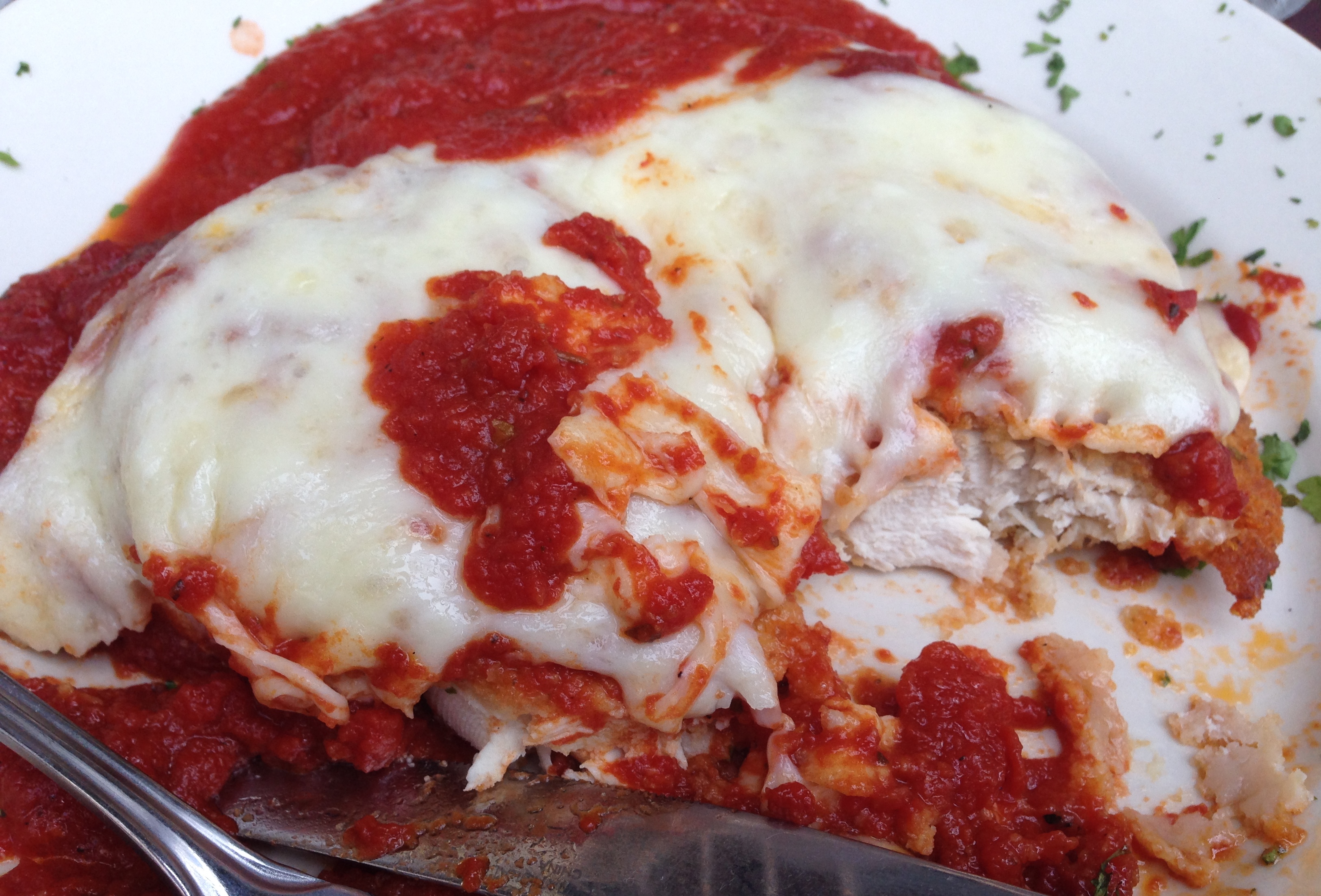
The soup came out first, and it was delicious.IMG_3344  I liked to dip the bread in it since it softened up the thick crust.  There were large nuggets of chicken in the creamy, pastel yellow broth along with a few slices of celery and carrots.  After quickly downing that small but rich appetizer, my selection finally was placed in front of me.  A chicken parmigiana consists of breaded and fried chicken cutlets that are then covered in marinara sauce and a hefty layer of mozzarella cheese. IMG_3346 Papa Joe’s also offered veal and eggplant parmigiana.  My poultry version was great.  The tomato sauce was savory and buoyed the gooey cheese that topped the crispy and juicy chicken breasts.IMG_3348  It was all white meat that left me extremely full after just one piece.  My meal also came along with a side of pasta, but I managed to swap it for mixed cooked vegetables that were sauteed and delectable.

So if you’re looking for a cozy and authentic Italian restaurant in the south suburbs of Chicago, pay a visit to Papa Joe’s.

Papa Joes Pizza on Urbanspoon

All About My Cheddar

Posted on

Top o’ the morning to ye and welcome to Mastication Monologues!  Today’s post involves an Irish pub with plenty of class and delicious food.  I’m talking about Lady Gregory’s located on the north side of Chicago.  The name references a female Victorian Irish playwright who penned “Playboy of the Western World”, a play made infamous due to its scandalous reference to underpants.  Ohhhhh my! She faced plenty of resistance and even death threats from audiences until Teddy Roosevelt saw the play and praised it.  Looks like the king of “Bully!” stopped the bullies, and Lady Gregory’s menu contains the same sassyness the original Lady Gregory possessed.  It ranges from flatbreads, salads, soups, burgers, and big plates.  Plus, they have plenty of alcoholic and non-alcoholic beverages to wet your whistle.IMG_3254

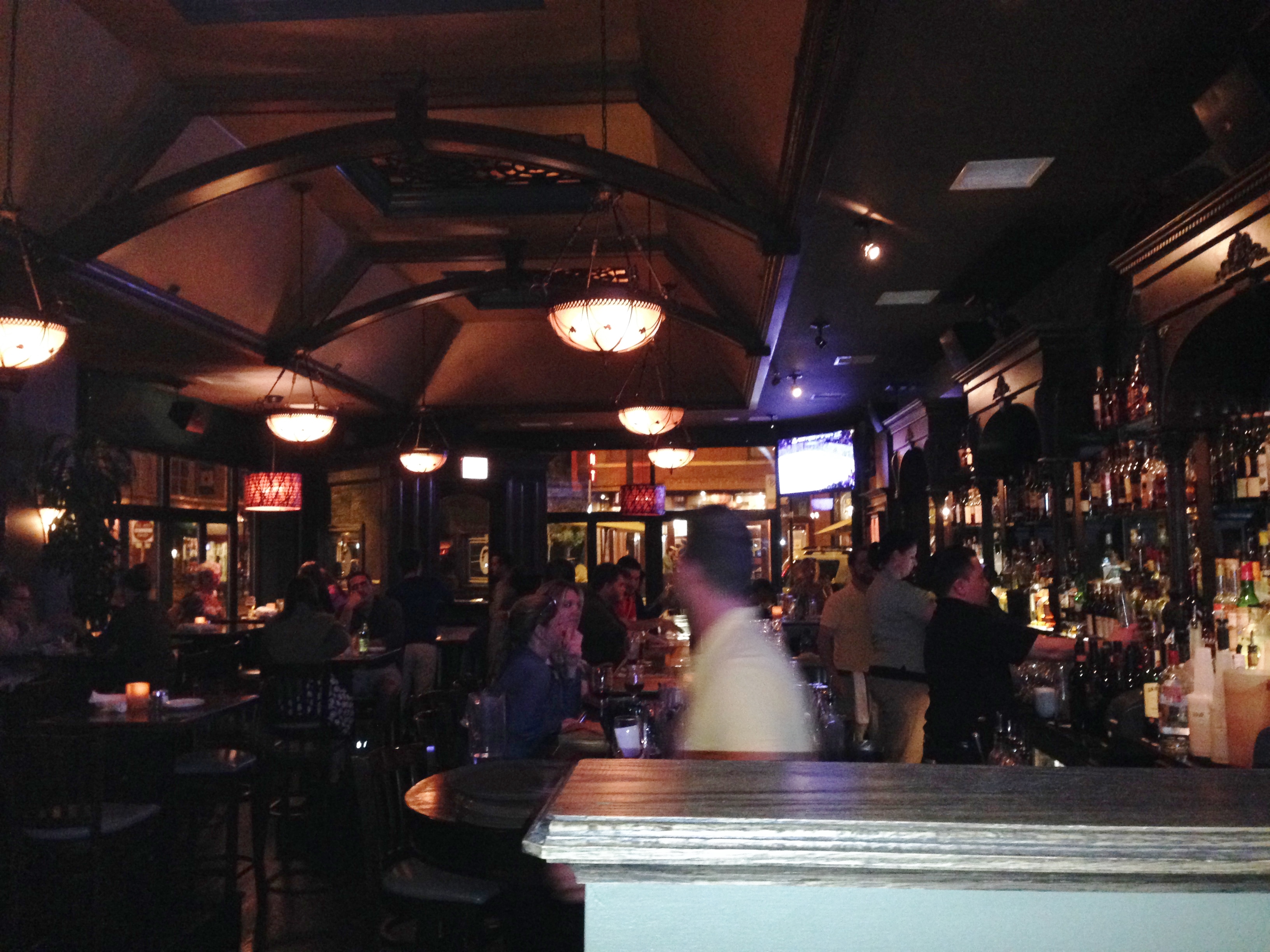
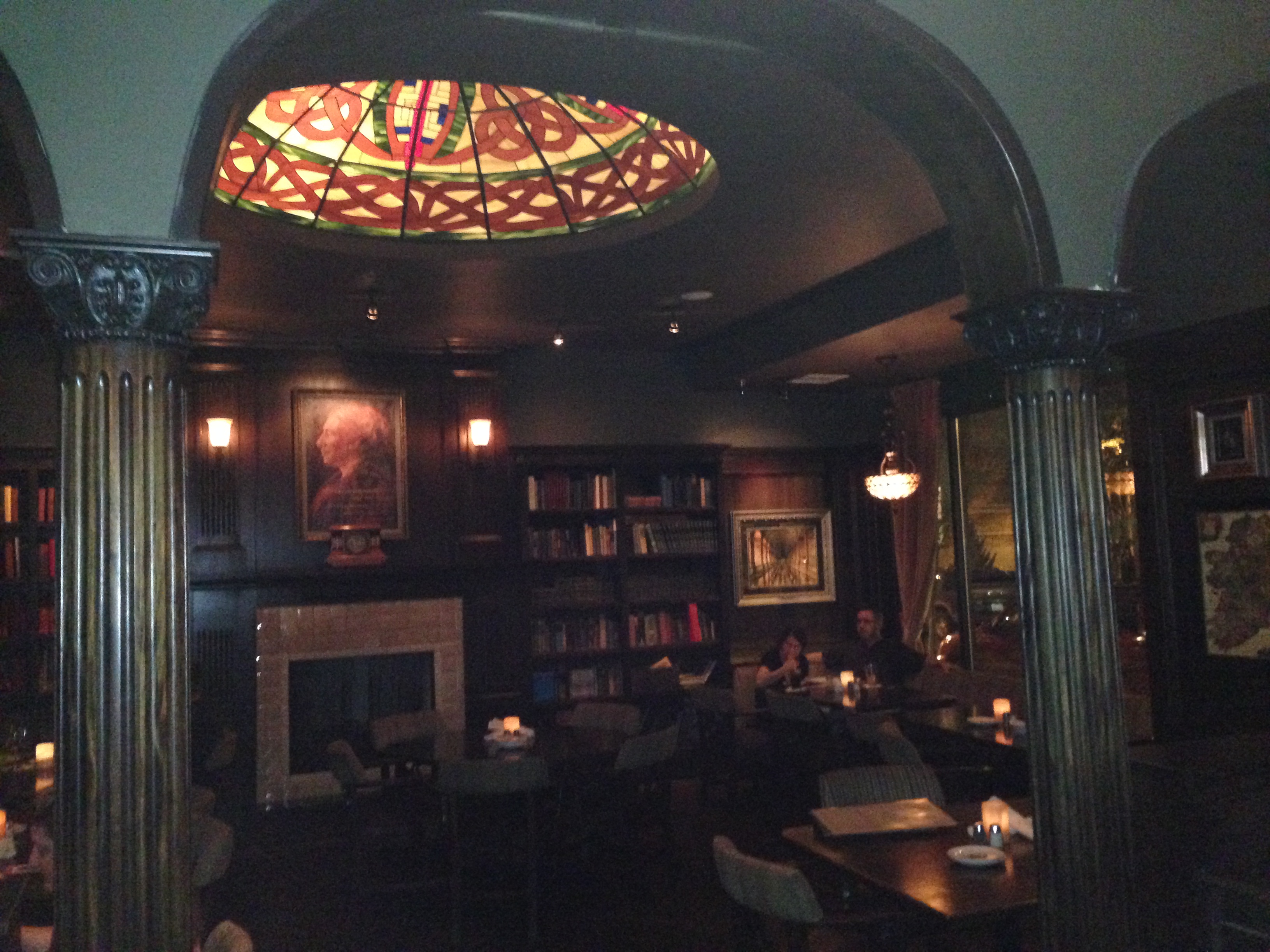
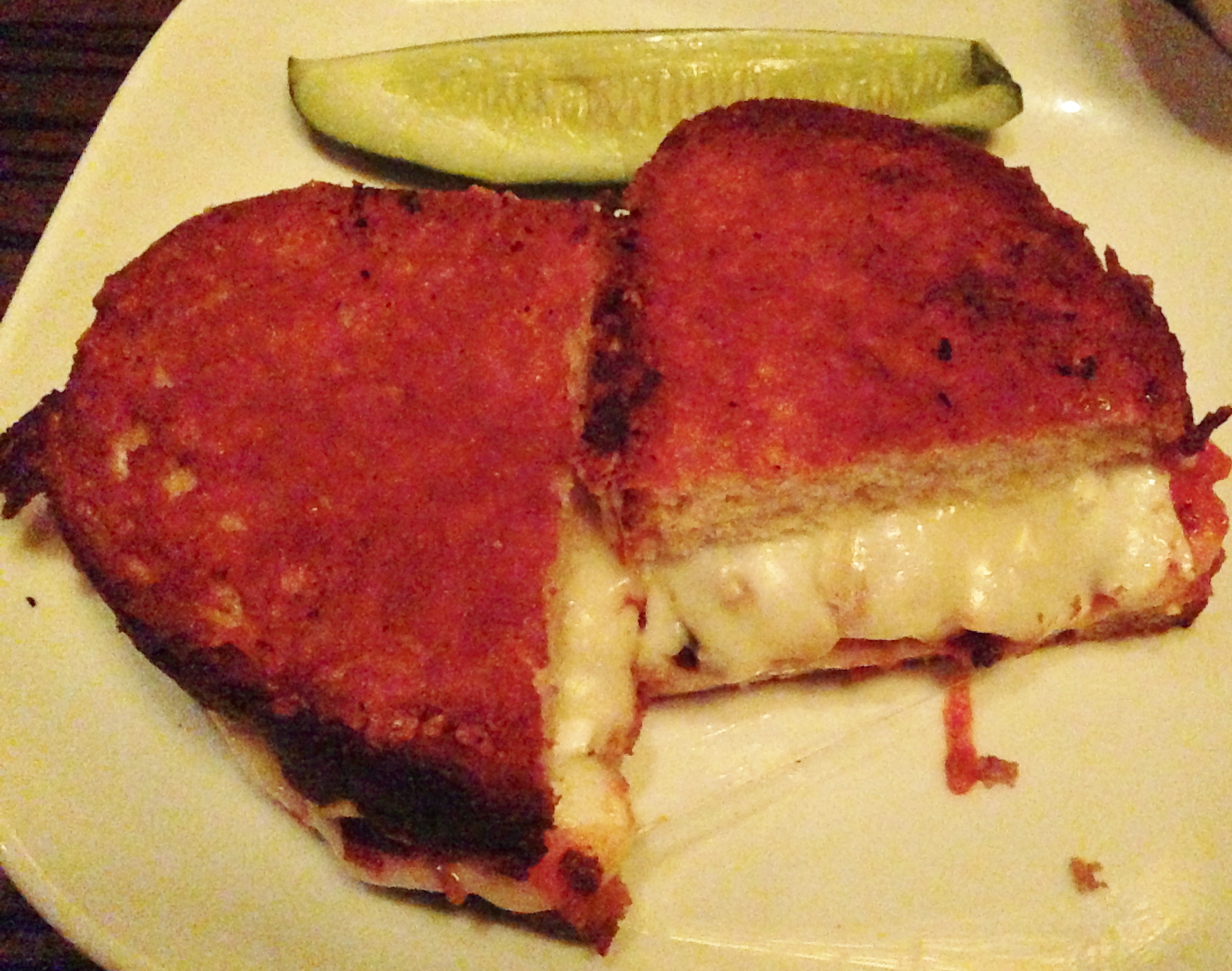
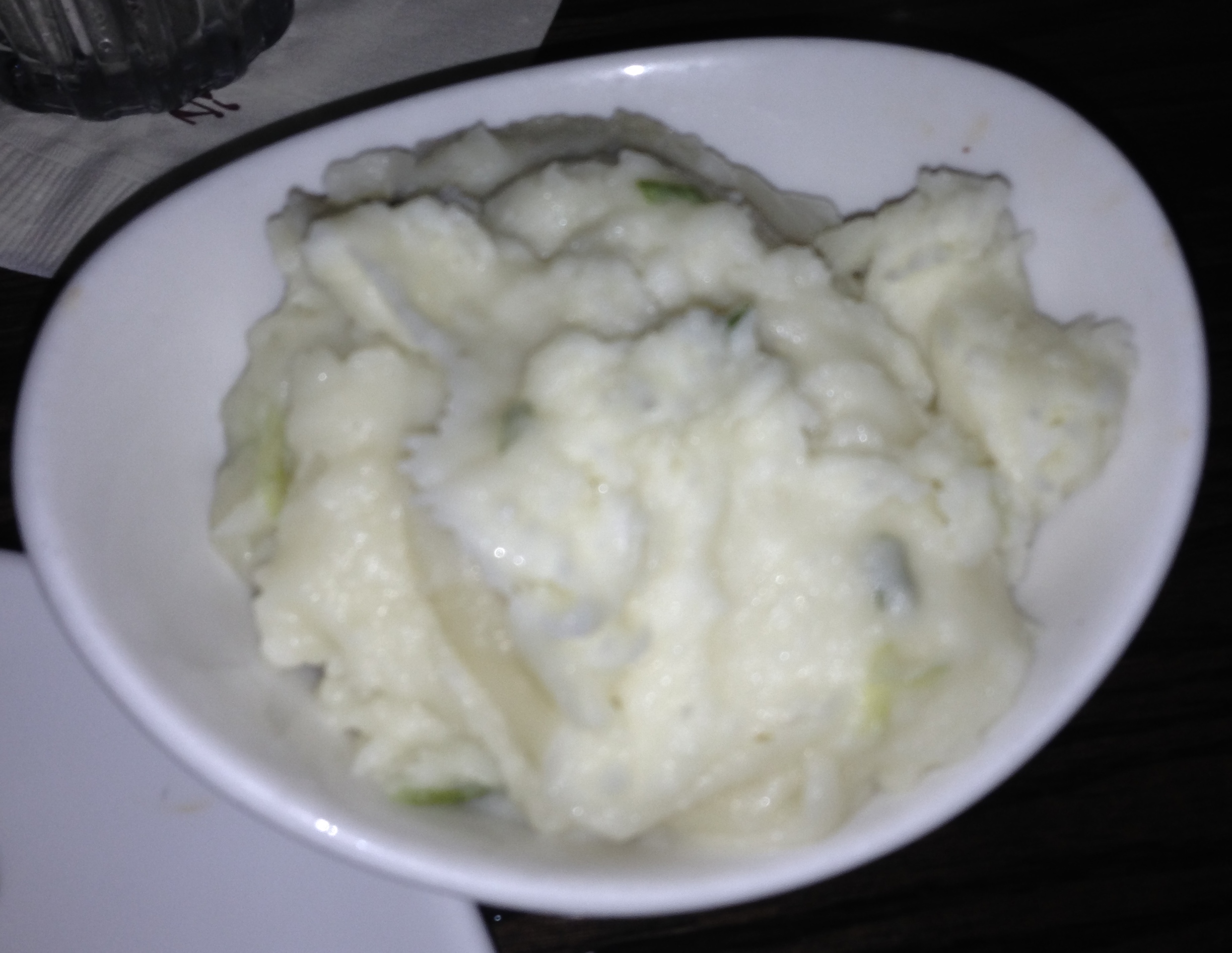
As for the layout of the restaurant, it has both indoor and outdoor seating.  Janice and I chose to sit inside, so we were ushered past the impressive wrap-around bar to the area known as “the library”.IMG_3253  Why?  Simple.  It’s an actual library that has walls stocked with reading material to go along with your eats and a few board games as well if you’re not entertained with simple conversation.IMG_3252  After looking over the menu, I went for the ultimate grilled cheese ($10) and a side of champ ($3.50).  My meal eventually came out, and it looked great.  When they say the grilled cheese is “ultimate”, they mean that every element of the sandwich is coated, stuffed, and/or infused with cheese.  *Cue Homer moment*.  It was unlike any other grilled cheese moment I’ve had in other parts of Chicago or in my life.  First, the bread was a Parmesan encrusted sourdough that had plenty of crunch, cheesy flavor, and consistency to support the flavor bomb that was ticking between the slices. IMG_3247 When I bit through the beautiful bread, I was greeted by an avalanche of lava hot cheeses:  Gruyere, Irish white cheddar, mozzarella, and brie to be exact.  While these smooth and flavorful cheeses were cascading down my palate, I also managed to catch some of the mashed tomatoes in the waves of dairy along with some delightfully smoky yet sweet, candied bacon pieces. IMG_3251  I’d highly recommend this delightfully rich in flavor but not in price plate.  The free pickle on the side only “sweetened” the deal with its sour, dill crunch.  As for the champ, it’s an Irish take on mashed potatoes.  Called brúitín in Gaelic or “poundies”, this side takes basic mashed potatoes and combines them with butter, green onions, and milk.IMG_3250  A simple food that packs plenty of complex sensations into a humble bowl.  While the potatoes were extremely creamy, the rich butter contrasted with the semi-strong green onions that introduced a bit of attitude like a champion side dish should have.

So if you want to have some great versions of simple meals that won’t cost you a pot o’ gold, check out Lady Gregory’s!

Lady Gregory's on Urbanspoon

In the Garden of Eatin’

Posted on

What’s beef? Beef is when you make your enemies start your Jeep
Beef is when you roll no less than thirty deep
Beef is when I see you guaranteed to be a ICU, check it”
-Notorious B.I.G.

While my gangster friend, Biggie, had other ideas about what “beef” meant to him in a serious context, today’s Mastication Monologues post is much more lighthearted.  While I could be considered a culinary hitman who is hired for his discerning palate and ruthless ability to deal with difficult dining experiences, I was working pro-buona at this latest establishment, Buona Beef that is.

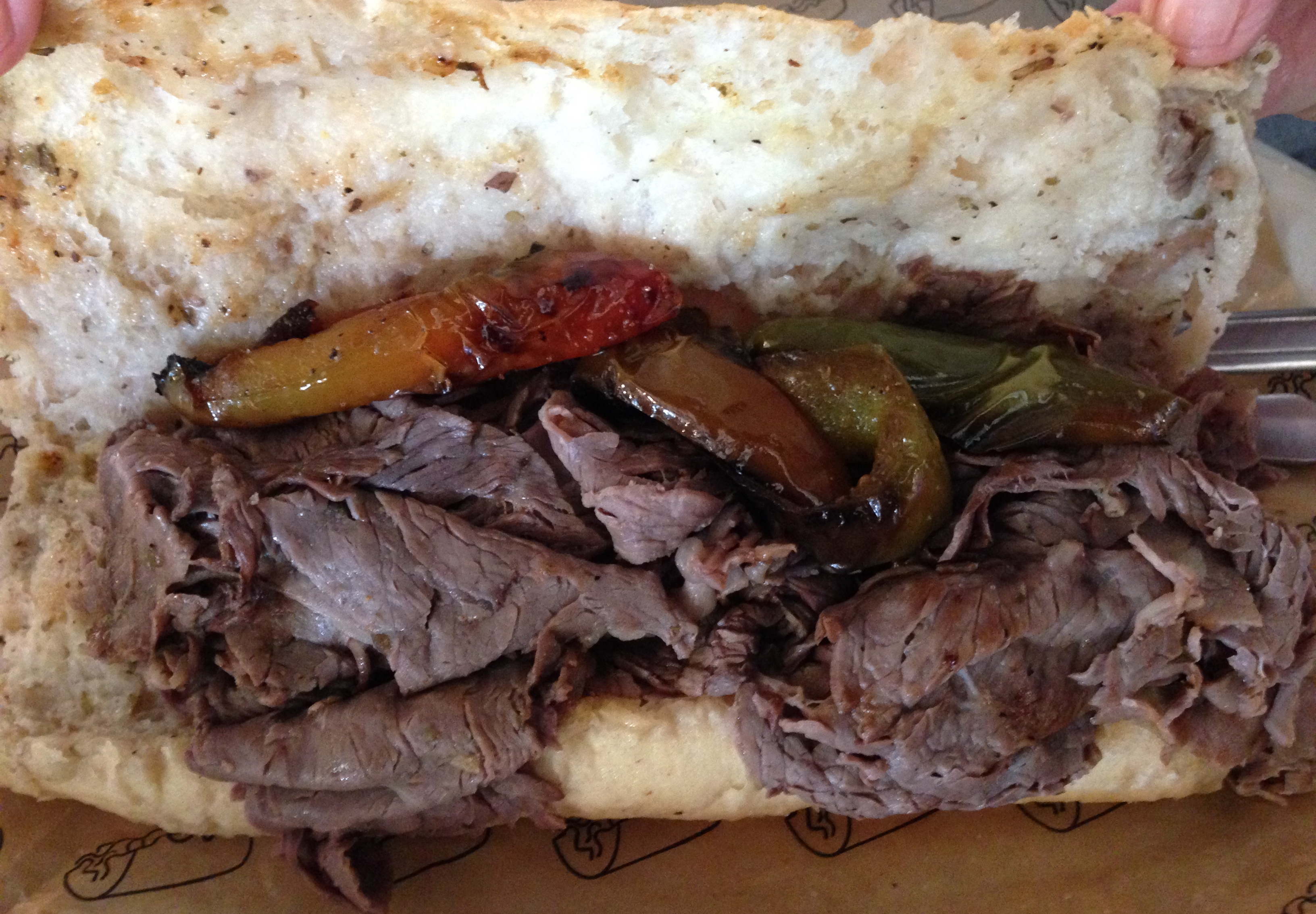
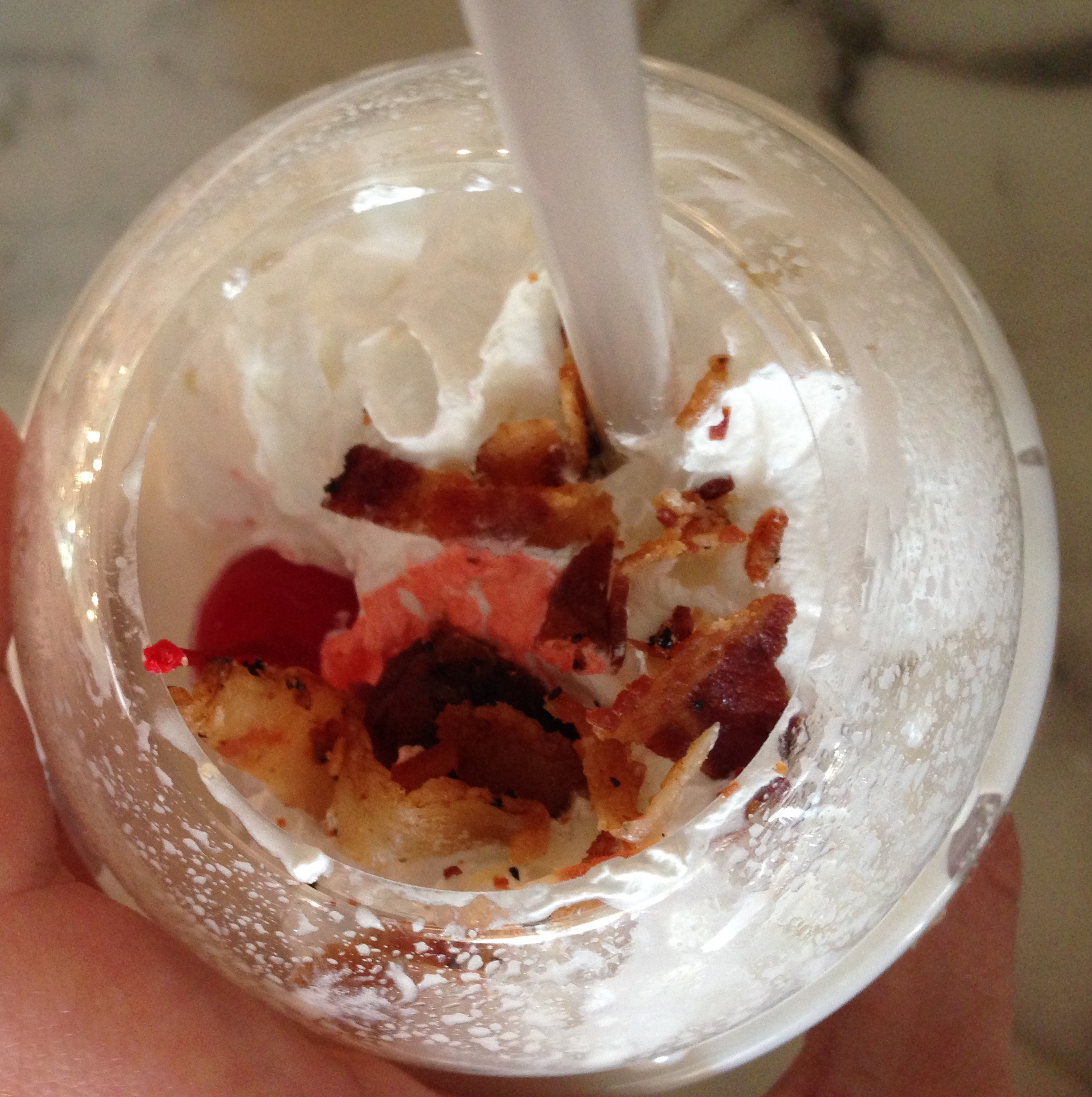
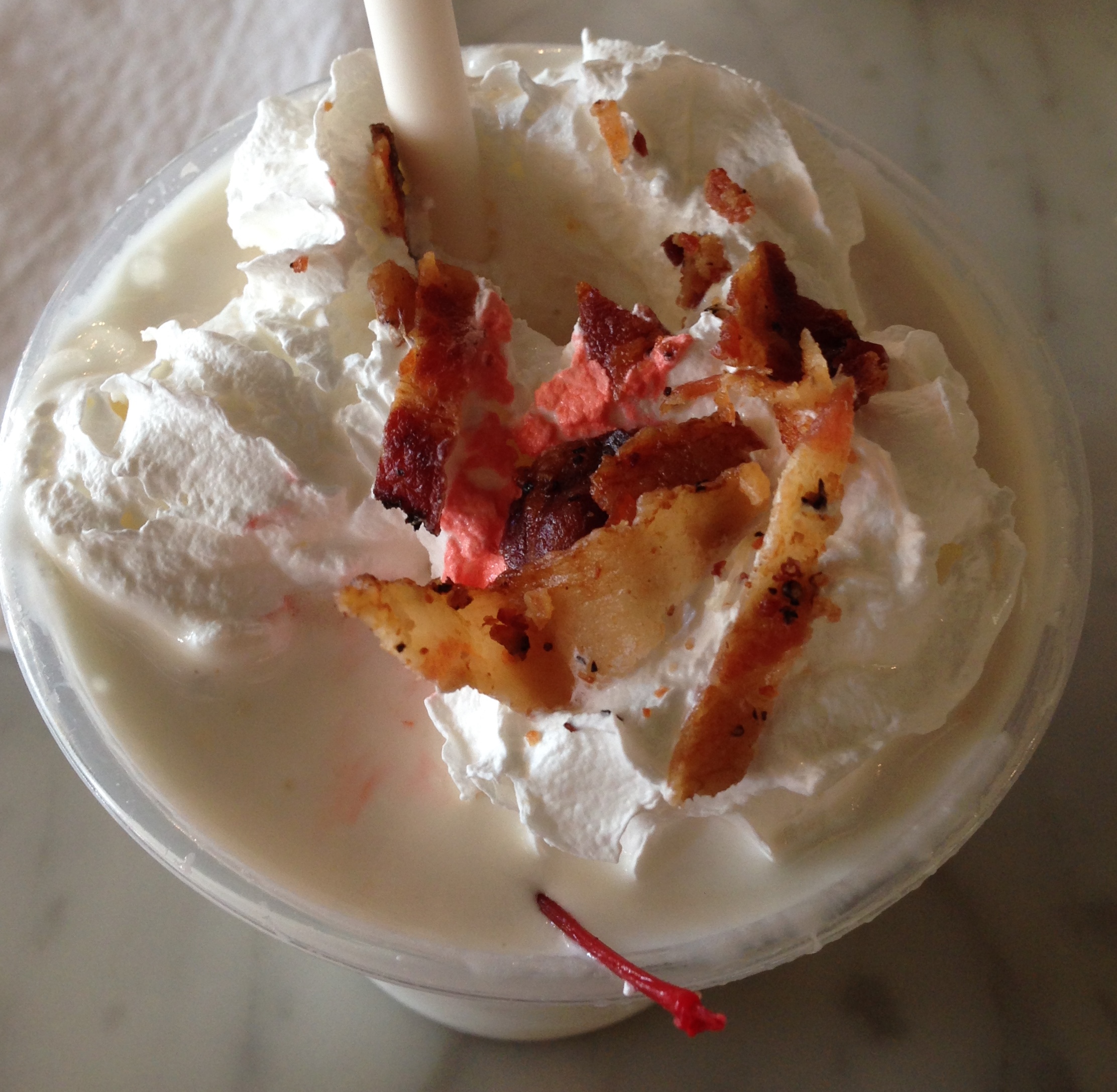
While Philly has their cheesesteak and NYC has their monstrous pastrami sammiches, Chicago’s sandwich is one that was born out of poverty.  When Italian immigrants used to work in the Union stockyards of Chicago, they would bring home the lower quality, tougher pieces of meat.  So what would be the easiest way to stretch these meager resources for a meal?  Easy.  First, they wet roasted it in a beef broth seasoned with garlic, oregano, and other spices.  Then, they’d slice the meat extra thin to feed the most amount of mouths with the least waste possible.  These paper-thin pieces of meat were thrown back into the broth to soak up all of the flavor from the roasting period for maximum deliciousness.  From there, the Italian immigrants put the beef on Italian bread loaves, and thus the Chicago Italian beef sandwich was born.  While the times and customers have changed, the cooking process has stayed the same.  Enter Buona Beef.  This franchise started back in 1981 by the Buonavolanto family who brought Neopolitan family recipes to the mainland and brought them to the American public.  Buona Beefs can be found all throughout the Chicagoland area but nowhere else in America.  I went with my parents to the location in Darien, IL, and it was a pleasant dining experience. darien The service was quick, and the prices are reasonable.  The menu ranges from pizza, salads, pasta, and of course, da beef sandwiches!  I got the regular 7″ sandwich ($5.50), but they also have piccolo (small) and maggiore (large) sizes.  While most sandwich restaurants ask if you want everything on it, ordering an Italian beef sandwich could almost sound like a script Ron Jeremy could read.  One can be asked if they want it juicy/dipped (dipped in the beef broth), dry (sans broth), hot (with hot giardiniera on top), or sweet (with sweet peppers on top).  While my mom went for the more subdued sweet, dipped sandwich, I kicked it up a notch by getting a hot dip.  This is definitely where I parked my car. While Buona Beef offers various desserts like cannoli, brownies, gelato, and lemon knots, I knew I had to try their new maple bacon shake ($3.25) which apparently diners have been scared to try.  Since I was the first to do so, the manager was overjoyed that I ordered it.  With our orders in, we took our number, and waited for them to bring us our food.

After a brief wait, our sandwiches came out along with the shakes.  I hadn’t had one of these bad boys since coming back to America, and when I laid my eyes on it, I could remember why I missed this small, meat-laden piece of home.  While I prefer the spicy over the mild, my mom’s sandwich still looked pretty good. I think they could have given her more of the roasted, sweet peppers though. IMG_3205 As for my sandwich, it was a thing of absolute beauty.  The bread was fresh yet glistening slightly with the juice of its beefy bathtub in the back.  Plus, the vegetables, or giardiniera (jar-din-air, Chicago pronunciation), looked fantastic.  Giardiniera means comes from the word in Italian for “garden” but actually means “pickled vegetables”.  That’s why the version in Italy is called “sotto aceti” or “under vinegar”.  However, there are slightly different takes on giardiniera depending on where you are.  The West Coast version is closer to its Italian roots with just using vinegar, but here in Chicago we use olive oil.  I’ve asked friends from across the US if they’ve heard of giardiniera, but it seems to be chiefly a Chicago thang.  Typically, one can find a cornucopia of vegetables in the mild or spicy oil such as carrots, celery, olives, pimentos, cauliflower, and bell peppers.  Everyone has their own favorite blend and brand like Greco’s for me.IMG_3216  Even though they’re soaking in oil, the vegetables still maintain their crispy texture.  compliments of the pickling process.  After appreciating the beefy Botticelli in front of me,  I finally took the first bite.IMG_3211  Not only is the Italian beef sandwich unique in terms of ingredients and being a culinary representative of Chicago, but one must eat it in a certain way known as “the stance”.  I’ll let the owner of  Al’s beef, the mothership of Italian beef sandwiches in Chicago since 1938 in Little Italy, and Adam Richman explain it.  Much like Mr. Richman, I was overwhelmed by the soft, juicy bread that encased the delicate pieces of garlic and oregano-laced beef.  The giardiniera provided a much needed crunch and spice to offset the soggy sandwich.  Naturally, my basket by the end of the meal looked like a sloppy slip-n’-slide, but it hit the spot.  As for my shake, it was thick and topped with a few morsels of bacon. IMG_3208IMG_3209 Upon sipping the ivory-hued beverage, I was immediately greeted with a wave of excruciatingly sweet maple flavor that dominated the shake for the most part until I reached the latter half.IMG_3213Once I finally dove deep enough, I could find and sample the crispy creatures hiding beneath the whipped cream.  The smoky and salty flavor of the bacon combined well with the sweetness of the maple riffs, but it proved to be a bit overwhelming as I sampled the dregs.  By the end, I feel like I drank a bottle of sugar syrup which didn’t settle well with me.  I think if  Buona Beef lightened up on the syrup and evenly distributed the bacon in a smaller portion size, they’d have a real hit on their hands.

So if you want to try a unique piece of Chicago’s culinary history without having to make the trek downtown to Little Italy, try Buona Beef!

Buona Beef on Urbanspoon

Semi-Sad Strudel Time

Posted on

Buon giorno a tutto il mondo!  Today were going Italian on Mastication Monologues, so jump on your Vespa  and put on your Gucci shades as we hit the road to see one of the peninsula’s most famous inventions with a twist:  pizza.  While pizza may take many different forms depending on where you are in Italy or elsewhere in the world, Chicago is one of the international hubs for world-famous pizza.  What sets Chicago apart from its classier Italian cousins or pushier brothers out in New York?  Heft.  If a slice of NYC pie is a thin Kate Moss, then Chicago deep-dish is a full bodied Christina Hendricks.  While I like both, I’m naturally biased towards my hometown style.  However, Pompei serves another type of pizza that I haven’t seen anywhere else in the world, so I’d like to tell you a bit about it.

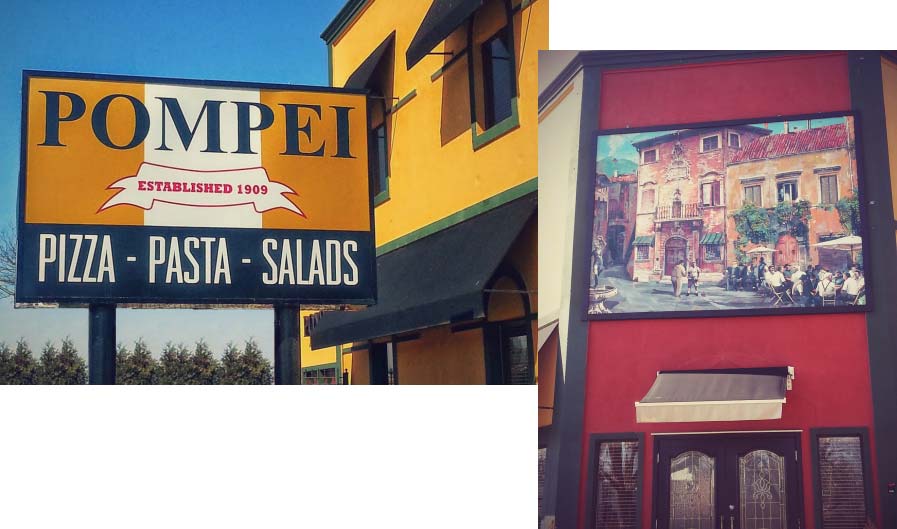
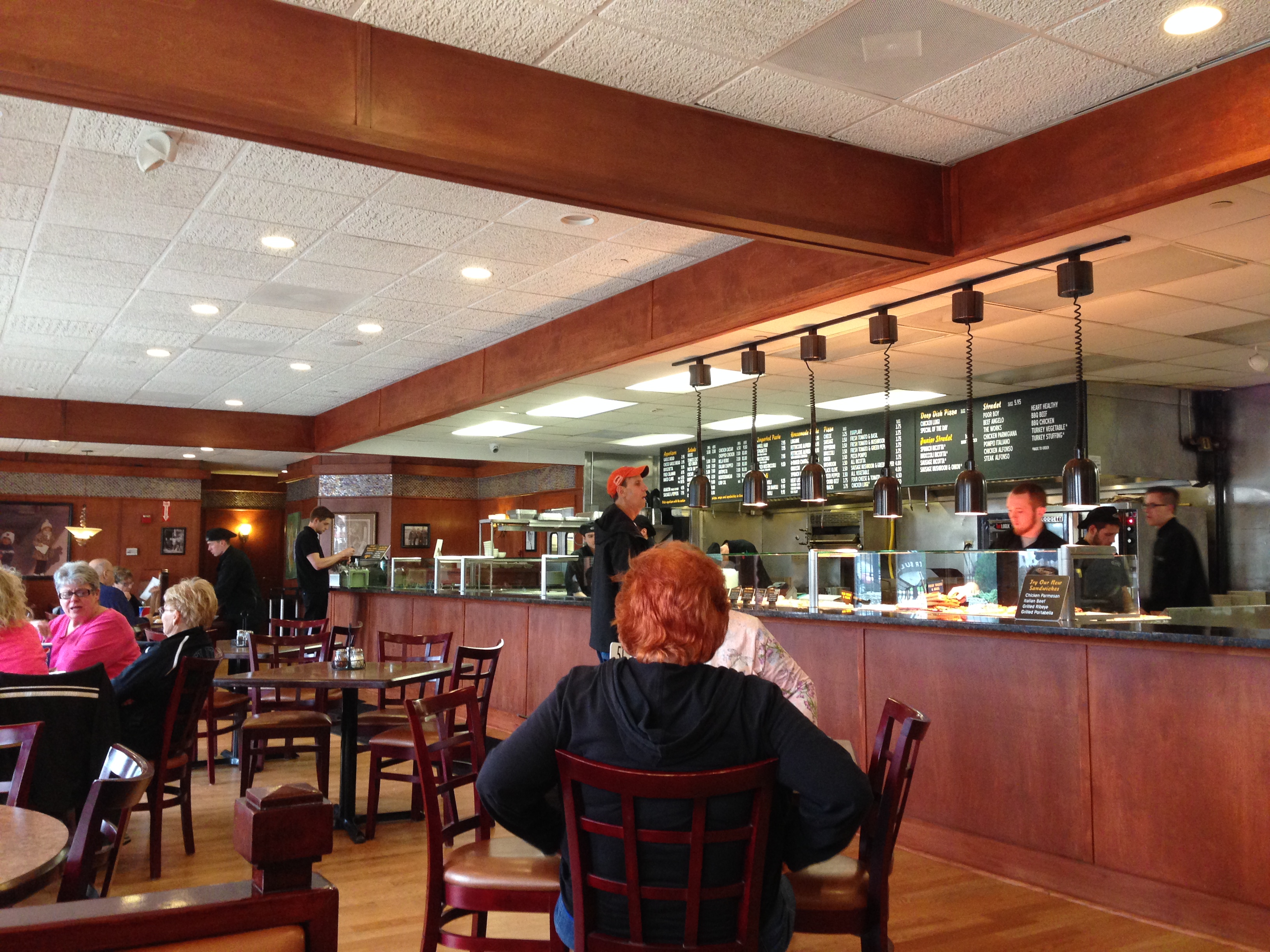
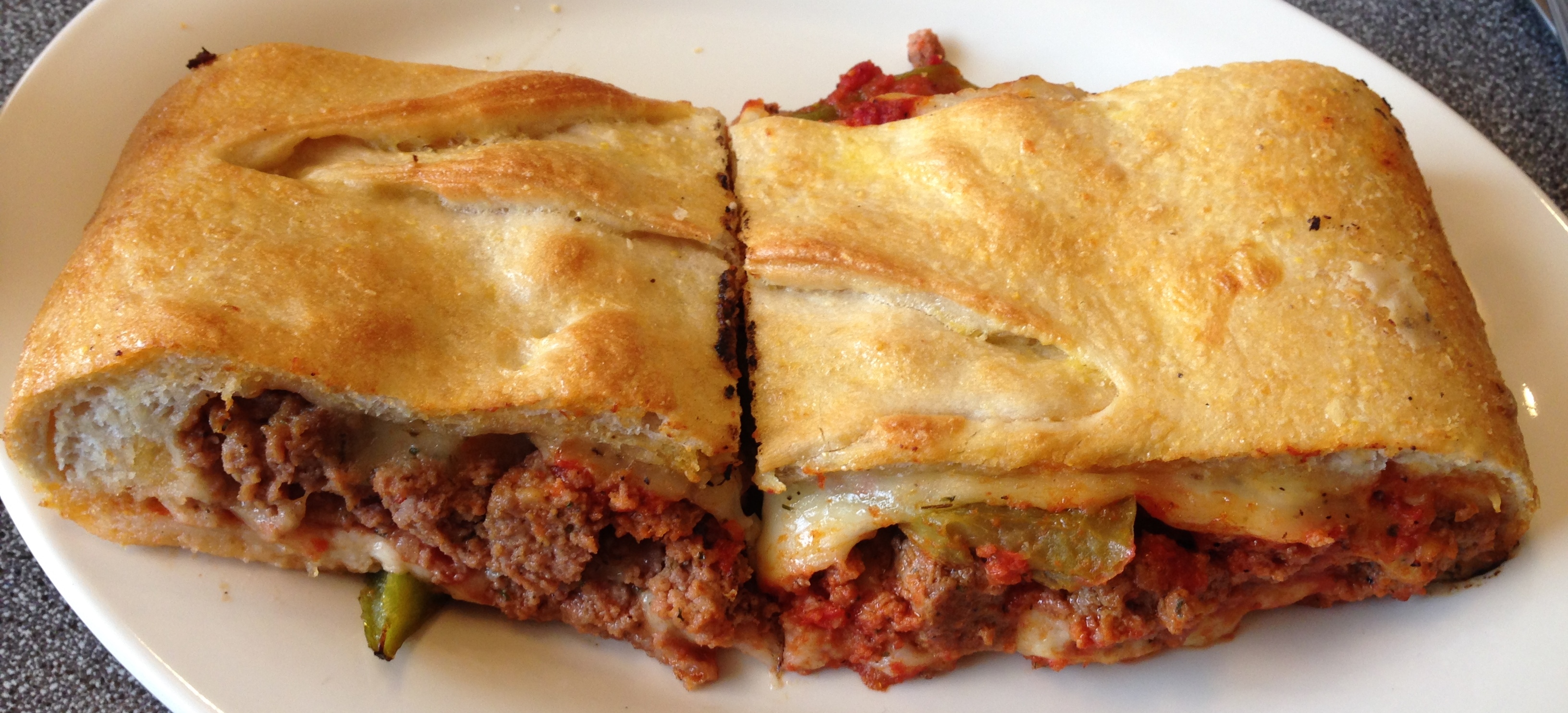
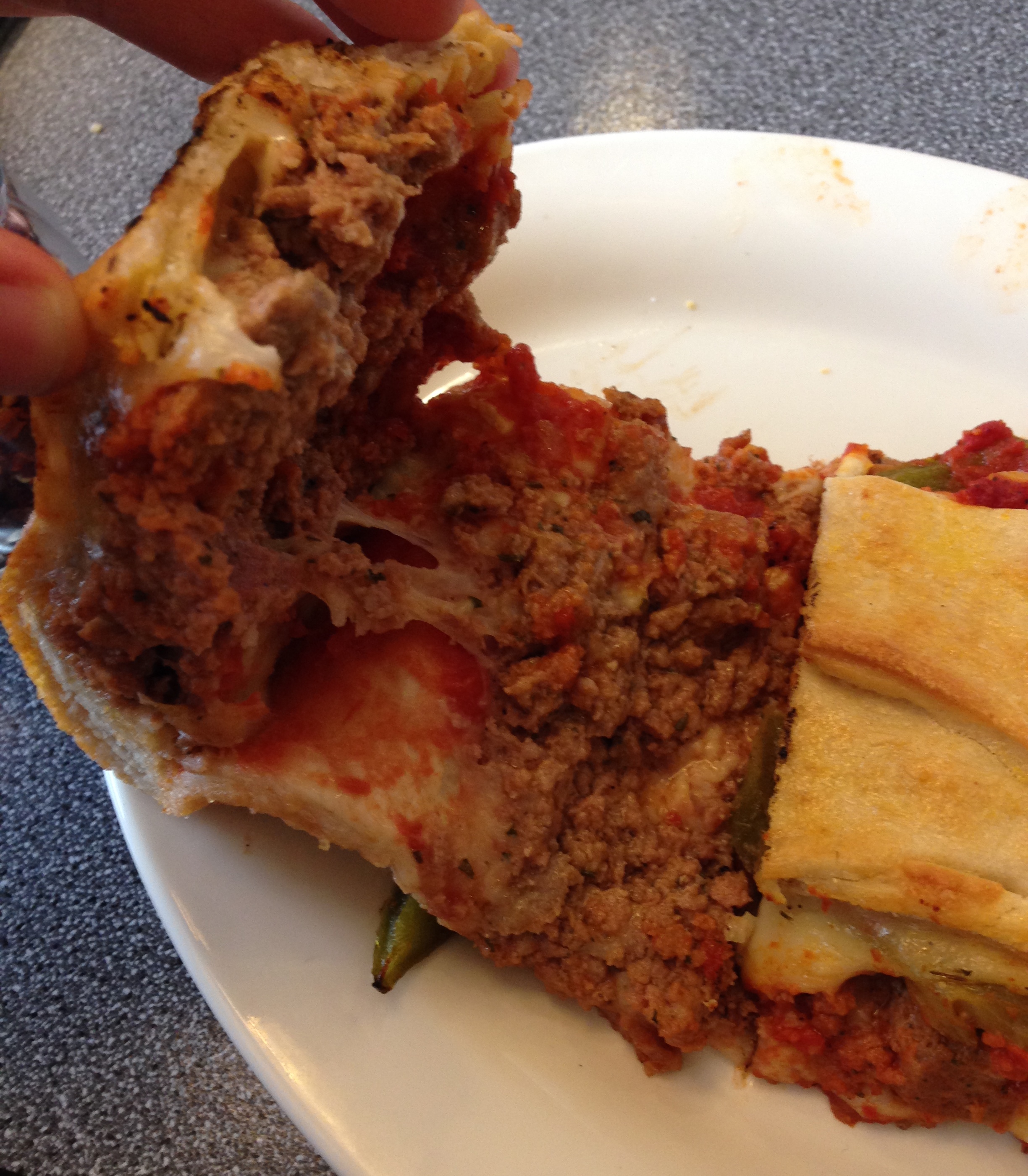
Pompei is a Chicago institution that started in 1909 on Taylor Street in Little Italy in Chicago.  While the name is the same as the famous lava encased village in Italy, it actually is derived from the nearby Our Lady of Pompeii Catholic Church. Pompeii_3723 rosary6-pompeii This reflects the local flavor of the neighborhood along with the items you can find on the menu.  Back in 1909, the founder, Luigi Davino, only made bread and cheese pizza, but now they have everything from salads, sandwiches, pasta, various desserts, and of course, the pizza!  While I still consider the original location on Taylor Street the best, this post involves the new branch in Westmont that moved from Oakbrook. westmont_splash Note:  since they’re run by good Italian boys, Pompei is closed on Sunday.  We learned that the hard way by rolling up to a desolate parking lot and subsequently were turned away.  Just a quick reminder if you’re really jonesing for some great Italian food on a Sunday.  Anyway, so upon walking into the Westmont Pompei, it was a bit different from the Chicago branch since we had to grab a lunch tray and work our way down the line of food like a cafeteria. IMG_3186 The Chicago Pompei does it in a similar fashion, but they keep all of it on their side of production.  Another trend that I noticed right away was the undercurrent of sarcasm and semi-threatening sales strategies that the staff utilized.  At the salad station, the employee seemed exasperated that we dared not to have a custom salad made for our meal.  My mom and I went down to the good stuff, the pizza.  Based on the time we went to eat, 5 pm, it was a bit disconcerting with the selection of pies they had.  My mom was looking at the hand rolled pizza that is still thick compared to NYC slices, but they all seemed to be the dregs of the lunch hour in terms of quality.  My mom ended up picking a semi-anemic slice of spinach pizza and slid on down the line.  As for me, I got the usual, the strudel pizza ($5.95).  While the word “strudel” is normally associated with lederhosen-clad Germans enjoying the sweet, European take on pie, Pompei manages to integrate both the general structure of the Teutonic dessert with the Mediterranean ingredients.  I wanted my favorite strudel flavor, “The Works”, but they didn’t have any out.  So I settled for the Beef Angelo, and I went to the cashier.  While waiting there, the employee behind soup and dessert hassled us in a condescending manner  about our pizza choices and why weren’t we getting more food.  We played it off like nothing happened and settled down to enjoy our eats.  My strudel looked fantastic but the taste didn’t match due to the quality of the ingredients. IMG_3184 While the crust was crusty yet chewy, it was soggy on the bottom which is never a good attribute for pizza to have.  As for the interior, the Beef Angelo normally is filled with slices of juicy beef, but what I found was more like the leftover, ground up meatballs.IMG_3185  The marinara and cheese were plentiful in this strudel which made up for the meat…just barely.  By the end of dinner, I was filled and semi-satisfied.  Yet I couldn’t help but reflect on the quality of service and food in comparison to the original Chicago location or when the same restaurant was in Oakbrook.  Even though not everyone goes to eat dinner at 5 pm, that doesn’t mean you should put out the minimal amount of low quality product to save resources.  Plus, the owner should whip the staff into shape as 90 percent of them were standing around talking while one guy did all of the work.  This type of terrible teamwork extended to all facets of the restaurant and put a damper on our dining experience.
So if you want to try a unique type of pizza in an original Chicago institution, try Pompeii, but I’d recommend the Chicago location over the obnoxious Westmont branch.

Pompei Bakery on Urbanspoon

The Cradle of Deliciocracy

Posted on

Tikanis, people?  That’s “what’s up?” in Greek which is the language spoken at today’s reviewed eatery in, you guessed it if you’ve been reading my latest entries, Delray Beach, Florida.  If you haven’t been reading through, some highlights include me taking down a giant chicken sandwich, eating a breakfast jammed in a burger, and a sexually titled sushi platter.  So, after having Italian the previous day, I wanted to continue the Mediterranean theme with a proper Greek dinner or maybe I just had a hankering for some good Feta cheese.

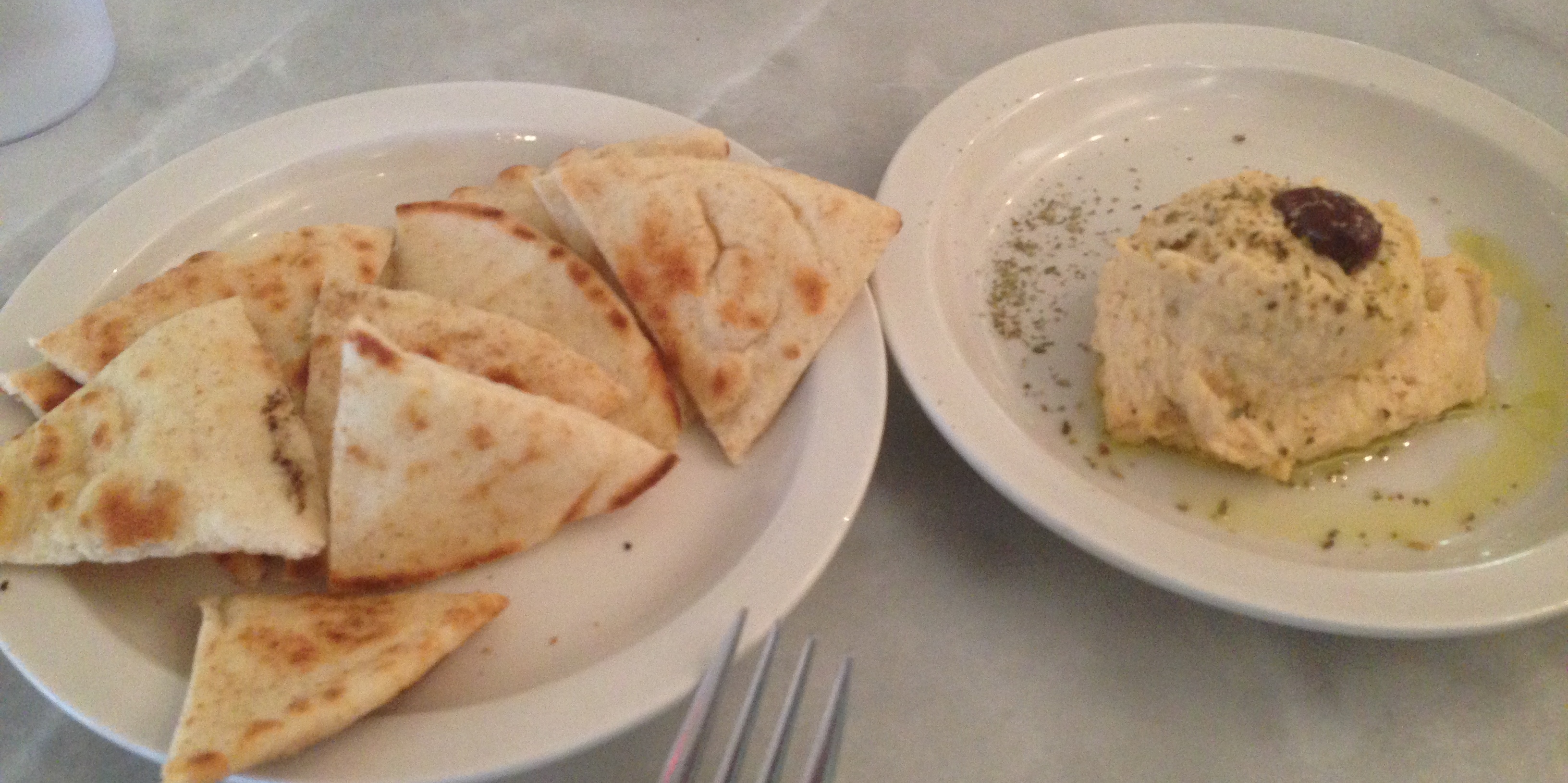
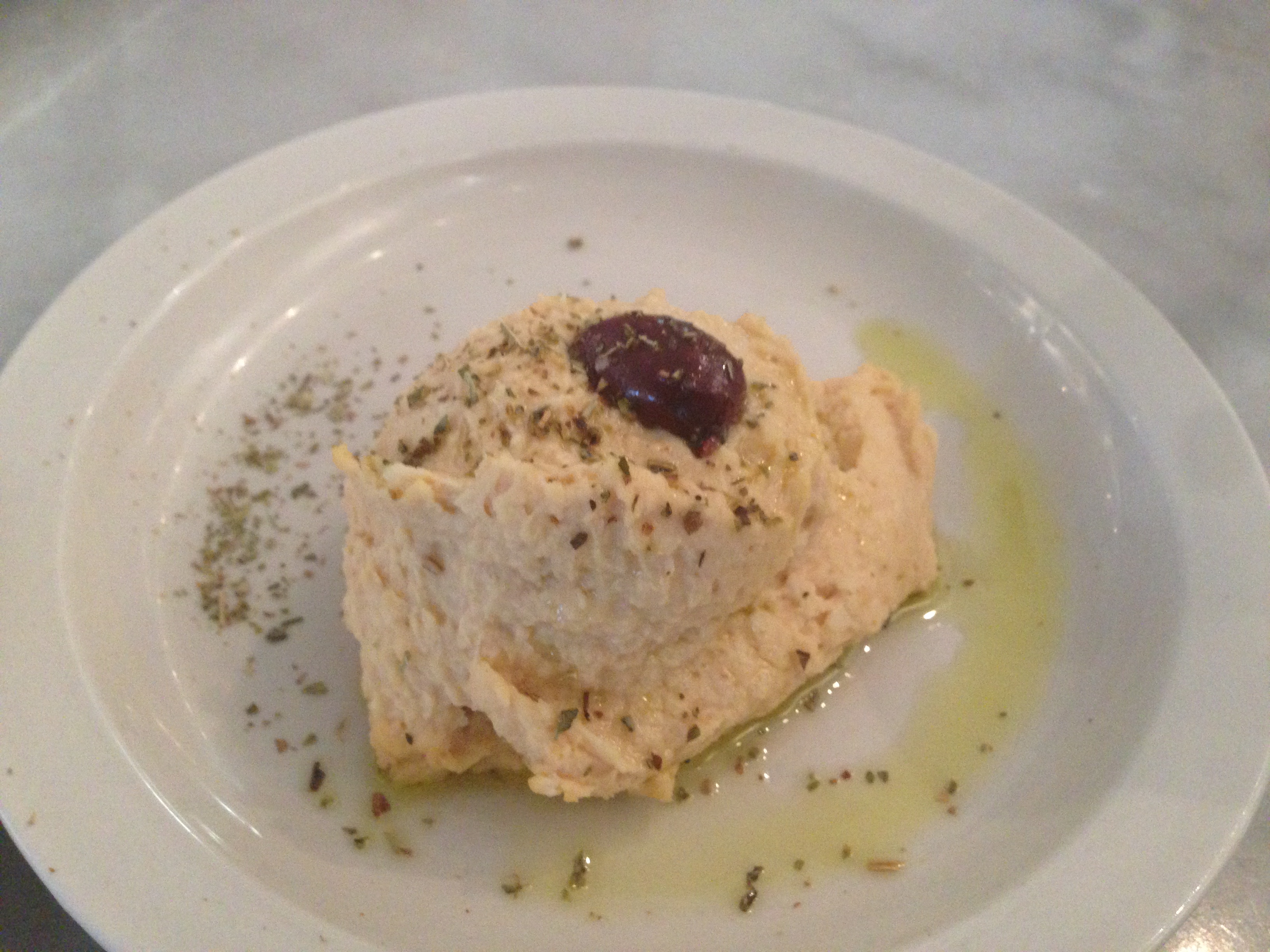
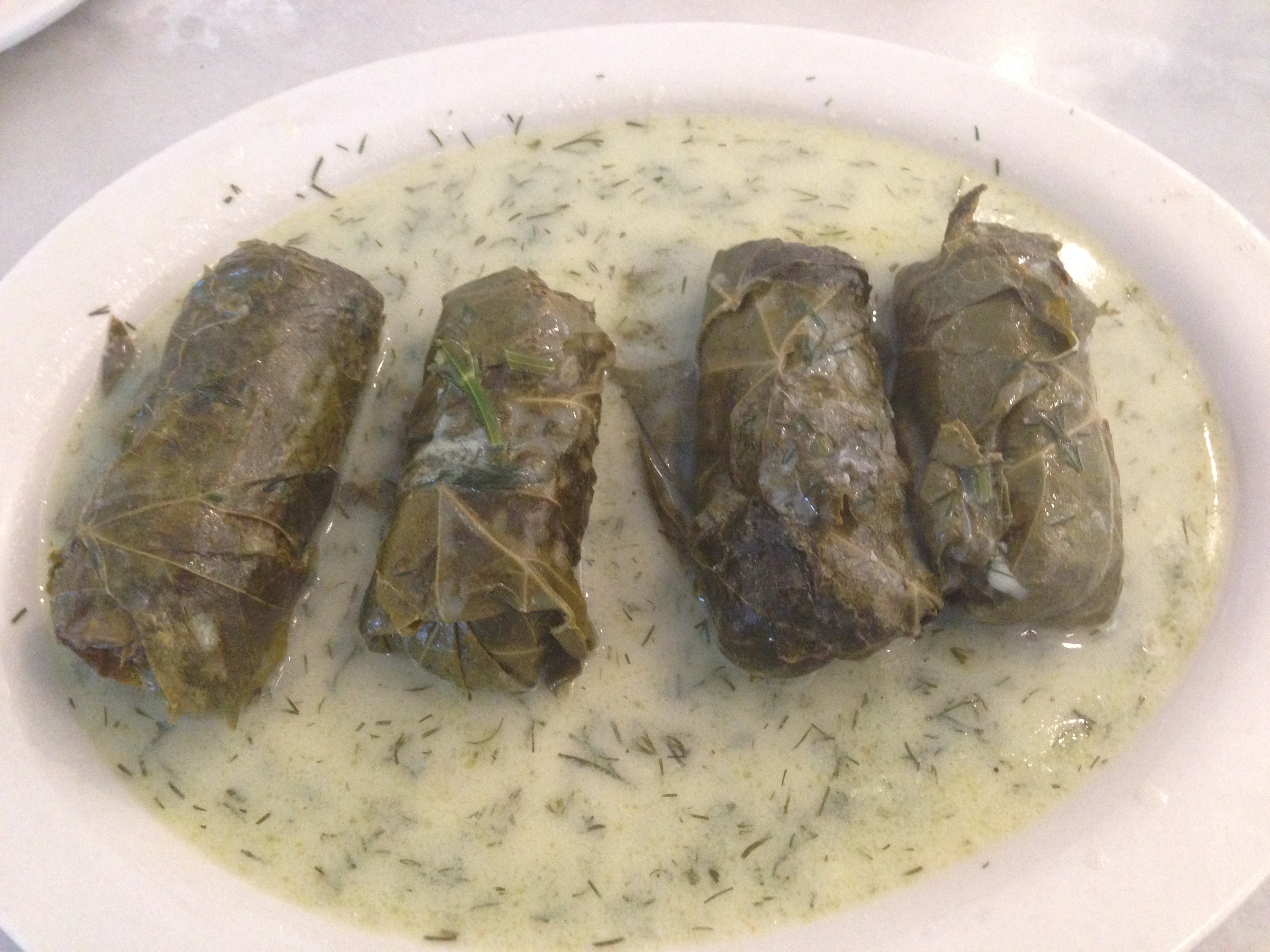
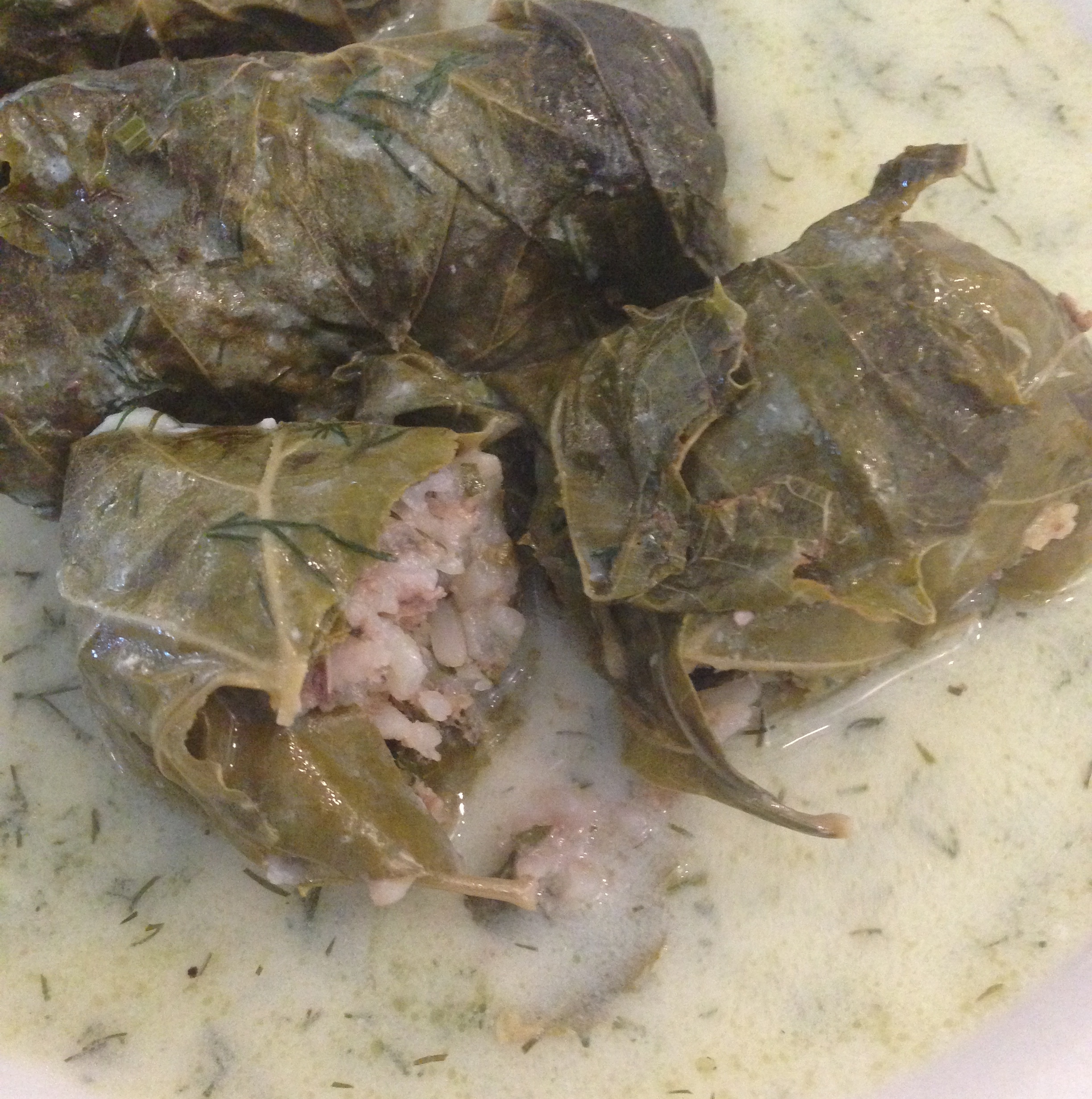
After a bit of sleuthing through the online food directories, I found Zorba’s Taverna that had a lot of great reviews where people raved about the tasty eats at reasonable prices.  Perfect.  It didn’t look like much from the outside as it was located in a strip mall, and coming from Chicago, I’m normally used to them looking like the white-washed buildings in Santorini.IMG_2957  The sign on the door, on the other hand, already provided me with a taste of the Greek hospitality to come (thankfully sans broken plates). IMG_2956 The place was moderately busy, but the seats quickly were occupied as we managed to beat the crowd rushing the doors trying to get out of the rain.  Our waiter slowly sauntered over, and he seemed slightly off for some reason I couldn’t put my finger on.  Nevertheless, he was amiable.  Inside, Zorba’s Taverna was the Greek diner I was expecting complete with a classic Hellenic blue and white motif everywhere along with a fitting tribute to the Anthony Quinn film that serves as inspiration for the restaurant’s name.IMG_2951 IMG_2950 IMG_2949  After looking over the menu that had all of the classic Greek dishes that they’ve served since antiquity like spanokopita, souvlaki, and baklava along with a couple newer Greek innovations like saganaki that was reinvented right in Greektown in my hometown of Chicago.  My mom got an order of the saganaki ($8.95) for us to share to start off.  For those who have never had the pleasure of trying saganaki, the name describes how the cheese, in this case vlahotyri, is melted in a frying pan since saganaki is the diminutive of sagani or a “frying pan with two handles”.  The cheese is then eaten with a spritz of lemon and maybe a sprinkling of pepper.  Once Greek immigrants came to America, they served this gooey cheese dish to diners, but as I mentioned before, the Greeks in Chicago added a bit more showmanship to this humble dish.  What can add panache to any sort of performance art like preparing and serving food?  Fire!  If you visit most Greek restaurants in the Chicagoland area, you can experience something like this.  Strangely, in Florida they didn’t set the cheese ablaze but rather placed it on our table with a whimper along with a free plate of pita triangles and hummus.  The saganaki sans flames was still delicious with a salty and citrusy flair to each forkful.  As for the hummus and pita,  I don’t know if they do this for every patron or if we were the 100th customers, but it was a great perk to our visit. IMG_2947 The pita was warm and fresh, and the hummus was creamy and evenly spiced with a liberal splash of olive oil.IMG_2948  We then ordered our food where my dad got the tzatziki platter ($4.95), my mom got chicken souvlaki platter ($12.95), and I got a side of dolmathakia ($7.95) and the roasted Greek chicken ($14.95).  Eventually, our food came out, and it all looked great.  My dad’s tzatziki or cucumber sauce was thicker than I was used to compared to back home in Chicago but didn’t affect the overall quality.  My mom informed me the chicken souvlaki or shish kabob was very dry.  On my plates, on the other hand, I found nothing but mouth-watering choices. IMG_2953 The dolmathakia consisted of cooked grape leaves that encased fluffy grains of rice with spices and just the right amount of dill that was further enhanced by the translucent dill broth that these mini-grape loves were stewing in.IMG_2954  I got a free Greek salad on the side which was verdant and scrumptious along with the creamy pieces of Feta that scratched my itch for cheese like the big rat I am.IMG_2952  As for my chicken, although it couldn’t hold an oil lamp to some of my Greek friends’ mommas’ cooking, it was alright for Delray Beach.  The chicken was so well prepared that it literally fell apart as soon as I touched it with my fork. IMG_2955 From the oregano coated skin to the juicy white meat interior, I was in a state of apotheosis as a foodie during this meal.  Unfortunately, then it went downhill from the average green beans to the less than noteworthy potatoes on the side that were quite bland and hard.  The tumble from the top of the Mount Olympus of food ended with a definite thud.

So if you’re looking for mostly lip-smackingly good Greek food that’ll make you shout Opa! down in Delray Beach, boogie on down to Zorba’s Taverna.

Zorba's Taverna on Urbanspoon

Getting All Sazzed Up

Posted on

Today, I’m going to write you a blog post you can’t refuse to read.  If you have a hunger that cannot be satisfied with a typical burger or fried chicken joint, I found Sazio in Delray Beach.  It’s an Italian eatery that truly believes in the idea of abbondanza or abundance as I “quickly” found out.

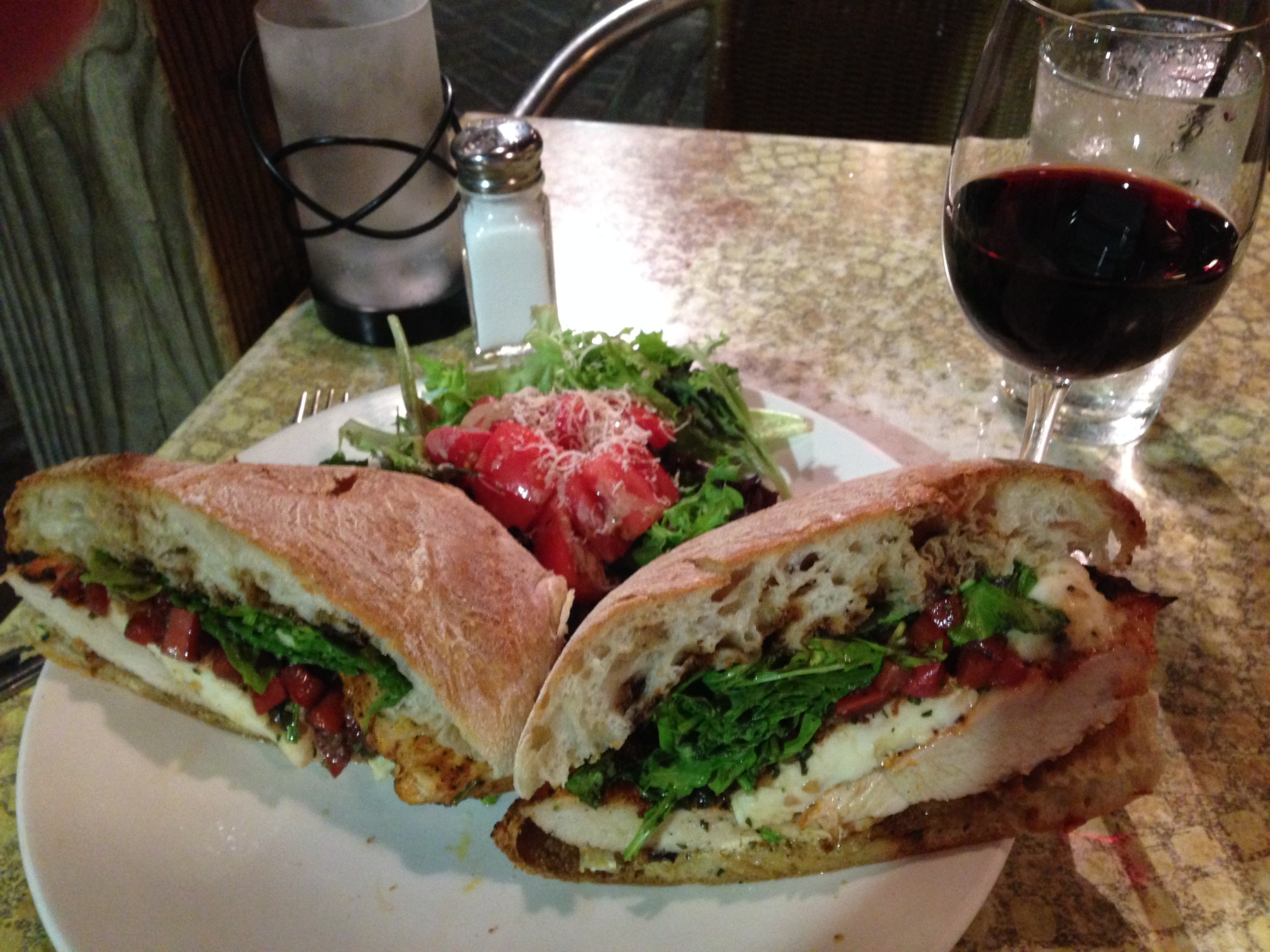
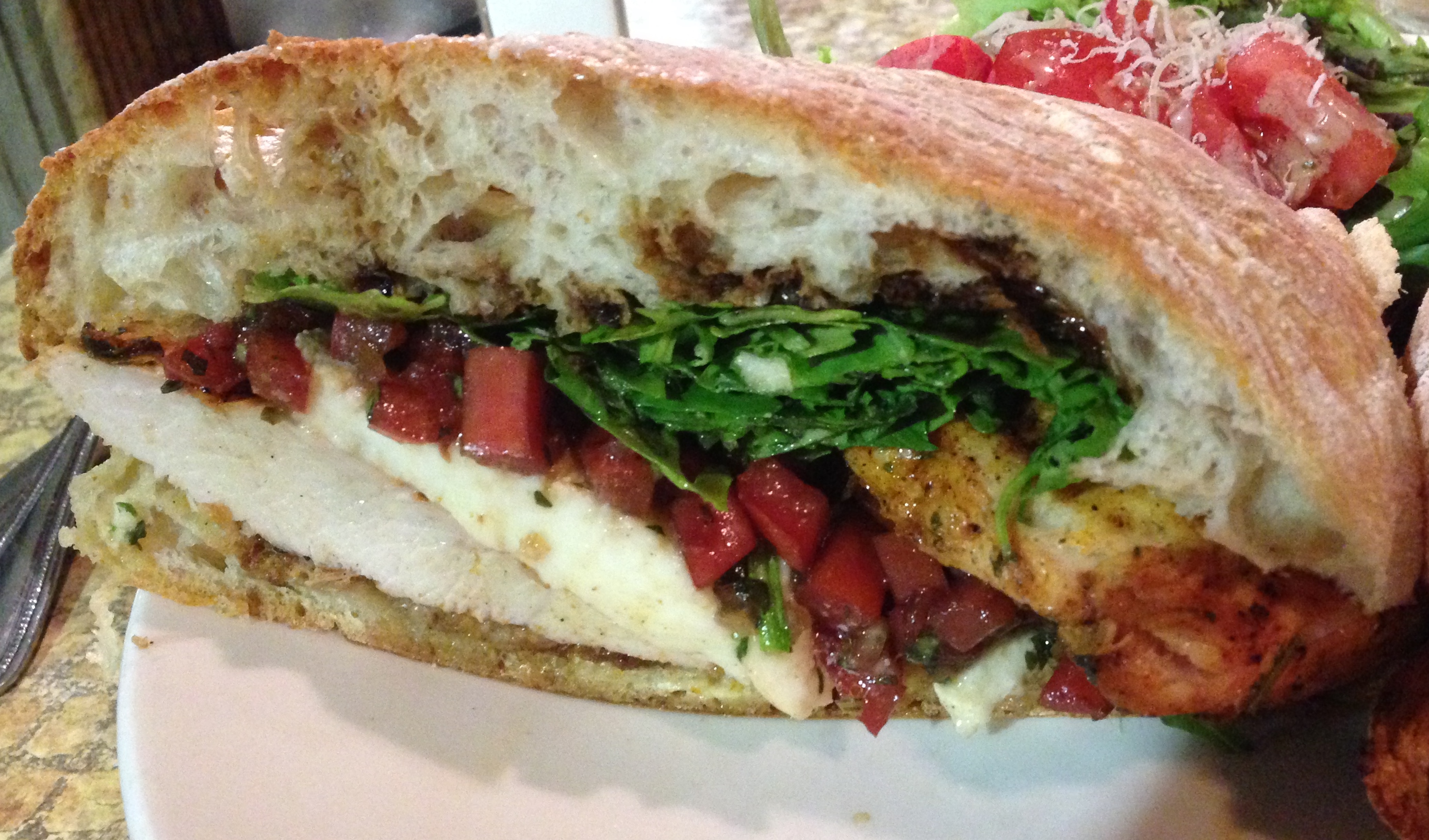
After working my way through Delray’s various food genres, I was in the mood to mangia some good Italian food.  While I did see that there were various pizzerias up and down the happening Atlantic Avenue, I wanted to see if there was any restaurants that could take on more substantial representatives of the Italian food famiglia.  This is where Sazio came into the picture.  It was a bit further away from the beach, but that didn’t mean that they weren’t doing booming business the night I visited.IMG_2944  They have both indoor and outdoor seating, and I opted for the latter due to Delray’s impeccable weather even at night.  The robotic but seemingly warm hostess told me it would be another 15 minutes for a table, but I saw there was a two-top (two person table in non-restaurantese) open on the patio.  Having worked as a host in a restaurant before, I wasn’t going to hassle her about the table being open since I knew there were other seating arrangements they might use that table for.  So I settled on looking at the menu while I waited.  I could see they had a litany of sandwiches, salads, pastas, pizzas, and entrees.  However, I was sad they didn’t really have any standards from Chicago like chicken saltimbocca or chicken vesuvio.  Eventually, I was seated, but I had to once again wait at least 5 minutes for someone to come to my table similar to Lemongrass Bistro in my previous post.  It seems that service is overall bit slower in the South compared to the North.  Thankfully, I knew I wanted the chicken bruschetta sandwich ($10), so I just had to choose a drink.  I went for a glass of the Ruffino Chianti 2009 that had fruity notes but a definite acidic bite for an aftertaste.  As for my meal, it eventually came out, and it was quite intimidating.  I think they might have sandwiched two full chickens between the fluffy, crustacular ciabatta bun halves.IMG_2941  I slowly unhinged my jaw to take a bite, and after the first chomp I was impressed.  Not only did they have monstrously large pieces of chicken breast in the sandwich but also a tomato relish, slices of fresh buffalo mozzarella, delicate arugula, and a balsamic glaze atop the mountain of greens to add a slight tang to the more mild mannered meal. IMG_2939 The side salad was good but was a mere footnote when compared to the behemoth it shared a plate with.  Sazio managed to reinvent a classic Italian antipasto with real gusto that left me one felice (happy) diner.

So if you’re ever in Delray Beach and are looking for a lot of good food for a reasonable price, check out Sazio on Atlantic Avenue!

Sazio on Urbanspoon

Design a site like this with WordPress.com
Get started