Hello everyone out there on the interwebz. Welcome to another edition of Mastication Monologues where I have been, as of late, exploring all the new foodstuffs that South Korea has to offer. Today I will be talking about a Far Eastern twist on a Western favorite: pizza. As with many things in the world, pizza has an unusual history in the sense that most people associate the main staple of college students with one country (Italy) when it actually came from a different one (China). Many historical scholars argue that Marco Polo allegedly brought it back from China and introduced it to the Italian peninsula which eventually led to the modern pie being invented in Napoli. Where I come from, Chicago, we have a special affinity for this Italian/Chinese treat which has led us to bump heads with New Yorkers over who has better pizza. Therefore, when I stepped into Pizza Maru in my neighborhood of Seo-gu, I didn’t know what to expect in terms of toppings. I was greeted by different Korean combinations like sweet potatoes and bacon or thin cream shrimp pizza. I went for the latter since it just seemed like a bizzare description, but I was pleasantly surprised.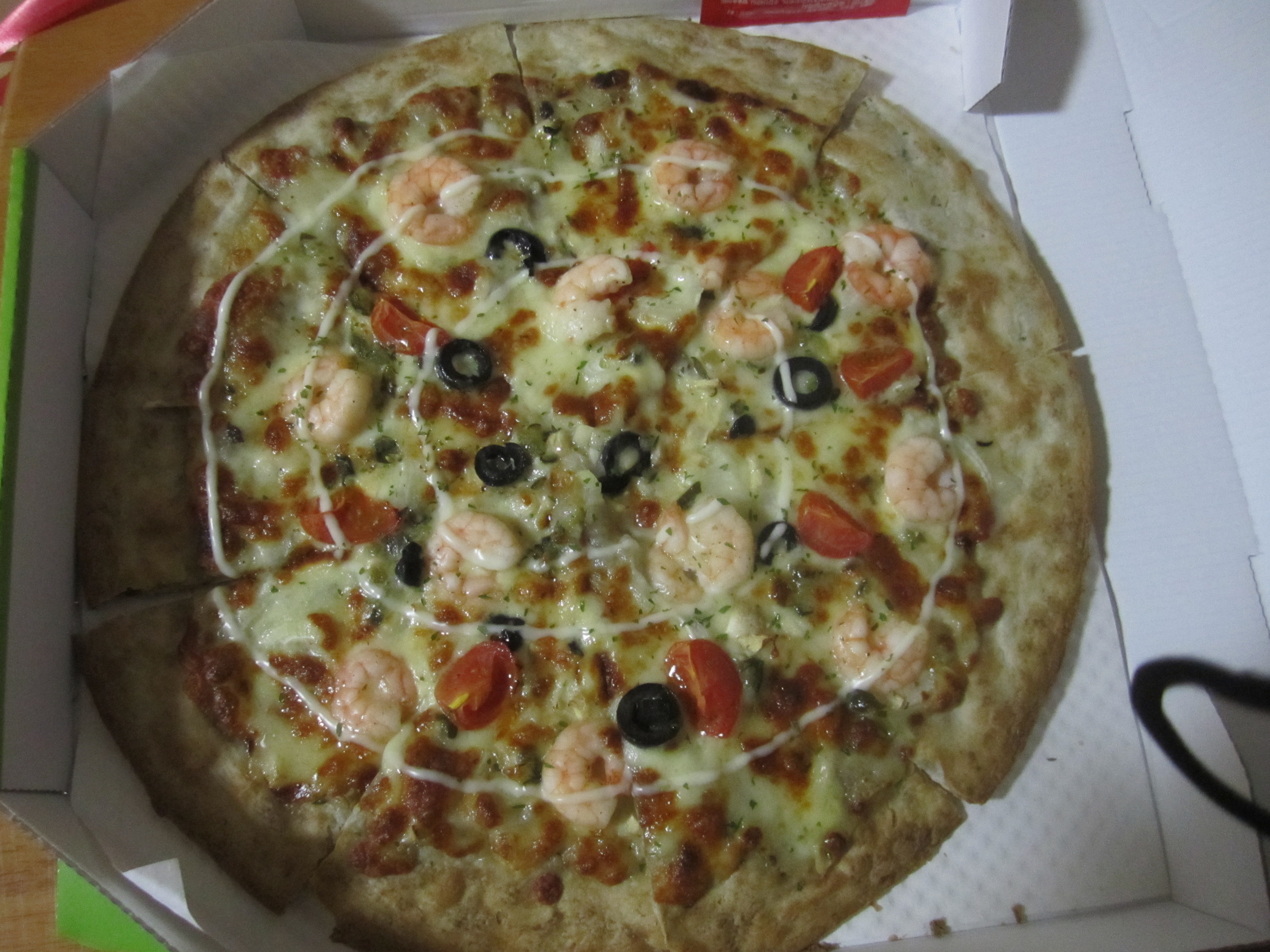 It was made with very thin and crispy crust that supposedly has 12 types of grains, black rice, and green tea. The toppings consisted of grape tomatoes, black olives, shrimp, cheese, oregano, and an alfredo-esque sauce. However, it was different from a typical pizza because it didn’t have tomato sauce but rather some sort of clear sauce that really didn’t taste like anything. It brought down the very flavorful pizza because it made the slices semi-soggy which is not a good attribute to have if your end pieces are nice and crispy. Overall, it was an okay pizza, but I don’t really see it giving European/American pizza a run for its money anytime soon. At least the presentation was a lot nicer than back at home.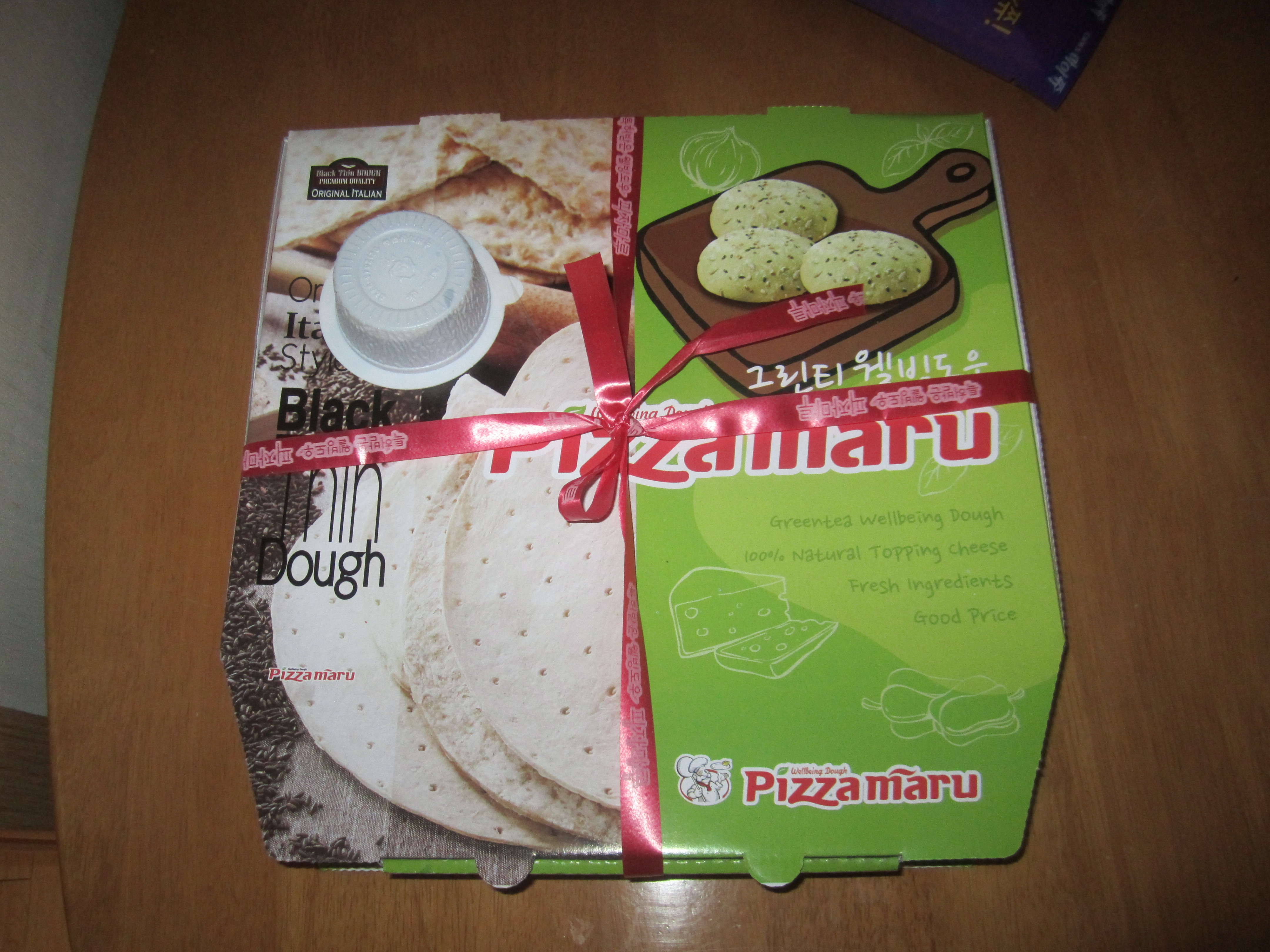
Category Archives: Far East Asian Cuisine
A Slice of the East
I See A Bowl of Noodles, I Want To Paint It Black
Hello to everyone out there in cyberspace. Today on Mastication Monologues, I am going to tell you about a Korean dish that I heard about very briefly in reference to Black Day in Korea where single people come together to hangout (kind of like an antithesis to the much commercialized Valentine’s/White Day) and eat a meal called jajangmyeon.
I actually had it today for lunch with my coteachers at my new elementary school. They initially told me they were going to be ordering “Korean Chinese” food. I knew that Incheon had the largest Chinatown in Korea, but I didn’t know what exactly they meant by this fusion term. I asked for clarification, and they said, “You can get fried rice or black noodles.” Done. I was going to get the bizzare sounding black noodles. Originally I was thinking that they were going to be black due to the addition of squid’s ink, but what faced me was very different.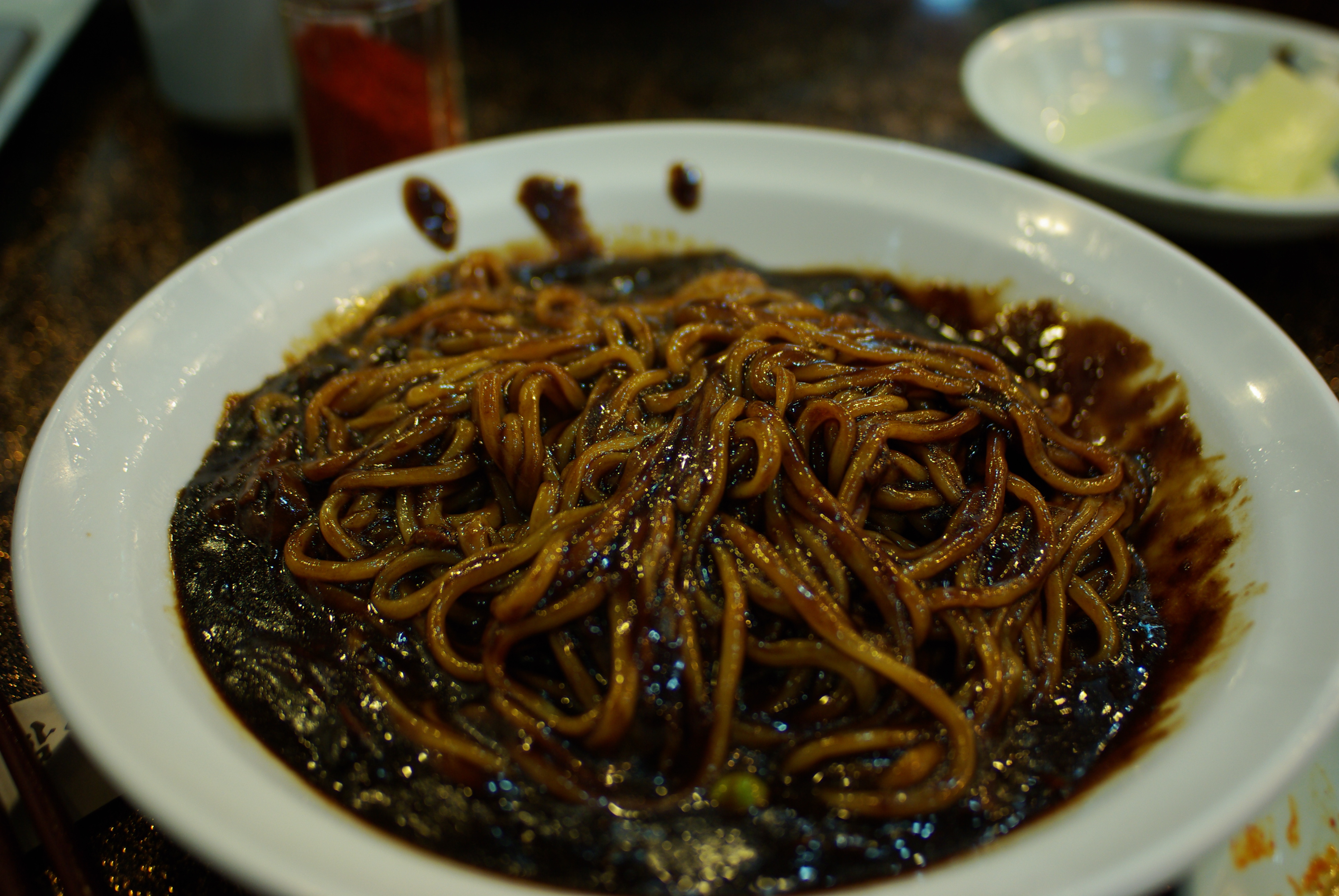 It was a massive mound of wheat noodles staring back at me in a dark dark brown sauce. I found out that it is nearly identical to the Chinese noodle dish zhajiangmian (fried sauce noodles) hence the teachers basically telling me it’s a Chinese dish that the Koreans adapted to claim it as their own. It wasn’t an ideal dish to eat with chopsticks, but I managed to eat it all. It wasn’t the prettiest thing, but the savory taste of the noodles was spectacular. It was semi-sweet in nature with a salty pork taste permeating every noodle laden mouthful. There were also onions in the sauce that kind of gave it a nice zing on occasion. On the side, there was the ever-present Kimchi, but I had some bright yellow, pickled radishes that I never had before. It actually tasted like a pickled cucumber back home. I didn’t touch the raw onion since I was at work, but the black fish sauce added a potent, semi-jarring element to the sweet noodle sauce. I also sampled some Korean deep-fried dumplings that looked like Chinese pork empanadas. They were fresh but semi-pedestrian. Of course, I washed it all down with a cup of Coca Cola. Hooray for globalization! This was definitely a cool look into Chinese-Korean relations in regard to food, and I’d probably get these black noodles again. Maybe I’ll do so during a trip to Incheon’s Chinatown. To be continued…
Where’s the Kimchi?
Hello once again to another edition of Mastication Monologues! Today’s review is about my brief encounter with one of the most American/global restaurants in the world in South Korea. I’m talking about the golden arches, the clown, or the corporation everyone loves to hate: McDonalds.

These cops aren’t clowning around
We had just visited the oldest Buddhist village in Korea, so naturally we topped off our field trip with a visit to one of the most controversial American exports. Politics and dietary qualms aside, I always am interested in trying what each country has to offer on the menu. Even though I was disappointed that they didn’t offer kimchi or rice for sides instead of fries, I decided to get a bulgogi (marinated Korean beef) burger and a choco-berry McFlurry for dessert (courtesy of my friend, Lauren. What a sweetheart).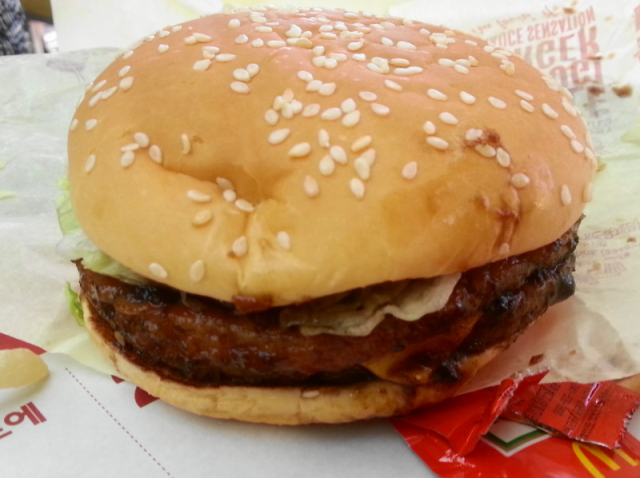 The bulgogi burger was quite interesting since it managed to capture the essence of the marinade used on the traditional Korean beef dish while supplementing it with a bed of lettuce and mayonnaise. It was a smooth and sweet barbecue rush to the tastebuds while the mayo gave it a nice tangy aftertaste.
 As for the choco-berry McFlurry, it tasted like a chocolate and raspberry milkshake. Even though I’m not the biggest fan of fruit and chocolate, it was acceptable. All in all, McDonalds in Korea was ok but not as crazy as I thought it was going to be. However, they do deliver here which is very different from the States.

Annyeong Haseyo, deliciousness!
Get Your Roll On
Hello to everyone out there in cyberspace. Still on the other side of the world and slowly but surely making my way through Korean cuisine. Today I finally tried the Korean version of sushi but without fish: Kimbap.
Originally, I thought that Japanese had the whole “stuff rice and a whole bunch of other ingredients into seaweed” market cornered, but as always, the Koreans manage to provide their own twist on a Chinese or Japanese staple food. We had just received our rolls of kimbap right after our physical for immigration, so it might have been the hunger talking, but I greatly enjoyed these delightful little rolls. The rice was sticky, and the seaweed wasn’t too tough. On the inside, there was a bit of radish, cucumbers, spinach, and some sort of ham (possibly Spam), but they all combined to form a burst of savory flavor. Surprisingly the meat didn’t overpower the vegetables, but in Korea, everything is seasoned or prepared to bring out the maximum amount of flavor. So overall, it was a good experience, and it is a good preview to my more adventurous culinary outings during my time here like eating live octopus and dog soup (yeah, they serve both of those things here). Stay tuned!
Red Bi Bim Bap, I Eat You Up
Hello or should I say, Annyeong haseyo to everyone out there! I have officially moved to South Korea, and I have already tried one of their signature dishes: dol sot bi bim bap. This blog post is going to be a bit different since you can basically get this dish anywhere in Korea, so instead I’m just going to provide my general impressions of the dish.

My precious
We just went to a really small place right by the hotel we’re staying in by the Incheon airport, but it was very welcoming. I decided to get the dol sot bi bim bap because I’ve had it before stateside, so I wanted to see how it would taste in the heart of the motherland (preview: delicious). If you’ve never heard of this meal before, it is a hot bowl that is filled with rice, carrots, bean sprouts, assorted greens, zucchini and cucumber to name a few ingredients. Plus, it had a raw egg on top that I had to stir along the sides of the pot in order for it to completely cook and mix among the veggies. I even gave it a healthy dose of gojuchang or red chili pepper sauce which supposedly was supposed to be spicy. Overall, I greatly enjoyed the bi bim bap since the vegetables like the cucumbers were fresh and flavorful. The rice was cooked to perfection with a slight crispiness thanks to the sesame oil used in the bottom of the stone dish, and the red chili pepper sauce had a slight kick to it but nothing too crazy for yours truly. I would liken it to maybe a Tapatio or Yucateco hot sauce level of spiciness. It was also accompanied with this very thin and flavorless broth that was filled with what seemed like green onions, but it was so bland that it was like drinking water. Oh well, at least I filled up on delicious rice and vegetables. I had my first Korean beer, Cass, which was not as terrible as I thought it was going to be after trying other Asian beers. I would liken it to a more flavorful Coors Light. So yeah, if you’re afraid of Korean cuisine, bi bim bap is a great starter dish.
Drop It Like It’s Hot Pot! Part 2
Hello again to part two of my journey through a hot pot dinner. Last post, I spoke about my very brief initiation to the hot pot experience with some fish roe and homemade soy milk, but it was merely a prelude to the symphony of flavors that I hope to fully convey through this amazing new post.

Behold the bounty
Before I even sat down at the table, I was advised to change out of my fancy new years eve clothes since hot pot could be messy. I didn’t think that I would have to dress down in order to eat a simple meal. When I sat down around the table, first I had to choose between a mild pot and a spicy pot which were on opposite ends of the table.
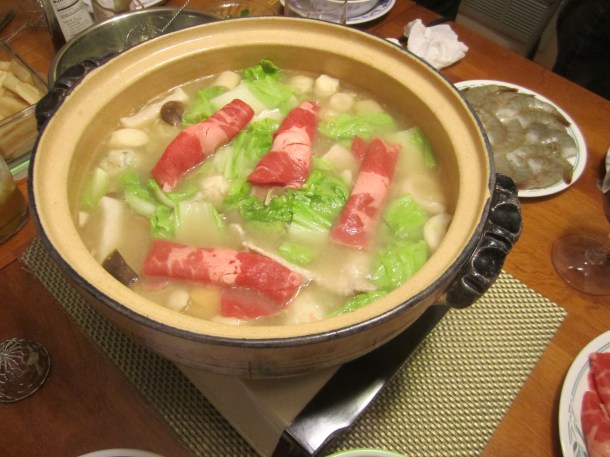
The more pleasant looking mild pot
If you don’t know me/haven’t read my previous posts like with the XXX spicy wing challenge, I will have you know that I am quite the chili head. When most people expect me to not be able to eat their spicy ethnic foods, I just smile and go about my business sampling their cuisine. This has led to me making plenty of friends down the road during my dining experiences. Therefore, I took my seat at the spicy end of the table where I quickly saw people throwing in strips of red marbled beef, healthy pink pork, large grey and pink shrimp, and striped bass into the ludicrously red broth. Later, they added watercress, taro root, and mushrooms since they apparently soak up the spice like a sponge with water. I found out that David’s family had brought back a packet of chili pepper native to the Szechuan region which is notorious for blazing hot dishes. While these meats were bubbling in the pot, we passed around small cups of cilantro, green onions, sesame oil, and soy sauce to put in our bowls. However, David informed me that it is tradition in Taiwanese hot pot to use a dipping sauce made of raw egg, green onions, and prawn paste. I wanted to do the real deal, so he made me my own bowl of dipping sauce for my first round of hot pot. It also helped cool down the smoldering hot meats and vegetables.

Raw egg sauce that would make Rocky proud
In order to get the contents of the pot into your bowl, you are supplied with mini metal wire scoops that look like small butterfly nets. Thankfully everyone was really helpful with supplying me with my food while I was attempting to get a hang of my chopsticks. Since I’m moving to Korea soon, I made it my mission to eat the entire meal with chopsticks, and I finally managed to do it! My first bowl consisted of fish balls, beef, green onions, cilantro, and prawn paste. The fish balls were made with a semi-firm dough which was dotted with peas and encapsulated the savory fish inside. The raw egg sauce provided a nice onion/soy flavor to the strong fish flavor. The beef piece was tiny but succulent, and the prawn paste gave the bowl a nice surf and turf vibe.
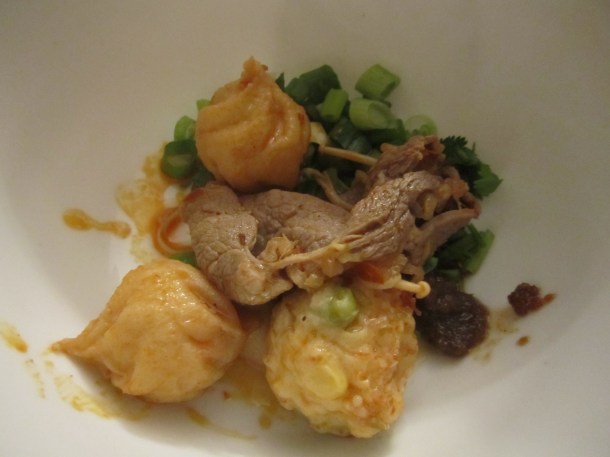
Bowl 1
The second helping I ate contained some striped bass, beef, pork, fish roll, watercress, and mushrooms. The bass was stewed quite quickly, but it literally melted in my mouth like some sort of heavenly piece of fish butter. As for the beef and pork, I was a bit flummoxed as to what to do with these large pieces of meat that were cooling off in my raw egg sauce since we didn’t have forks or knives. Thankfully my friend David said it was cool for me to just go at it, and I wholeheartedly enjoyed each juicy and spicy slice. The more elongated fish roll was not as satisfying as the ball dumplings, but it seemed to be stuffed with a stronger tasting type of fish. Plus, I had thought that the mushrooms were initially noodles since they were so long and thin, but in reality they were winter mushrooms. The cabbage was also delicious. Even though it was put in last, it contained so much chili flavor that it was like a warm, non-fermented version of the popular Korean dish kimchee.

Bowl 2
My third bowl (in hot pot, you eat a lot slower and savor the smaller portions) consisted of prawns, mushrooms, watercress, taro root, and pickled radishes. The prawns were still in their shells and with legs, but I took a mighty bite into their pink bodies to be welcomed by a explosion of flavor. The mushrooms were a non-factor, but the watercress and the pickled radishes had a similar chili infusion like the cabbage. This bowl was a bit trickier because the radishes were quite slippery after swimming around in the hot pot, and the taro root kept on disintegrating when I would grab at it with my chopsticks. I finally managed to get both into my mouth, and the taro was more interesting because texture-wise it was like a semi-mashed potato but possessed a more earthy flavor. Once I finished that bowl, I was faced with something that reminded me of a type of pizza they serve at Sbarros.

Bowl 3
It was basically green onions baked inside bread that was coated in sesame seeds and had a crust. Perhaps this is what Marco Polo brought back to Italy from China. Pizza origin theories aside, this was probably my favorite part of hot pot. The bread was golden brown and crisp on the outside while soft and pliable on the inside. I’m a huge onion and sesame seed fan, so I was in heaven biting into the verdant interior of this onion bread and experiencing the mellow sesame seeds combining with the strong green onion flavor. It also went really well with the raw egg sauce as a sort of replacement for garlic butter or marinara sauce.
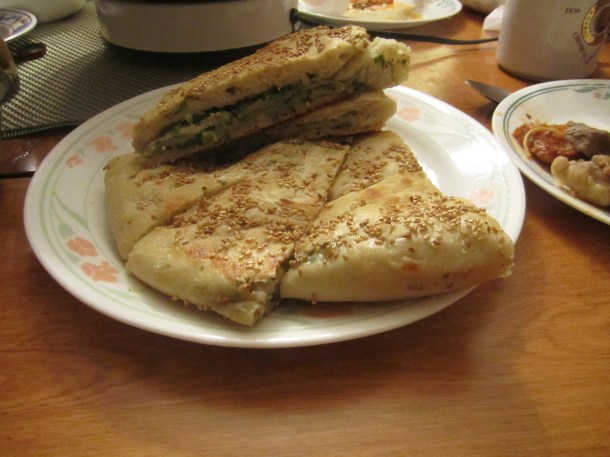
The original pizza?
After eating a couple of slices, I limped to my fourth and final bowl which had some of the aforementioned ingredients along with a pink fish dumpling. It was like the other fish dumplings but had a slightly sweeter, more tuna-esque taste.

Bowl 4
However, the fourth bowl was unlike the others because I had asked David why we had spoons on the table. He then proceeded to ladle in the devilishly red pepper broth from our spicy hot pot into my bowl . This lava in my bowl was pretty spicy but tolerable for me. Once I finished eating this molten ambrosia, my mouth felt kind of funny, but it turns out that the Szechuan pepper causes slight numbness along with burning in the mouth.
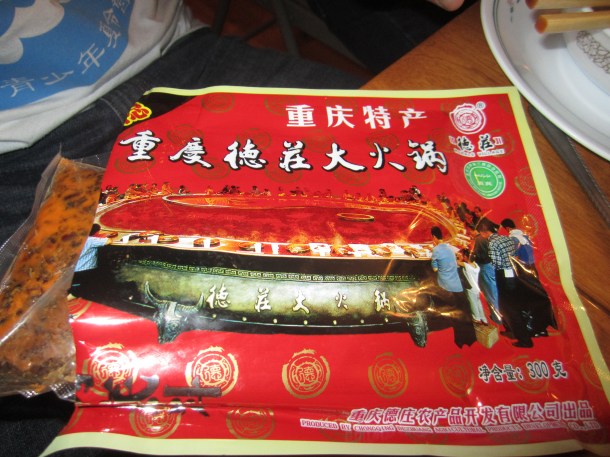
The chili flavor is as big as the pot on the package
Even though I couldn’t feel my mouth, it was a sign that I had just experienced an authentic piece of Chinese culture, and I am thankful that David and his family welcomed me into their home to take part in this very entertaining tradition. Hope you and everyone else has a happy and healthy new year!
Drop It Like It’s Hot Pot! Part 1
Hello everyone out there and happy new year! Today’s post I will be doing something that is a bit different from the typical Mastication Monologues that you all know and love. Instead of reviewing a restaurant, I will be talking about a certain type of cuisine that I have never had before but have always wanted to try: hot pot.
Now I do love my Panda Express and other types of insanely Americanized Asian food including the ubiquitous fortune cookie and orange chicken, but I always have found authentic Chinese cuisine to be quite interesting in terms of how many different types of ingredients are used and variations there are on dishes depending on which city you are in. Hot pot is no different. To ring in 2013 right, my friend David invited me over to his family’s hot pot dinner, so I naturally was honored to be brought along for this culinary adventure.

My gracious hosts, Mr. and Mrs. Wu, and I
I had already some basic background knowledge about this type of meal going into it, but I quickly found out that hot pot is much more complicated and nuanced than just sticking random vegetables and strips of meat into a boiling pot of water. Before we even sat down, I was immediately faced with my first new snack of the evening, congealed roe with slices of daikon radish. I’ve had daikon radish before from sushi platters, but I have never consumed fish eggs in any form. Upon first glance, I was surprised that the roe looked like small woodchips instead of the more recognizable orange or black caviar pearls. I ended up eating the roe on the radish like a slice of cheese on a Ritz cracker, and it was an interesting blend of textures and flavors. Biting through the fish roe felt almost like eating a piece of hard cheese that had elements of beef jerky and smoked fish coursing throughout its semi-smooth interior, and the daikon left a light and crisp impression on my palate. I helped myself to a couple more servings of this fish dish, but I was quickly whisked away to try a new drink.
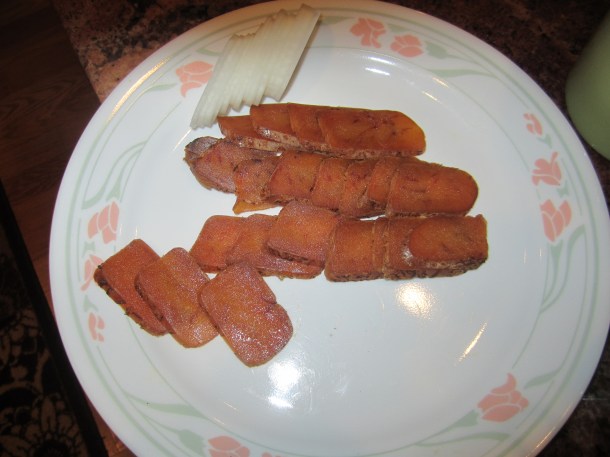
The radish is part ninja blending into the top part of the plate
Even though I had a Blue Moon in my hand, my friend David asked me if I’d like to try a homemade version of soy milk. Naturally, I said, “Bring it on!” He led me over to the kitchen where he poured out some pastel green liquid in a cup for me. I had initially spied these containers of green goop thinking that it was going to be some sort of sauce for meat, but boy was I wrong. So I took a sip of the soy milk, and it was quite thin in consistency with a mostly neutral taste and slightly grassy undertones.
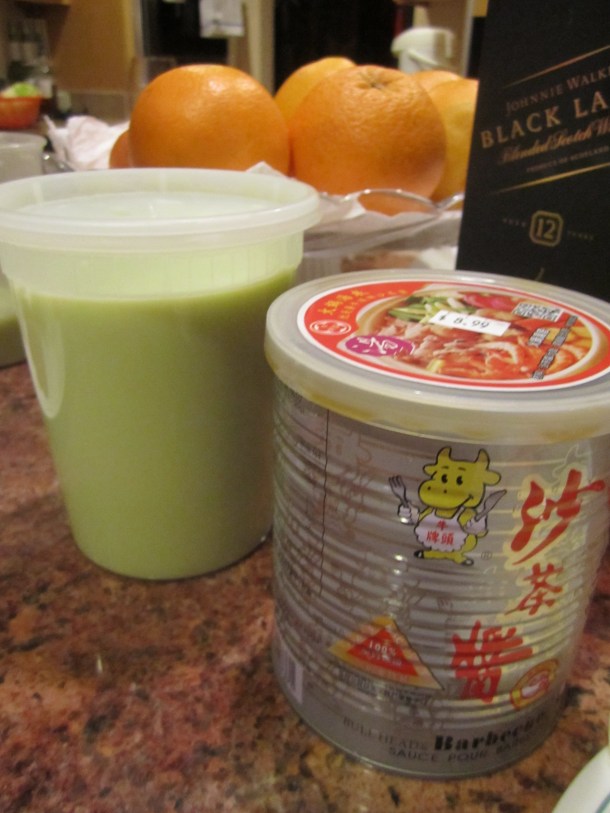
Soy milk on the left, prawn paste on the right
However, David kicked it up a notch Ming Tsai style by adding some honey to this Chinese drink, and it made it taste sort of like milk with sugar in it. Plus, the highly viscous honey added a bit more body to the beverage which made it more filling and complimented the spicy three-ring circus that was to come when we finally sat down for the actual hot pot where I managed to finally use chopsticks for an entire meal, eat Chinese pizza, and cheers to the new year…but you’ll have to wait for the next post to hear about the second part of this delectable dinner!
I Fell Into a Burning Ring of Fire
Hello to all out there on the interwebs! Sorry for the immense amount of lag time between my last amazing post and this one, but I have been enjoying the last fleeting moments of my summer before going back to the grind of graduate school. Anyway, I’m going to be telling you today about a food adventure I had this past weekend in Chinatown in Chicago. The place in question is called Lao Sze Chuan located at 2172 South Archer Avenue Chicago, IL 60616 which is part of the new Chinatown square which is a bit further north of the older Chinatown.
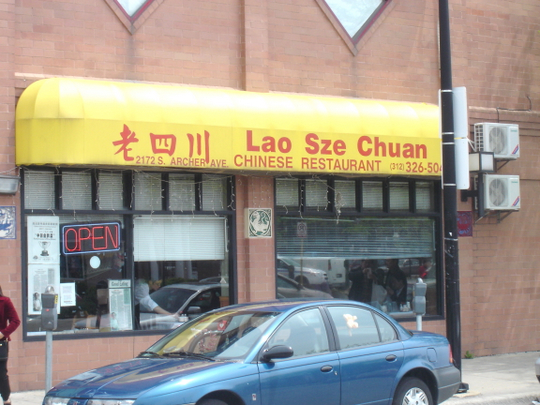
My friend invited me out to lunch in Chinatown, and she asked me whether I wanted Dim Sum or spicy food. Now, I had already went to a Dim Sum restaurant (check out one of my previous posts if you haven’t already!), so I went with the spicy food option. Apparently, Lao Sze Chuan is one of the most popular restaurants in Chinatown, so naturally there was a wait. However, it didn’t take long for us to get a table. Upon opening up the menu, I was greeted with the story of the restaurant and all of the famous people who have dined there in the past including one Bill Clinton. Anyway, there were plenty of options with spicy, chicken, beef, seafood, and traditional Chinese sections to name a few. In the end, we ended up going with an order of Ma Po Tofu, LaLaLa spicy chicken pot, and double fried sliced pork with cilantro Jiazhou style.
I’ll start off with the Ma Po Tofu since I’m going to be up front with my dislike for tofu (sorry veggie readers).
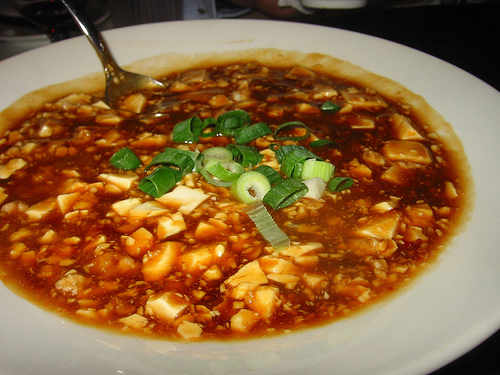
A delight for veggies
However, I still wanted to try it since I never pass up an opportunity to try something new. It was served in a brown, pork based broth along with chopped up red chilies, and the small tofu cubes looked like tiny spicy icebergs bobbing in the Arctic ocean. With my small sampling, there was no arctic chill with this tofu as it was very soft and disintegrated in my mouth instantly with a brief spicy flourish. If you’re a vegetarian, I’m sure you’d be more of a fan of this dish, but it was dead last during my trip to Lao Sze Chuan. Moving on to the LaLaLa spicy chicken pot, I am a sucker for picking out food that has a funny name hence my choice. Thankfully, I did not regret it at all as it arrived to our table on a mini-grill that kept the chicken nice and hot. The perfectly grilled chicken was marinated in a red chili sauce and came with diced red and green peppers and onions. It was bringing that heat that makes me sweat which let me know that I was in an authentic Chinese restaurant that didn’t pull any punches with their use of spices. Even though some of their food might be hellishly spicy, it keeps on bringing people back since every table in their restaurant was full during our four-hour visit, but I digress. The final choice, the double fried sliced pork with cilantro Jiazhou style, was just alright. It consisted of thinly sliced pieces of fried pork along with blackened red chilies, whole stalks of marinated cilantro, and celery.
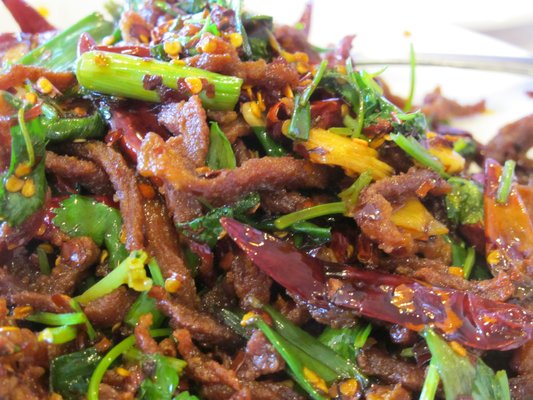
Definitely pigged out on this dish
The only downside was that the cilantro was a bit too overpowering and left a strange, bitter aftertaste. Plus, the fact that the pork was dry did not go well with so much cilantro. However, when I isolated the pork, it was very crispy and filled with bacony goodness along with some spicy highlights.
So as a whole, I would rate my visit to Lao Sze Chuan as very enjoyable and would recommend it to anyone looking for authentic (read: very spicy) Sichuan cuisine along with a slice of one of Chicago’s most famous/oldest neighborhoods.

Looks Like Hell Can Freeze Over…Sort Of
Hello all. Welcome to another installation to Mastication Monologues. I was looking over my blog as of late, and I was seriously slacking the past couple of months in terms of keeping up with my culinary adventures around the world. Therefore, I am backtracking a bit, so bear with me. Today I would like to tell you about an interesting restaurant called Chino Latino located at 2916 Hennepin Avenue South Minneapolis, MN 55408. It is located in a very nice part of the city, and there is ample street parking.

The fancy exterior of the restaurant
My girlfriend told me about this place awhile ago, so when I came up to visit we went there for dinner. The decor is eclectic with different types of Latino and Asian artwork covering the walls of the entrance, i.e. papel picado from Dia de los Muertos and Thai shadow puppets . Some of the pictures were borderline creepy, but I was here for the food, so I was ready to get down to business. The interior of the actual dining room is two levels, but I did not care for the lighting. It was too dark which made reading the menu a bit of a chore. There’s a difference between mood lighting and trying to save on the electric bill. Either that or I’m getting too old as I approach my quarter-life crisis. Yet I digress once more, back to the food.

The interior of the restaurant
Even before I saw the menu, I knew that I was in for a treat as I saw that they had my favorite hot sauce on the table: Yucateco Habanero salsa verde (Warning: this sauce doesn’t mess around with people who think Pepper Jack cheese is spicy). Our waitress was very helpful in explaining to me some of the different menu items, and the overall concept of their establishment which aims to deliver street food from countries which the Equator runs through. As I looked over the different entrees, I was torn in many different directions by the different curries, satays, tacos, and noodles. However, I was won over by a seemingly simple, borderline appetizer, dinner: Habanero Hell Poppers.
One of the reasons why I chose this option from all of the others was the fact that there were three mini sticks of dynamite on the menu around the poppers. Now, normally I take these “heat measurements” with a grain of salt and a good-natured chuckle since they are geared towards people who are not used to eating really spicy food. However, since we were in an Equatorial restaurant I knew they’d be bringing the heat like their geographical location namesake, and I have a bit of a daredevil streak in me when it comes to food. So when I ordered them, the waitress looked at me like I was a madman. Always a good sign that you’re ordering a meal with some real cojones. They came out on a medium-sized platter with four large poppers, a slice of lime, and a strange cup filled with an orange substance. Upon closer inspection, there was a paper that came along with the food that in so many words states that if you complain about how spicy the poppers are, you’re going to be made fun of by the staff at Chino Latino and your friends. Challenge accepted!
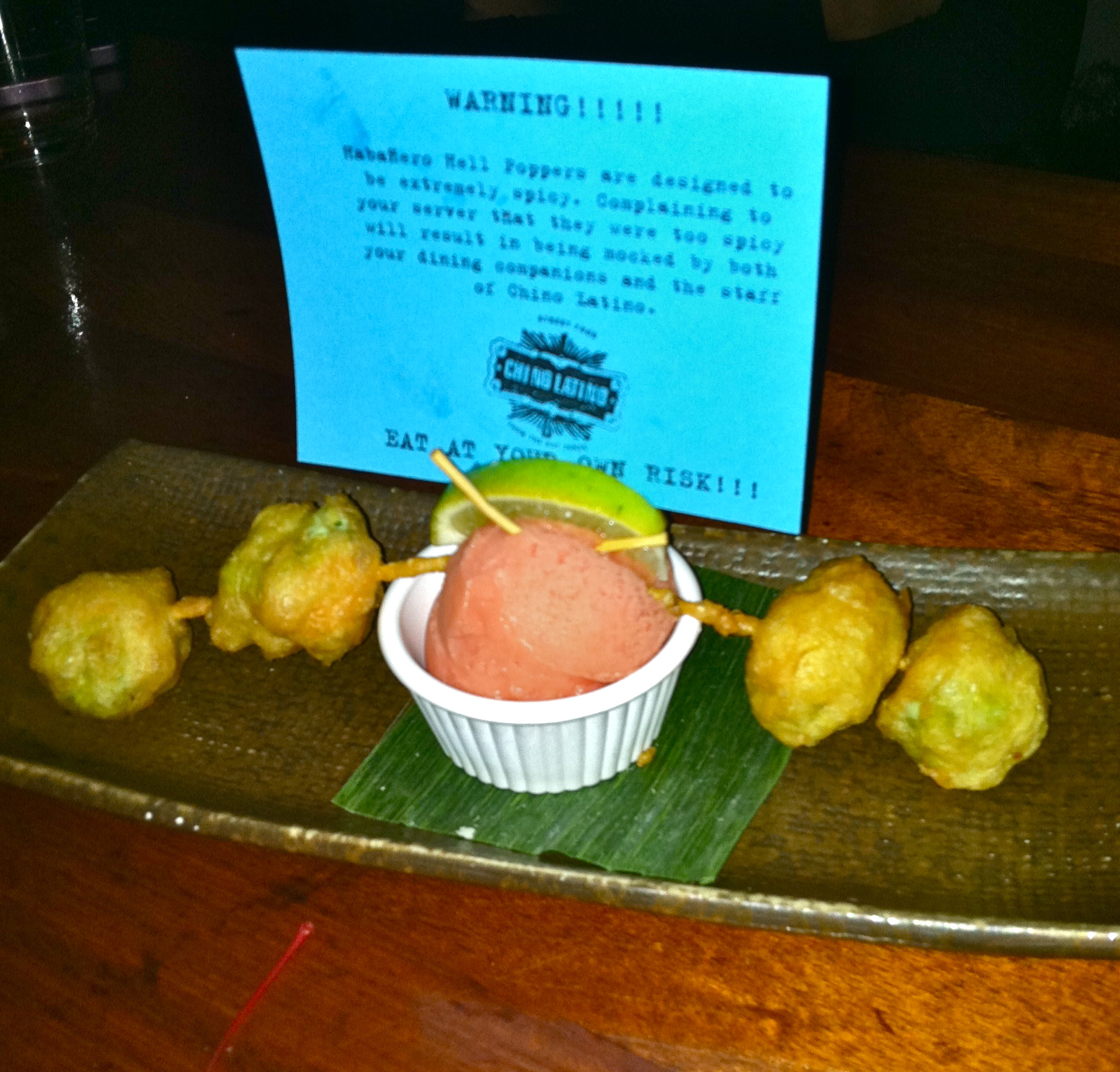
Great Balls of Fire!
I tucked into the poppers with gusto, and I finally found a spicy meal that lived up to all of the fanfare. First off, it was hot temperature-wise. The breading was light and airy and not greasy. The Habanero peppers on the inside were fresh, and the Habanero infused cream cheese was hotter than napalm. So, I would definitely let them cool off before you start wolfing them down. The first one really started with a bang of spice along with a slightly acrid taste that comes along naturally with the skin of the Habanero. By the time I finished the fourth and final popper, I definitely had the spicy food sweats; they’re not as scary as meat sweats but are definitely more painful. However, I then tried the orange substance in the small ceramic cup, and it turned out to be blood orange sorbet. It was like a plane dropping water on a moderate forest fire. The embers were still smoldering, but the blaze was extinguished. The actual sorbet was delicious with a light, even texture and a rich blood orange flavor.
So if you’re a fan of various types of Latino, Southeast, or Caribbean foods, check out Chino Latino in Minneapolis. However, if you’re looking for a memorable dinner, try the Habanero Hell Poppers because as Kurt Cobain said, “It’s better to burn out than fade away”.


Three’s Happiness Too
Hello to everyone out there in the blogosphere! It has been a long time since I last posted on Mastication Monologues, but I have finally emerged from the madness is grad school (actually I’m only in the eye of the storm right now) to bring you a new post about a type of cuisine I have never truly experienced: Dim Sum.
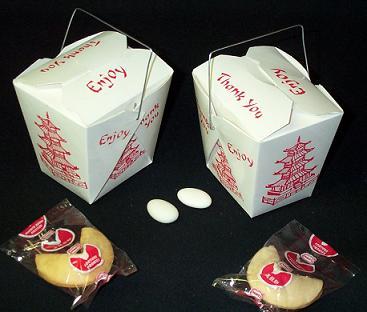
Mmm So delicious and MSG laden
When many people proclaim that they enjoy “Chinese food” and then proceed to rattle off such favorites as General Tso’s chicken, orange chicken, or sweet and sour chicken, this culinary adventure I embarked on was the furthest from these Panda Express concoctions. Instead, my good friend David finally fulfilled a promise he made to me a long time ago that he would take me out to an authentic dim sum dinner, and yesterday we finally made it happen.
We ended up making our way d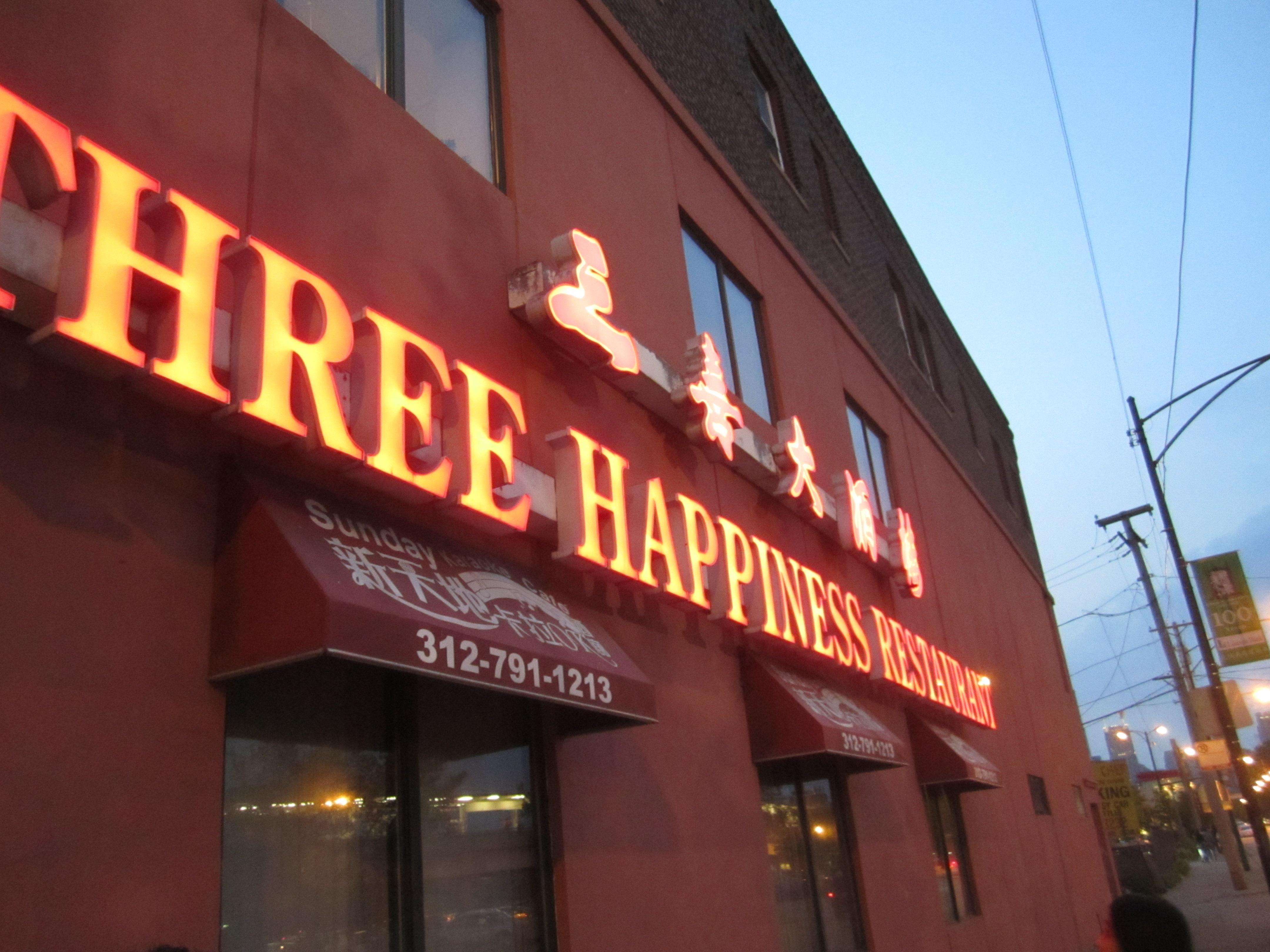 own to Chinatown to Three Happiness Restaurant located at 2130 South Wentworth Avenue, Chicago, IL. There is parking available nearby, and the establishment will validate your parking which eliminates a gigantic headache for anyone who has tried to find parking around the city. It was an interesting/surprising coincidence that we were actually going to this specific Three Happiness because I had visited it on numerous occasions when I was just a young little spring roll and yet never had Dim Sum but rather the Pu-Pu platter (oh immature humor).
Poop jokes aside, we were promptly seated in the spacious and very clean dining room. The wait staff was very helpful initially with providing us with drinks. I say initially due to a minor incident later on in the meal that somewhat soured the experience, but spectacular food can always make up for service problems. Now, the only previous experience I had with Dim Sum was in the basement of a YMCA during college with the Chinese Student Association, so I only knew of two or three types of plates you could order at Dim Sum. However, my friend David explained Dim Sum perfectly by saying that there are many options to sample yet they’re portions that are just enough to share with friends kind of like tapas in Spain. It was the perfect culinary storm as my love for sampling random foods combined with my affinity for tapas to create a wave of mass consumption that laid waste to all dumplings, cakes, and small watercraft on the table (OK, maybe not that last one).
The first round of Dim Sum consisted of turnip cakes, taro root puffs, sesame buns, and shrimp wraps.
Our waitress also provided us with a small bowl of chili sauce that looked very dangerous which made me happy. I say happy because I love spicy food with a burning passion. Unfortunately, often times I am disappointed by dishes in more mainstream restaurants that claim to be spicy but in reality are merely smouldering coals instead of raging infernos (i.e. any “spicy Southwest burger/spicy Asian stir fry/blazing chicken wings”). However, realizing that I was in an authentic Chinese restaurant, I knew that they would be bringing the heat especially if I wanted to go Sichuan or get my favorite spicy mustard that makes me feel like I have Rocky Balboa inside my sinuses taking a left hook to the back of my nose. As much as I would like to glorify the wonders of insanely spicy foods, I’m here to write about the Dim Sum. I had already tried turnip cakes before, and the ones here were alright. They were baked with a thin flaky crust and did not have much flavor aside from some potato-esque hints in the aftertaste.

The suspects in question going clockwise (turnip cakes, taro root puffs, shrimp wraps, and sesame buns)
The chili sauce definitely kicked them up a notch, Emeril-style BAM!. The taro root puffs interested me as soon as I saw them on the menu, and I was not disappointed. They looked like empanadas sporting very stiff Jheri curls, and biting into one felt like munching on a pine-cone but without the sap/pain and instead a delicious deep-fried flavor. The inside surprised me the most where there was a meat and black bean concoction that was piping hot and quite savory with a flavor that could be most likened to a traditional meatloaf sans ketchup. The shrimp wraps were brought to our table and had a dark brown fish sauce poured over them to provide more flavor, and it nicely complimented the cooked shrimp sleeping underneath their tender rice dough sheets. I saved the best for last: the sesame buns. For some reason, a lot of great food comes in orb form like handmade doughnut holes or even pão de queijo(cheese bread) in Brazilian cuisine, and these sesame buns are no different. They are roughly the size of a golf ball, coated in sesame seeds, and are firm with a semi-sticky texture when you bite into them. The inside also contains a dab of red bean paste, but before you ready your barf bags, fickle eaters, I have to let you know that the paste actually carries a semi-sweet, almost vanilla wafer quality to it. Satisfied with my first round of Dim Sum, we had a second helping.

Fried Calamari
The second round of Dim Sum delights entailed fried calamari, shrimp toast, beef and pork dumplings, and chicken feet. My friend David order the fried calamari with sea salt which made me a bit wary since calamari seems to be more of a hit or miss dish from my experiences. However, I was pleasantly surprised as the squid was tender and the batter was light and was adequately assisted by the sea salt to bring the squid back to its briny roots. I did not know what to expect with the shrimp toast which led me to be pleasantly surprised when it confirmed some of my suspicions with a twist. The shrimp was served whole on top of a slice of bread (like I assumed), but then the whole piece was completely fried which naturally made everything taste fantastic. The beef and pork dumplings were nothing too special with the latter being encased in a thin casing of rice dough and the former looked like meatballs nestled in small pieces of cabbage that actually were chartreuse pieces of dough. The presentation was very nice, and both of the meats were adequately seasoned and in harmony with the starch. Once again, the last Dim Sum choice was the most interesting: the chicken feet.

A quartet of delights going clockwise (beef dumplings, chicken feet, pork dumplings, shrimp toast)
Throughout my food expeditions both in the States and abroad, I have eaten various parts of animals, but I had never tried chicken feet. David informed me that in Chinese, they are literally referred to as “Phoenix talons” (talk about a good marketing scheme through linguistics!), and thankfully they lived up to their fancy name. They were baked in a soy based sauce that had some sweet elements to give the meat a slight barbecue flavor with prominent black pepper overtones. The actual meat was juicy, falling off the metatarsal, finger-lickin’ good. However, contrary to American customs of deboning any type of meat fit for human consumption (pink slime aside), the Chinese and many other cultures leave all of the bones in their meats to contain the various flavors obtained through the marrow and minerals. Ergo, beware of the tiny bones lurking in the feet!

Jello Jigglers eat your heart out
The final movement to our Dim Sum symphony ended with mango pudding which was less like Jello and more like a tropical fruit version of flan without the pool of caramel. Unfortunately, there was a mix-up with our order since we wanted BBQ pork buns for the end of the meal, and they said they were on the way. However, we had to wait at least twenty minutes before they realized that they had made a mistake which kind of put a damper on the experience. Nevertheless, they eventually brought out the BBQ pork buns, and they were well worth the wait. The dough was thick and pliable, and the pork was neatly cubed and lodged within the dumpling surrounded by a sweet bbq sauce that most likely had a molasses base.
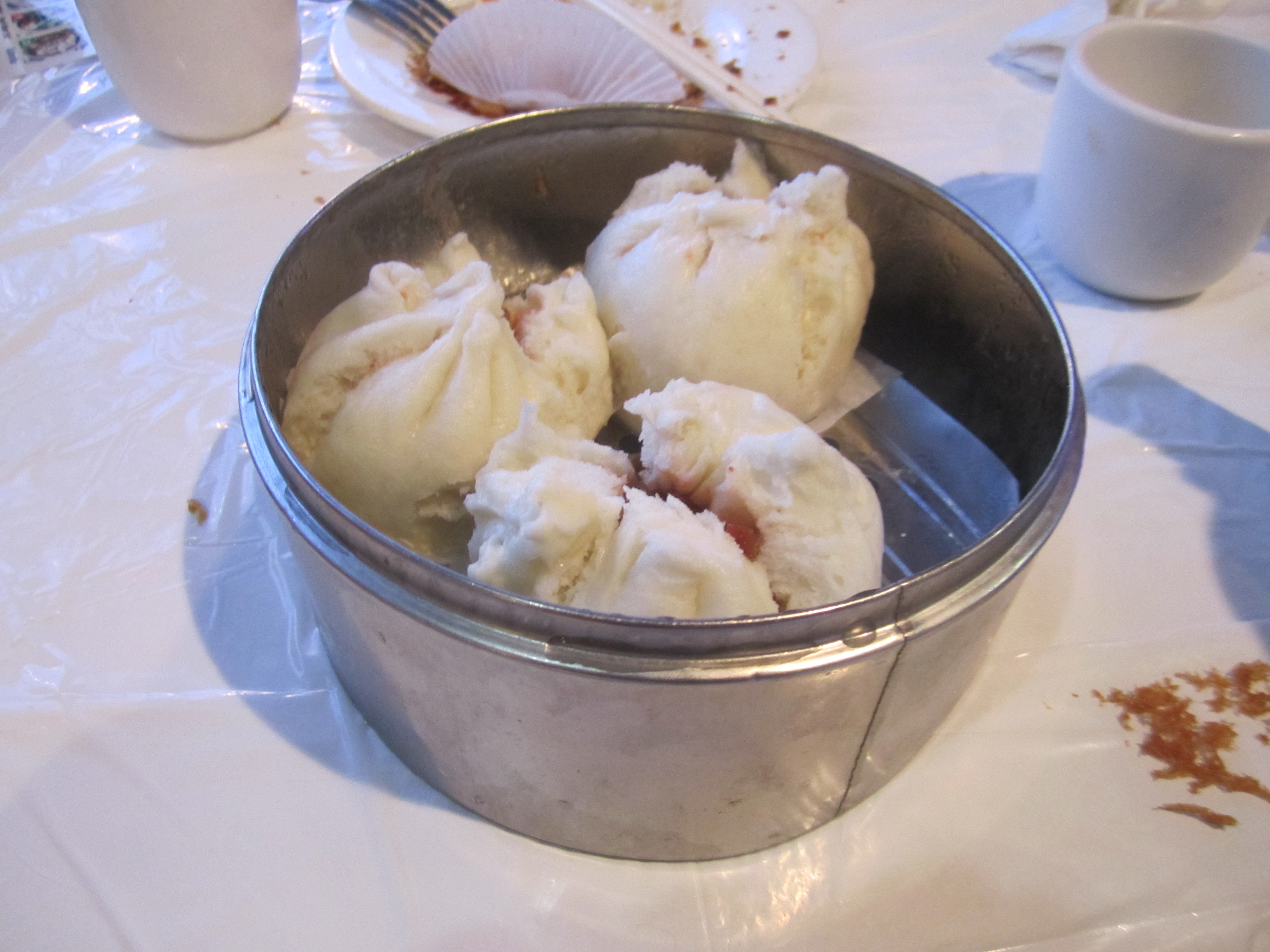
Definitely pigged out on these pork buns
In the end, I was greatly satisfied with my Dim Sum experience at Three Happiness. If you are tired of the same old egg roll and fried rice dinner at your local Chinese restaurant, go outside your comfort zone and try some Dim Sum if you have the opportunity to do so. My fortune at the end of the meal definitely came true, and I hope you find your own new adventures and foodie pleasures!

It came to fruition!


 Mastication Monologues
