Tag Archives: Chicago

Getting Our Just Desserts

Posted on

Today’s post on Mastication Monologues is one of my sweetest and over the top posts I’ve ever written!  If you have a sweet tooth that borderlines on a diabetic condition like I do, then you’re going to love this entry.  Last weekend, Janice and I experienced the final part of my one year anniversary gift that she got for me:  two tickets to Chicago’s Dessert Fest.  What a sweetheart!

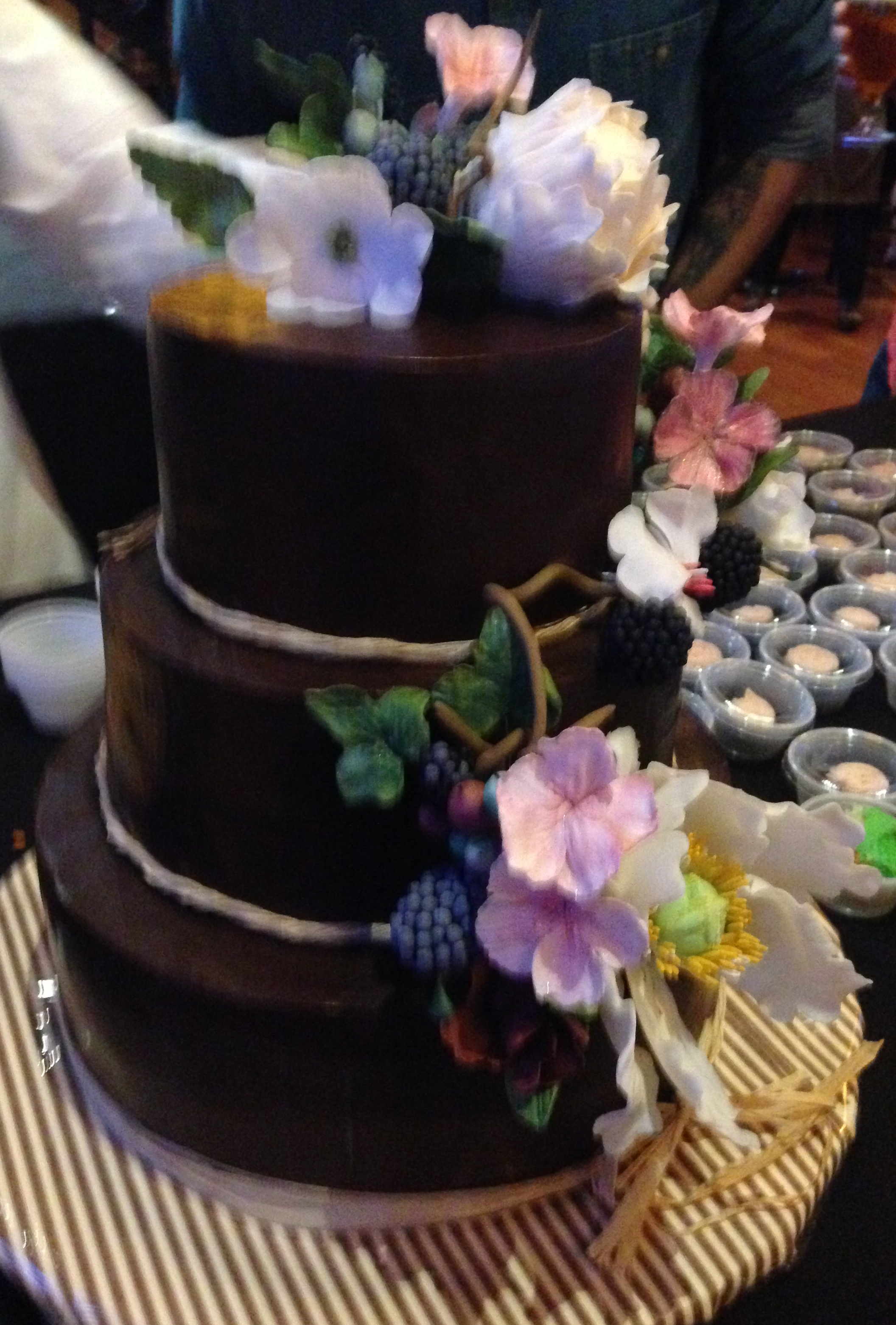
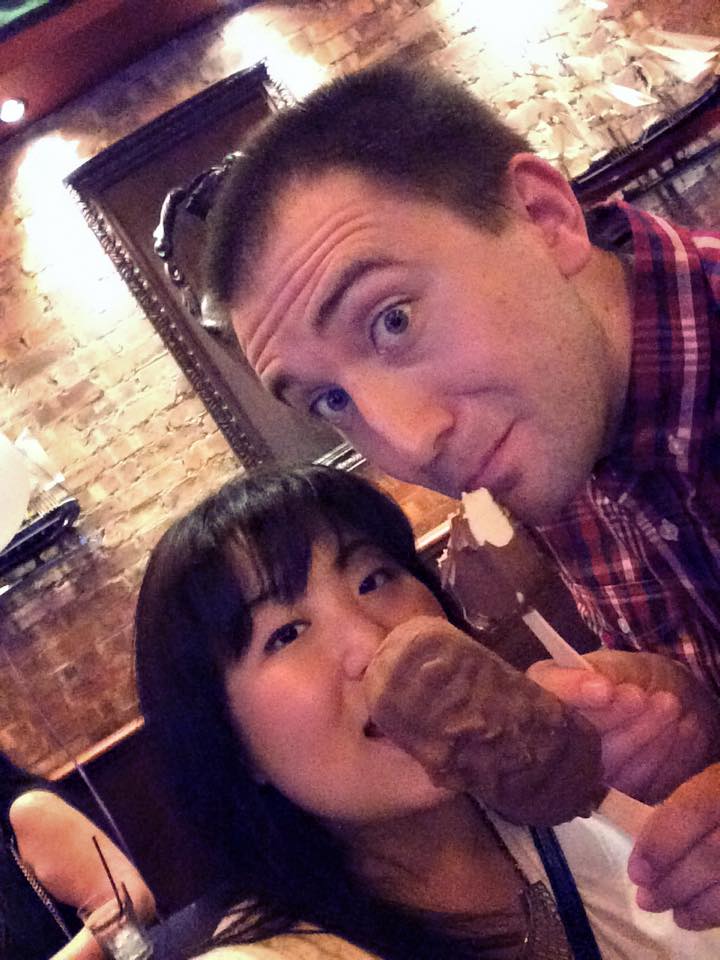
When we got to the venue, River North’s John Barleycorn and Moe’s Cantina, there was already a line out the door and an accompanying mob once we got inside.  Everywhere we looked, we could see plenty of delicious treats being enjoyed by the guests.  While we weren’t swayed by the sundae bar that seemed pretty weak for an epic event like this one, we were more interested in the cake table with desserts made from Fabiana’s Bakery.  Not only did it boast a wonderfully delicious, buttercream-coated, cyclops rainbow cake that won “Most Craveable Dessert”IMG_6451 but also a decadent chocolate ganache wedding cake served in plastic shotglasses.IMG_6452  We definitely got crunk on those nuggets of rich dark chocolate goodness.  We quickly moved our ways through the munching masses and were confronted with a barker of sorts who bellowed, “WHO WANTS FREE ICE CREAM?!!  THIS IS DESSERT FEST!!!!”  I didn’t know King Leonidas worked dessert fairs in his spare time. Naturally, Janice’s and my hands shot up because we’re all about the cold stuff.  He hooked us up with free Blue Bunny turtle bars that was a combo of pure vanilla ice cream coated in a crunchy milk chocolate shell with the occasional hunk of pecans and caramel.  IMG_6454Simply the best, bar none! 11188221_10105701925746959_7766073886550940910_n We managed to snag a sample of macarons from a table that was mobbed with people.  I snapped up a chocolate one and a passion fruit one while Janice got a raspberry one.  They were perfect from their semi-sticky middles to the airy yet firm cookies.

Chocolate and passion fruit macarons.

Chocolate and passion fruit macarons

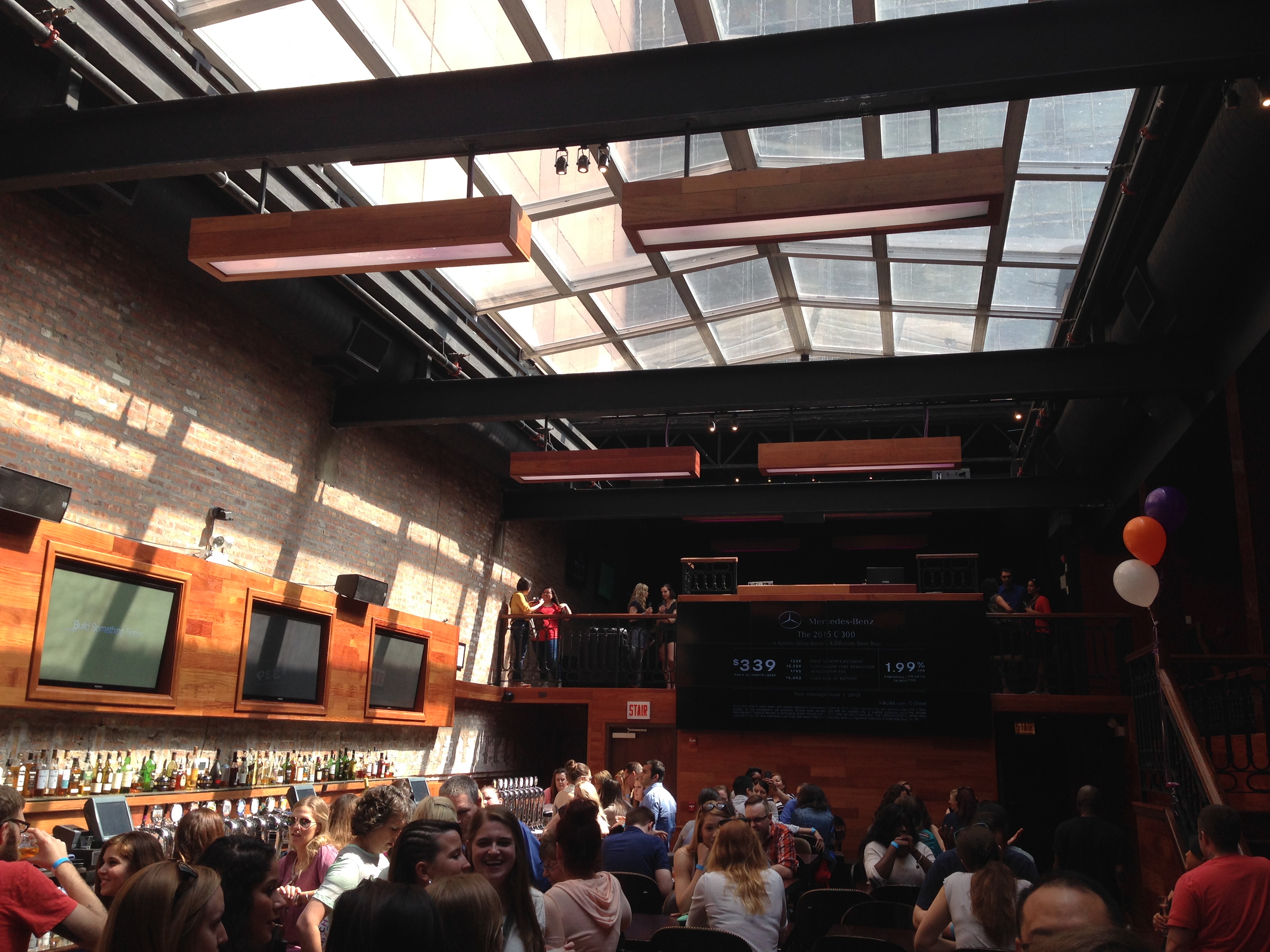
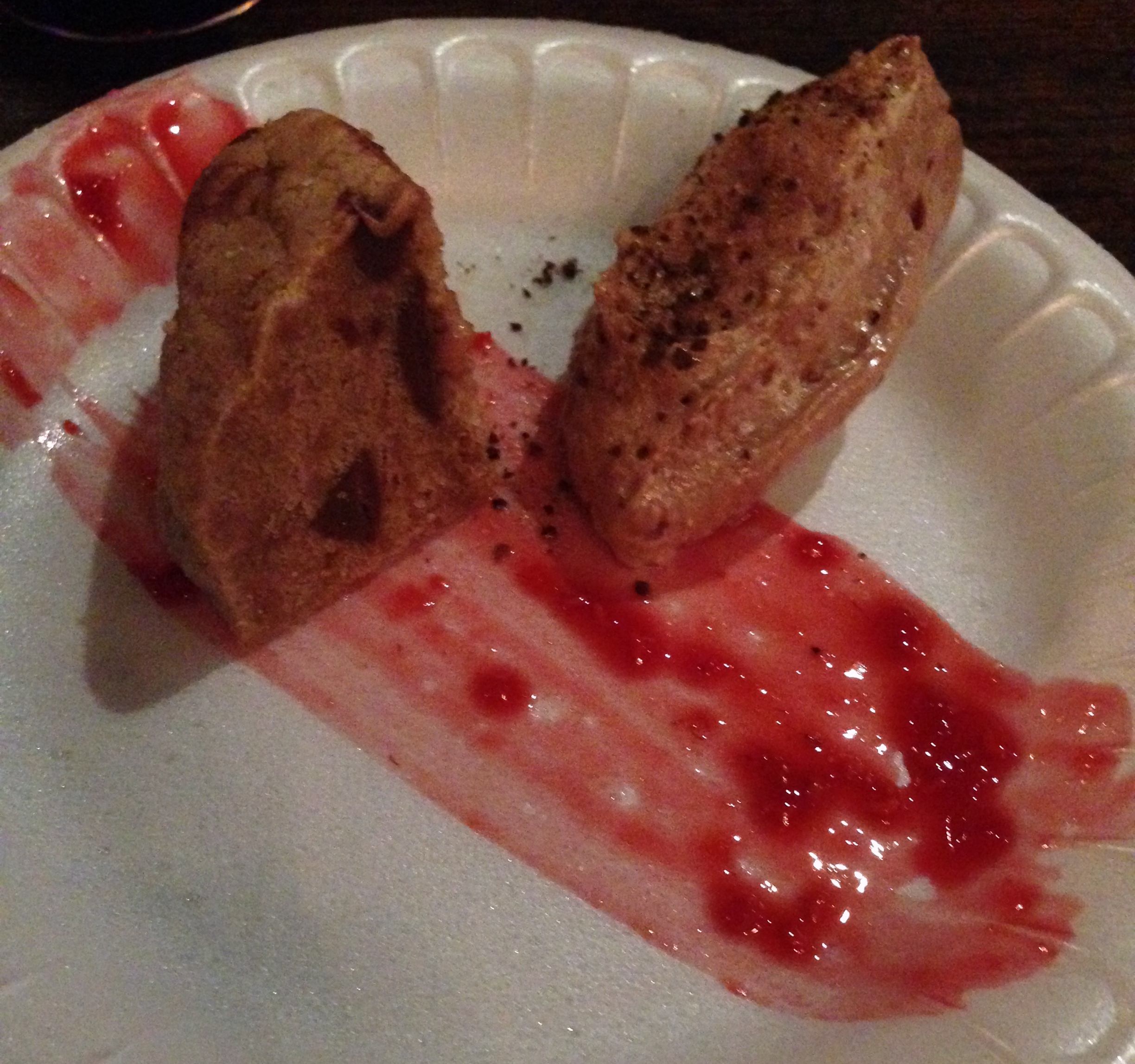
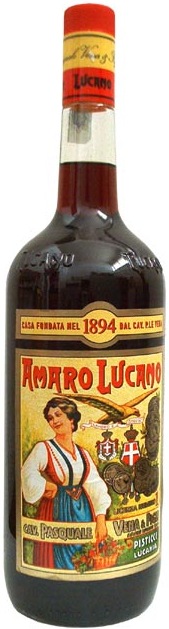
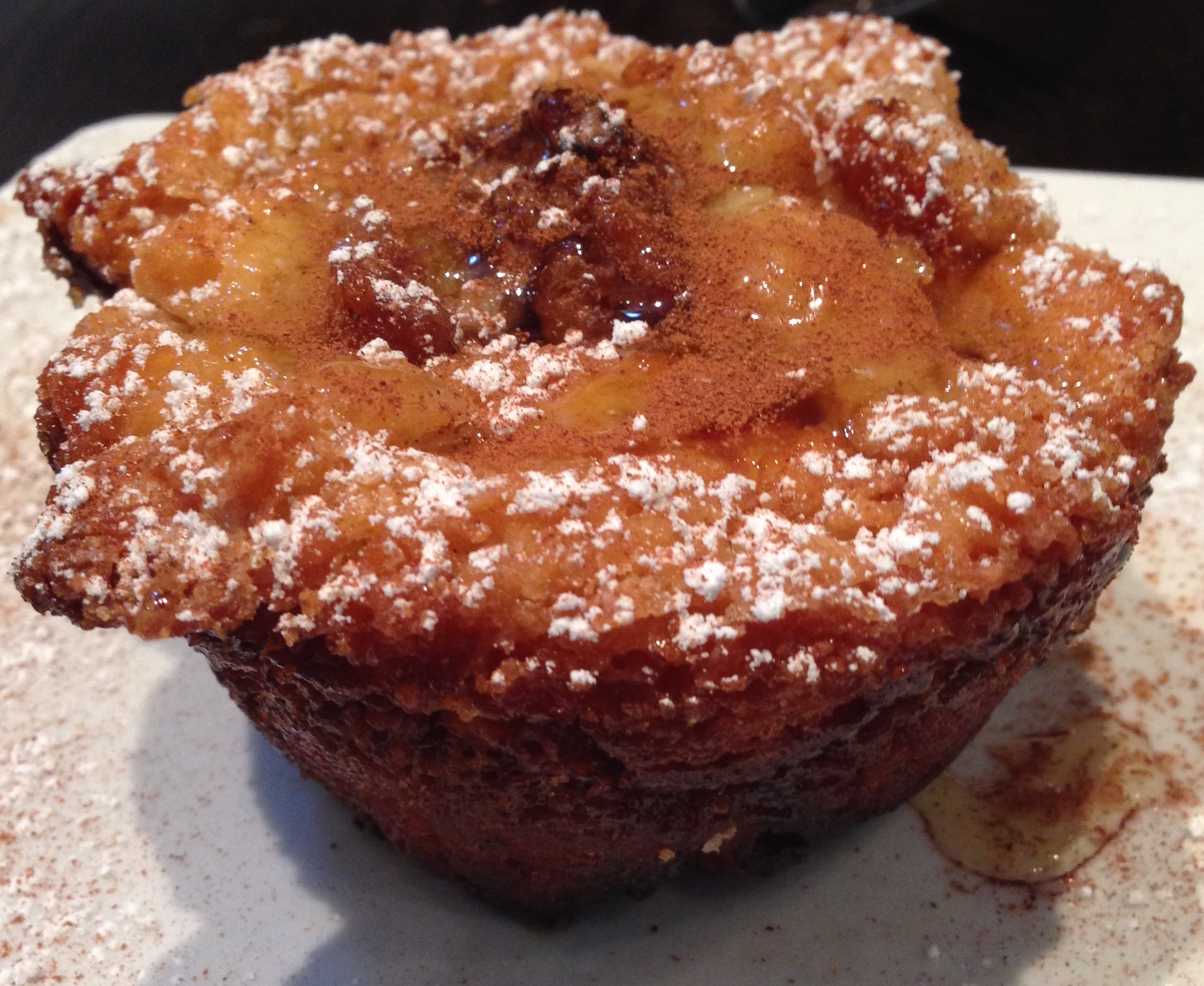
I personally felt the raspberry combined with the chocolate one was the ideal combination, but the passion fruit was a bland letdown.  We made our way upstairs to the sun-splashed second floor of John Barleycorn where they were slinging champagne and white wine with banana creme pie samples. IMG_6457 I got a glass of bubbly while Janice and I shared a nibble looking out over the crowd by the bar while lounging on a leather couch.  The banana creme pie reminded us of a pina colada with a mix of coconut and cream, but the champagne made it even better.  We made our way down and over to Moe’s Cantina where an entire room was just waiting for me to be explored. IMG_6466Right by the entrance, they had an open kitchen where I saw cooks preparing some sort of cup dessert with cream.IMG_6459  I didn’t have time to spare.  I was on a mission.  I visited each booth and brought back my loot to our table.  What a spread we had once I was done doing my recon mission.IMG_6460  What we ended up with was a slice of Bar Louie’s chocolate cake, voted “Most Delicious Dessert”, but sadly we never tried it since we filled up on the following treats beforehand.  First, there was the Warm Belly Bakery entry that eventually was crowned the Chocolate Champion.IMG_6465  Its presentation left much to be desired, but the brown butter chocolate chip cookies with a salted hazelnut dark chocolate mousse and a raspberry accent was quite a combo.  The cookie seemed a bit undercooked but the rich buttery dough and sweet chocolate combined to perfection with the salty yet earthy mousse.  The raspberry reminded me of our earlier macaron experiment.  While the fruit and chocolate combo was seemingly going to rule the day, the mystery dessert I had witnessed a few minutes earlier ended up rocking my world.  Turns out it is a Mexican dessert from Moe’s Cantina called a crispy xango (pronounced “zan-go”with berries and cream.  IMG_6462What is consisted of was a deep fried tortilla, coated in cinnamon and sugar churro style, and filled with a berry infused cream.  Janice got even more of the lowdown from one the employees.  Turns out they import their tortillas from Nuevo Leon in Mexico, and the cream even had a slight Bailey’s infusion to the cream.  Deep fried treats and a boozy sweet element?  I’ll take it!  I spread the cream evenly over the crunchy and crumbly surface like butter, and it was an ideal combo of textures and flavors.  By the time we made our ways upstairs, we walked past Old Crow Smokehouse’s plethora of key lime pies, which were given the “Perfected Classic Award”.  IMG_6467IMG_6468We didn’t sample any, but we did get a taste of some after-dinner digestifs.  Digestif is a term from French that refers to a drink that supposedly aids digestion.  The ones we samples were of an Italian variety in the shape of an amaro and a limoncello.  The former is an herbal liqueur that is often consumed neat, and has roots in the 19th century often originating in pharmacies or monasteries.  The name “amaro” means “bitter” in Italian, and I could see why.Lucano  I could only liken the taste of it to a less syrupy/obnoxious Jaegermeister.  It was potent but bursting with anise, ginger, and licorice.  As for the limoncello that Janice tried, it is a very different digestif compared to the amaro.  First, it is a bright yellow that comes from the lemon zests (hence the name) that are used to make the alcohol.  Second, it is more regional in nature given that it is a mainly southern Italian drink.  The one we had came from the southeastern region of Italy called Abruzzo which is kind of close to the heel of the boot of the peninsula.  Tastewise, it cleansed the palate of all of the sugar we had previously consumed but also perked us up with a strong, lemon scented kick.  As we left the festival, it was like leaving some sort of wonderful, Willy Wonka-esque type of dream, but it was a great gift from my lovely girlfriend.  I highly recommend it if you’re looking for a good and calories-be-damned sort of time!11248149_10105702971601059_1612555248785757579_n

Sarajevo Fo’ Sho’!

Posted on

The Balkans have long been a forgotten corner of Europe but one of the most tumultuous and diverse regions of the continent.  A potpourri of Bosnians, Serbians, Croatians, Bulgarians, Greeks, and Montenegrins all interacting with each other, not always positively, mind you, and exchanging ideas and more importantly, food.  While this geographic region is on the Mediterranean Sea, the food is very different to their western neighbors Italy, Spain, France, and Portugal.  While they might focus on the same staples like wine and olives/olive oil, their meals have more of an Eastern European and Middle Eastern vibe due to their location as a crossroads of sorts between East and West.  Instead of having to buy tickets to Europe, Janice and I managed to find a slice of Bosnia quite close to home on Chicago northside at Restaurant Sarajevo.

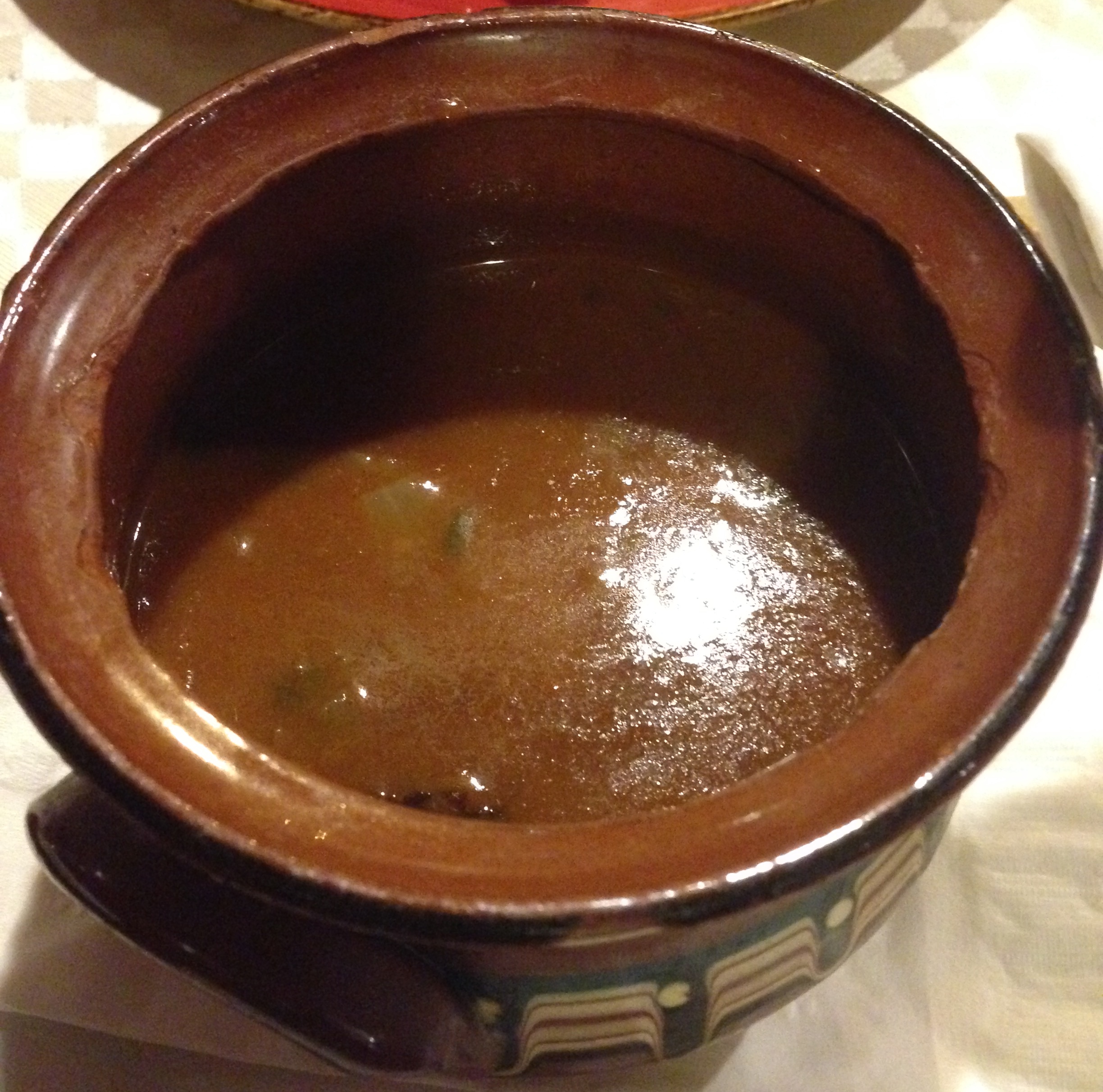
Sarajevo is the name of the capital of Bosnia-Herzegovina.  It is an ancient and diverse city that once boasted of being the only European city with a synagogue, Orthodox Catholic, mosque, and Catholic Church in the same neighborhood.  However, much of the city was destroyed by Serbian forces in the siege during the War of Independence from Yugoslavia in the mid 1990s.  Once the guns fell silent, the rebuilding process began, and now it’s back to its former glory.  Due to the aforementioned violence, many Bosnian and Serbian refugees came to Chicago for a better life.  This brings me back to our visit to Restaurant Sarajevo. IMG_6128 It was quite busy around dinner time, but we also just beat the rush by going around 6 pm.IMG_6108  We looked over the menu and decided to try the cold appetizer plate ($10.07) since it contained two of our favorite food groups:  meat and cheese.  While we were waiting, we got a free basket of some delicious, warm, crusty bread.  It came pre-sliced in giant pieces, and the butter that came with it had a thicker consistency that was almost like cream cheese. IMG_6117Turns out it was a Balkan and Central Asian treat known as kaymak.  The word “kaymak” means “melt” in Mongolian which was an apt description since the spread on the warm bread was melt-in-your-mouth delicious.  Our appetizer came out, and it was a gigantic plate filled with savory delights. IMG_6110 IMG_6109We could see smoked beef, two types of Bosnian sausage, peppers, and Bosnian Travnik feta cheese.  It was a who’s who of European food with the Mediterranean represented in the olives and peppers and feta while the Eastern and Central European elements were present in the sausages and smoked meats.  The smoked beef was not as super smoky as you would think it would be like American barbecue, but it still was very juicy. IMG_6111 While the two meats were very distinct in flavor.  The darker of the pair was more like a salami with a salty aftertasteIMG_6113 while the more reddish sausage I could liken to a spicier Spanish chorizo. IMG_6112 As for the feta cheese, it was a great piece of the crumbly stuff when combined with the olive oil coated peppers or the sausages. IMG_6116 For the main course, we were simply awash with great choices, so we shared two entrees.  First, there was the Bosnian chorba ($4.58).IMG_6114  It was a hearty beef based stew filled with large, succulent chunks of tender veal along with bobbing potato cubes and carrots.  Definitely a great choice for the winter months, and it was a lot of soup for a great price.  Then there was our Bosnian mix plate ($19.23).  It was a family dinner for less than twenty bucks, but you really must like meat if you get this entree.IMG_6119  On one plate we had grilled veal and chicken kebab, beef sausage, cevapcicipljeskavica, mixed vegetables, chicken schnitzel, and our choice of side.  Woof.  It was totally worth it since we brought our appetites to this meal and were ready to destroy what came our way.  First, I have to say that every slice of meat was all killer and no filler, i.e. high quality cuts of meat with little to no excess fat or additives.  We learned that they make their own sausages on-site which probably explained the freshness of the meal.  The grilled veal and chicken kabab were good but nothing beyond some competently made pieces of grilled meat.  As I mentioned before, the beef sausage was filling and super fresh and did have a bit of a snap to the casing that comes with using natural casings.  Then there were the super Bosnian entries to our meal in the form of the cevapcici and the pljeskavica.  The first one, the cevapcici, actual comes from the Persian word for “kebab” and is a type of casing-less sausage.  Although during the time of the Ottoman Empire, it became associated with hadjuks or outlaws as an easy food to make while wandering the countryside. IMG_6122 I had had this mini-sausage dish before at Chicago’s Andersonville fest even though it was at a Croatian food tent and served in a fancier fashion.  It was like a Balkan version of a cocktail weenie but with more delicious, seasoned lamb and char-grilled.  As for the pljeskavica, it’s basically a lamb and beef patty that is stuffed with mozzarella cheese.IMG_6121

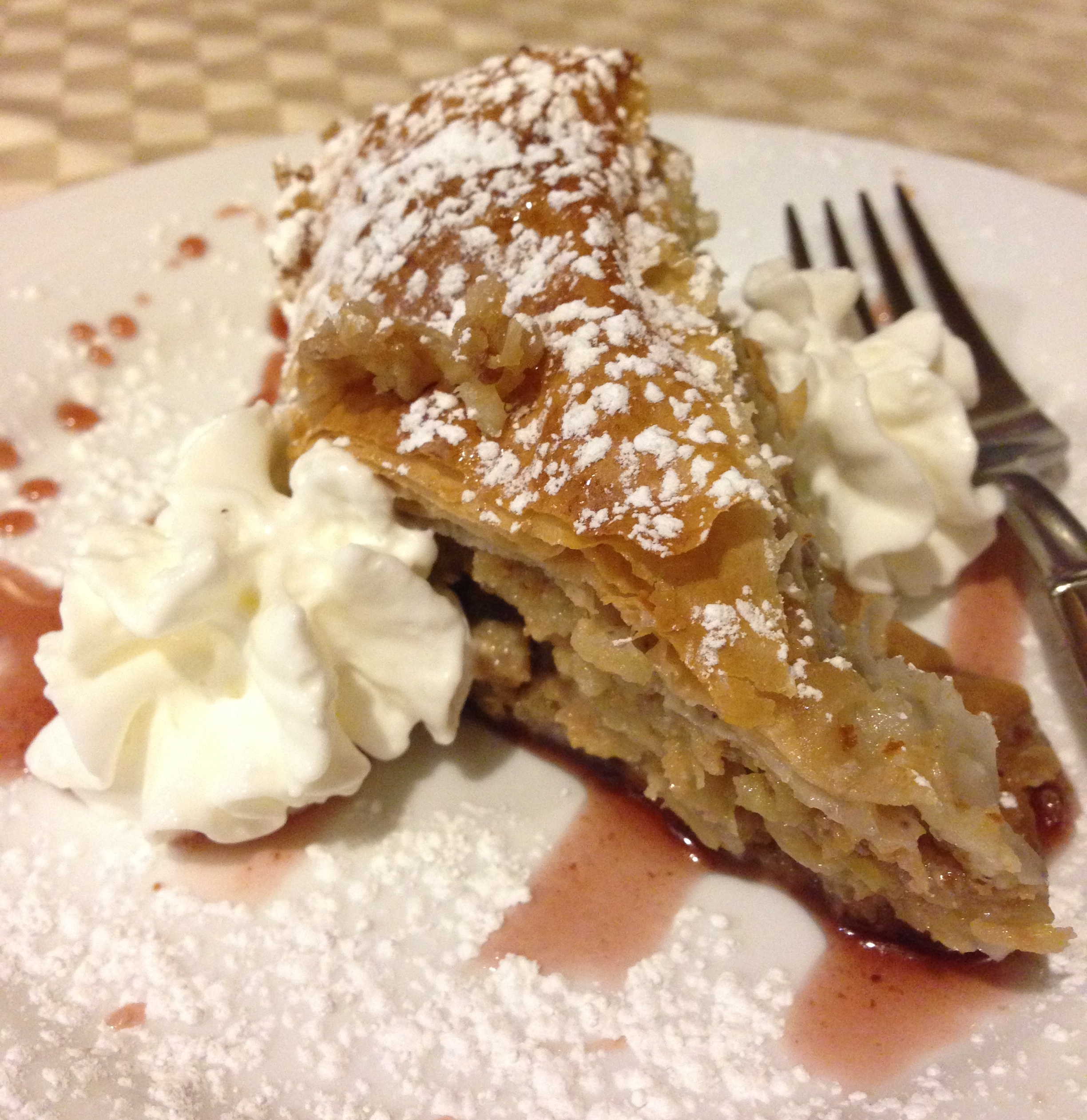
Once again, meat and cheese reigned supreme in this Balkan favorite, and it was so bad for you yet surprisingly not super greazy.  It also had a helping of the kaymak cheese on top just for good measure.  The chicken schnitzel was a representative of the Central European element in Bosnian cooking, and I really liked the tangy tartar sauce that combined with the super thin but tasty, golden breaded chicken cutlet.  Surprise, surprise!  We still had more food in the form of the potatoes on the side that were simply sauteed with an olive oil and oregano coating. IMG_6123 Even after all of that we managed to find some room for some decadent dessert.  We got the Bosnian chilled apple rolls ($5.50) that apparently is another Bosnian specialty.  IMG_6124IMG_6126IMG_6127It consists of a mix of chopped walnuts and apple pieces with honey that is enclosed in flaky, buttery filo dough.  Surprisingly, it was served chilled like it said on the menu which is a bit different than similar desserts that are served room temperature or even warm like Greek baklava.

In the end, we were absolutely stuffed with a ton of delicious and hearty food.  If you want a taste of a land that isn’t very well represented in America, run down to Restaurant Sarajevo!
Restaurant Sarajevo on Urbanspoon

The Mother of All Posts: 4 Great Mother’s Day Restaurants

Posted on

Finally I am free to write!  I’m very sorry that I haven’t been able to write lately since I’ve been going through a whole sort of life transition with going into a completely new career, but that doesn’t mean that I will forget about loving and writing about food.  Today’s post deals with four great brunch places for tu mama, and is presented to you by my blog, Mastication Monologues, and OpenTable.com in honor of Mother’s Day.  If you want to check out more great picks for Mother’s Day and make reservations for your family, check out OpenTable’s Mother’s Day promo page with plenty of offers!

1.  Kanela

Kanela is one of the best brunch places that I’ve been to in Chicago, and I’m sure they will pull out all of the stops to make your mom feel special. IMG_4818 I would highly recommend making reservations for this place since the place isn’t huge and is very popular with the locals.  It’s on the northside of Chicago nearby the iconic Wrigley Field, and while the Cubbies might be the lovable local losers, you won’t lose anything except your mind with Kanela’s delish dishes.  I would highly recommend their monkey bread to start off with one of their smoothies on the side.IMG_4808  For the entree, you can’t really go wrong.  If you like sweet things, I’d recommend the red velvet french toast.  However, if savory is the name of the game, try the spicy Feta omelet that is jam packed with whipped semi-spicy cheese and all wrapped up in a layer of fluffy eggs.

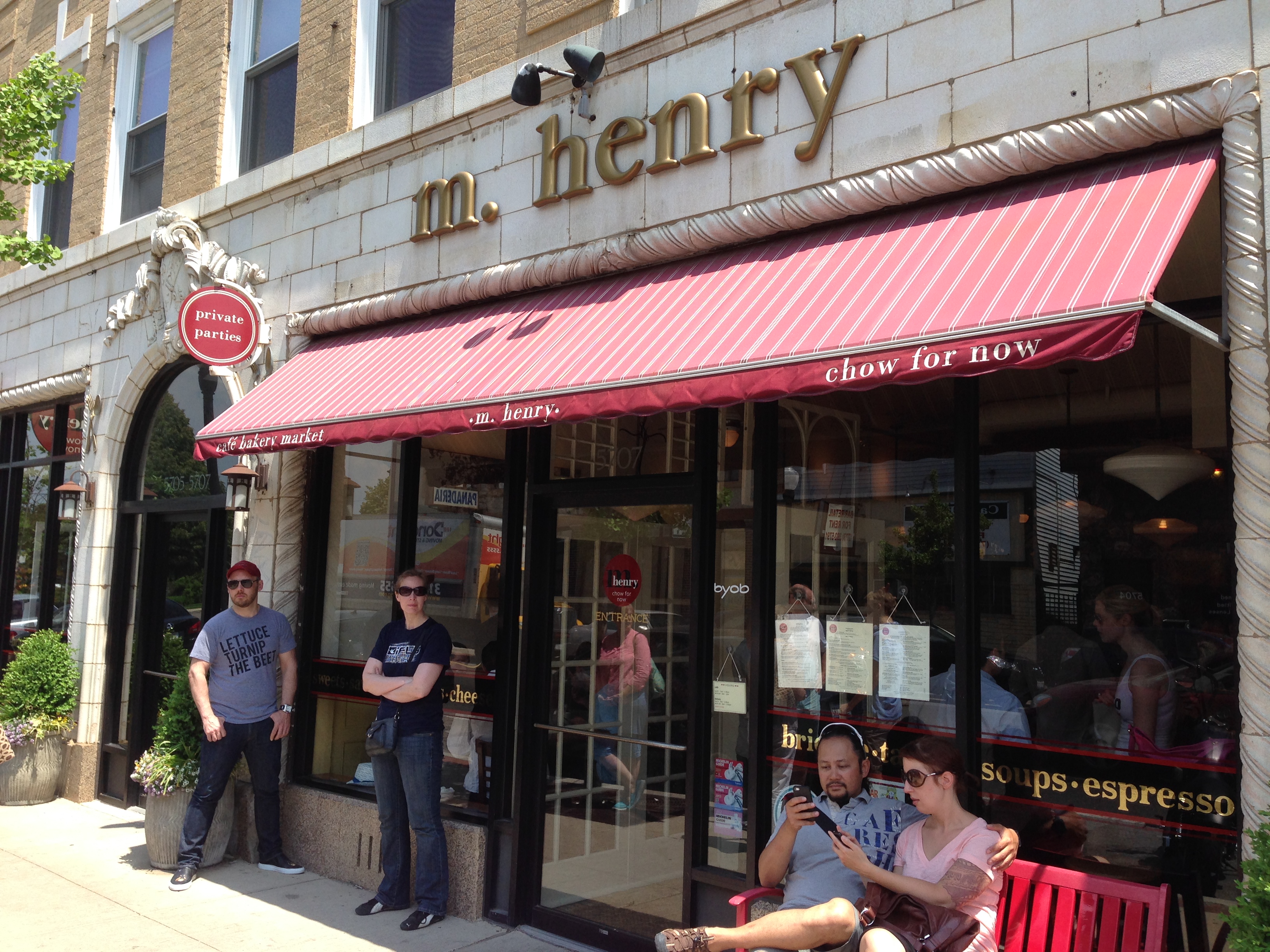
2.  M. Henry

Then there is M. Henry in the Andersonville/Little Sweden neighborhood which is also on the northside of Chicago.  IMG_3298While it doesn’t specialize in meatballs and cold herring as the area would suggest, they have plenty of noms for your mom to enjoy.  Everyone swears by their extremely fruity bread pudding aside from me, but try it for yourself and let me know what you think.  While I got their granola pancakes that were also swimming in fruit juice, my girlfriend’s huevos borrachos were fantastic for a savory option. IMG_3293 It’s not my cup of tea, but everyone else that has been there has raved about it.  So I’d still recommend trying to fight the crowds at this very popular brunch establishment.

3.  Bongo Room

While the name might sound like a funky, nighttime hangout, it’s actually quite a quaint and modern breakfast restaurant that is serving up unique and mouth-watering fare for the masses.  It’s actually right down the street from M. Henry, so if it’s too full there, you can always pop on over to the Bongo Room.  IMG_3644Once again, I cannot stress the importance of making reservations!  I’ve been there twice, and you get GIGANTIC portions for the price.  My personal favorite are the white chocolate and pretzel pancakes. IMG_3647 Not only are they bigger than your face, but they combine the best of both sweet and salty that everyone loves with chocolate covered pretzels.  If you don’t have that big of a sweet tooth, they also have plenty of options for you savory lovers out there.

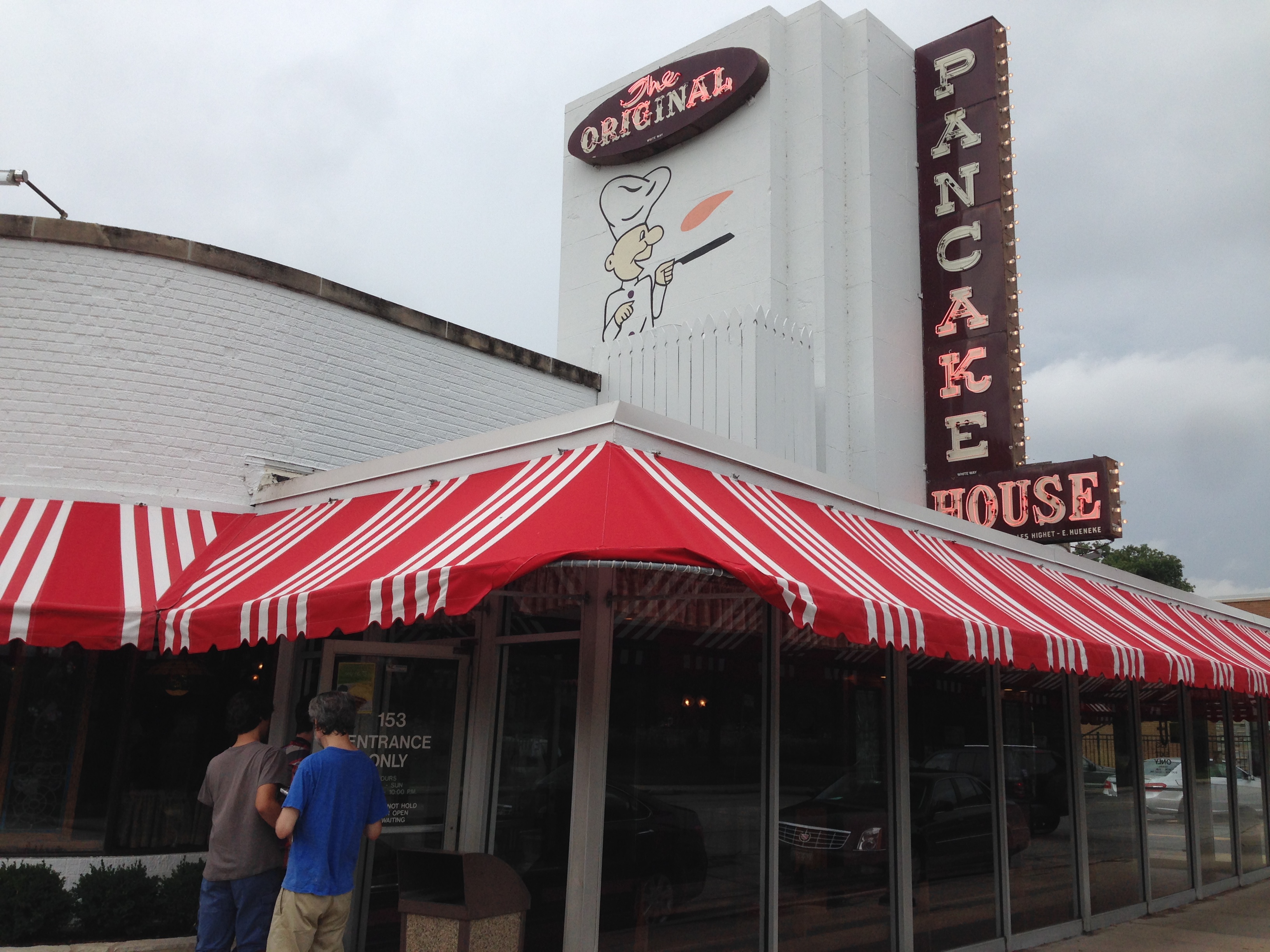
4.  Walker Brother’s Pancake House

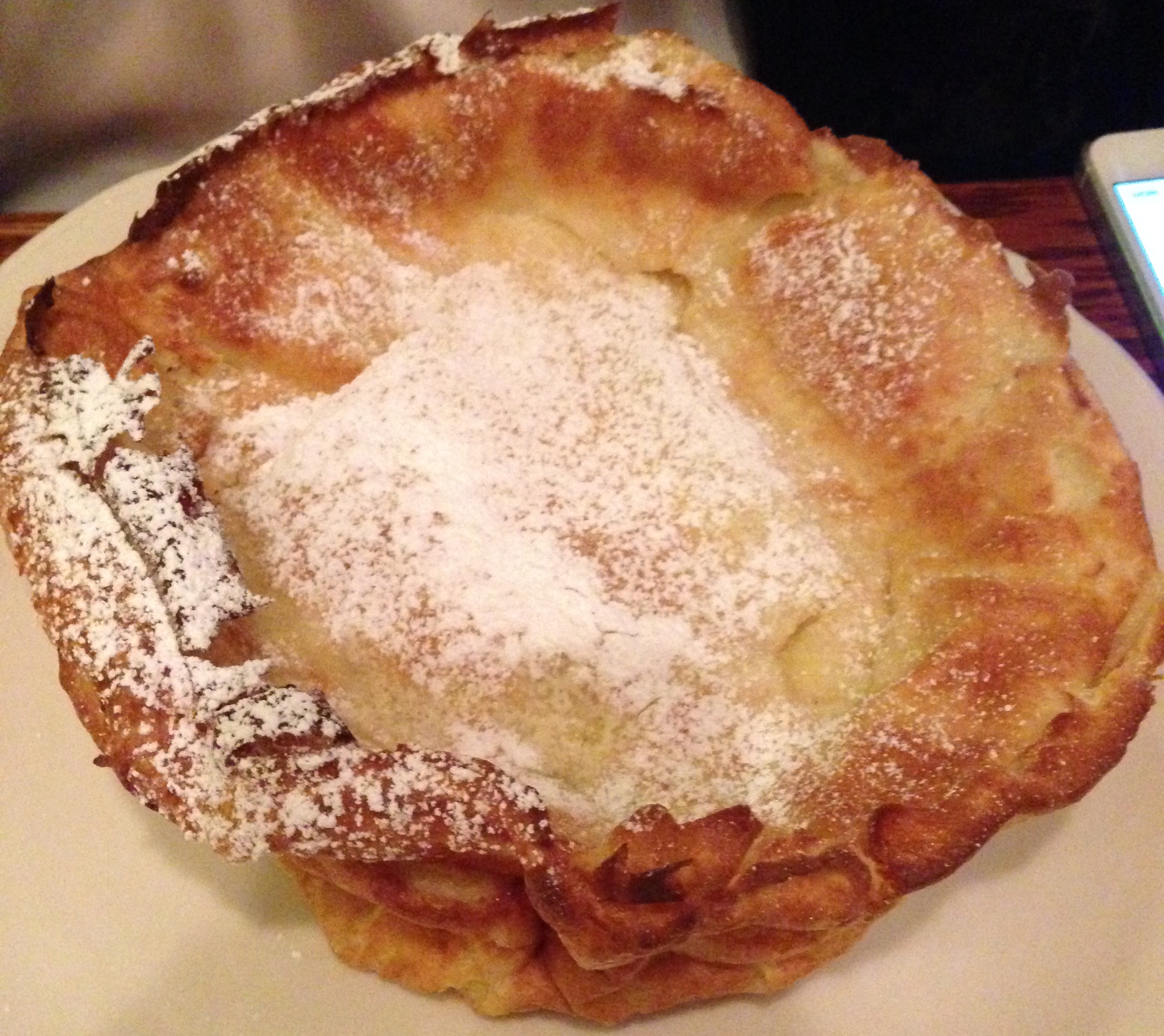
Finally, there is the oldest of the bunch in the form of the Walker Brother’s Pancake House.  If you like a lot of history and a lot of great food for delicious prices, I highly recommend this Chicagoland favorite.  The original one that I went to in my first post about it (you can read it in this section’s title). IMG_4201 This place was bumping when we went there for breakfast, and I’m sure it will be bursting with patrons on Mothers’ Day.  They have a very extensive menu filled with classics like bacon and eggs and other more exotic entries like blue crab Benedict which is like eggs benedict with the addition of some decadent crab meat.  I, however, was following Janice’s lead when I went there.  If you’re really hungry, go for the pancakes since they are gargantuan and oh sooooo good.  I would recommend the apple cinnamon pancake or the Dutch baby pancake.  IMG_4199The former can be served a la mode which is totally worth it while the latter is a lot less intense, but still filled with plenty of mouth-watering powdered sugar and lemon juice for a tart and sweet contrast. IMG_4197 Plus, the surroundings of dark wood and Tiffany glass aren’t too hard on the eye either.

So there you have it.  Four great Mothers’ Day locations for brunch in the Chicagoland area that focus on quality food at prices that are easy on the old wallet.  If you want to make reservations at any of these establishments or others, please check out OpenTable.com.  Bon appetit!

All Roads Lead to Good Food

Posted on

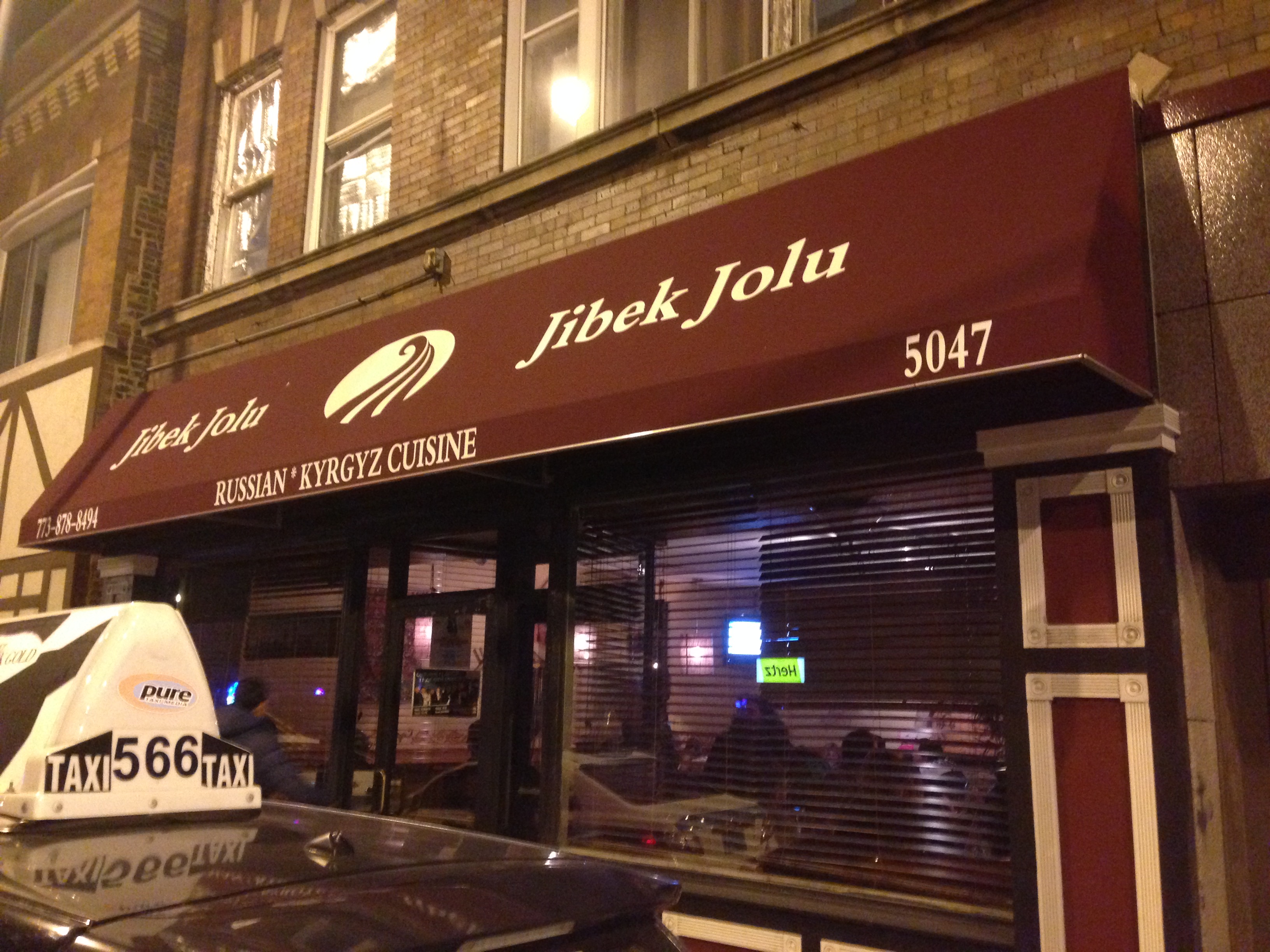
Have you ever heard of a little place called Kyrgyzstan?  While it is not as well known as its neighbor and home of Borat, Kazakhstan, or nuclear armed Pakistan, it a very interesting corner of the world with a lot of history.  The word “Kyrgyz” in Turkic languages means “We are forty” which is a reference to the forty clans the legendary Kyrgyz hero, Manas, united to fight against the Uighurs (A predominately Muslim group that resides in what is now western China).  The number forty also appears in their flag in the form of a sun with forty rays and a criss-crossed center to symbolize a yurt or traditional tent the Kyrgyz sleep in. kg It’s one of my favorite world flags, and recently I found that Kyrgyz food is right up my alley as well.  Janice and I had a double date with one of her best friends and her husband at a Kyrgyz restaurant in Chicago called Jibek Jolu.  Her friend and husband raved about it, so I was curious to see what exactly Kyrgyz food consisted of.

While I never had this particular type of cuisine, I had a faint idea of what to expect given the geographic location of the Central Asian nation and its history.  First, I expected there to be a lot of meat given that most nomadic peoples rely on high energy meals focusing primarily on protein and dairy.  Second, I found out that Jibek Jolu means “Silk Road” in Kyrgyz, so there were bound be plenty of dishes that combined the influences of Chinese, Indian, and Western cooking.  Finally, given that Kyrgyzstan was a former Soviet republic, there would be lots of Russian dishes, and Janice’s friend’s husband is Russian, so we had our cultural “in” if we needed anything.  When we walked up, it was funny to see all of the cabs parked out front due to the high number of Central Asian cabdrivers in Chicago. IMG_6056 We walked in, and the place was jammed for dinner.  IMG_6055We were quickly seated by the friendly staff, and I perused the menu options.  I wasn’t surprised with the amount of meat and root vegetables being offered, but all of that had the making for a great meal in my eyes.  The ingredients don’t have to be super fancy to make a superb meal; it’s all in the freshness of ingredients and execution.  The prices were also very reasonable compared to other Russian restaurants I have been to.  To start the meal, I wanted to try an appetizer, but a majority of them were Russian dishes.  So I went for the tandyr samsy ($4.00) which seemed more Kyrgyz since I had never seen it on a Russian menu.  Plus, it was cooked in an Indian tandoor oven which once again shows the multicultural nature of the cuisine. IMG_6045 When it came out, it reminded me of a ghost from Pac Man,

Four tandur samys

Four tandyr samys

and once I bit through the semi-crunchy crust, I was going “wakawakawakawaka” gobbling it up like the little yellow guy. IMG_6047 It was a great combination of freshly baked bread, plenty of ground beef, and some soft, stewed potatoes to give the dish a little more body.  Then there were the entrees, and each one was quite unique.  First, there was the lagman ($12) which after a bit of research turns out to be more familiar to me than I had previously thought.  Ramen noodles or just “ramen” are known the world over as a cheap snack for poor people and college students, but it turns out the word “lagman” is the Turkic word for “ramen”.  Once again, the interconnected nature of Kyrgyzstan was reflected in this lagman dish that utilized the same hand-pulled noodle techniques that originated in the 16th Century in China.  It was different than the Japanese ramen I tried in Tokyo, but it reflected the no-frills approach to cooking the Central Asian Republics take. IMG_6048 Of course, there was stewed pieces of tender beef, peppers, onions, green beans, and onions along with a beef based broth to bring the ramen bowl together.  I don’t normally say this, but I loved the noodles because they were super soft due to soaking in the aforementioned broth.  I enjoyed every slurping forkful.  We also got a small order of the meat oromo ($7.00), and they were still very substantial.  Looking at these traditional steamed pies, I could only think of the steamed dumplings in Chinese dim sum.  They had the same translucent skin as the little potstickers I’ve taken down many a time in Chinatown. IMG_6049 While the exteriors were Chinese inspired, the interiors were more Slavic in nature with beef, minced potatoes, onions, cabbage and carrots.  They were kind of hard to slice and share due to the fragile skin of the pies, but they were very hearty and all of the ingredients came together like a mini beef stew in a pie.  After we tried that, I got a taste of my girlfriend’s plov ($10.00).  This entree, more commonly known today as “pilaf” which originates from the Sankrit word “pulaka” meaning “a ball of rice”, has been around since the beginning of time.  Alexander the Great comments on being served the same meal while visiting Samarkand, one of the stops for future explorer Marco Polo on the Silk Road.  Alexander’s troops took the “pilav” recipe back to Macedonia, and it spread throughout Europe as “pilaf” from the Greek word “pilafi“.  IMG_6050I didn’t think this rice dish lived up to the other entrees we tried since it just consisted of a broth-infused rice sprinkled with beef, carrots, onions, and garlic.   While moderately flavorful, it seemed to be average in comparison to the other types of food we had tried.  Then there was my kuurdak ($12) which was as elemental as food can get just short of ripping a hunk off a cow.  Turns out this entree is one of the oldest and most traditional of Kyrgyz meals.  It literally was stewed beef, potatoes, and onions. IMG_6051 Simple as it sounds, the combination was amazing in my eyes and on my tastebuds.  I would take this Kyrgyz beef over an American steak and potato dinner any day.  I don’t know what they did to the beef, but it tasted like it was char-grilled and coated in a possible garlic/olive oil mixture.  Then, the potatoes were herbal tinged and extremely tender which combined perfectly with the beef.  The icing on the cake were the raw onions since I love onions in any way, shape, or form.  It was one of the ugliest dishes at the table, but it was a definite hit as the others were sneaking bites off my plate.  The final and most hardcore of the entrees was the beef shashlik ($11.50 for two).  Janice’s friend’s husband, Ivan, ordered it, and when it came out, I couldn’t believe the presentation.  There were two extremely long knives on the plate that had chunks of tandoor cooked beef on them along with a pile of rice and a salad just in case to protect you from a heart attack from ingesting that much red meat in one sitting.  This part of the meal was as delicious as it was fun and dangerous to eat.

In Russia, you cut knife!

In Russia, you cut knife!

The Indian tandoor oven really brought out the intense flavor of the beef, and surprisingly we didn’t cut off our tongues when ripping the beef off the blades as the girls stared on in disbelief.  IMG_6054Best double date ever.

So if you want to try a cuisine you’ve possibly never heard of for a great price with friendly service, make a pilgrimage to Jibek Jolu!
Jibek Jolu on Urbanspoon

Laissez Les Bons Boefs Roulez!

Posted on

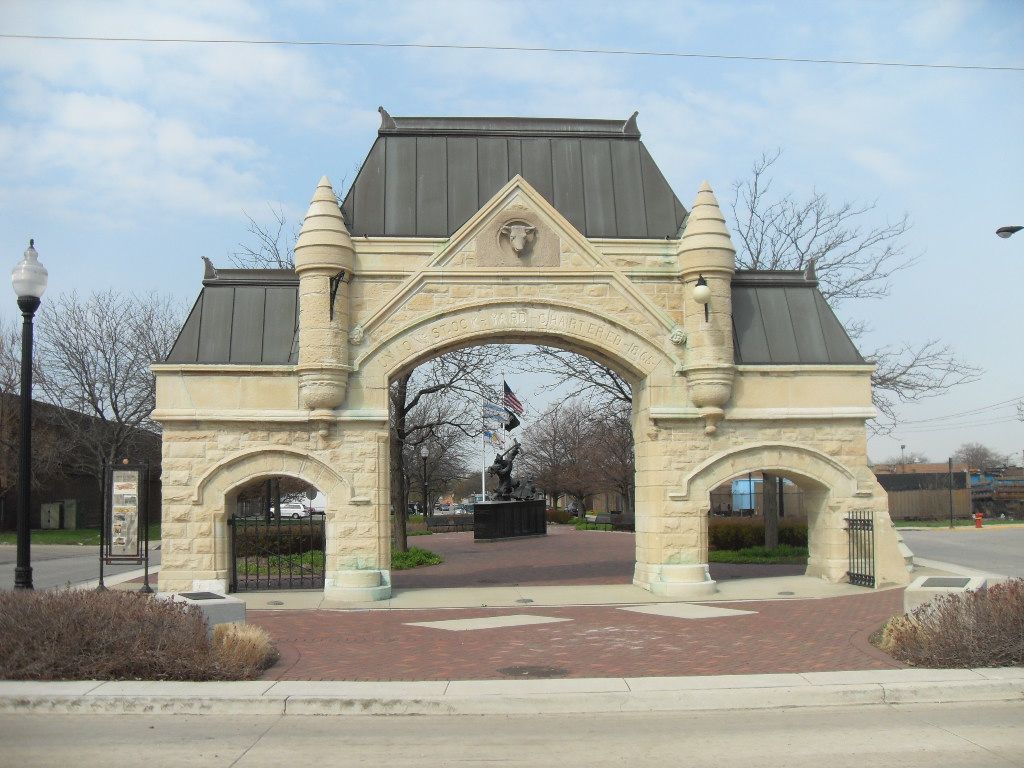
Beef.  The quintessential meat.  Hearty and filling, it can be found throughout many different cuisines served in very different forms.  If you visit Chicago, you can sample some of the best steaks in the country.  We used to be the butcher for the world with the Union Stockyards, but they have gone the way of smoking on airplanes and pay phones.

So.  much.  beef.

So. much. beef.


The Union stockyard gate then...

The Union stockyard gate then…

and now

and now

Still, that doesn’t mean that you can’t find a great porterhouse or t-bone.  If you’re not in the mood to drop some major paper on some of that red stuff, there are cheaper alternatives.  Enter another Chicago institution:  the Italian beef sandwich.  While other US cities have sandwiches that could be considered distant cousins to this hearty and humble meal like Philly’s cheesesteak or Pittsburgh’s Tommy DiNic’s Italian pork sandwich, the Chicago version is the best, I think.  In fact, it is so popular here that there are many restaurants that claim to have the best Italian beef sandwich in the city.  Today’s restaurant review revolves around one of the biggest names in the beef biz:  Mr. Beef.

Two of the biggest names in the city are Al’s Beef located in the Little Italy neighborhood and Mr. Beef on Orleans in the River North neighborhood.  Their rivalry is so notorious that it was featured on Travel Channel’s Food Wars.  I won’t spoil it for you, but I disagree who the real winner is.  Anyway, for those of you who haven’t been to Chicago, an Italian beef sandwich is one of those “must”s for Chicago tourists to try.  It’s in the holy trinity of a Chicago hot dog, deep dish pizza, and the holy beef sandwich.  It arose from the Italian immigrant community’s need to make the meat last longer, so they sliced it thin, stewed it with spices, and slapped the tender meat on a fresh roll.  Thus, the Italian beef sandwich was born.  While I was working at a Mexican university that was located right next to the restaurant, I knew I had to pop over to try it since I’ve walked past it a million times but never tried their sandwiches. IMG_4930IMG_4931 So, I finally fulfilled my vow, and walked in to see a shop that is similar to other Italian delis with lots of pictures on the wall and a deli counter at one end with no fancy decorations. IMG_4932 Scanning the menu, I saw the beef sandwich I wanted, but it was 7 bucks.  I couldn’t believe how expensive it was compared to their competitors, so I was expecting this sandwich to justify the price tag.  I got it spicy which means that I got giardiniera on top.  I think giardiniera is also a Chicago thing since it comes from the Italian community also and consists of a mix of pickled vegetables and chili peppers in olive oil.  However, you can get it mild with cooked bell peppers or with no peppers at all.  Then there’s the juice factor.  You can get it dry or juicy, i.e. dipped in the same herb tinged broth the beef soaks in.  I always get mine juicy since it adds more flavor to savor, but you can get it dry to enjoy the freshness of the bread and the delicious beef.  After the brusque cashier took down my order, they set to making my sandwich.  As I was looking at the menu I saw they had other typical fast food staples like burgers, hot dogs, and sides like fries and onion rings.  Eventually, I finally got my sandwich and was ready to see what all the hubbub was about.  I got a seat in the back room at one of the super long tables you share with your fellow diners.  Once I opened up my wrapped up treasure, it looked mouth-watering. IMG_4995 From the bright verdant giardiniera to the fresh bread, I couldn’t wait to sink my teeth into dat beef.  The first bite was quite satisfying with a good ratio of bread to meat, but it lacked that spicy flair that comes with other dipped Italian beef sammiches.  The beef was tender and flavorful, but the giardiniera left something to be desired.  While other Italian eateries have a generous blend of veggies, I wasn’t a fan of the mainly celery based mix atop my meal.  It wasn’t as fiery as other spicy sandwiches which made it lose points, but it was innovative in the sense that the giardiniera was extremely crunchy to provide a bit of different texture to the mainly chewy sandwich.

So in the end, would I say Mr. Beef is the be-all, end all of Italian beef in Chi-town?  I’d say no.  It lacks the ingredient complexity of their competitors, and the relatively expensive price tag took it down a couple notches in my book.  However, that doesn’t mean you shouldn’t try this fixture on the Chicago food scene.  It’s just a different take on a hometown classic, so maybe it will be better for you than for me.  Happy hunting!
Mr. Beef on Urbanspoon

Good But Not Gr8

Posted on

Welcome to Mastication Monologues!  If this is your first time here, prepare to be amazed with some of the most unique and delicious food adventures you’ve ever seen.  If you’re coming back, then thank you so much for your support and your views.  Remember to always tell your friends about my reviews as well.  So, today’s post deals with a cuisine that I never really dabbled seriously in until recently:  Vietnamese food.  For a majority of my life, I ate mostly Chinese or Japanese food, but then I started dating my lovely gf Janice who just so happened to live next to Little Vietnam in Chicago.  Therefore, the amount of Vietnamese restaurants I have tried now have increased greatly, and Pho 888 is one of them.

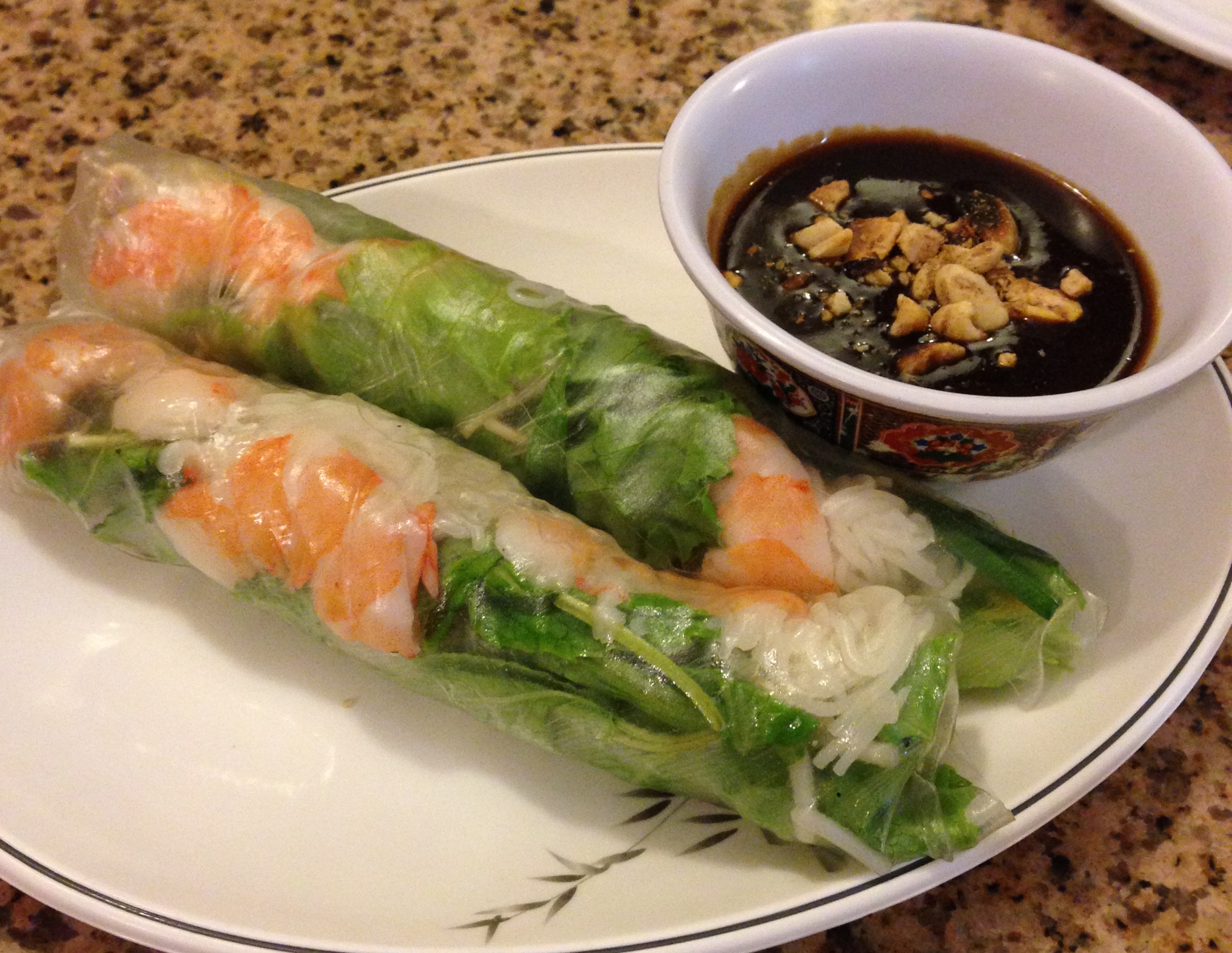
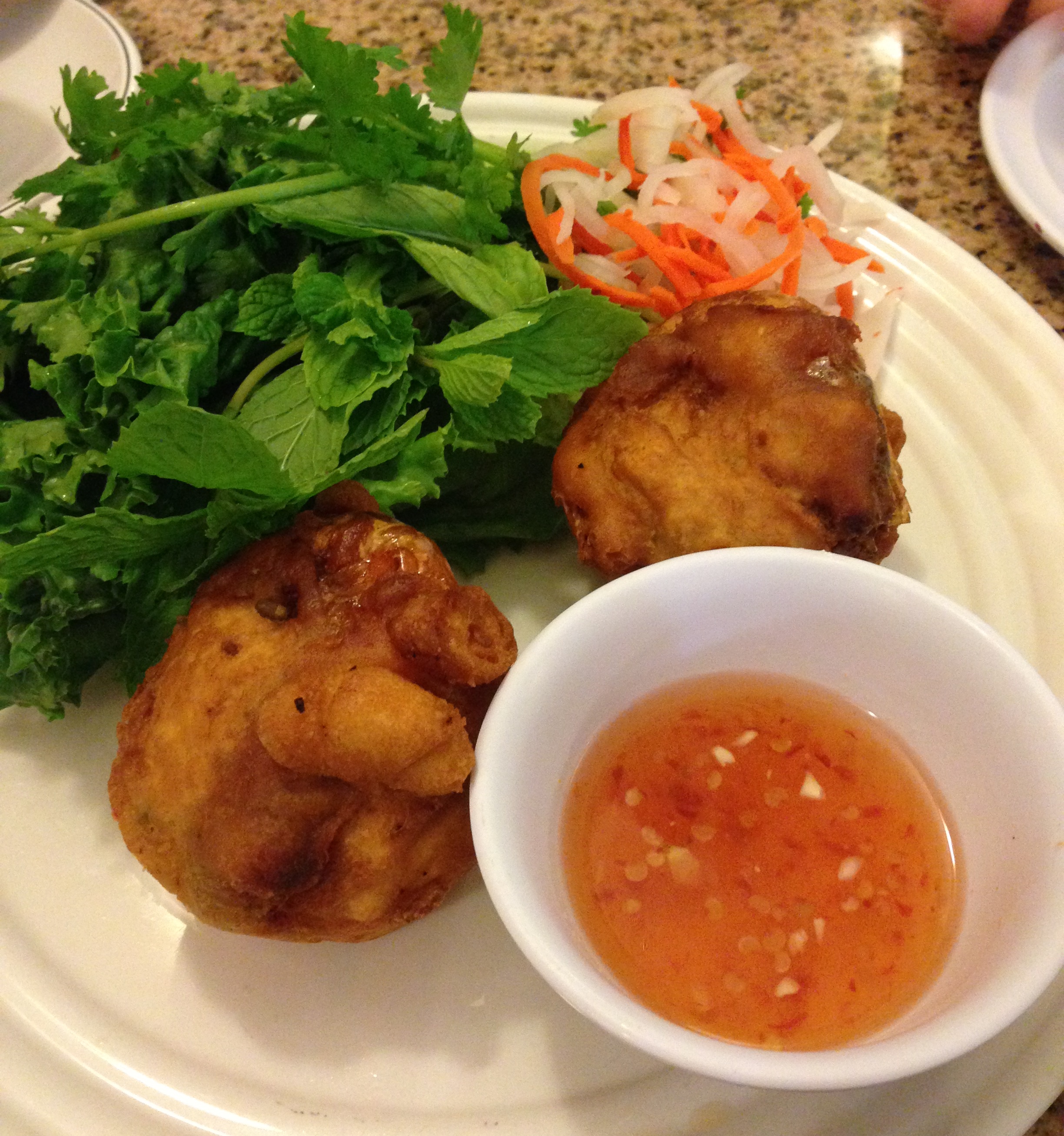
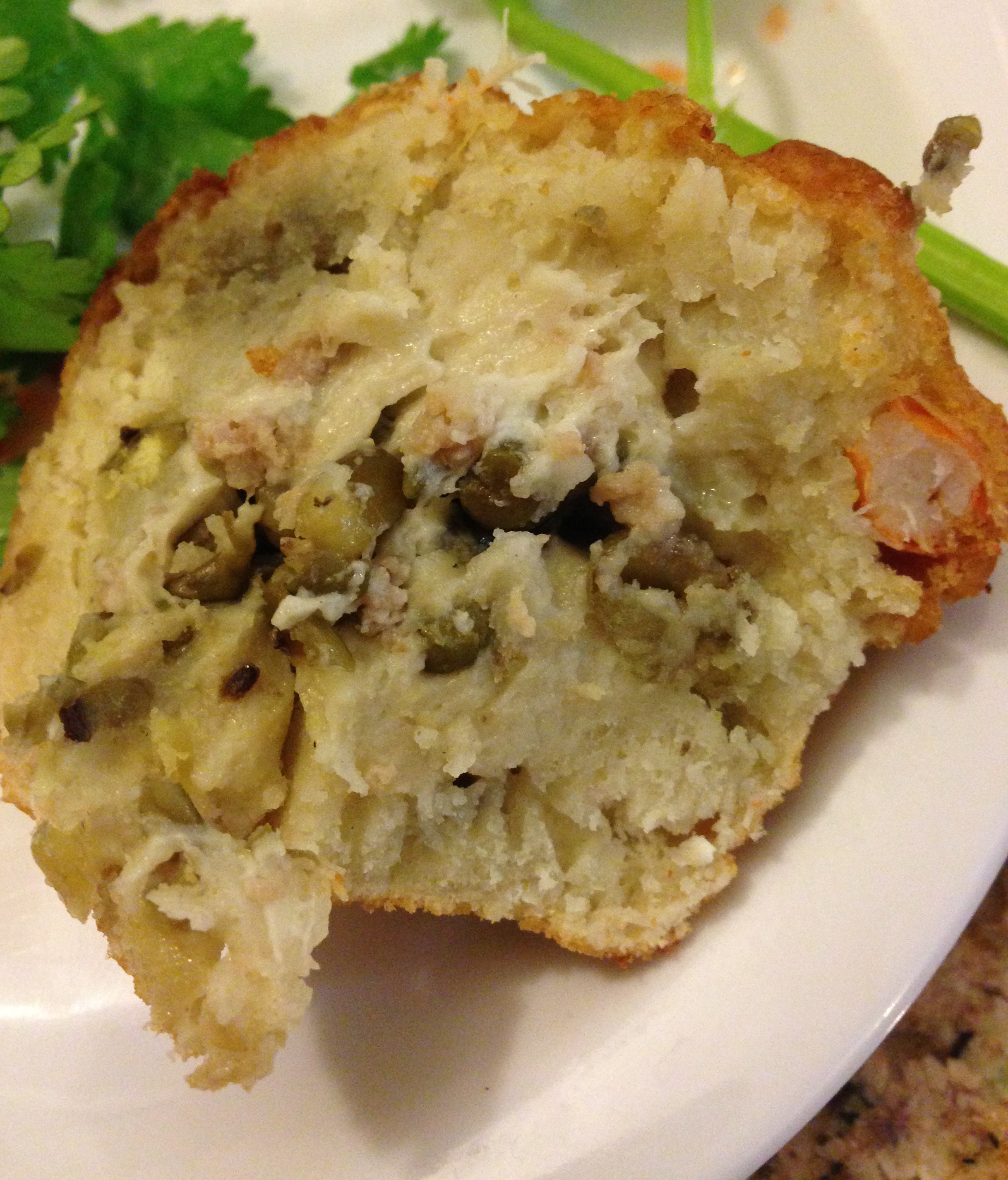
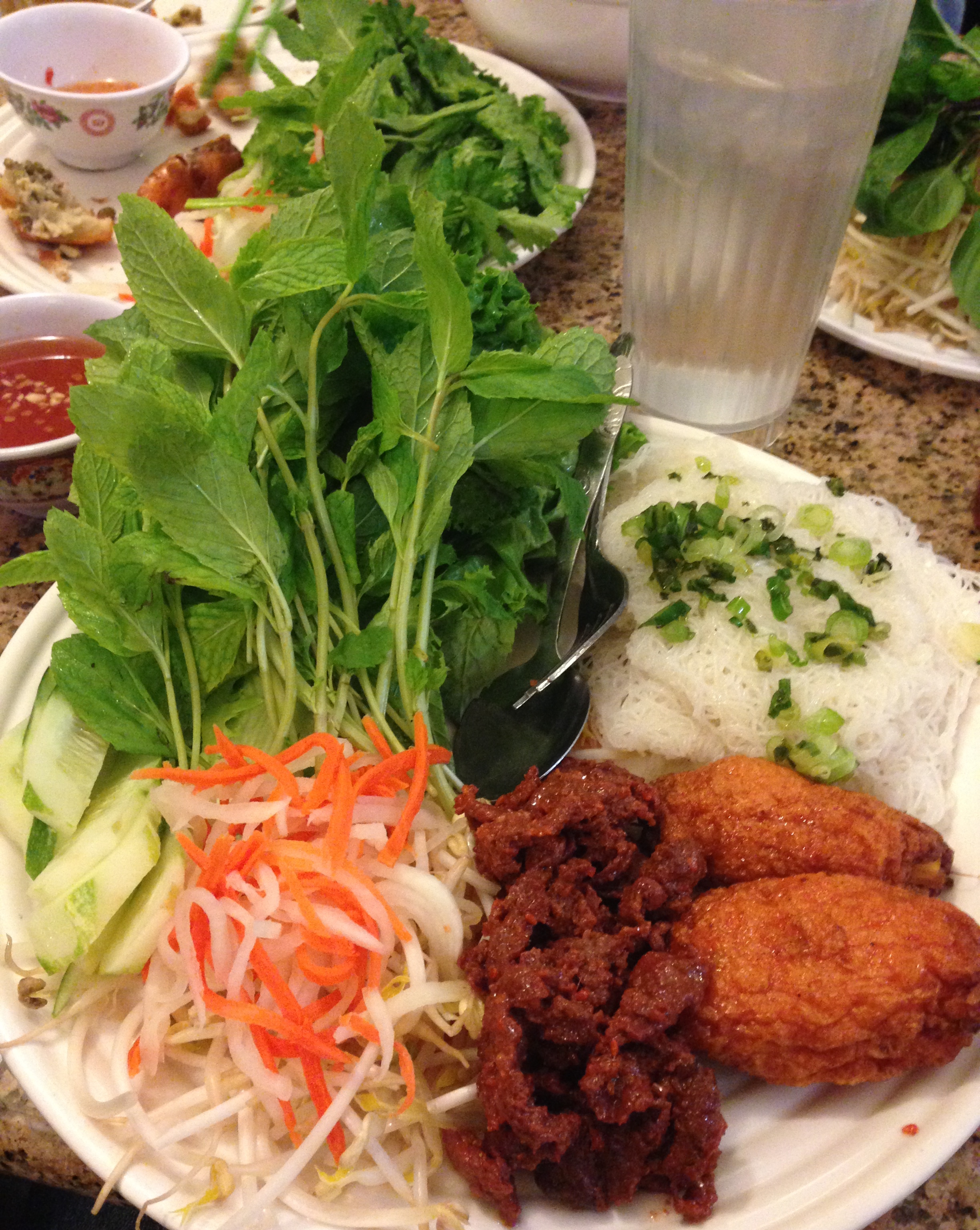
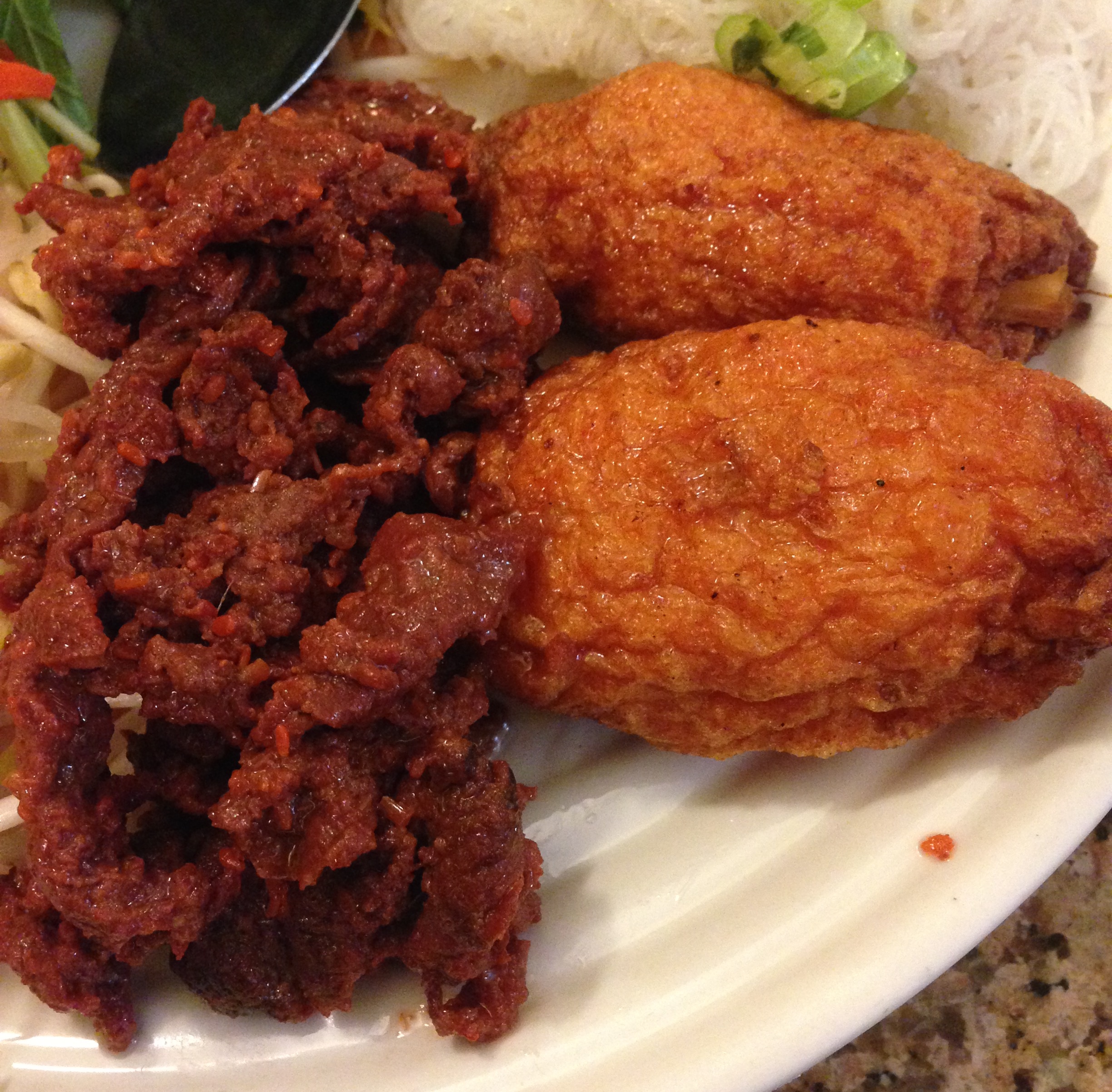
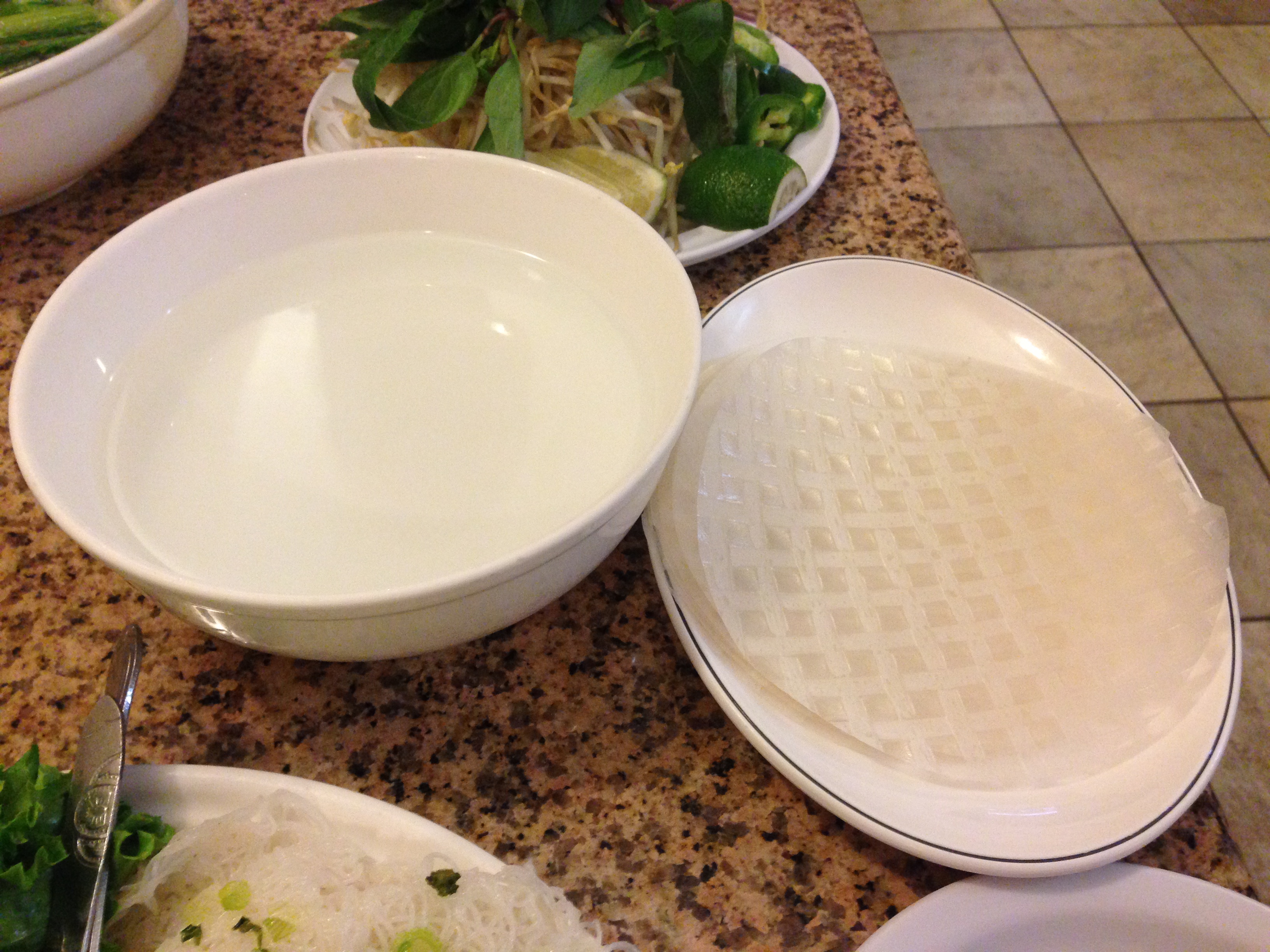
If you walk down Argyle street, you’ll be beckoned by every storefront since there is a plethora of Vietnamese eateries and Chinese bakeries like the iconic Tank Noodle shop or Bale Sandwiches, but I wanted to try Pho 888 since I had heard good things about it.  Plus, it didn’t seem as Hollywood as the more popular eateries.IMG_6026 Janice, Michael, and I hit this place up back in December a.k.a. life in the Ice Age.  So, they both wanted to get the quintessential Vietnamese dish, pho, but I was in the mood for something different.  Inside, the place was super simply furnished with plenty of chili sauces and seasonings on the table.  It’s literally a dining room and a kitchen.IMG_4917 The menu was huge like any good Asian restaurant, and the prices were pretty cheap (range of 4-12 bucks per item). IMG_4916 After a bit of deliberation, we made our choices and waited for the food to come out.  The first dish we sampled were the gỏi cuốn or “salad rolls” in English.  They consisted of bún (vermicelli noodles), cooked shrimp, herbs, greens, and it was all wrapped up in bánh tráng (rice paper). IMG_4918 These rolls were served at room temperature and were a refreshing alternative to fried spring rolls that sometimes can be too greasy.  The tương xào (hoisin sauce) that was served on the side had peanut pieces in it, but all of it put together was delectable.  The sticky rice paper was strong enough to hold all of the ingredients within its insanely thin cocoon.  Everything from the shrimp to the fresh cilantro and lemongrass made this dish really pop, and dipping the rolls in the sweet hoisin sauce blended well with the herbal notes from the vegetables.  As for the vermicelli, it provided a much needed body to the rolls and a solid foundation for the house party that was happening in my mouth.  The other appetizer we got, the fried shrimp balls, were quite the opposite experience. IMG_4920 While they looked scrumptious on the outside with their golden brown exteriors with an accompaniment of greens, pickled radish, and some sweet and sour dipping sauce on the side, what we found inside was horrifyingly gross.  IMG_4922I don’t know what was inside them, but it was like eating pre-chewed eggs mixed with seafood with the consistency of cream cheese.  I’ll just leave you with that image.   On the plus side, my main course came out soon thereafter I tasted one of these horrid appetizers.  I got the chả tôm (shrimp cake) and pork combo that was paired with more noodles, greens, pickled radish and carrot salad, fresh cucumbers, rice paper, and a bowl of warm water to make my own gỏi cuốn.  IMG_4923I tried a bit of the shrimp cake, but I really didn’t like it.  It was more fishy tasting than the fresh shrimp from the salad rolls we ate earlier in the meal, and it just seemed oddly artificial with its orange, spongy, Nerf-like interior yet wrinkled, glistening exterior.

Dr. Jekyll and Mr. Hyde on one plate

Dr. Jekyll and Mr. Hyde on one plate


That cake ain't right

That cake ain’t right

So, I focused more on eating the seasoned pork that was stir fried in a chili sauce that had plenty of personality to make up for the awkward shrimp cakes on my plate.  So, I set to making my first Vietnamese spring roll.  First, I had to take one of the rice paper disks and submerge it in the warm water.IMG_4924  Once wet, I placed it on my plate, and I placed my ingredients in the middle of the nearly invisible Vietnamese version of a tortilla.IMG_4927  Then came the tricky part.  Rolling this rice paper up into a presentable roll was way more difficult than making a taco since the edges of the rice paper were incredibly sticky which meant that if you didn’t position your toppings right while rolling, then you risked a lopsided roll that will explode all over your hands/clothes when you bite into it.  After some trial and error, I finally got the hang of it, and it was an interactive meal that I really enjoyed.  As for Michael’s and Janice’s pho, I found it to be just below Tank Noodle’s version since it seemed to be a bit more on the salty side, but it still was delicious and kept us warm against the frigid conditions outside.

So if you’re looking for a real authentic Vietnamese restaurant in Chicago that may not be the best but does have simple and fresh food for reasonable prices, check out Pho 888.
Pho 888 on Urbanspoon

Some Really Mean Cuisine

Posted on

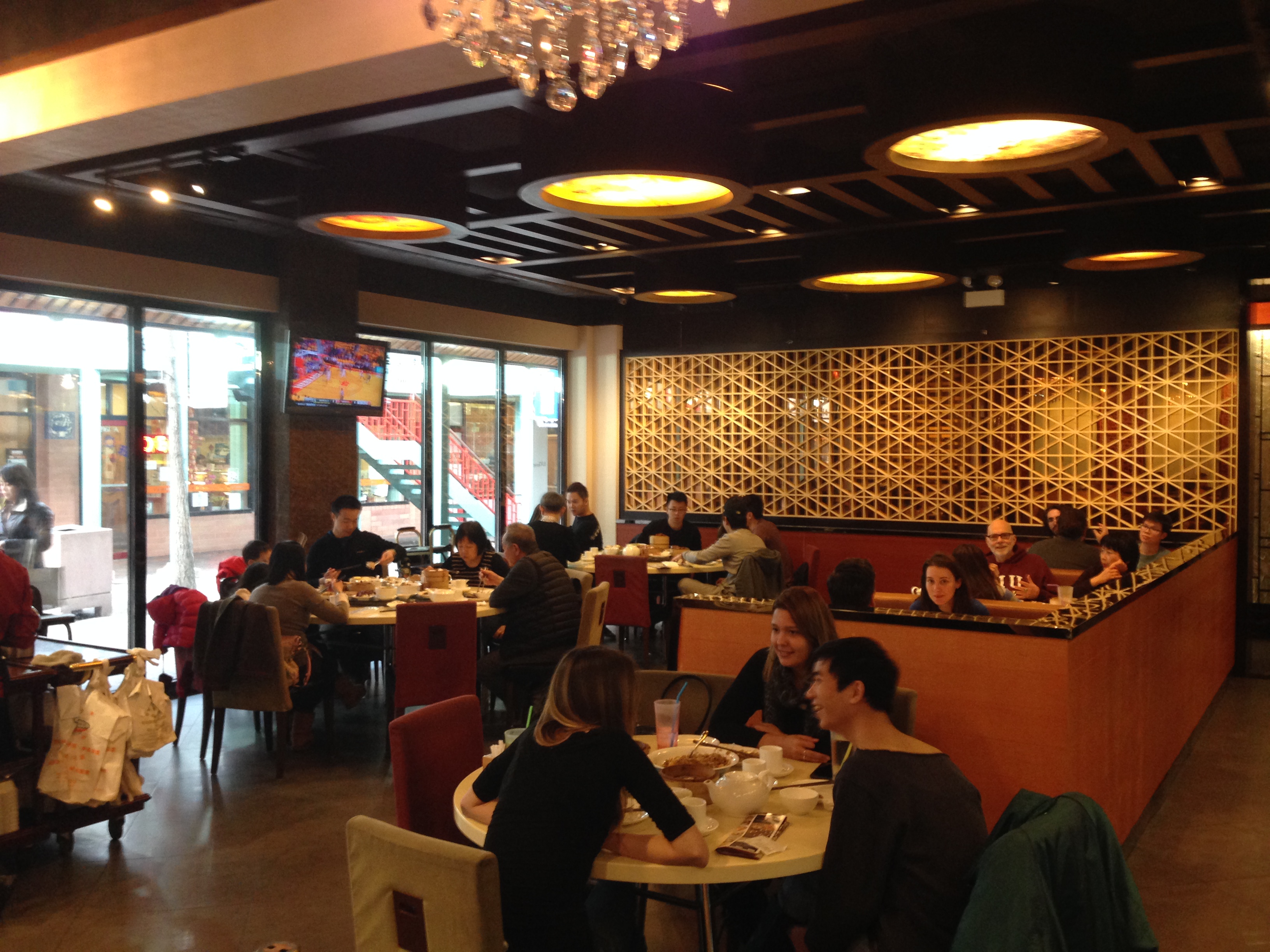
Ah, Spring!  You have been nothing but cryptic so far in Chicago.  You have teased us with near bearable temperatures only to blindside the city with waves of freezing rain, snow, and chilly winds.  While the weather might get you down, you definitely should hit up one of the top dim sum places I have ever ate at, including America, Hong Kong, and Taiwan.  The name of this wonderful eatery is MingHin Cuisine.  My girlfriend had been there before and had nothing but great things to say about it.  It is located in the New Chinatown on the northside of Cermak Road right next to the famous Lao Sze Chuan.IMG_5718

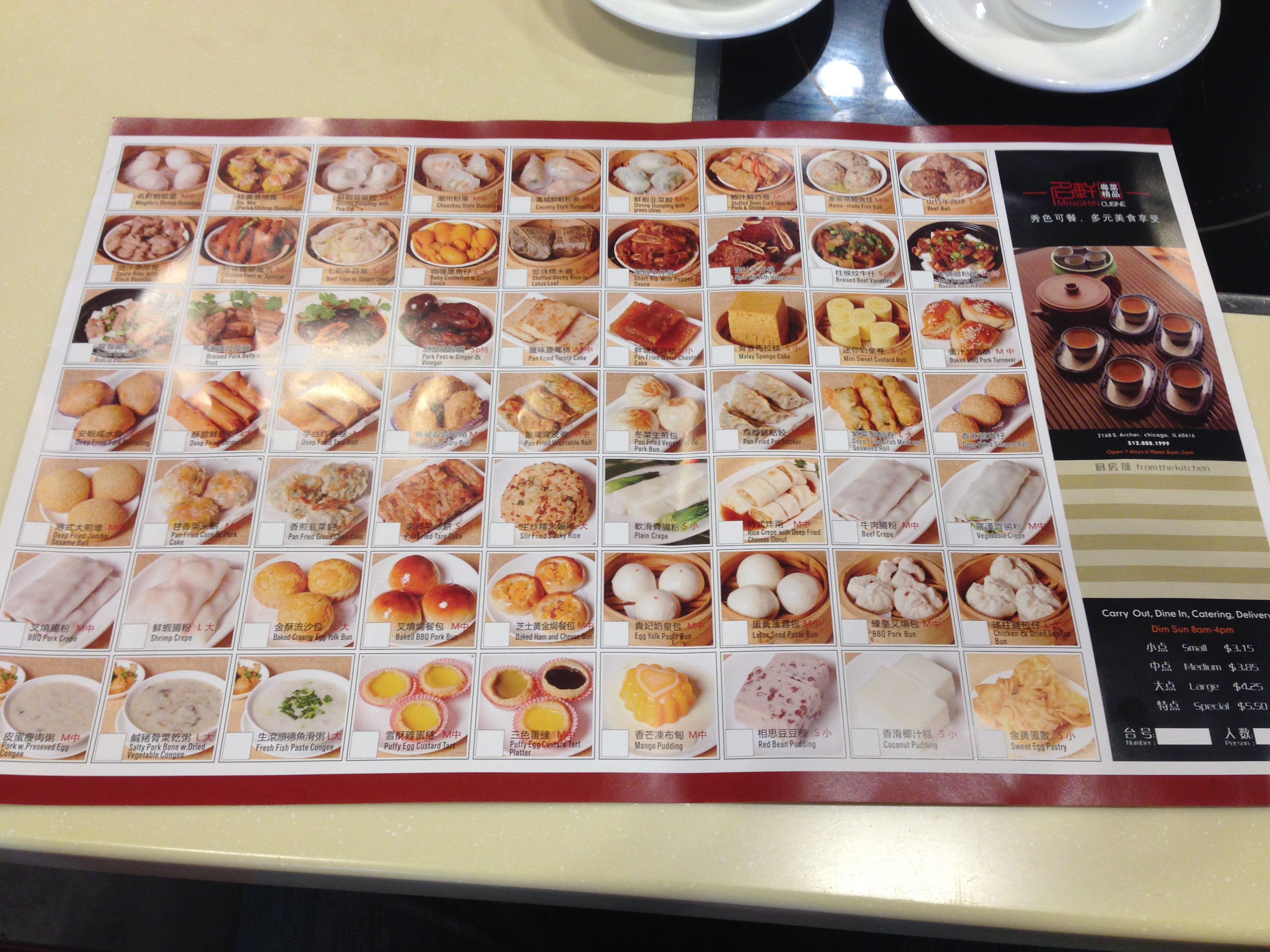
When I arrived before Janice, I was greeted with a horde of anxious diners waiting for a table in the bustling main rooms or the side tea room that is devoted solely to the warm brews.  IMG_5719So, I put our name in and got a post it with a number on it.  It’s a simple but functional system they have for alerting customers when their tables are ready.  You have to try and hear your number on the Post-It note being shouted out first in Chinese and then in English above the din of the restaurant.  Eventually, they yelled out my number, and they quickly seated me. IMG_5743 They offered me a selection of teas to sample while I was waiting, so I plumped for a pot of chrysanthemum tea.  Janice took a seat opposite me soon thereafter, and we sipped on the tea that oddly looked like urine.  IMG_5721Thankfully, there was no trick to be had there, but it wasn’t Janice’s cup of tea.  I found it to be quite interesting with its earthy and highly herbal personality, but a bit more intense than the green or black teas I’m used to.  While the tea was warming our bellies, we looked over the two different menus on the table. IMG_5720 One consisted of the dim sum options we could pick from while the other menu was more focused on barbecue.  After much intense deliberation and taking into account Janice’s recommendations from her previous visits, we made our choices.  IMG_5737

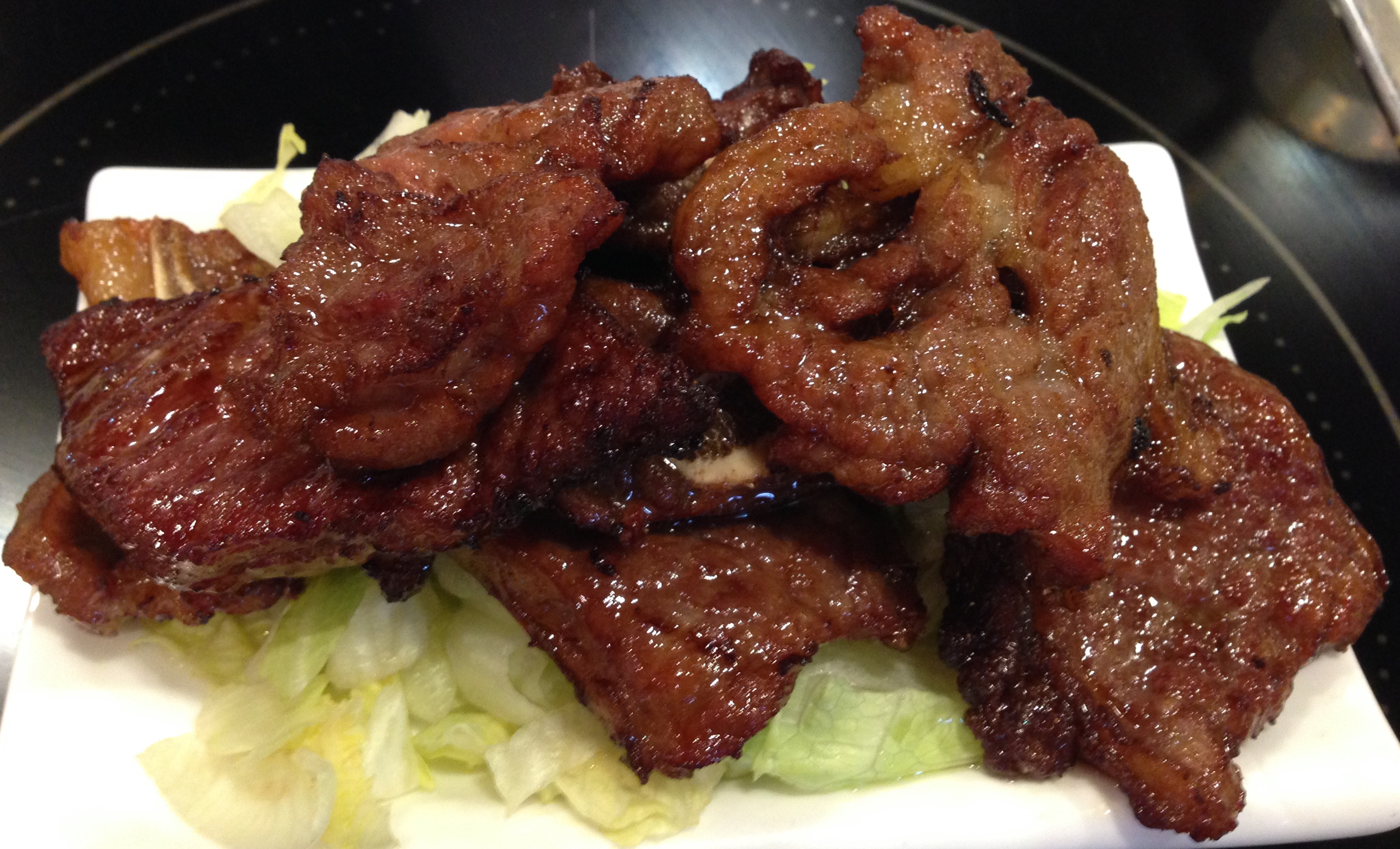
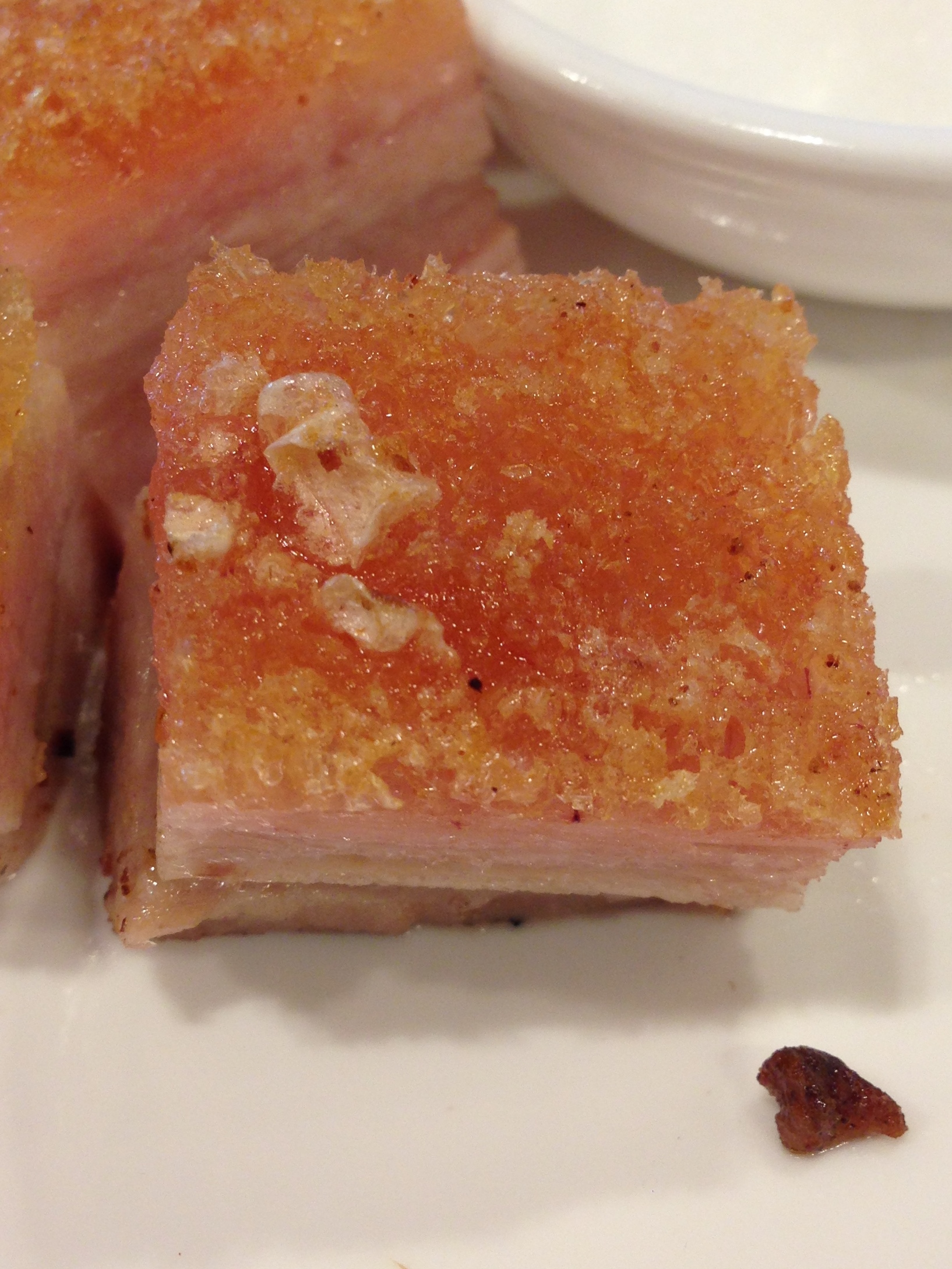
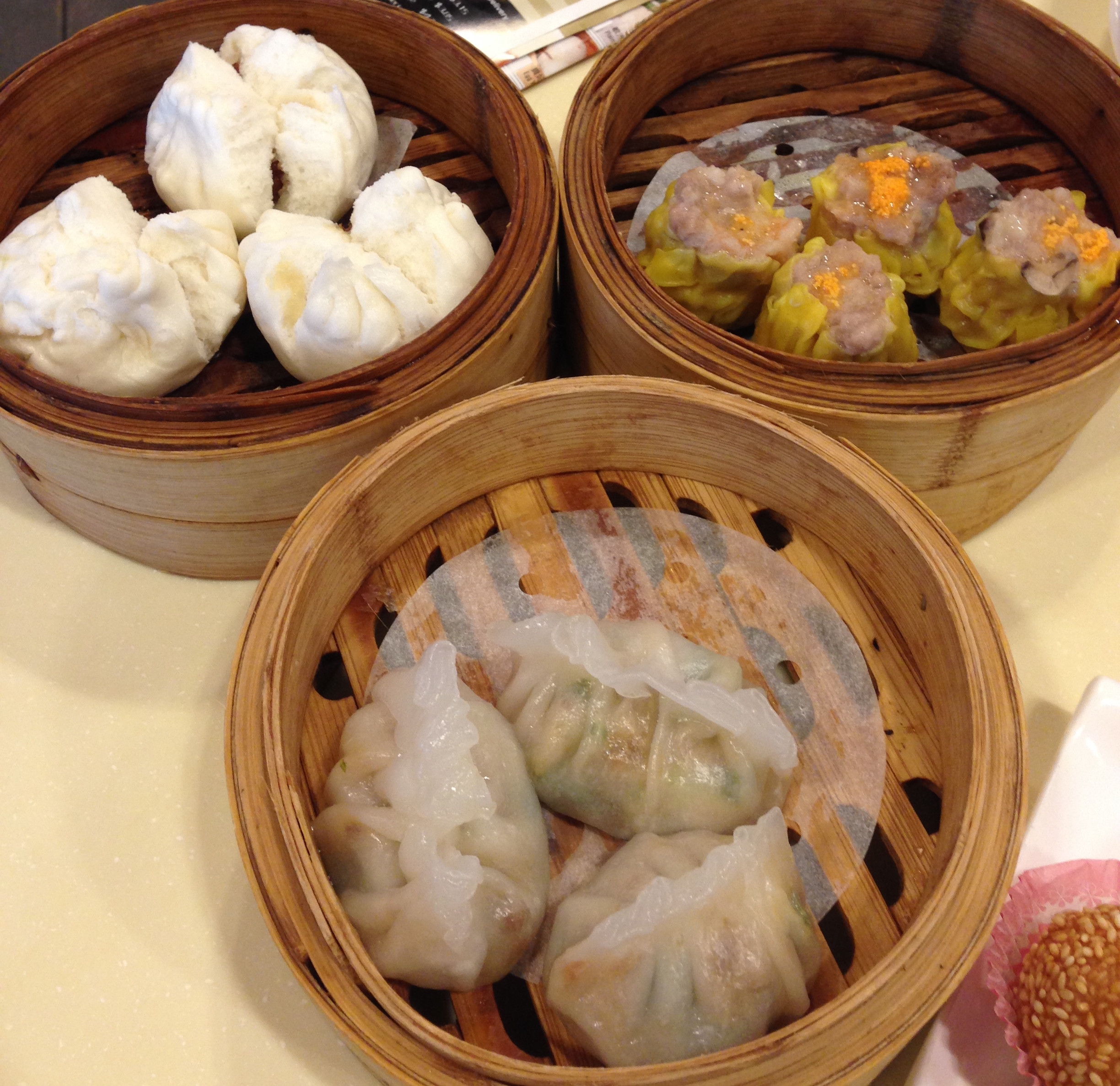
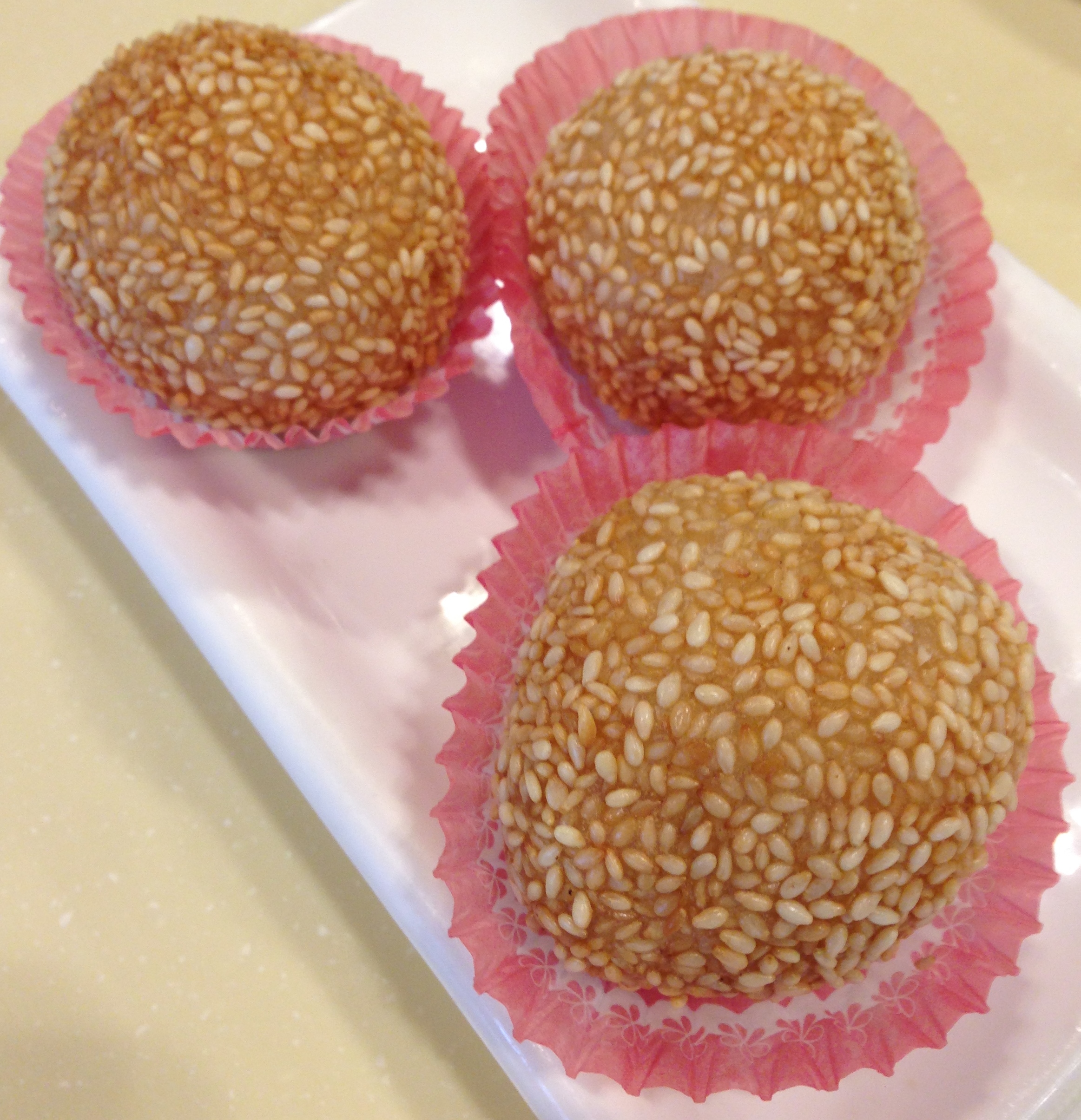
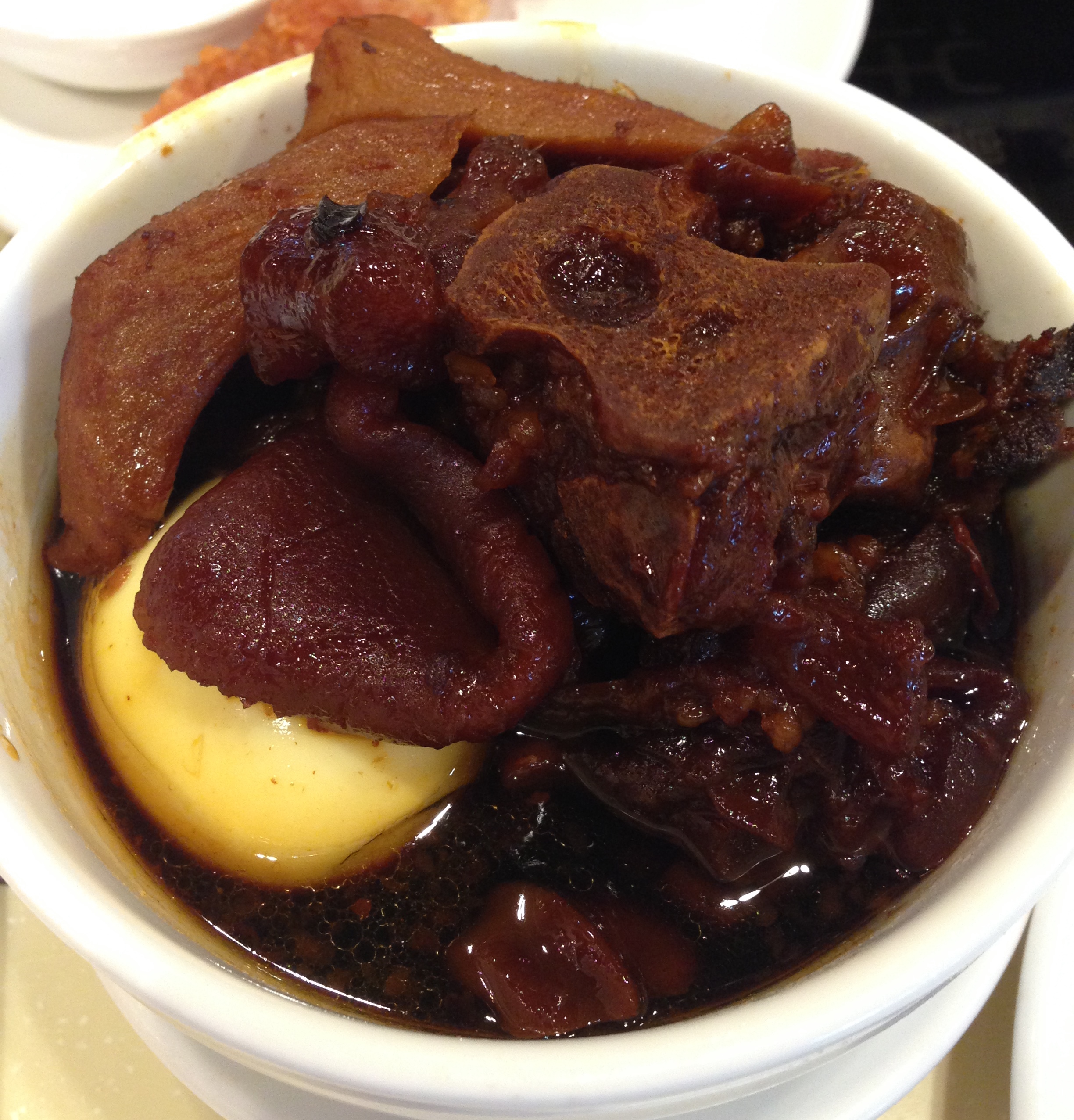
The first dishes that came out were from the barbecue menu.  We tried the barbecued spare ribs and the crispy Macau style pork belly ($5.95 each).  Both were fantastic. IMG_5725 The honey spare ribs were lip-smacking good minus the bones, but the taste was similar to Korean kalbi ribs with a soy marinade that was both sweet with a little salt mixed in.  Then there was the pork belly. IMG_5728 Talk about a contrast of flavors and textures.  The top of the meat had a thin yet crunchy skin of sugar and perhaps a bit of cinnamon that was the perfect compliment to the multi-layered and uber-tender and juicy pork.  IMG_5731These nuggets came with a side bowl of sugar to dip them in, but I found it to be a bit excessive.  We also had a side of fried sticky rice, but I was not impressed at all by this bland and flavorless pick.  We moved on from the meaty opening salvo to more traditional dim sum options like the barbecue pork buns, fried sesame balls, siu mai, shrimp egg rolls, and chao zhou dumplings. IMG_5741 All of the dim sum plates are priced based on size with small ($3.15), medium ($3.85), large ($4.25), and special ($5.50).  I won’t go into tons of detail with most these plates since I’ve tried these a million times over.  I did love my bbq pork buns because they were fluffy and filled with that sweet sweet char siu style pork.  As for the sesame balls, the ones at MingHin are my new favorite ones because they aren’t filled with my old enemy of the Far East:  red bean paste. IMG_5733 Instead, they are filled with a more neutral and less obnoxious white bean paste.  What I found out at a later visit is that if you get the giant fried sesame ball, they just give you fried slices of the chewy rice paste that is coated with plenty of savory sesame seeds and no beans to be found.  Another stand out in this meal were the chao zhou dumplings I ordered.  They were filled with pork, but two huge surprises were the crunchy peanuts and the slightly spicy kick with each dumpling.  Another great pick were the shrimp egg rolls. IMG_5739 They were slightly addicting with their crunchy, golden-brown exteriors that were light and not greasy at all with plenty of shrimp inside.  While all of these choices were quite standard, I knew I had to try something new, something slightly frightening to those who are happy to stick with the tried and true favorites.  Enter the pork knuckle and lotus root. IMG_5734 When it was placed in front of me, it looked intimidating, but I’m not one to back down from a culinary challenge.  I picked up a piece of the burgundy flesh, and it was oddly soft.IMG_5742  It was like eating ginger-flavored jelly.IMG_5735  It was slightly unsettling but not terrible once I got used to it.  I also tried one of the lotus roots as well, but it left me with a sour taste in my mouth.  I’m glad I tried it, but I won’t get it again.  I’ll just stick to chicken feet.  By the end of the meal, we were quite happy with the food we got and for the reasonable price.

So, if you’re looking for a new and high quality dim sum eatery, check out MingHin Cuisine!  It’s a small slice of culinary amid the jungle of restaurants, and it’s fun for the whole family!  Afterward, you can check out everything Chinatown has to offer including their square of zodiac signs among many other sights.

Tame rabbits love it

Tame rabbits love it

And wild tigers love it too!

And wild tigers love it too!

MingHin Cuisine on Urbanspoon

Topolobampo: One Bday at a Time

Posted on

Welcome one and all to Mastication Monologues where I try to try as many different meals as possible while educating the reader about new cultures or the origins of popular foods.  One of the most diverse food scenes out there is Mexican cuisine.  You can go all over the USA and find some form of taco, burrito, or nachos at least even though some interpretations of these meals (especially nachos) might not be seen south of the border.  However, there has been an evolution of Mexican food as of late where different Asian cuisines have been blended to create new and crazy creations like Korean inspired bulgogi (marinated beef) tacos.  On the other hand, one of the biggest names in Mexican cooking, Rick Bayless, has been trying to get to the heart of simple Mexican food after decades of living, tasting, and drinking everything from Juarez to Jalisco.  Janice and I met him during Taste Talks of Chicago where he talked about the constant evolution of food, and how meals bring people together from different backgrounds or may make them more in touch with their heritage.  How does Rick manage to do this?  At his restaurant Topolobampo in Chicago, they serve a rotating menu that draws on Mexico’s culinary history starting in the pre-Colombian era and ending in modern Mexican fusion along with different specialty dishes from all corners of Mexico.  I had the pleasure of paying Topolobampo a visit for my birthday last year with my lovely girlfriend, so I apologize for the delay for this mouth-watering post.

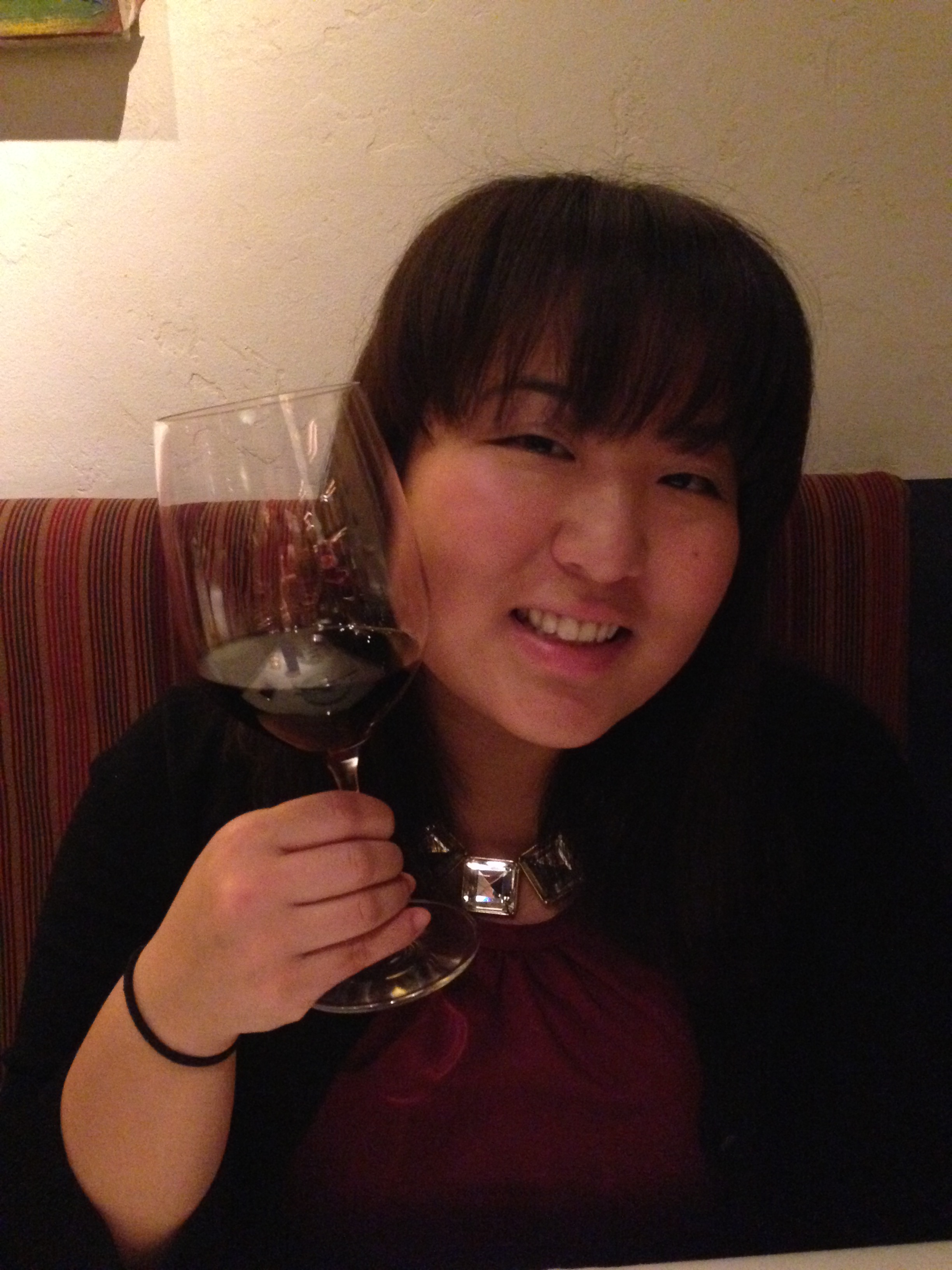
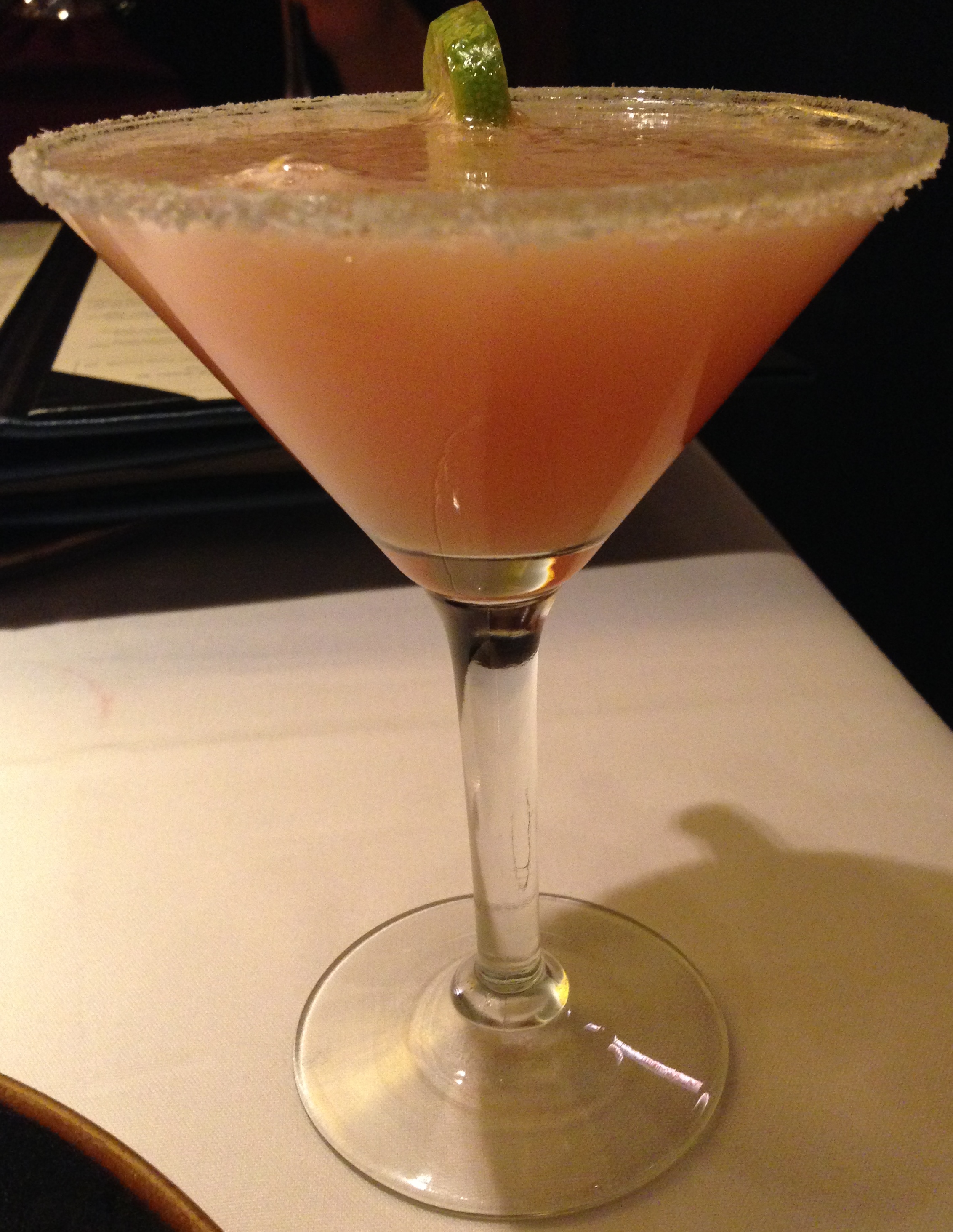
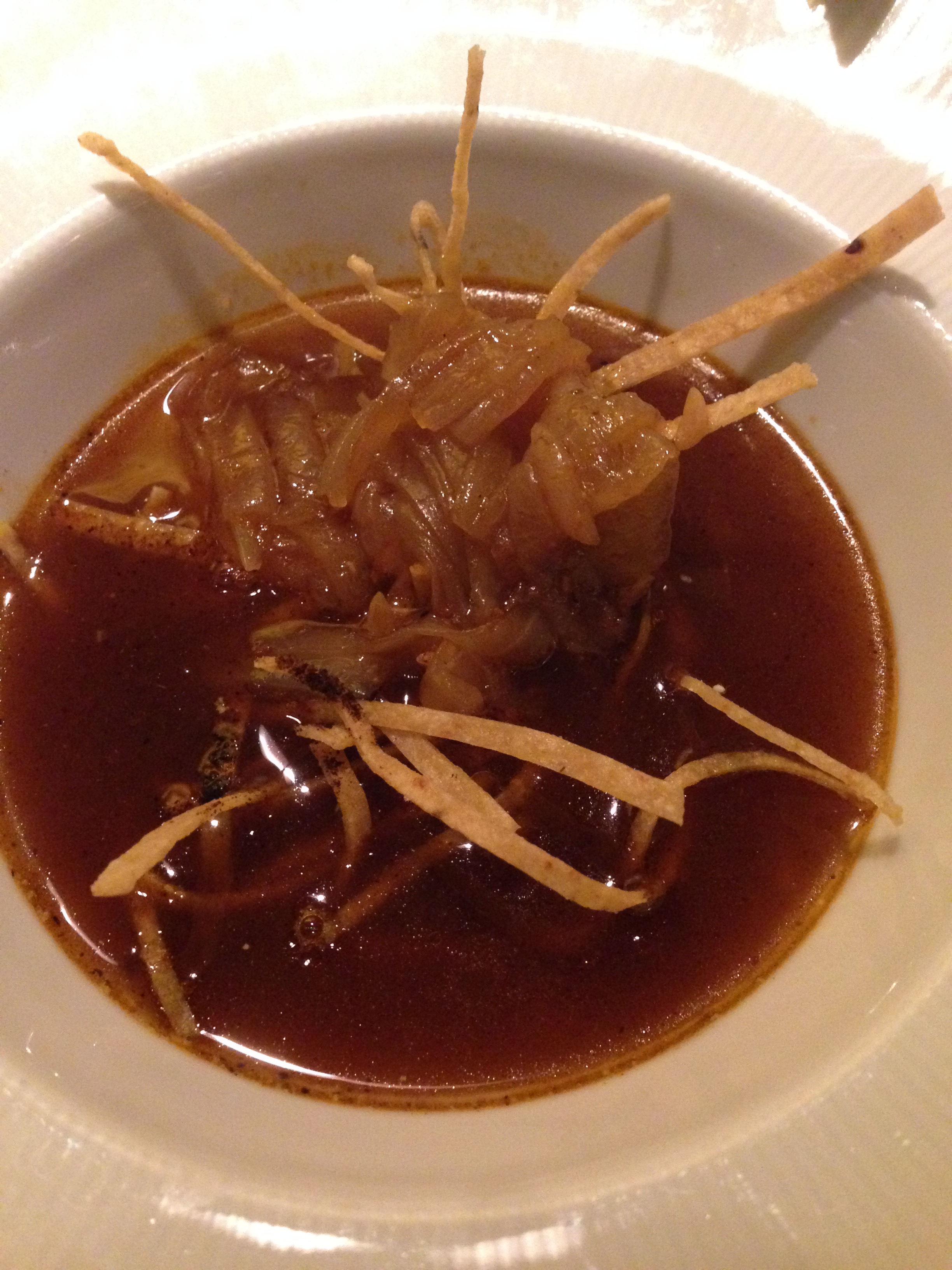
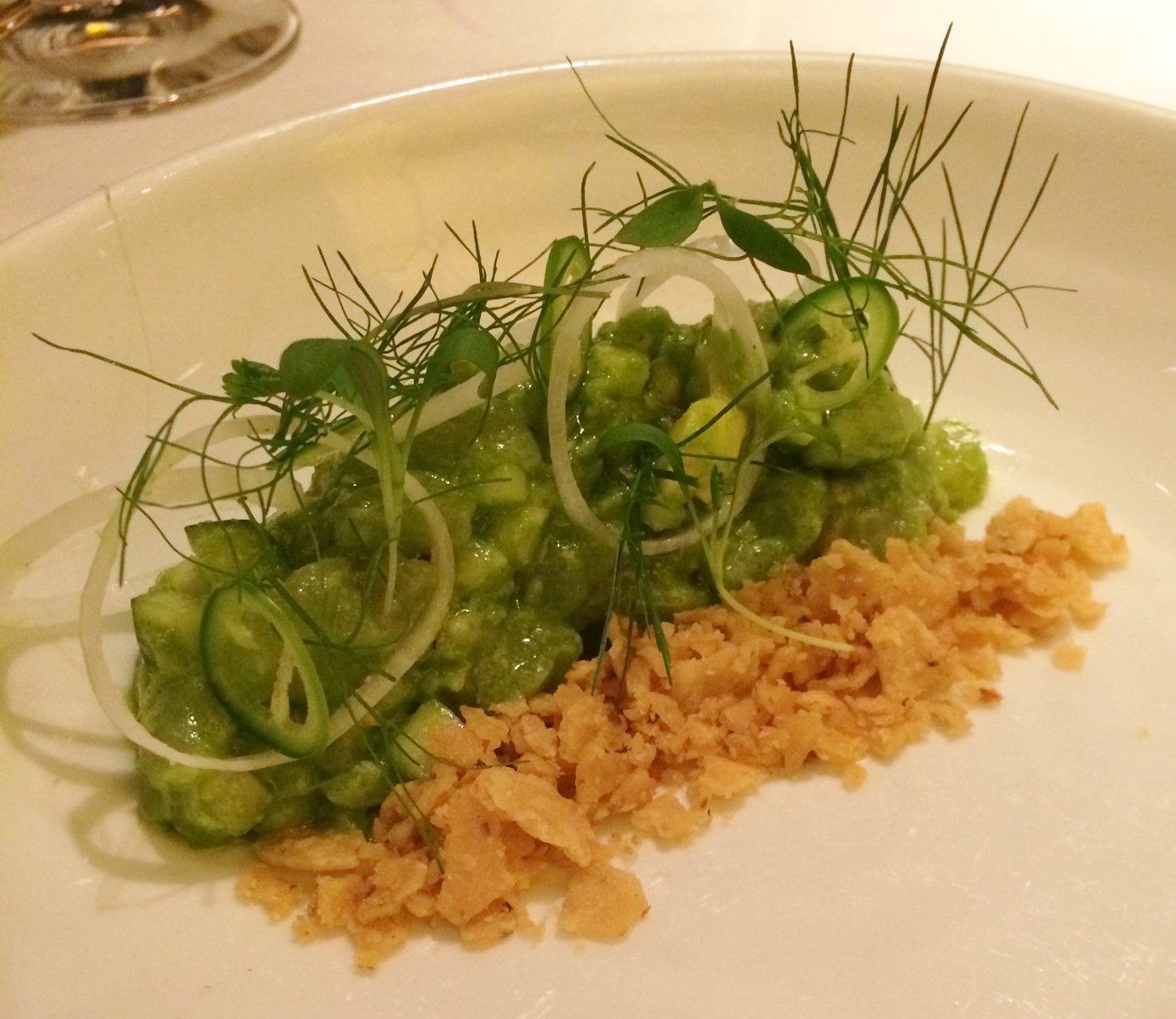
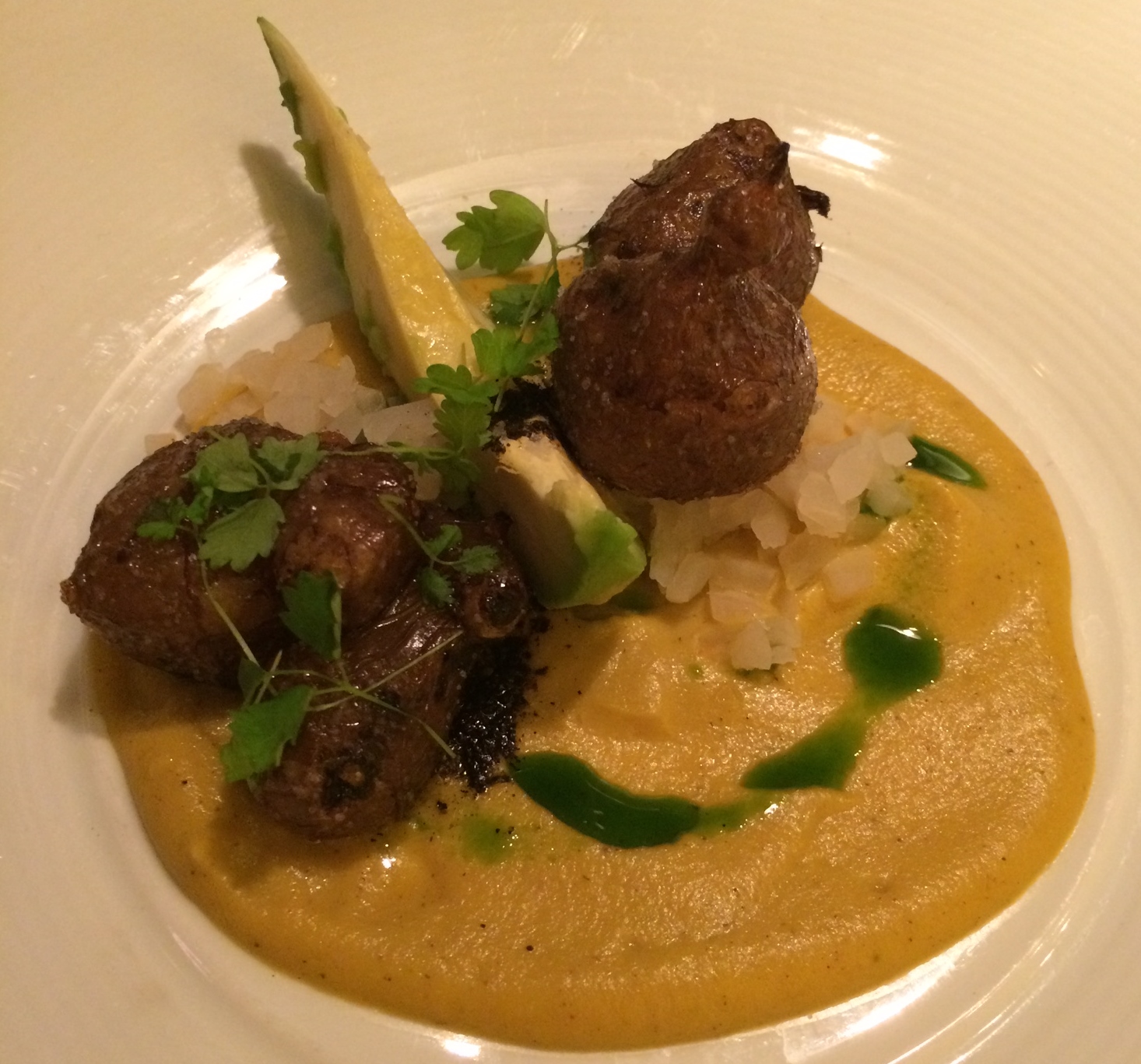
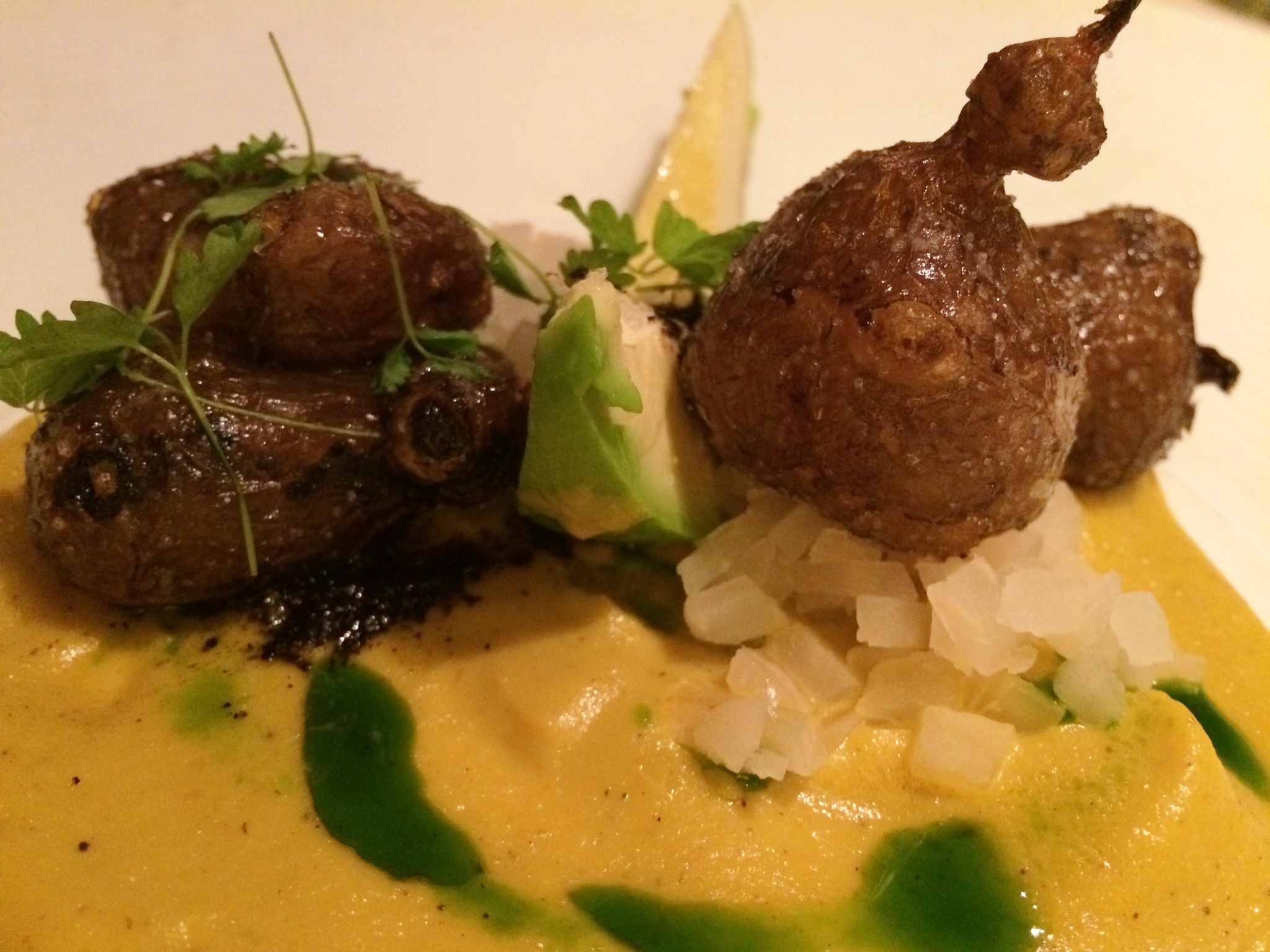
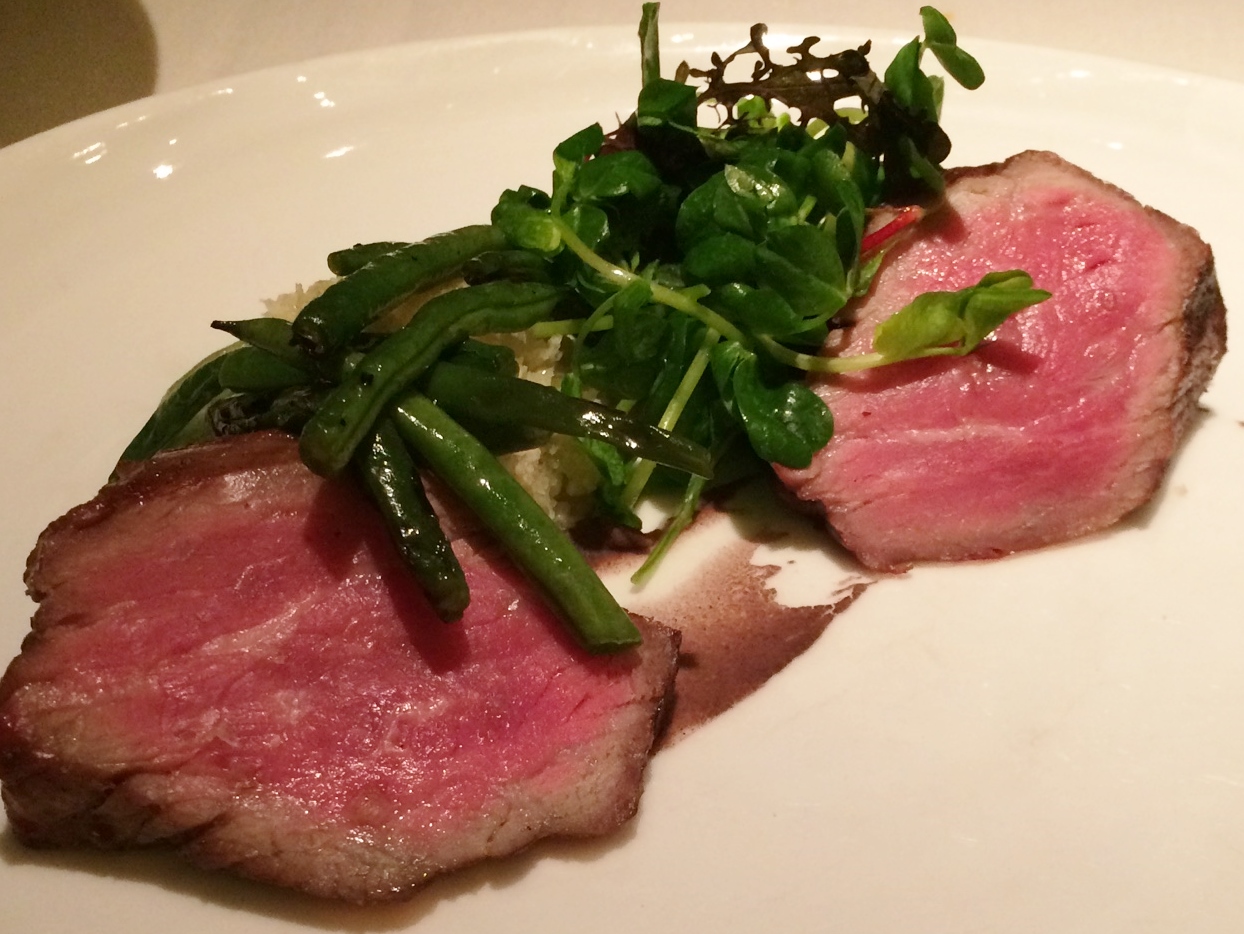
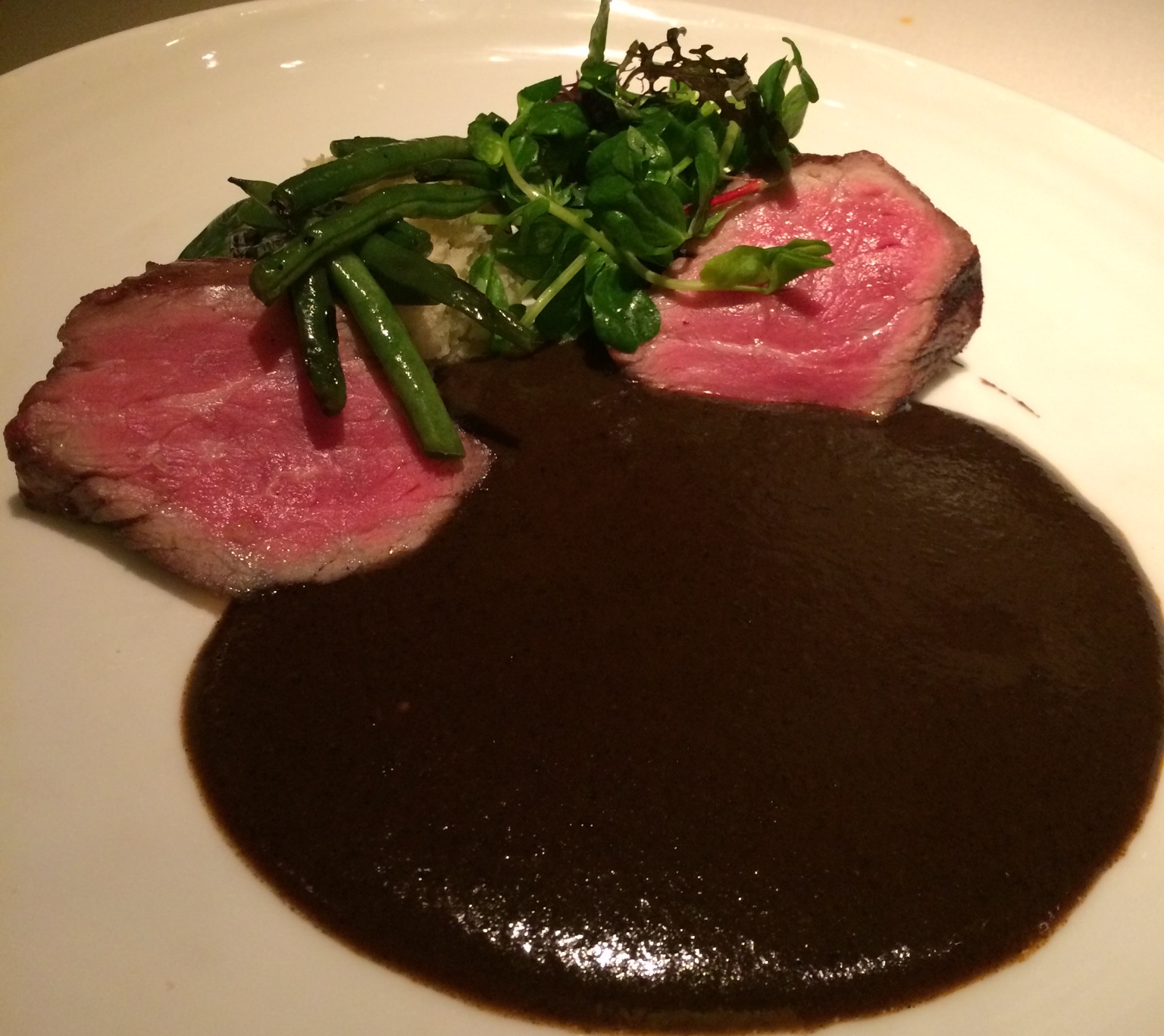
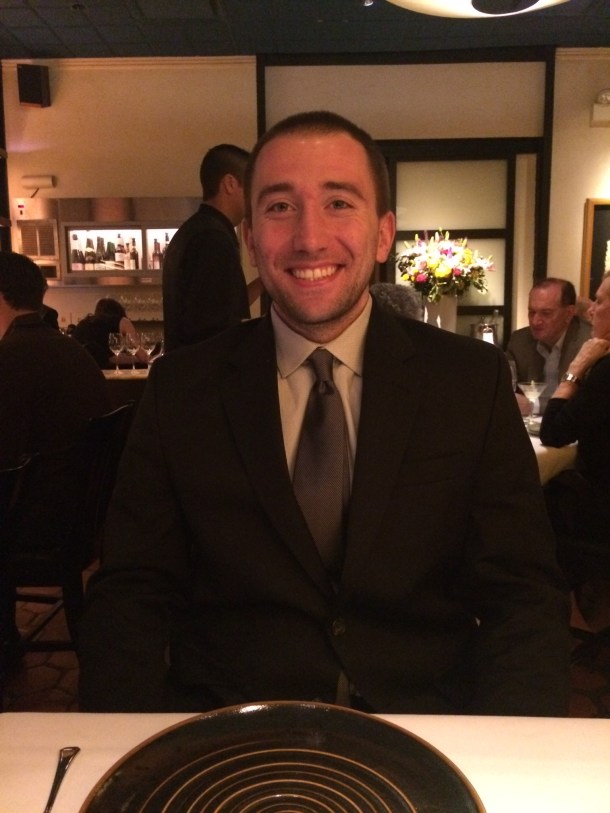
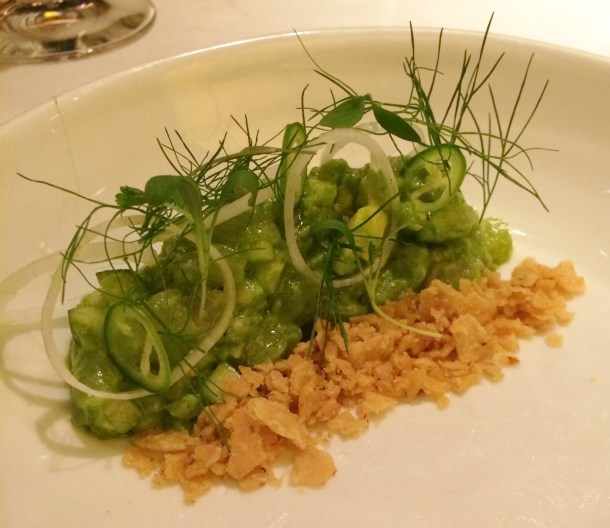
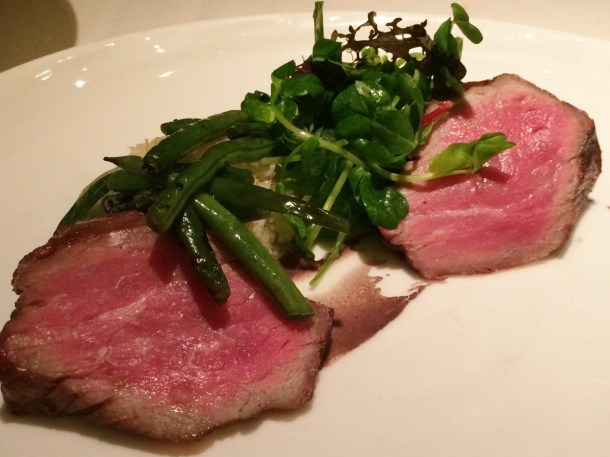
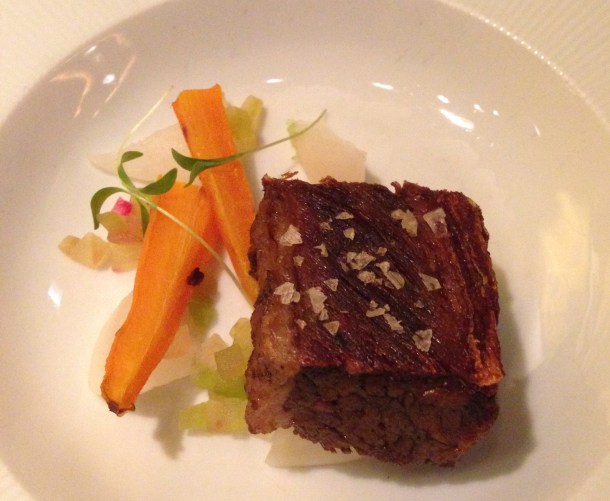
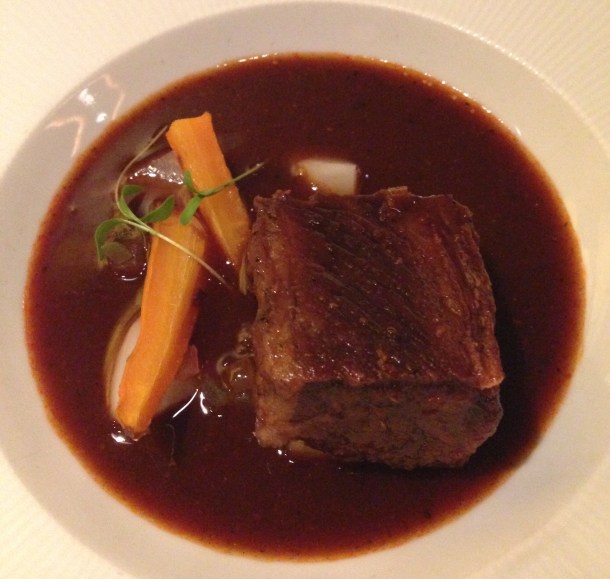
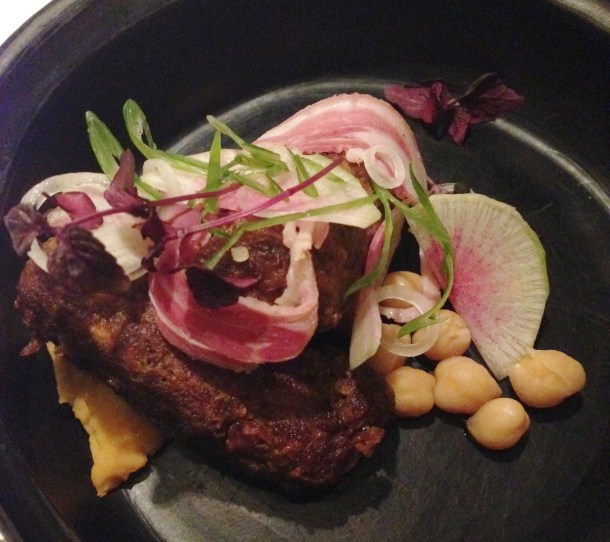
The front of the restaurant consisted of two different restaurants but both owned by Mr. Bayless.  IMG_4981It was slightly confusing trying to find the entrance because we couldn’t see a clear door for either restaurant, but it turns out they shared a common door.  Upon walking in, we were in the lobby for Frontera, the cheaper and more boisterous of the two restaurants.  We walked through the hallway past the strains of musica ranchera to the more demure Topolobampo dining room.  Instead of lots of kitchy Mexican bric a brac on the walls a la Frontera Grill, there were more oil paintings and softer music.IMG_4978  I’d also recommend putting on nicer clothes since its a classy kind of joint.01df7509f997342c67799f4f76e06f709f9e61dfc8  I could hardly contain my excitement as I looked over the menu, but we started off with some drinks.  There weren’t any prices for the food items, but there are for the drinks.  So, it seems they operate on the “If you have to ask, you can’t afford it” train of thought.  Janice went with a classic glass of red wine that ended up being as big as her head, and I got a mezcal margarita ($12.50).IMG_4964  Mezcal has become more popular with the rise of tequila, but still isn’t very widespread.  It is distilled from the maguey agave plant which is so revered that the Aztecs called the fermented liquid the “elixir of the gods”.  Mezcal assumed its current form when Spaniards took the Aztec agave drink called “pulque” and found a distilling process to increase its alcohol content.  While in Mexico mezcal is consumed straight, I had it mixed with the Spanish Torres 10 year brandy, bitters, lemonade, and mezcal from the very home state in Mexico that started it all, Oaxaca.  It was shaken and served tableside with much pomp, and it was one of the best mixed drinks I’ve ever tasted.unnamed (2)  It was super potent, but not too sweet. IMG_4957 The hight quality mezcal and Spanish brandy left my palate with a smooth caress with each sip, and there was no burning sensation when it was going down compared with some tequilas I’ve tried.  Once we got our drinks, we got to figuring out what food to order.  At Topolobampo, diners have the option of doing a three, five, or seven course tasting menu with the eaters choosing the dishes.  A fourth option is doing a “Perfect Seven” chef-chosen seven course meal.  We each went for a 5 course tasting menu since we were starving and ready to sample everything Chef Bayless had to offer.  We expected nothing less than magic after hearing him talk about his pre-Colombian menu where he made Mexican food with no beef, chicken, cilantro, lime, or even pork! Long story short, we were blown away.  Our meal started with an off-the-menu item that we got for free.  It was a tiny stack of radioactive pink disks resting in a similarly colored liquid.IMG_4959  Our waiter explained that it was pickled watermelon and radish topped with cayenne pepper.  It was cool, sour, yet slightly spicy that primed our tastebuds for what was next.  I got the sopa azteca (Aztec soup) that consisted of a medium heat pasilla pepper infused beef stock, incredibly tender chicken, cheese, and tortilla strips.IMG_4961  It was simple yet warmed my soul on that dark and cold night.  It kind of reminded me of a Mexican take on French onion soup.  Janice’s first plate was a surprise knockout in terms of flavor.  She got the Sand and Sea which was green ceviche on a bed of tortilla sand.  If you’ve never had ceviche, it’s basically a room temperature salad made of tomatoes, onions, some kind of whitefish, and lime juice.  In true Rick Bayless fashion, he turned this Mexican coastal favorite on its head with chunks of summer flounder, serrano chiles, lime, jicama, and avocados to give it that Hulk green hue.  01cb2a19792a28dad09df6f12d856abd8ce6b359a7Coming from someone who is not a huge fish person, I loved it, and Janice, a bigger fish lover than I, loved it as well.  It didn’t have that super “fishy” taste that might accompany some dishes; I’d liken it more to a lighter and thinner guacamole in terms of taste and texture.   Next up was my beautiful girlfriend’s sunchokes.  The name “sunchoke” was invented for this tuber that is kind of like a potato in terms of appearance in the 1960’s to revive the sales of this very old plant.  However, the sun part supposedly comes from the Italian name for it “girasole” or “sunflower” due to the similar yellow flowers that grew wherever sunchokes could be found.  As for the “choke” part, that came from famous French explorer Samuel Champlain sending back samples of the veggies to France from Canada and America noting a “taste like an artichoke”.unnamed (3)  They were served in a recado blanco sauce from the Yucatan peninsula, a.k.a. the home of the Maya and every high schoolers’ Spring Break plans.  It was a simple sauce that had some garlic, oregano, and some sweet spices to give it a semi-curry character with a guero chile mixed in to give it a vibrant yellow hue.  unnamed (5)Underneath them were resting fermented kohlrabi pieces which were basically pickled turnips.  It was both spicy yet savory and slightly sweet.  The cool slice of avocado on the side cut down the spice when necessary.  They were ok but not amazing in comparison to my second dish:  the carne asada in mole negro.  Now, a lot of people love the chocolatey, spicy sauce on their enchiladas, and much to my own surprise, I am not one of them.  I love chocolate in all forms, but I normally shy away from mixing sweet and savory items.  Topolobampo made me see the upside of this pre-Colombian sauce.  First, there were the firewood-roasted pieces of ribeye that were small but extremely lean, and these exemplary cuts of meat were surrounded by smoked green beans and a small tamal of chipilin herbs. unnamed (4) Mole comes from the Aztec word for “sauce”, and legend has it that a group of nuns threw a bunch of spices together with some chocolate to make sauce for the archbishop’s meal.  He loved it and wanted to know what it was.  One of the nun’s said, “I made a mole”, and thus the legend was born.  For once, I was like the archbishop in a divine state of being when eating this plate. unnamed The Oaxacan mole wasn’t overly sweet like other moles I have tried; the chihuacle chili peppers really brought a little fire to each bite which I appreciated along with the other 28 ingredients that went into the delicious sauce.  As for the meat, it was astoundingly tender and smoky to compliment the mole.  The same could be said for the green beans.  Next, I got goat barbacoa which was served two ways.  The lower layer was slow cooked goat that could be found in a Jalisco birria stew while the top was a panchetta or cured piece of goat that was crunchier.IMG_4971  It was served with garnishes on the side that were fresh, but the goat when it was coated in the red chili sauce was rich, almost too rich for its own good.  IMG_4973While the barbacoa was melt-in-your-mouth quality, it was a bit too salty for my liking.  Janice’s tamal festivo that was stuffed with turkey, chestnuts, and coated in a red mole sauce was like a Mesoamerican take on a traditional American Thanksgiving dinner.IMG_4967  I was very thankful she ordered it because it was extremely comforting and hearty.  Our final round of savory plates took us to two stewed dishes.  I got the mole de olla or (pan mole) which consisted of beef short ribs wallowing in a ancho and guajillo mole while being topped with some zesty and sour prickly pear fruitIMG_4969.  IMG_4970It covered every taste bud with an explosion of flavors, and I highly recommend this dish.  Janice’s suckling pig was equally decadent. 01f8efcc2b3d20eb4e1e73a399b356a5e08d901b68The braised pork was succulent, overshadowing the greens, and further embellished with the extremely thin veils of 14-month dry cured ham resting softly atop this tiny nugget of greatness.  Even after all of these dishes, we still had room for dessert because as the maxim of high end dining held true where it was a series of small but high quality ingredients that satisfied us, but we didn’t feel stuffed.
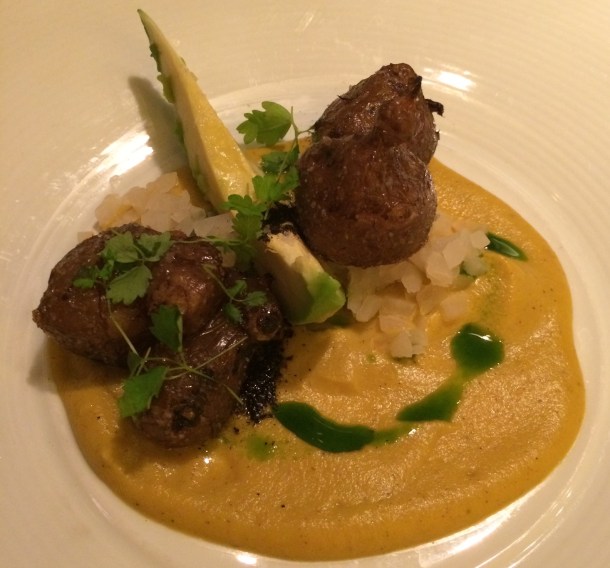
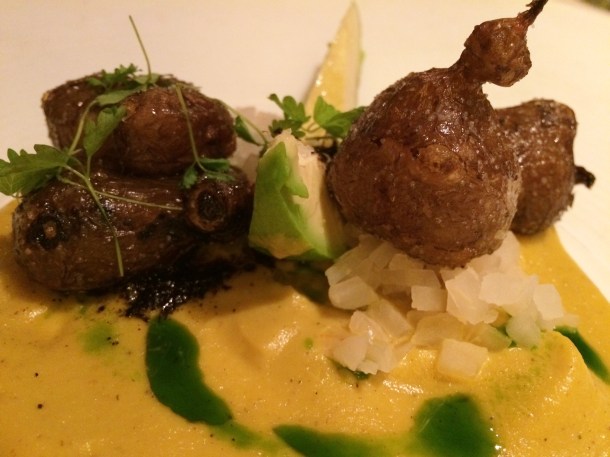
Dessert was just as over the top and true to its Mexican roots.  The cacao tree was an homage to the sacred cacao bean that was considered a drink and food only reserved for Aztec emperors and gods.  A piece of milk chocolate bark lay across three different forms of the dark stuff. unnamed (1)unnamed (6) First, there was the moist lava cake that was made with house-made chocolate straight from Tabasco, Mexico.  Words cannot describe how delicious this element was.
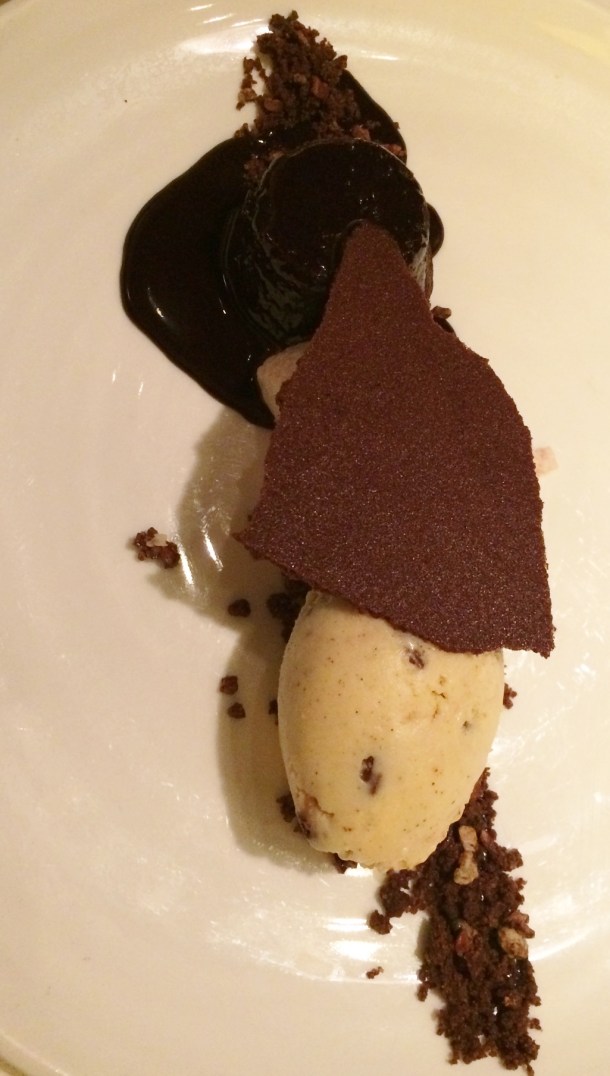
So much love for the cake.

Clearly she liked it.

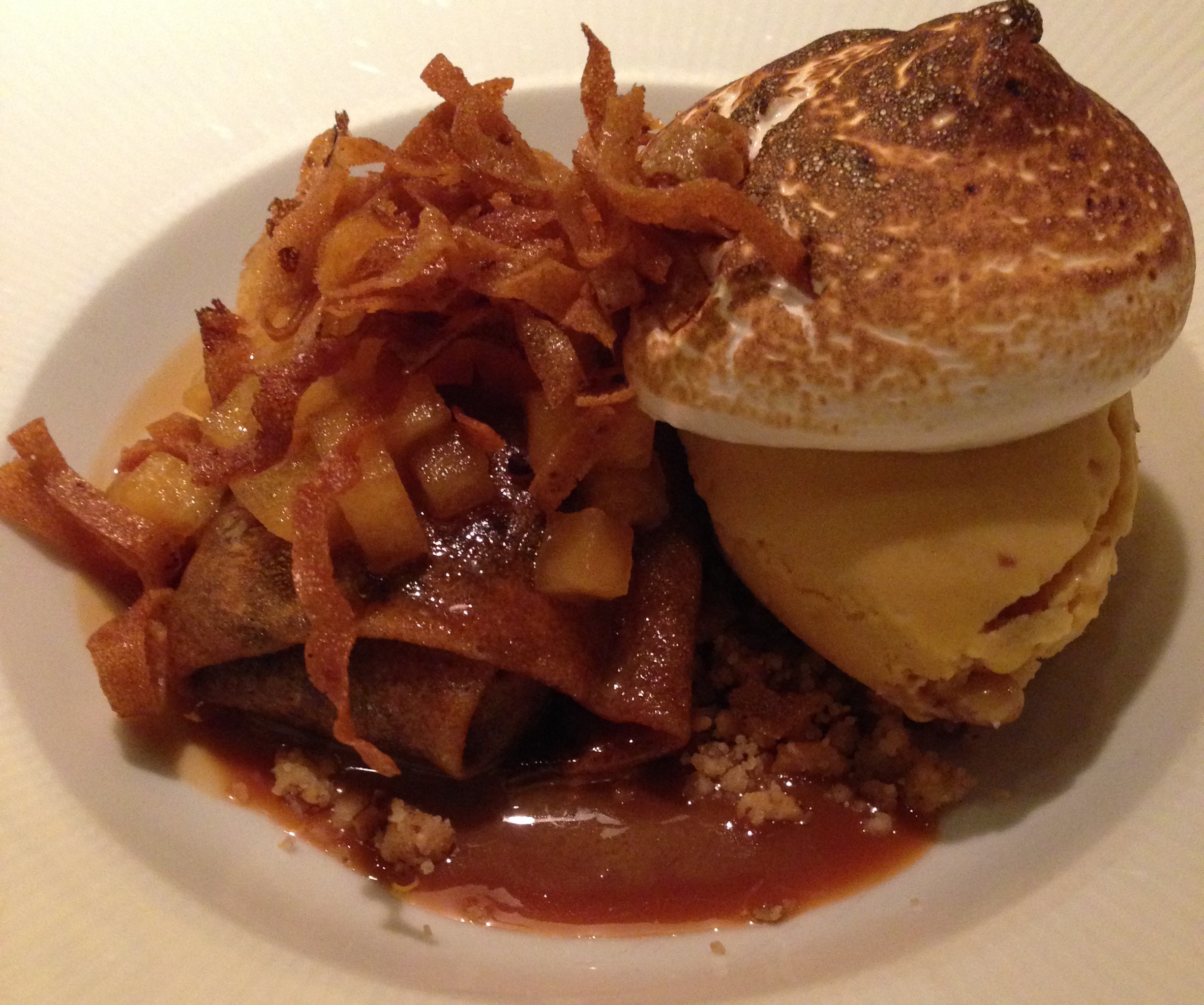
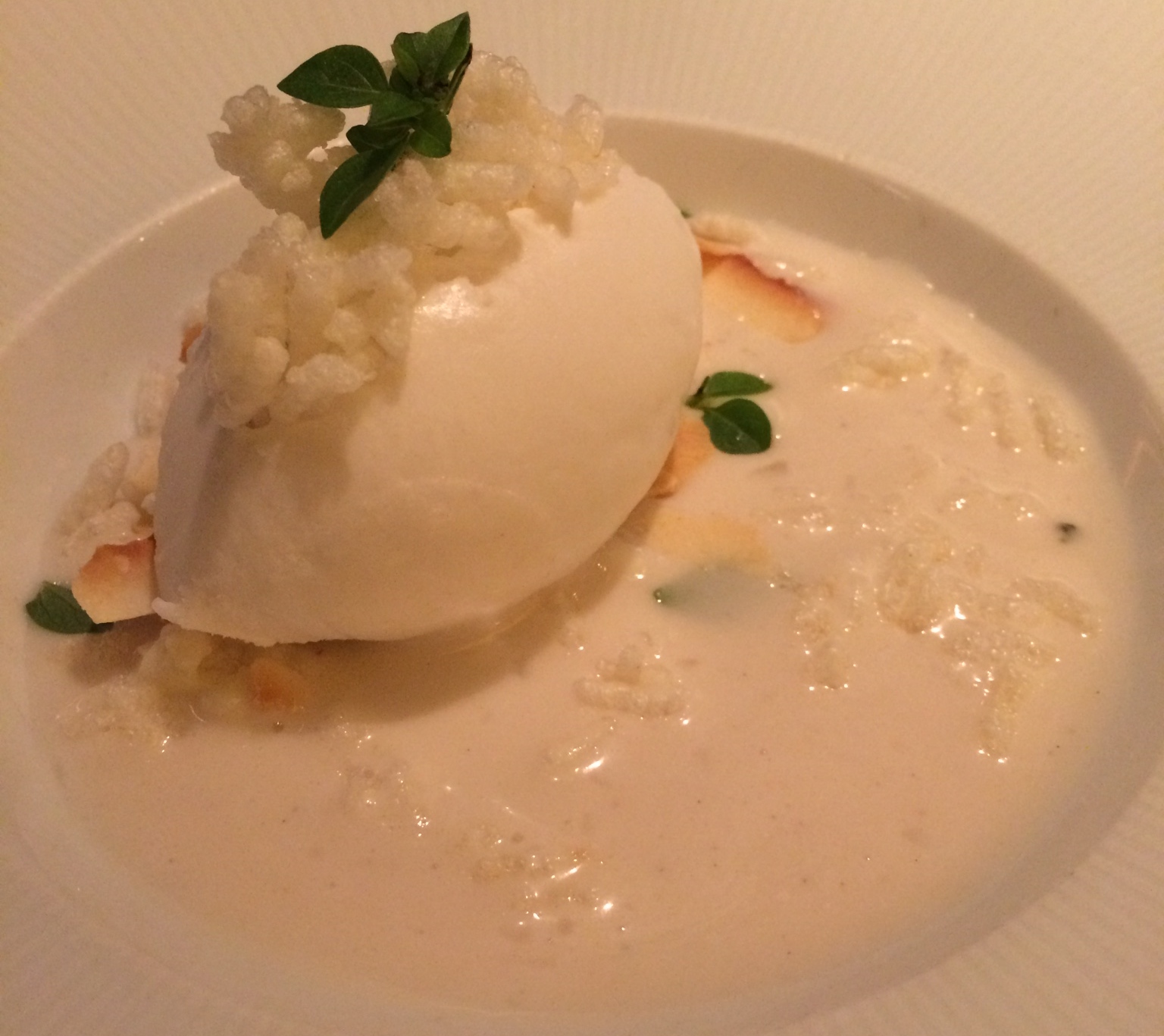
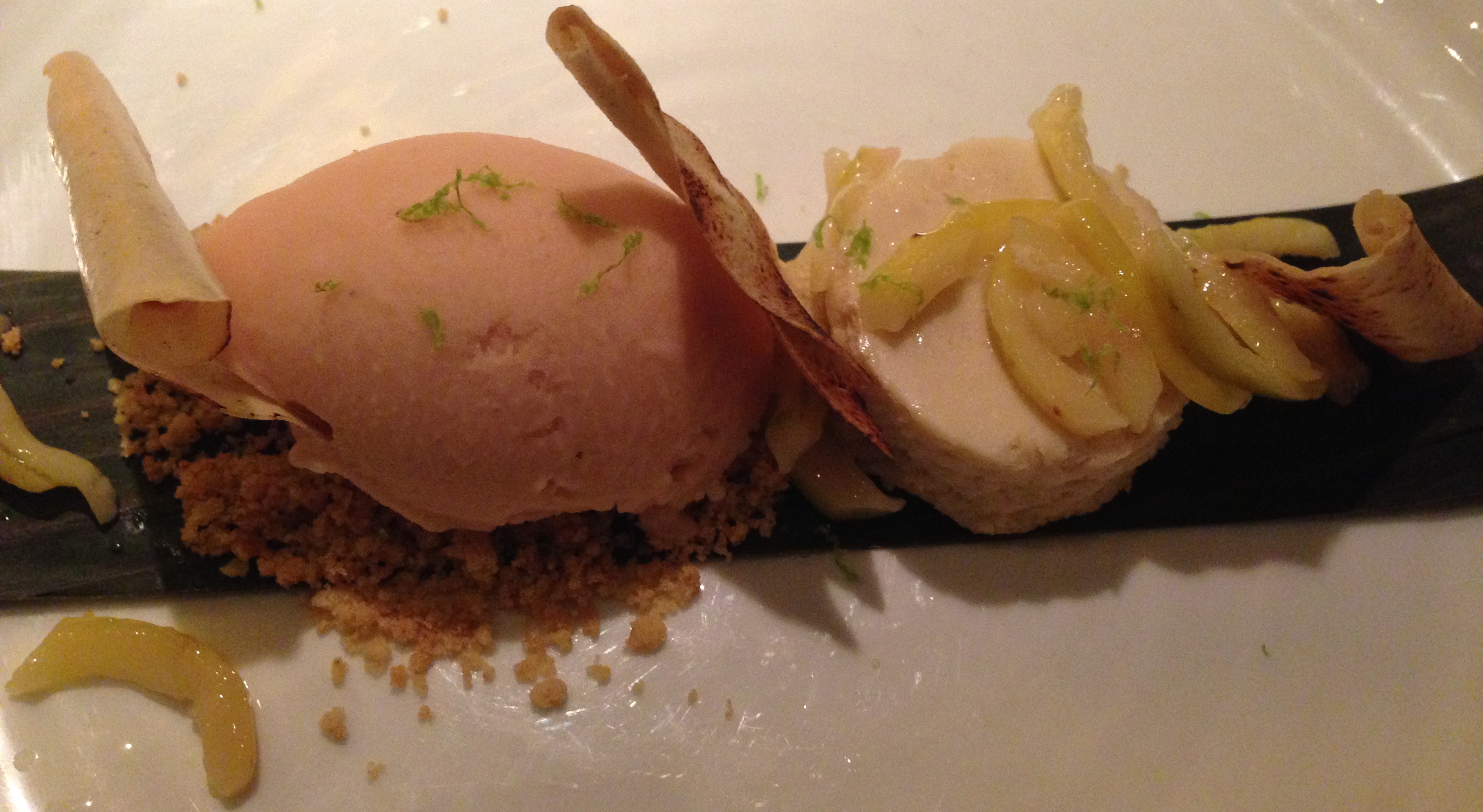
Next, the cacao fruit mousse was the opposite in the sense that it wasn’t extremely rich but rather a smooth and sweet raspberry and chocolate cream.  Finally, there was the rosita de cacao ice cream that was like a lip-smackingly great French vanilla combined with a generous helping of chocolate chunks from Chiapas, Mexico.  Janice got the crepas con cajeta (crepes with cream) which was just as great. IMG_4977 The crepes were slightly warm and filled with bittersweet dark chocolate ganache that became gooey due to the heat, and the pumpkin spice and pecan toffee ice cream on the side started to melt that made it perfect for the Fall.  On top of all of this, there was a meringue and warm apples that made it a mixture of European and pre-Colombian influences to make my stomach very happy.  The final two desserts were the winter buñuelo de viento and the guava atole.  The former was the antithesis to the cacao tree since it was all white errthang.01c17989af02d0e072be4bab7bc510836a68be025e  It consisted of a scoop of vanilla-brandy ice cream topped with puffed rice stewing in a warm traditional Mexican ponche or “punch” infused with hibiscus, tamarind, brandy, sugarcane, and tejocote apples.  The latter, the guava atole, was a complete nod to the Aztecs who invented the corn and flour drink.IMG_4974  On one side there was a steamed masa corn cake that was semi-sweet and moist.   Then the atole guava ice cream was on the other side where the sweetness of the tropical guava mixed with a slightly starchy element.  I liked the crunchy masa strips and flour crumbles because they brought both a change of texture along with an almost pie a-la-mode feel with the ice cream combined with the crumbles.  It was my second favorite dessert behind the cacao tree.
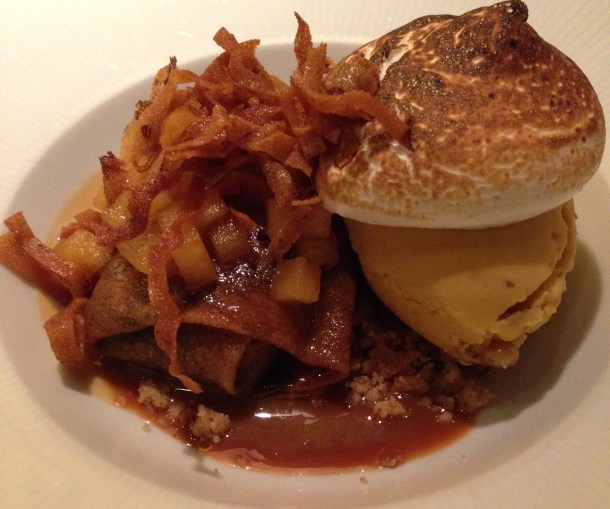
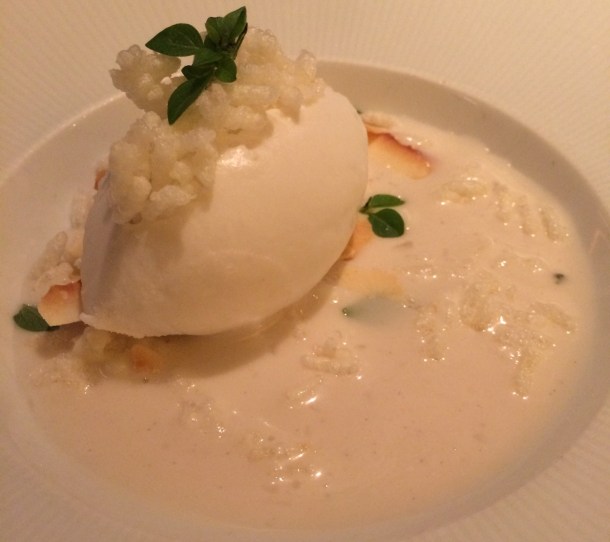
By the end of the meal, we were greatly satisfied, and it was a fantastic birthday from the beginning to the end even though I never found out how much everything cost haha.  If you want some gourmet Mexican cuisine at reasonable prices for high end diners, I highly recommend Topolobampo!
Topolobampo on Urbanspoon


Winter bunuelo de viento

guava atole

One In A Milion

Posted on

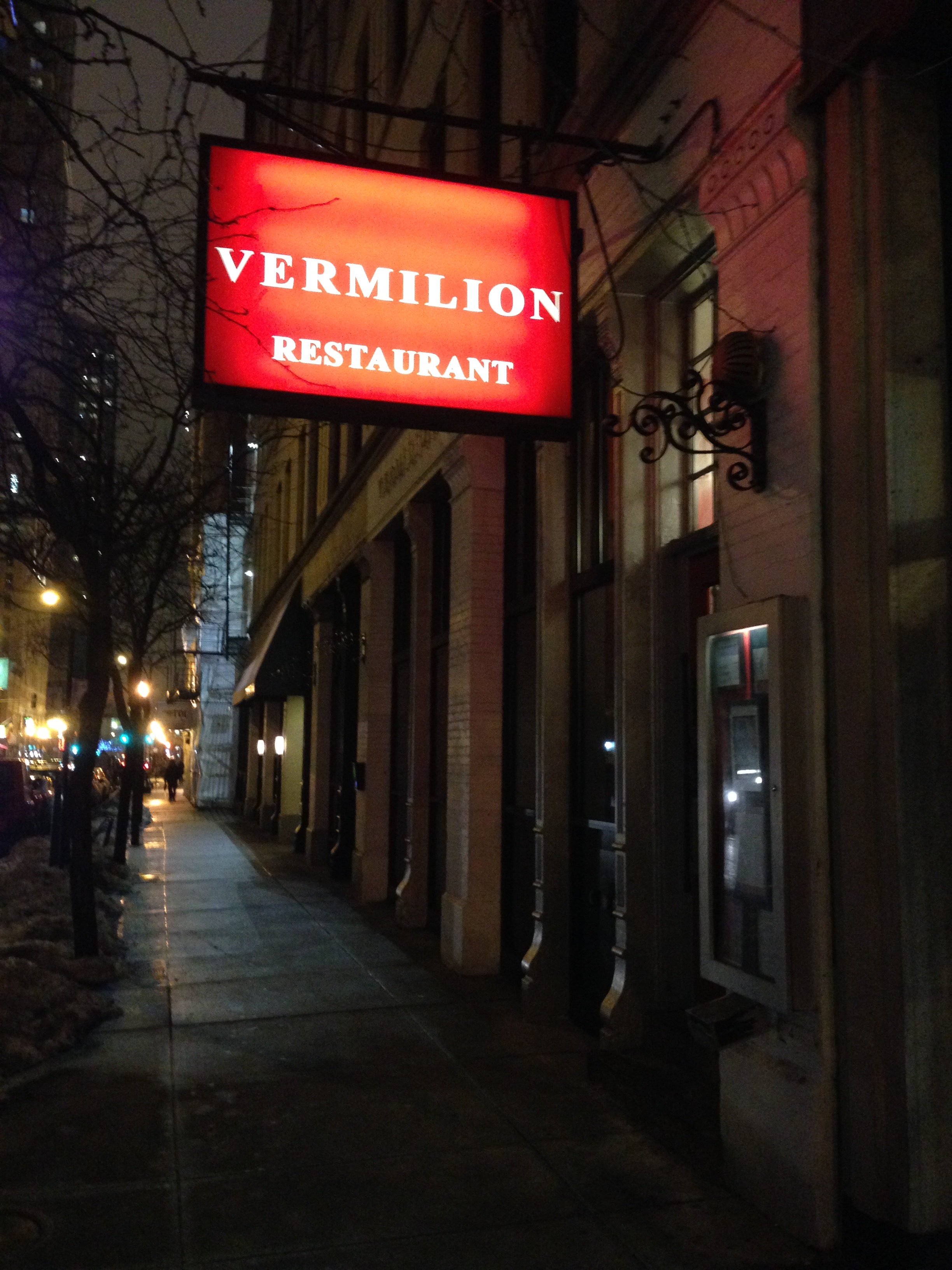
Hola and Namaste to a new Mastication Monologues post!  I got to apologize for the lack of consistent posts due to a new full time job that has been quite time consuming, but I promise that today’s entry will be all killer and no filler in the form of a great Latin fusion eatery in Chicago known as Vermilion.

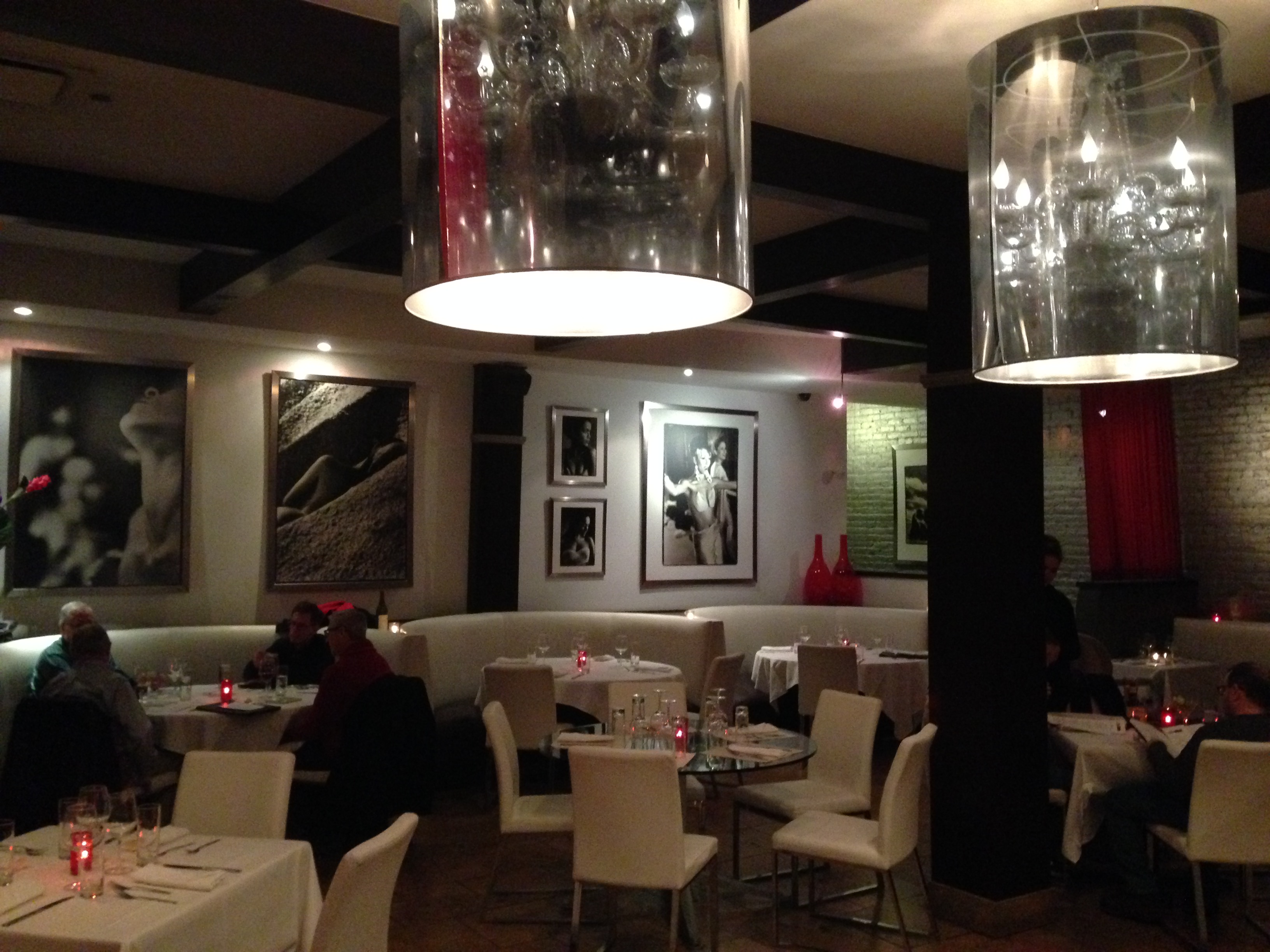
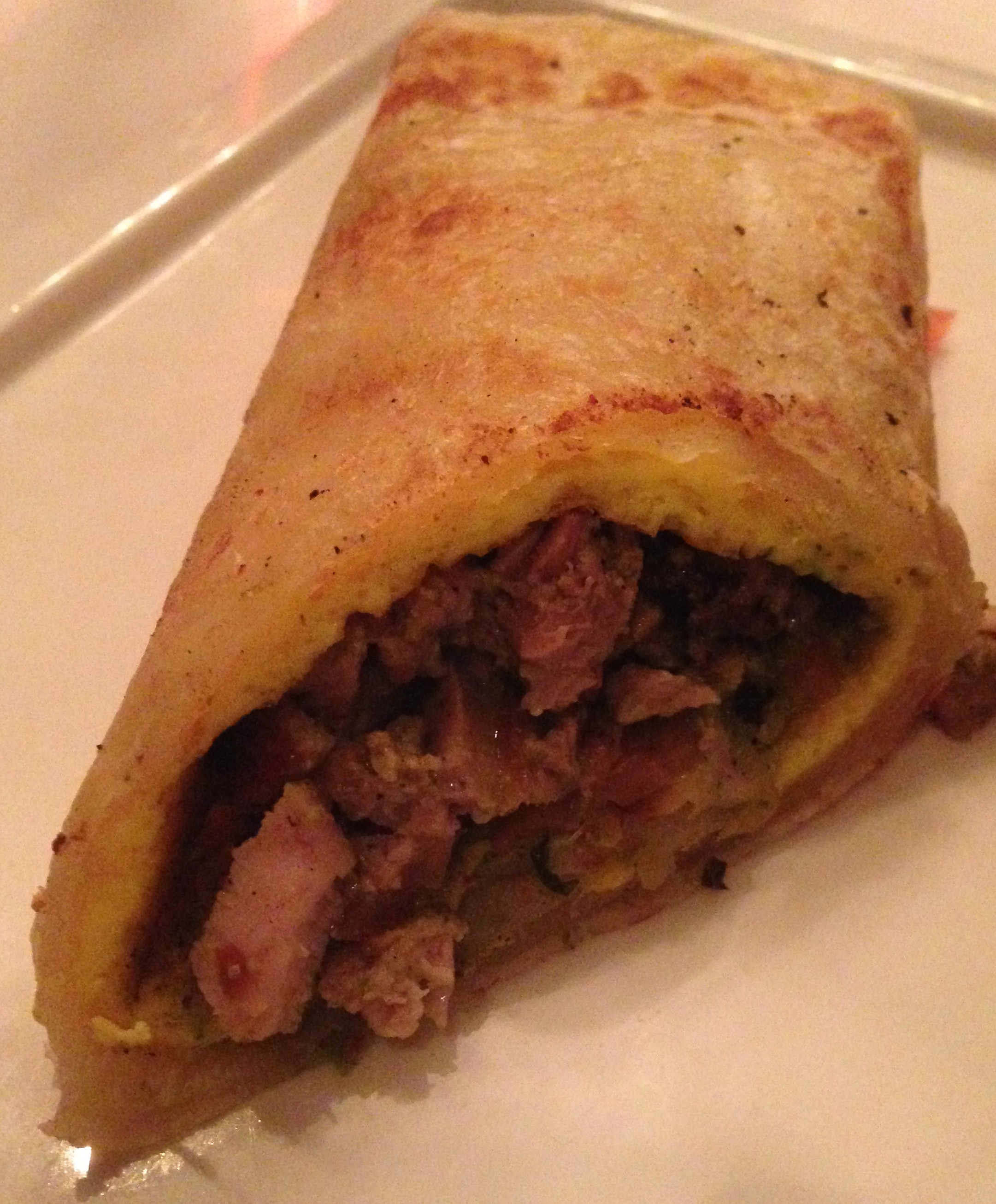
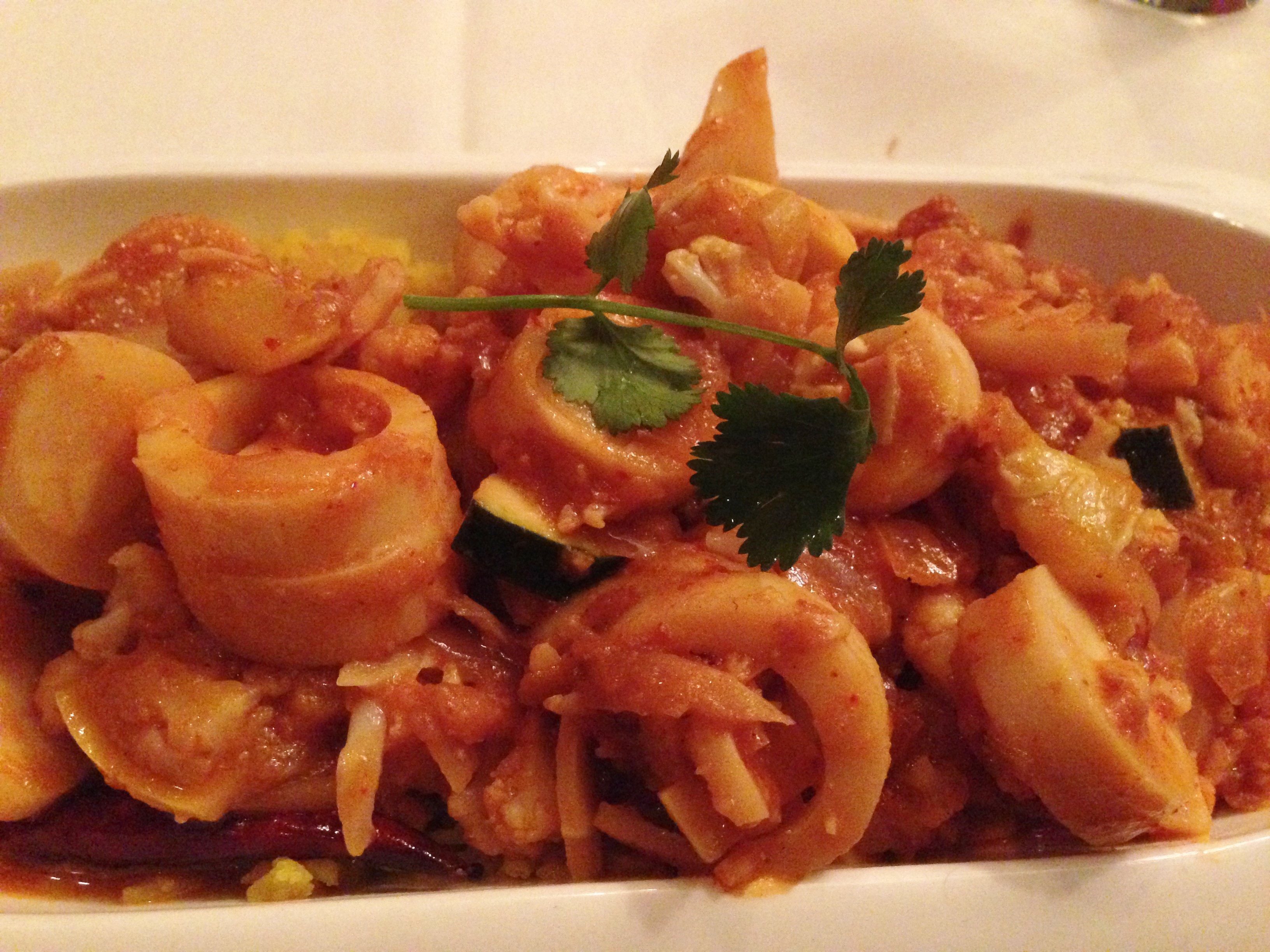
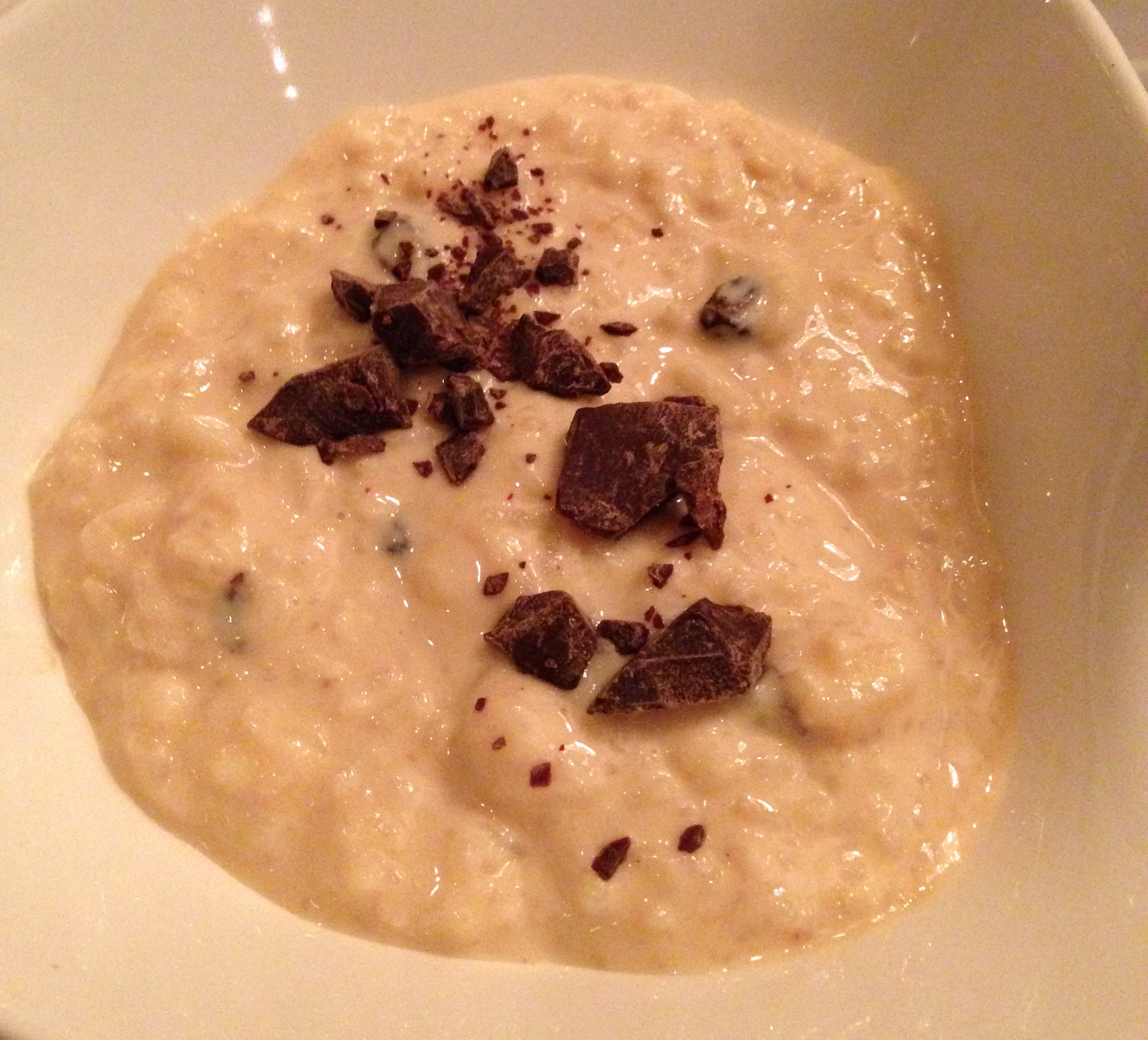
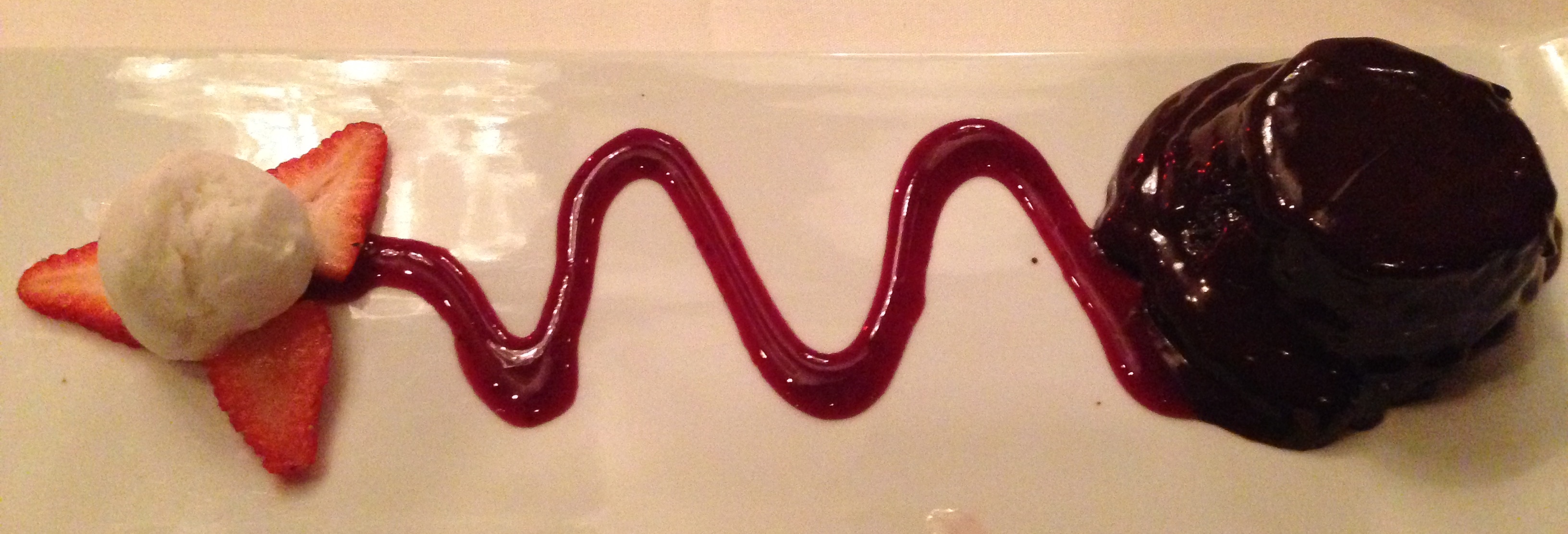
Fusion in food is as common as the intermingling of cultures.  For example, America is a nation of immigrants, and our food reflects that concept of culinary cross-pollination.  Even traditional barbecue draws elements from Spanish, African, and Native American cooking traditions.  However, Vermilion focuses on a menu based on mixing Indian and Latin American cuisine.  What that means is that the super savory and aromatic Indian dishes get a spicy south of the border kick many are familiar with in Mexican cooking, but that is only part of the picture.  Janice and I went for our second to last reservation during Restaurant Week, and it was on a Sunday night after a delicious lunch at Demera.IMG_5908  The interior was super hip and sleek with a black, red, and white motif.IMG_5909IMG_5910  We were quickly seated in the dining room as a blend of Spanish pop and Bollywood hits bounced out of the speakers overhead.  I would also recommend dressing up a bit since Vermilion is a bit more upscale than most Latin and Indian restaurants.  We both went with the $33 restaurant week dinner which consisted of a standard three course meal with an appetizer, entree, and dessert.  However, our waiter surprised us with a free, little taster plate with a chef’s creation.IMG_5912  These petite squares that we were face to face with was a fried plantain chip topped with mango pico de gallo and resting on a sweet, brown tamarind chutney.IMG_5914  It was a mini t-bomb (taste bomb) of flavor where the sweet backbone of the canape was supported by the chutney, mango, and plantain, but was then tempered by the sour lime juice and semi-savory aftertaste of the fried plantain.  As for the appetizer stage of our meal, I went with a Bombay frankie and Janice got the pumpkin squash curry leaf soup.  The frankie was great. IMG_5915 It is one of India’s favorite street food snacks, and I can see why. IMG_5916 It consisted of a fried flatbread known as a roti that was then filled with chunks of chicken coated in Indian spices like cardamom and curry, but the best part was the shot glass of mint curry on the side.  It wasn’t toothpaste minty, but it gave the spicy sauce a cool aftertaste.  Janice’s squash soup was just as delicious. IMG_5917 It came with an Indian cracker on the side known as a pappad or papadum depending on where you’re at in India.  The soup was extremely creamy and rich with a pepper infused oil that gave each curry-filled spoonful a mild kick.  These bold flavors warmed us up for our entrees that came soon thereafter.  I got the Brazilian feijoada which I was pretty excited to try since it is considered to be the national dish of the South American nation.  Contrary to popular preparation which utilizes black beans and a dark, purplish-brown broth which is a mix of the aforementioned beans and various meats stewing in the dish, Vermilion’s take on it was a mix of Indian and Latin flavors.  First, the color of the stew was a vibrant red that contained a mound of white rice and a rice cracker in the middle that acted like a nacho with taco dip.IMG_5920  As for the rice, it was an element more in touch with its Brazilian roots, but I didn’t see any traditional farofa (manioc flour roasted with butter and bacon) on the side which made me quite sad.  As for the contents of the actual dish, there were red beans (supposedly black beans according to the menu), large chunks of succulent chicken, and hunks of spicy Portuguese chorizo sausage.  Not only was the meat spicy, but the actual stew had an Indian vindaloo flavor to it which means that it was super spicy with a smoky background.  This fiery quality was also a sign of Indian/Latin fusion since a typical Brazilian feijoada isn’t spicy.  Even though it wasn’t the most traditional dish, it was innovative, warm, and hearty.  Perfect for a cold day like it was when we went.  Janice didn’t go down the super spicy route and got the heart of palm Valencia paella.IMG_5922  It consisted of large rings of the pulp found in the middle of palm trees, curried Indian rice, and a bit of orange zest.  IMG_5923Neither of us found it to be as interesting as the feijoada since it just tasted like curry.  However, our meal got more interesting in the wrong way since we found a hair in Janice’s paella.  Thankfully, they replaced it for free with a dish of her choice, so she got the feijoada as well.  It got even better when our desserts came.  I got the mango cardamom flan which was out of this world.IMG_5924  The flan had the perfect firm yet gooey texture and was infused with cardamom.  It was soaking in a mango escabeche (a word originally from the Persian “al-sikbaj” meaning a meat dish soaking in a sweet and sour sauce) or syrup which imparted an incredibly but not overwhelming sweetness to a mostly neutral tasting dessert.  The coconut foam on top tied this entire dish together perfectly since it was both light and sweet.  If you wanted to cleanse your palate after all that sweet flan and heavenly foam, you could follow the trail of  pitted, juicy lychees covering mini mounds of cranberries to the end of the plate.  I jumped from one plate to another to get a taste of Janice’s date chocolate rice pudding that had a little bit of cinnamon and clove to add a savory yin to the semi-sweet yang with the date chocolate. IMG_5927 I never was a big fan of rice pudding though, so it didn’t capture my imagination as much as our final dessert.  Since Janice didn’t make a big deal about finding the hair in her food, our waiter brought out the most popular dessert to our table for free.IMG_5928  It was a flourless chocolate lava cake that was covered in a subtly spicy dark chocolate mole sauce…words can’t describe how satisfying and incredibly rich this dessert was.  It was further embellished with an undulating raspberry syrup trail that led to a creamy, small ball of vanilla bean and coconut ice cream that rested on some fresh sliced strawberries.  These desserts were by far the best part of the entire meal, and the service was superb.

So, even though things got a little hairy midway through the dinner, Vermilion managed to win us over with its creative food (especially the desserts!) and great service.  I highly recommend this restaurant if you are tired of the same old ethnic eateries.
Vermilion on Urbanspoon

All Fired Up For Demera

Posted on

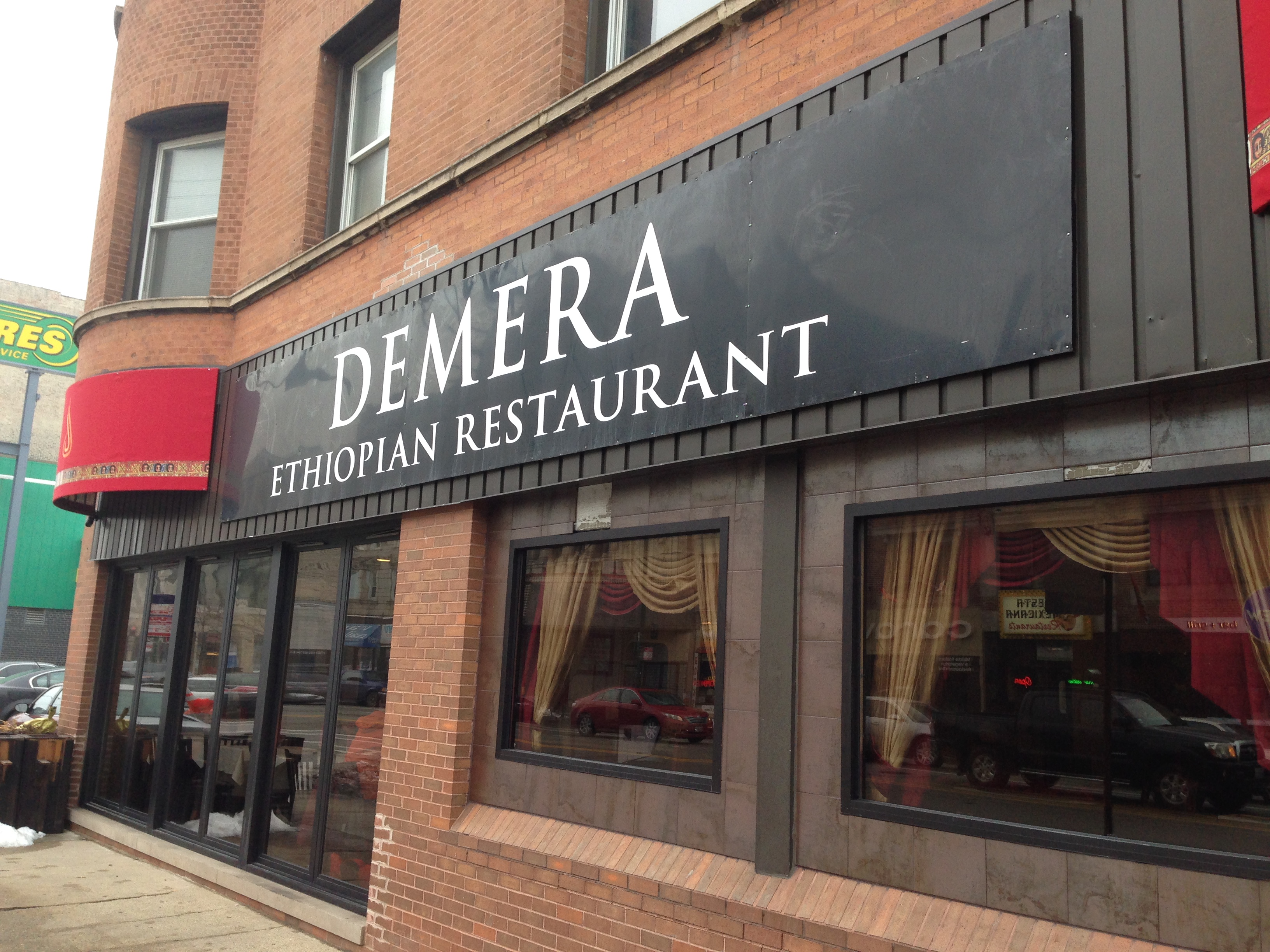
Hello and sorry everyone for the lull on Mastication Monologues, but I’m back with a fresh new post that is part of Restaurant Week that is now over in Chicago.  For those of you who don’t know, Restaurant Week in Chicago is a multiple week event where a multitude of eateries throughout Chicago open their doors to everyone with great deals.  In this post, I’d like to tell you a little bit about Demera, one of Chicago’s premier Ethiopian/Eritrean diner.IMG_5907

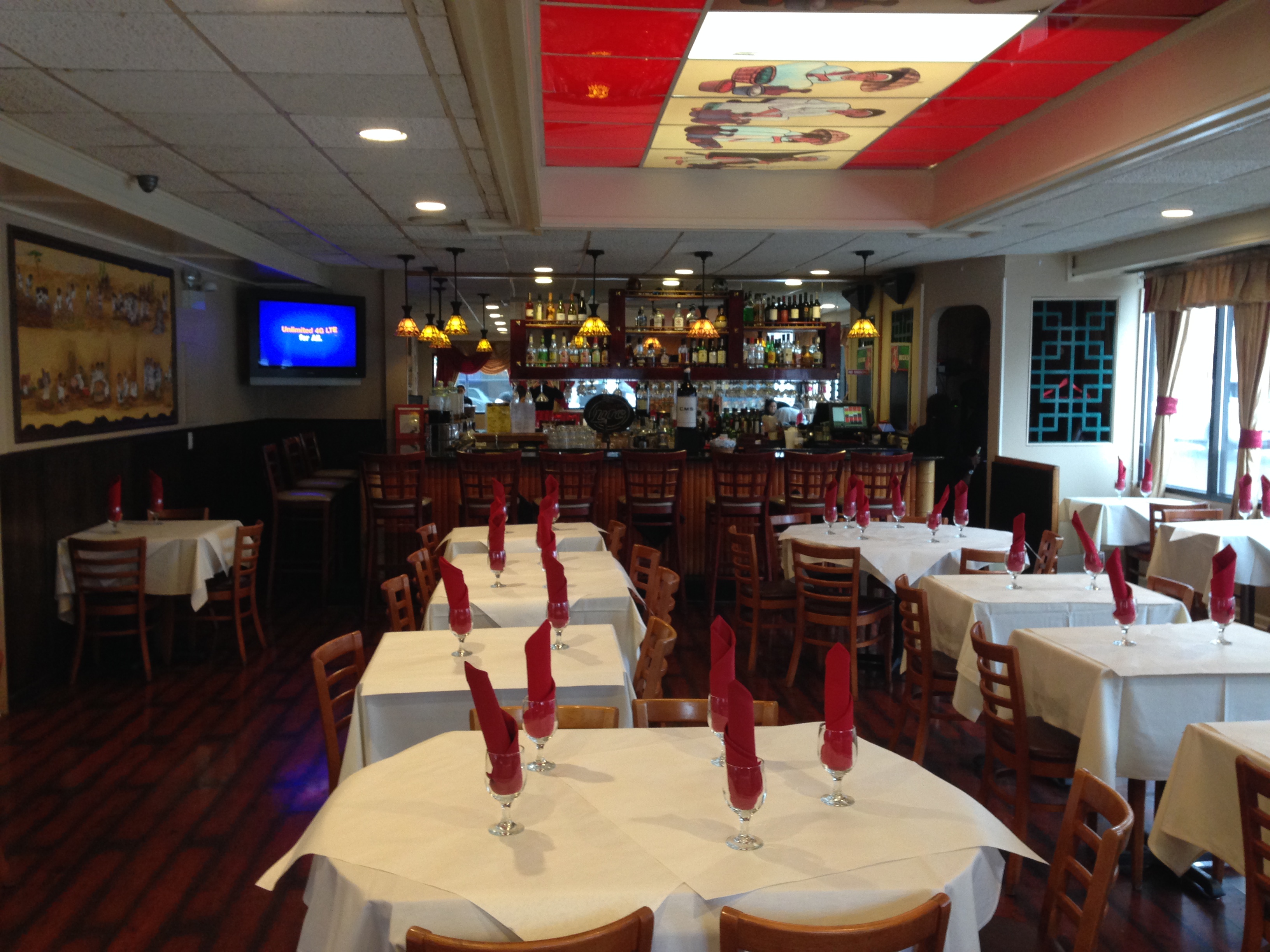
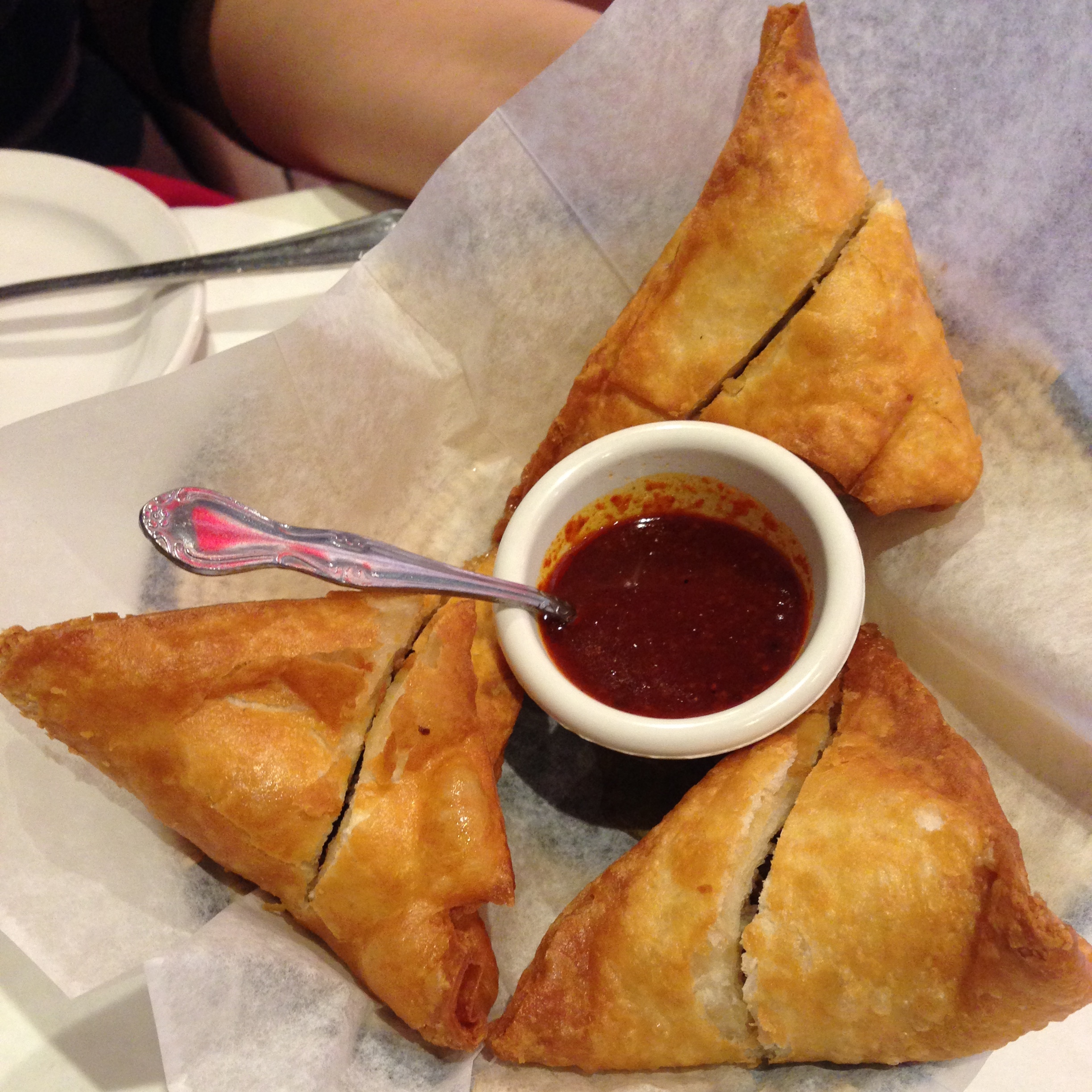
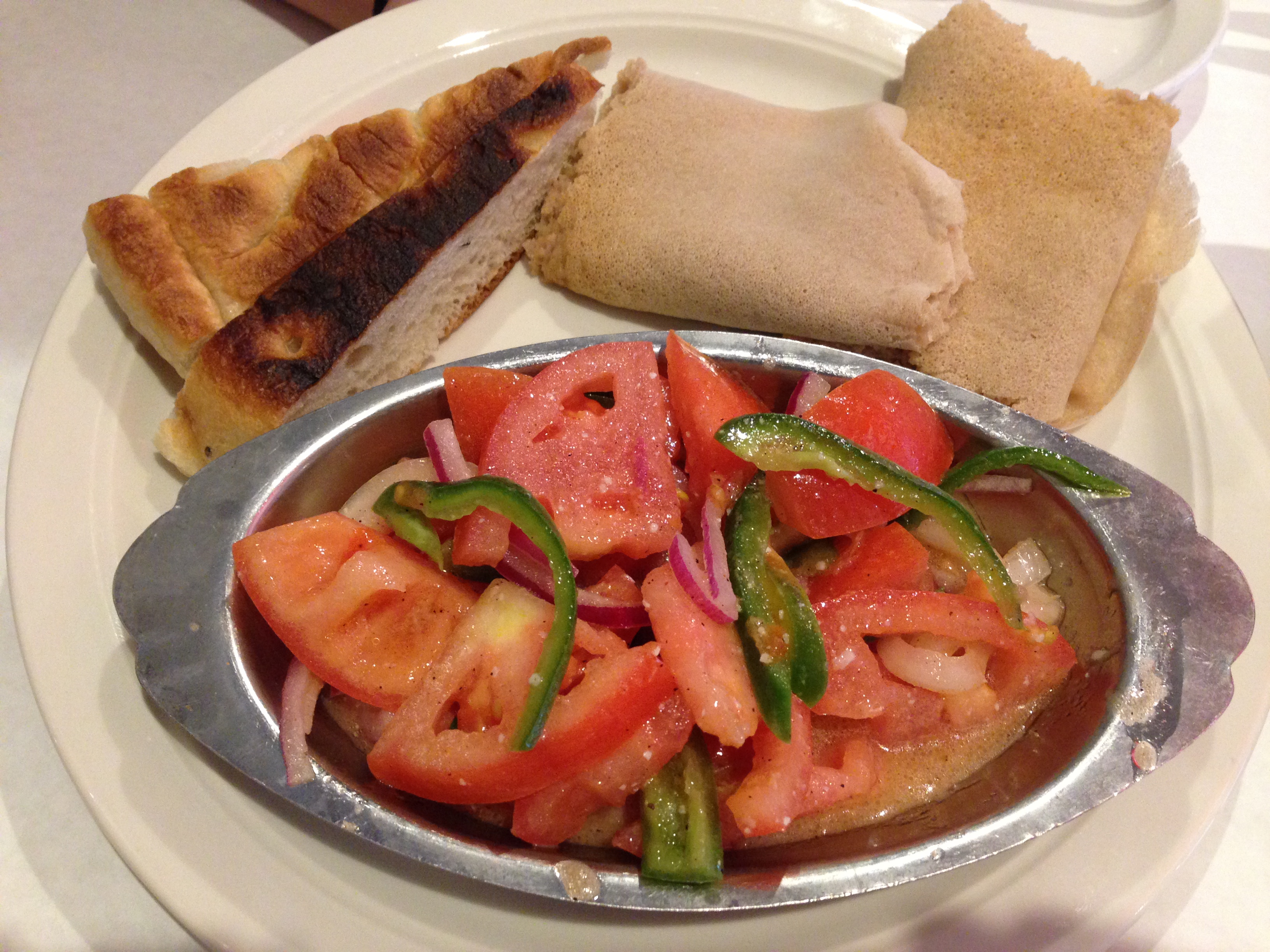
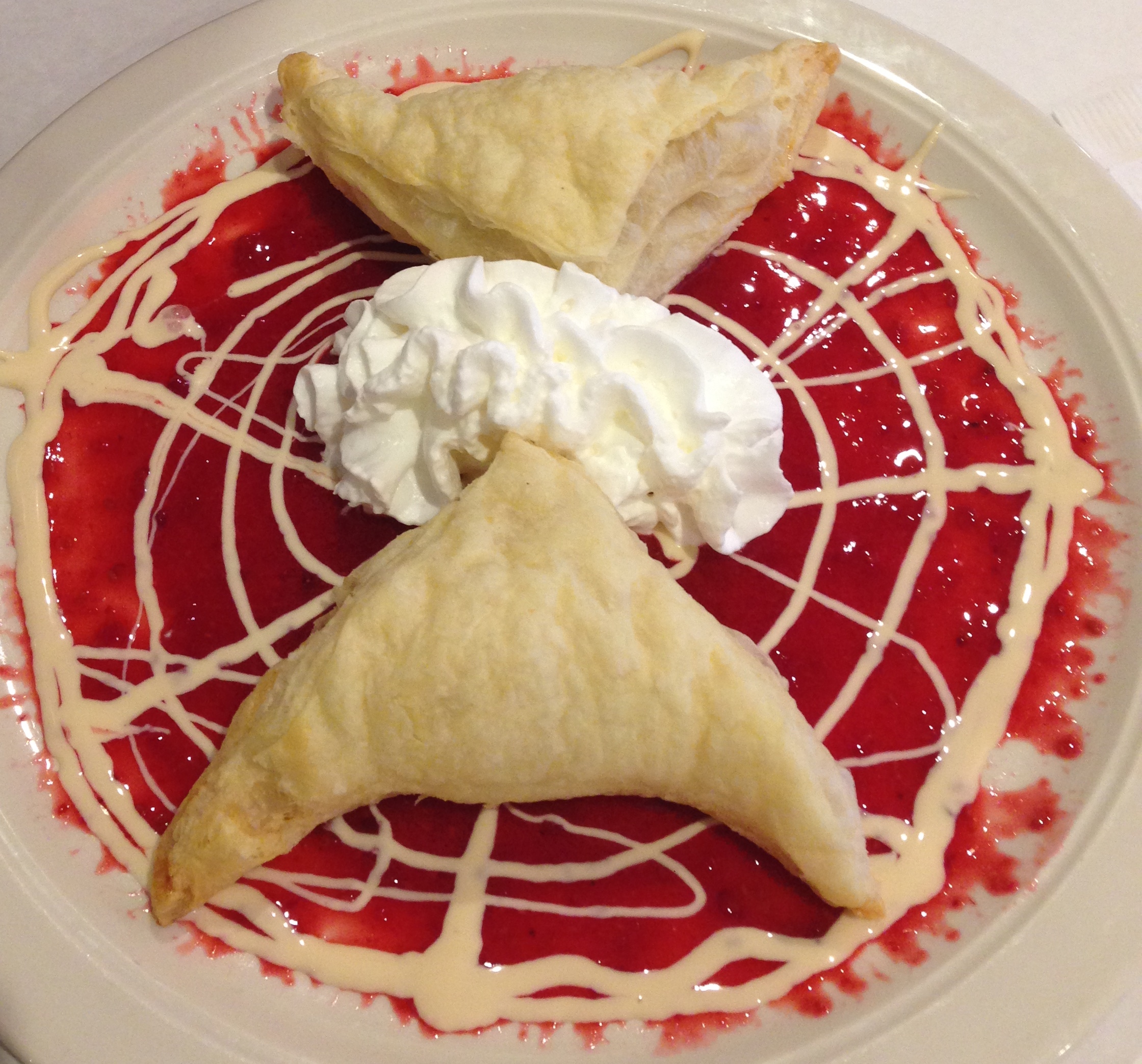
Janice and I went there for their lunch special, and the inside was brightly lit and bumping with some funky Ethiopian jamz. IMG_5888IMG_5889  We were quickly seated, and we had some trepidation with what to pick since everything sounded so delicious.  I started the meal off with a St. George Beer to drink.IMG_5891  Ethiopia is interesting enough since it is a mainly Christian society surrounded by Muslim nations, and some go on to even speculate that the Ethiopian people are descendants of one of the 12 lost tribes of Israel.   The name of the place, Demera, is the term in Amharic for the ceremonial bonfire used in the Ethiopian Christian version of Ash Wednesday, and we had a similar religious experience with the food.  However, the St. George Beer wasn’t very noteworthy since its neutral flavor and watery consistency left me hoping for the second coming of my food savior to resurrect my taste buds from the bland rapture. IMG_5890 Luckily, the beef sambussas and timatim selata did just that.  First, there were the beef sambussas that I could liken to a lighter version of empanadas.  IMG_5893The dough was less pie-like and more flaky and light like Greek philo dough.  The meat was spiced and amped up in terms of flavor with the spicy yet sweet yet dangerously addicting awaze sauce. IMG_5896IMG_5897 We also got an order of the timatim selata which I likened to an Ethiopian version of pico de gallo.IMG_5892  It consisted of tomatoes, onions, and jalapeno pepper slices all coated in a lime vinaigrette.  It was tangy and flavorful and was handily consumed (pun intended) with the ubiquitous Ethiopian flatbread known as injera.  While flatbreads can be found around the world in cultures that eat with their hands like naan in India or pita in Greece, injera is super unique in the sense that it is spongy with a slightly sour taste compared to its more doughy brethren.IMG_5900  Thankfully, it had plenty of nooks and crannies to soak up all of the lime juice but was also strong enough to enclose the large slices of tomato.  IMG_5894After polishing off that flavorful and refreshing appetizer, we got our main entree.  Traditional Ethiopian cuisine focuses on family style dining where everyone eats from the same plate.IMG_5901  On our plate, we got the ye-beg alicha  (mild lamb cubes), doro wat (chicken in a mild sauce with ayib cheese), ye-misir wot (split red lentils in spicy berbere sauce), and gomen (chopped collard greens).  With the spicy lamb, it was a great mix of spice and the slightly gamey taste that comes with lamb.  The doro wat chicken wasn’t as bold as the lamb, but the ayib cheese was like an African queso fresco that gave this savory part of the meal a cool and semi-salty twist.  IMG_5899I really enjoyed the split red lentils because they were super spicy, but I was mixed on the collard greens.  On the one hand, I enjoyed the earthy, spinach tones, but the ginger notes kind of left me cold on this hot entree.  Surprisingly, we had a bit of room for dessert, but we could only get the missionary delight, a basic vanilla sundae, because they apparently didn’t have enough ingredients for the dessert we wanted, the sambussa turnovers.  Super normal for a restaurant that serves food that isn’t on many peoples’ radars, but thankfully, our waitress told us that we could get the dessert we originally wanted, the turnovers.  What they consisted of were sweet versions of the savory sambussas we had earlier in the meal.IMG_5903  It was the same flaky dough, but instead of beef, there was a melange of walnuts, cardamom, walnuts, saffron, and rose water.  IMG_5904It reminded me of a honey-less baklava with an almost flowery aftertaste compliments of the rosewater.  The strawberry sauce was a bit too much of guilding the rose for me which made me prefer the savory version of these handheld treats.  At the end of the meal, we were absolutely stuffed but greatly pleased with Demera’s food selection.

So if you’re tired of the same old restaurants serving foods you’ve heard of before, check out a red-hot slice of Ethiopia at Demera.

Demera Ethiopian on Urbanspoon

Design a site like this with WordPress.com
Get started