Hello…helllooo..helloooooo….Is anyone still left out there that reads this blog? It seriously has been way too long since I have posted any new content on Mastication Monologues, but such is the life of someone working on a 2nd Bachelor’s degree. Thankfully, the light at the end of the tunnel is near, and I am looking forward to some mental rest and relaxation. Thankfully, I won’t slack too much though because I have plenty of great reviews and food adventures to bring to you. Today’s review involves Tokoro Sushi in the Lincoln Square neighborhood.

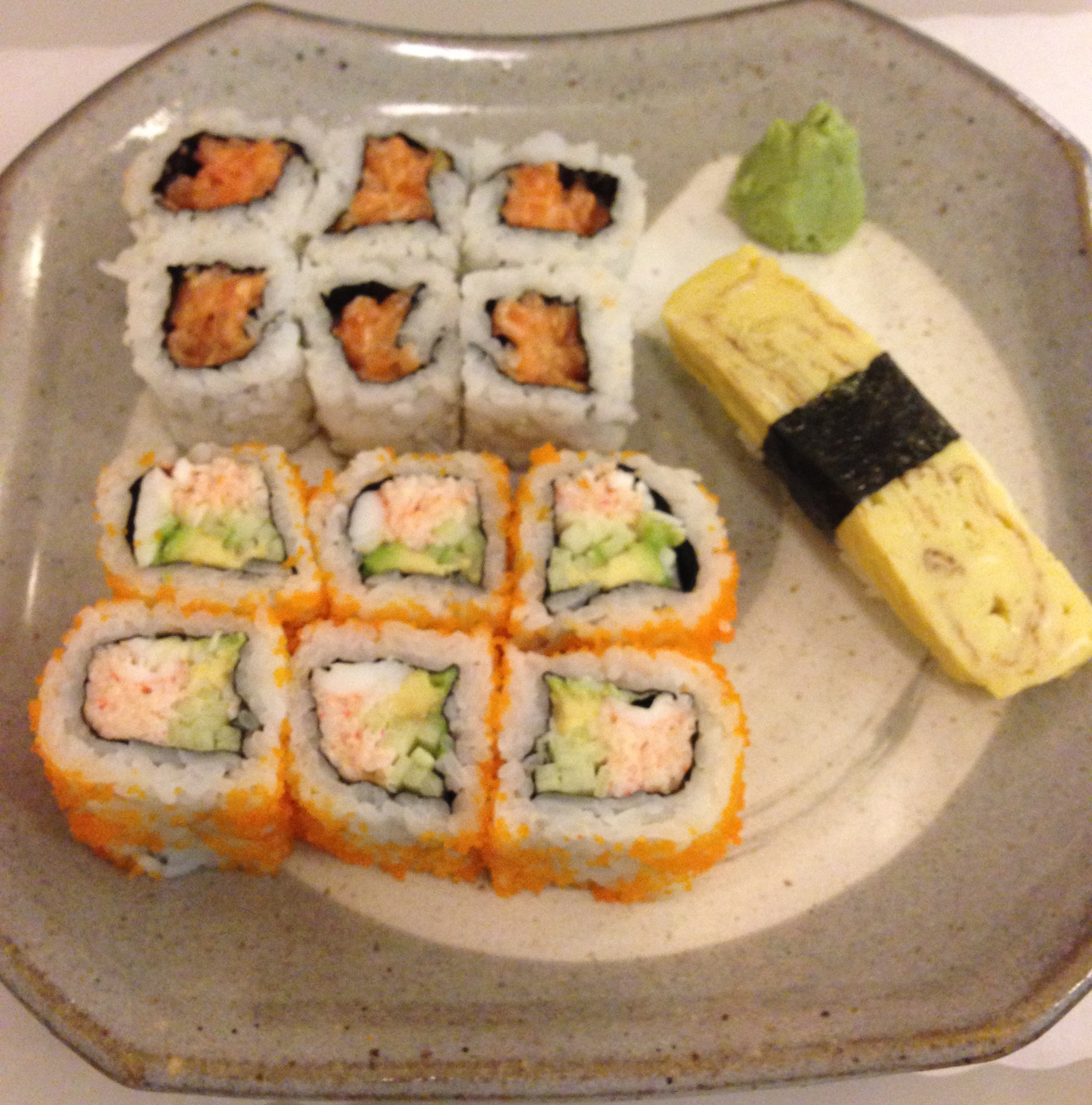
My fiancee, then girlfriend, suggested we try the new eatery when it opened last year, and we have been back since. However, our first visit wasn’t the most enjoyable compared to the second time. There is mainly street parking and there are plenty of public transportation options for those of you rocking Ventra cards on the bus or L. The interior of Tokoro looks like any other sushi restaurant complete with bamboo prints and assorted Japanese tchotchkes. Fitting given the name of the restaurant in Japanese literally means “place”, i.e. this could be the interior of any of the other million, lower/middle rung Chicago sushi restaurants. They have a BYOB policy and a free corkage service which helps if you care for a glass of chardonnay to go with your unagi. Upon sitting down, we looked over their extensive sushi menu and saw most of the the typical Japanese restaurant offerings from lunch specials, soups, gyoza dumplings, sushi rolls, sashimi, and even hibachi offerings for diners searching for something a bit more substantial. Janice and I preferred to try the figurative treasure chest of sushi that lay before us in the menu, so we got the “all you can eat” sushi option for 20 bucks. Some people always wonder or straight up deny that the all you can eat option is a waste of money, but when you think about it, there is some method to the madness. Based on current trends of fishing, human consumption, and sushi demand from around the world, the price of fish, especially the fatty toro tuna, is only going to sky rocket. Therefore, placing a cap on your wallet but not on your stomach makes perfect sense to me especially if you were as hungry as we were. Then again, who knows if most sushi restaurants actually use the fish advertised on the menu. The results are often times surprising. Either way, that didn’t stop us from enjoying some good, not great sushi. Thankfully, we got a complimentary bowl of miso soup which I think should come free with each meal in Japanese restaurants because it is such a simple but satisfying soup to make. 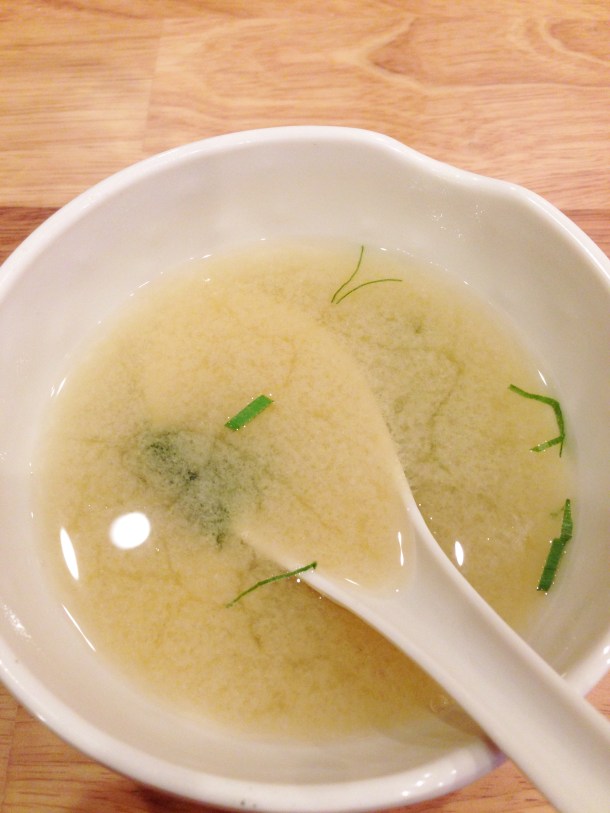 This traditional Japanese soup consists of a kelp/fish based broth and a soy based paste called, you guessed it, miso. I have never seen it anywhere, but there are also red and mixed color miso pastes used in miso soup. However, I greatly enjoy the white miso which is typically used in American Japanese restaurants because it is salty, savory, and has a taste that envelopes your entire body with a warmth that is enhanced with the soft cubes of tofu and slightly crunchy scallion strands. Definitely great for the cold Chicago winters. Once we drained our bowls, it was time to dive into our sushi. Side note: the service was absolutely terrible the first time around in terms of waiting for food, but thankfully they have improved their turnaround time from ordering to bringing out your order. Our first platter consisted of the crazy tuna roll, spicy tuna roll, and mountain roll.
The crazy tuna roll, the one closest to the wasabi in the picture above, consisted of the rice rolled around a tuna and pepper mix and topped with slices of tuna and a sriracha chili sauce.  I didn’t find it to be too spicy, but it went down just fine. The mountain roll was next which left the biggest impression on me for this round.
 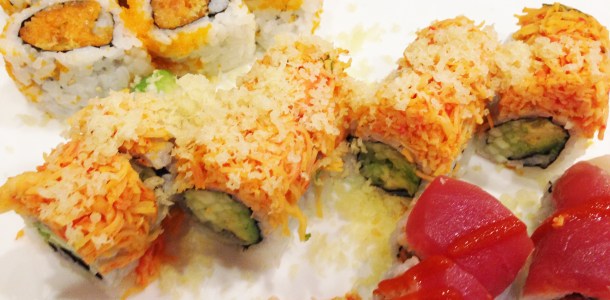 The inside was a cool cucumber and creamy avocado duo, but the real fire came from the spicy crab and spicy mayo on top that was festooned with a sprinkling of crunchy tempura crumbs. I liked it the most out of the three selections due to the contrast between the relatively understated interior and the more eye-catching exterior. Kind of a case of sushi superficiality, but this is a roll whose cover really makes the book a must read. The same could not be said about the spicy tuna roll which was like the crazy tuna roll minus the “crazy” part.
  I’m a big spicy food eater, and I didn’t think it lived up to its fiery moniker. So it was not a big draw for me. It was just a transition to the next sushi round we ordered. We amped it up with a volcano roll, a kiss on fire roll, another mountain roll, and got some actual sushi on the side with a tomago, shrimp, and a piece of yellowtail.
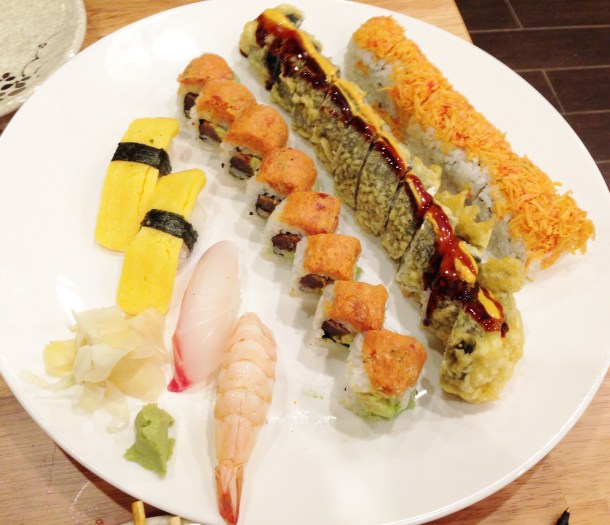 I’ve already spoken about the mountain roll, but the volcano roll and kiss on fire roll were bolder than the first round participants. The kiss on fire roll (between the raw fish and fried roll) did actually bring some spice since below the tuna there was a raw jalapeno pepper resting in wait for our unsuspecting taste buds. I always like being kept off kilter sometimes during my dining experience, and I would recommend this roll for those who do like a bit of spice with their rolls. Then there was the volcano roll. Frying actual sushi is a crime against humanity, yet with rolls it kind of works. The light, rice flour based batter goes well with the delicately constructed rolls, especially one that was bulging with spicy tuna, crab, avocado, cream cheese, and eel sauce and spicy mayo streaks across the sliced roll. I think this was more of a luxury roll than a spice-centric entree due to the amount of ingredients that went into it. I’d still recommend it though if you’re looking for a bit more heft to your typical sushi roll. I did not have the tomago (egg) sushi, the shrimp, or the yellowfin, but Janice said they were all competently made but not mind-blowingly fresh/delicious.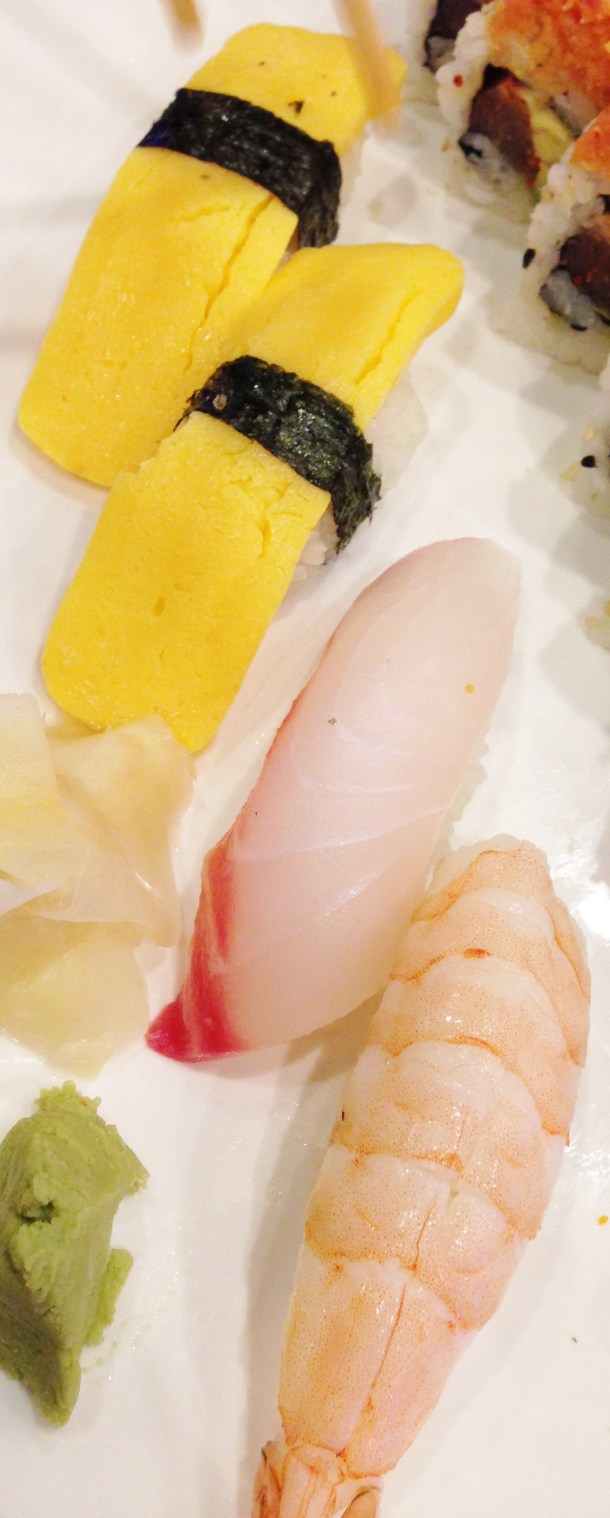
So, if you’re looking for a solid, middle of the road sushi restaurant on the far northside of Chicago, roll on over to Sushi Tokoro!
 The waitstaff is also probably some of the nicest you can find in a Korean restaurant since they aren’t known for having the same rules as found in American restaurants. They might be a bit gruffer or forward compared to your typical server in a T.G.I.Fridays, but they know how to make some delicious food. We were quickly seated at one of their simple tables which are a bit cramped if you are six feet or taller like yours truly. We decided to start with kimchi pajeon or a type of savory Korean pancake. It is derived from a Chinese green onion pancake (
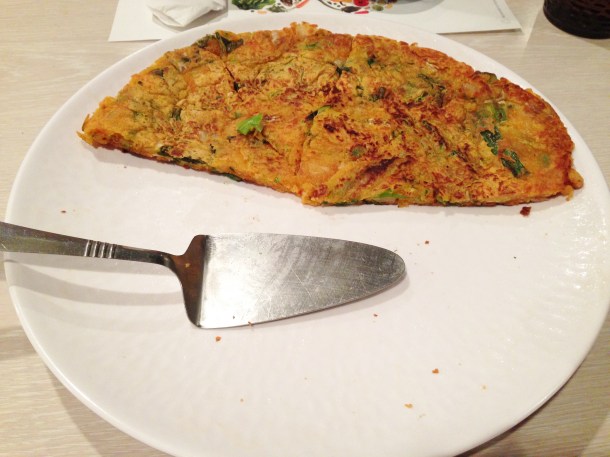 Typically, Janice’s family gets the haemul jeong or fish, shellfish, and octopus pancake, but I can’t get enough of kimchi in any form. It was a ton of food to start off the meal for a reasonable price.
 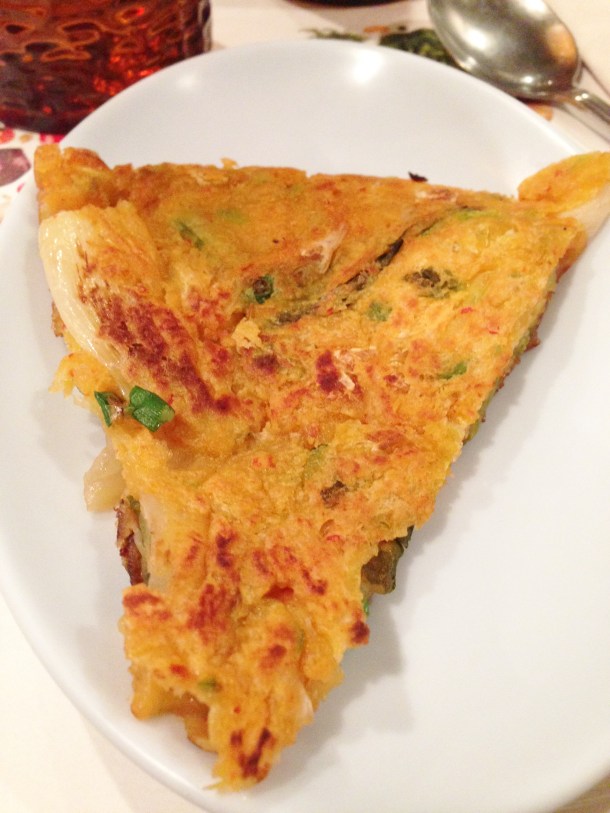 It is kind of bready yet filled with crunchy green onions and spicy, crisp pieces of hot and spicy fermented cabbage.
  As we moved our way through this perfect pancake,
 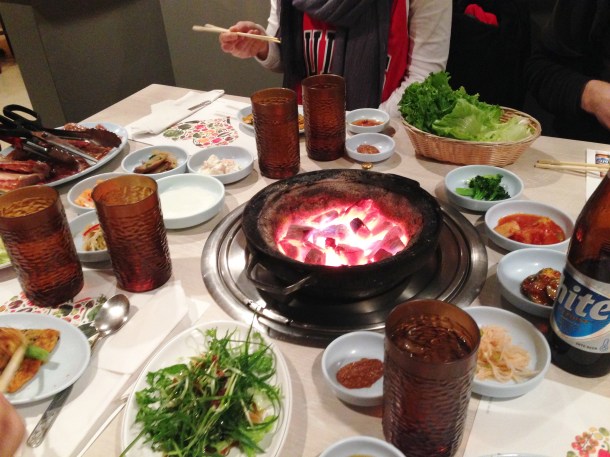 Korean bbq has been a bit of a recent phenomenon in American cuisine, but it is a form of dining as old as time. In Korea, eating beef was a great privilege since the cattle were beasts of burden, and the Koryo Buddhist dynasty of rulers forbade the consumption of meat. However, in the 13th Century, those crazy Mongols invaded and removed the ban. They were pragmatic nomads, but they knew good food too. However, beef didn’t become prevalent on Korean tables until the latter half of the 20th Century as South Korea quickly became the advanced nation we now know. History lesson over, we threw the raw pieces of meat on the grill with a satisfying sizzle and pop.
 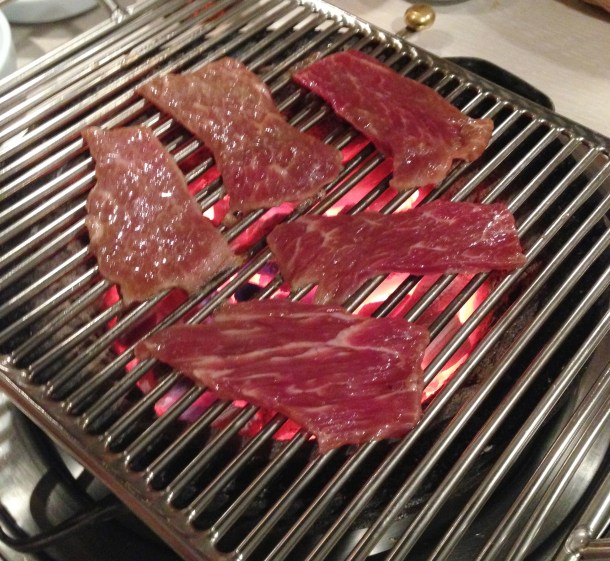 Once Janice grilled them to perfection, we mixed them with rice, doenjang (soybean paste), and banchan in leaves of lettuce to create ssam bap or what could be described as lettuce wraps with plenty of savory flavors to enjoy.
  We also got a side of pre-prepared dwegi bulgogi or sliced pork loin that is sauteed in a soy based sauce infused with ginger, gochujang (chili sauce), garlic, sugar, and rice wine.
 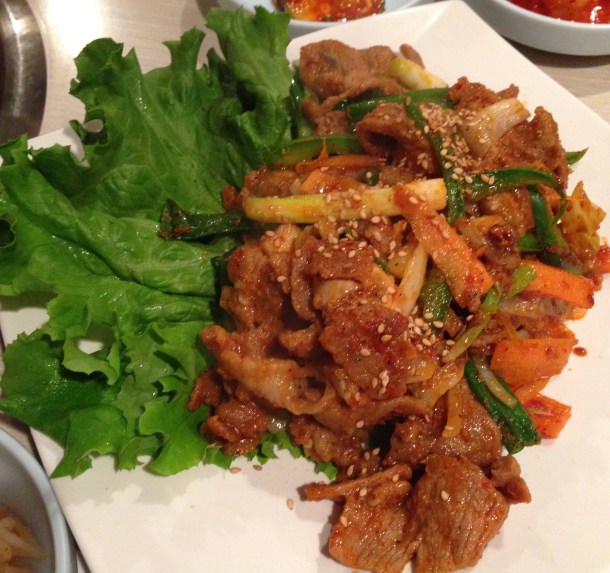 It wasn’t on the menu but highly recommend this Korean classic. It also has a bit of a spicy kick to it if you’re not feeling the more mild grilled meats. I loved mixing the pork’s zing with the green onions that came with the kalbi.
 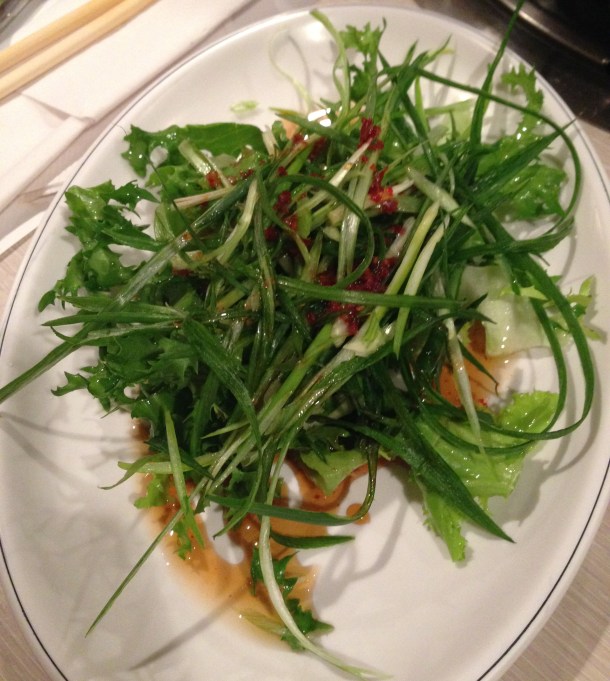 It provided a definite earthiness that mellowed out the grease of the meat. We also got an order of moo guk or literally “radish soup”.
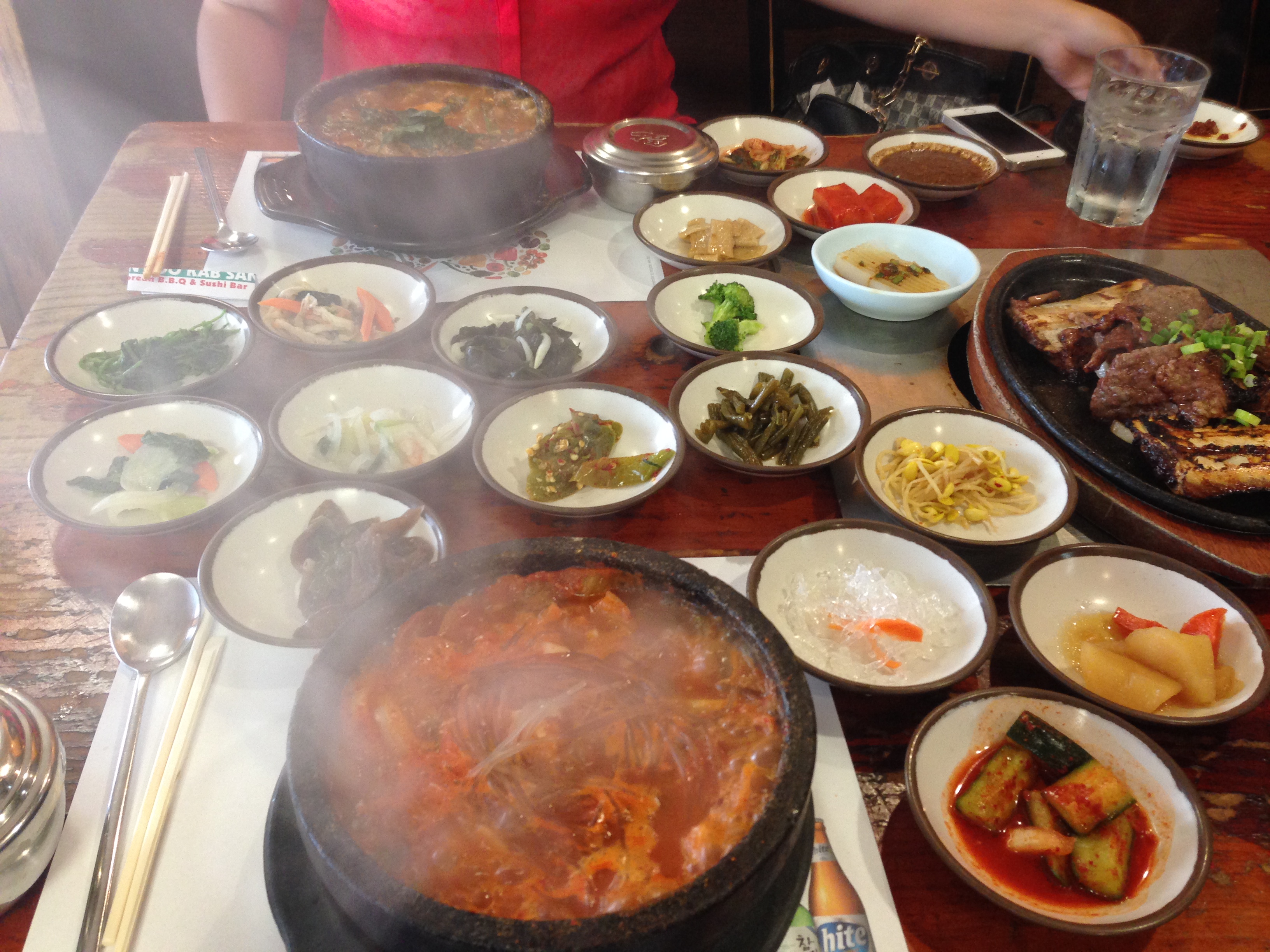
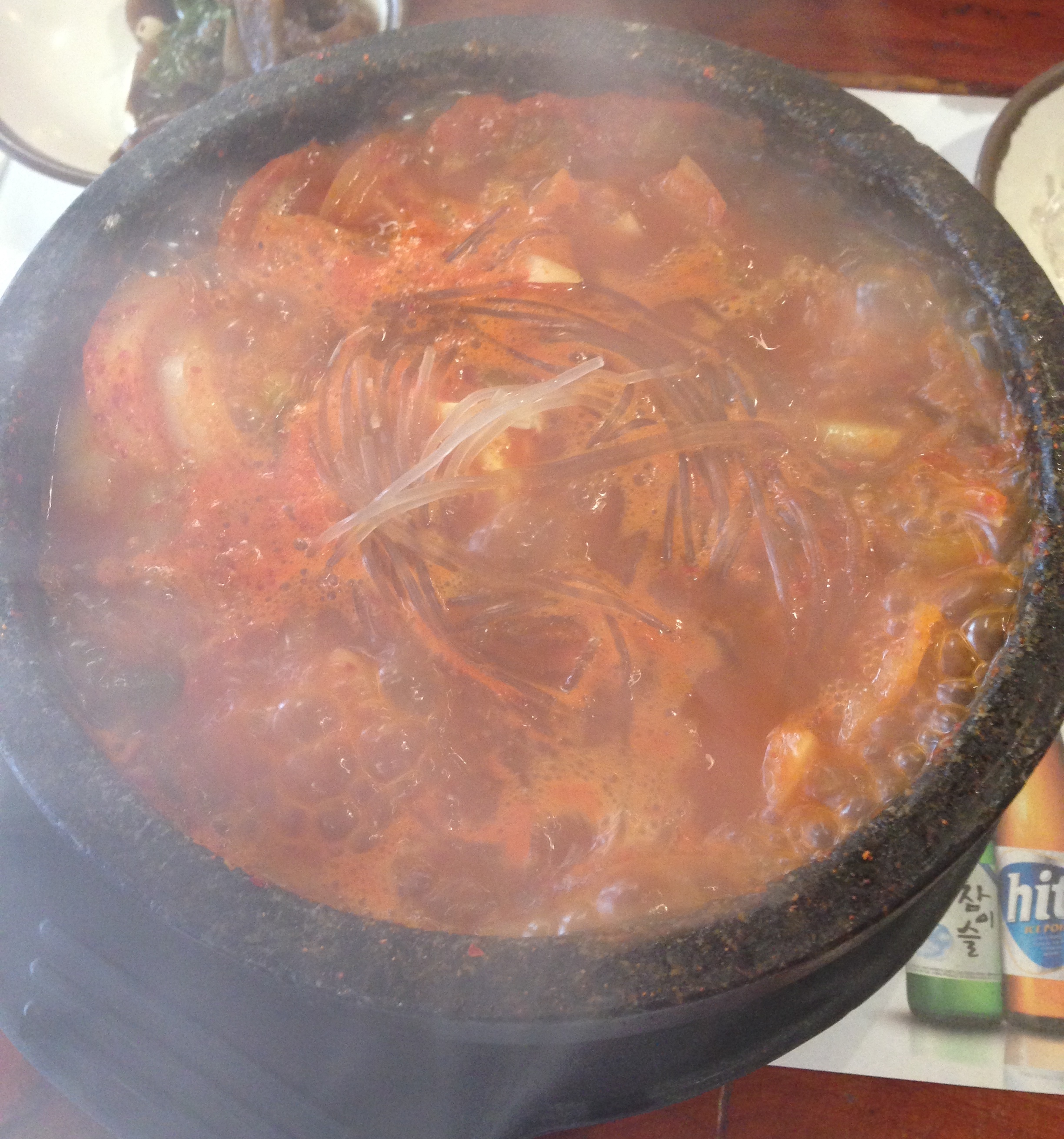
  If there’s one thing Korean soups and stews are known for, or at least what I’ve noticed, is being absolutely as hot as the surface of the sun, temperature-wise. While it takes a bit of time to cool off, the taste alone is worth it. Plus, if you’re looking for a bowl of comfort food during these cold Chicago months, step aside mac ‘n’ cheese, get a warm and filling bowl of soup. By the end of the meal, we were stuffed to the gills with great food, and we were ready to take on the cold climes outside.



















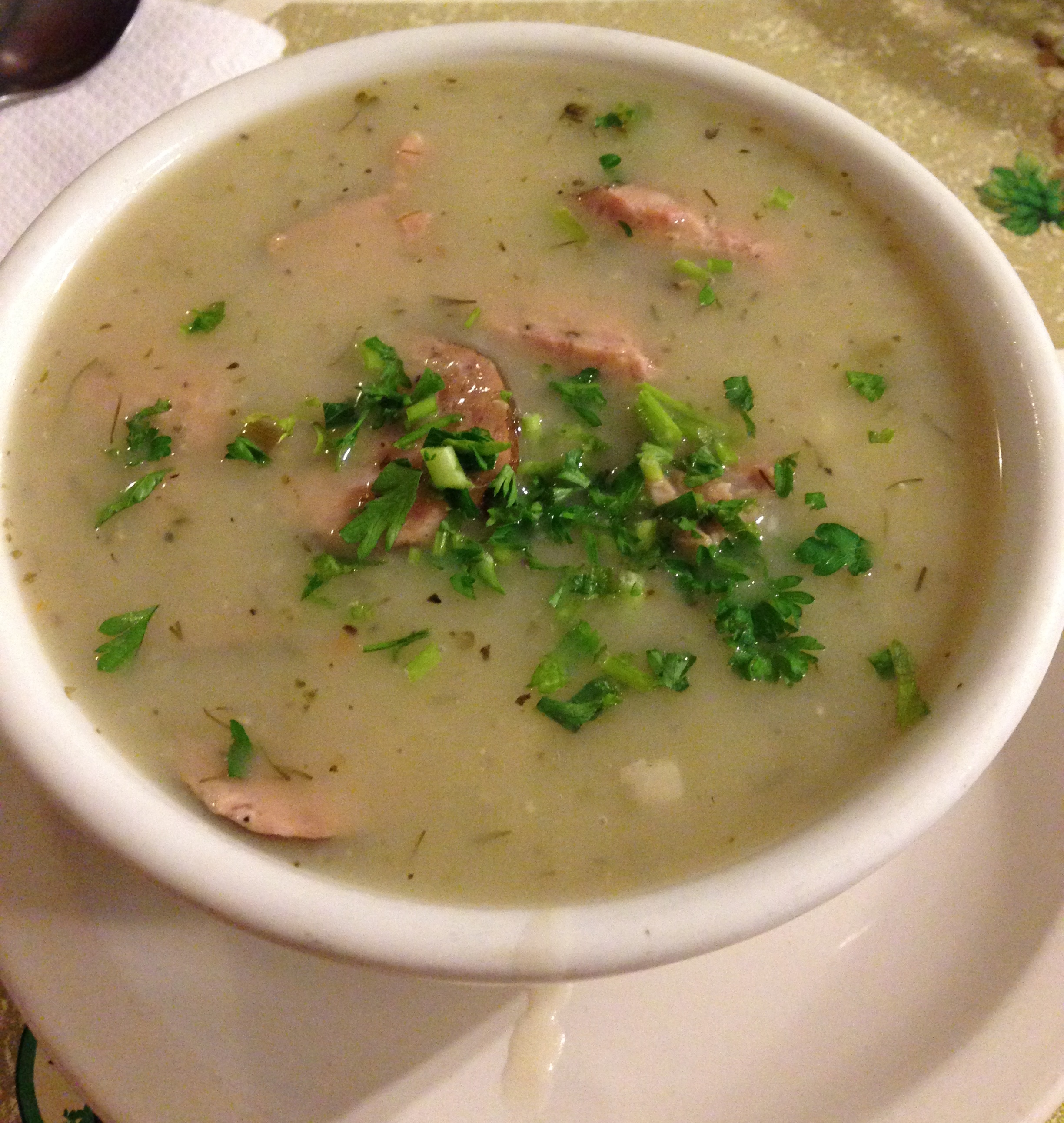

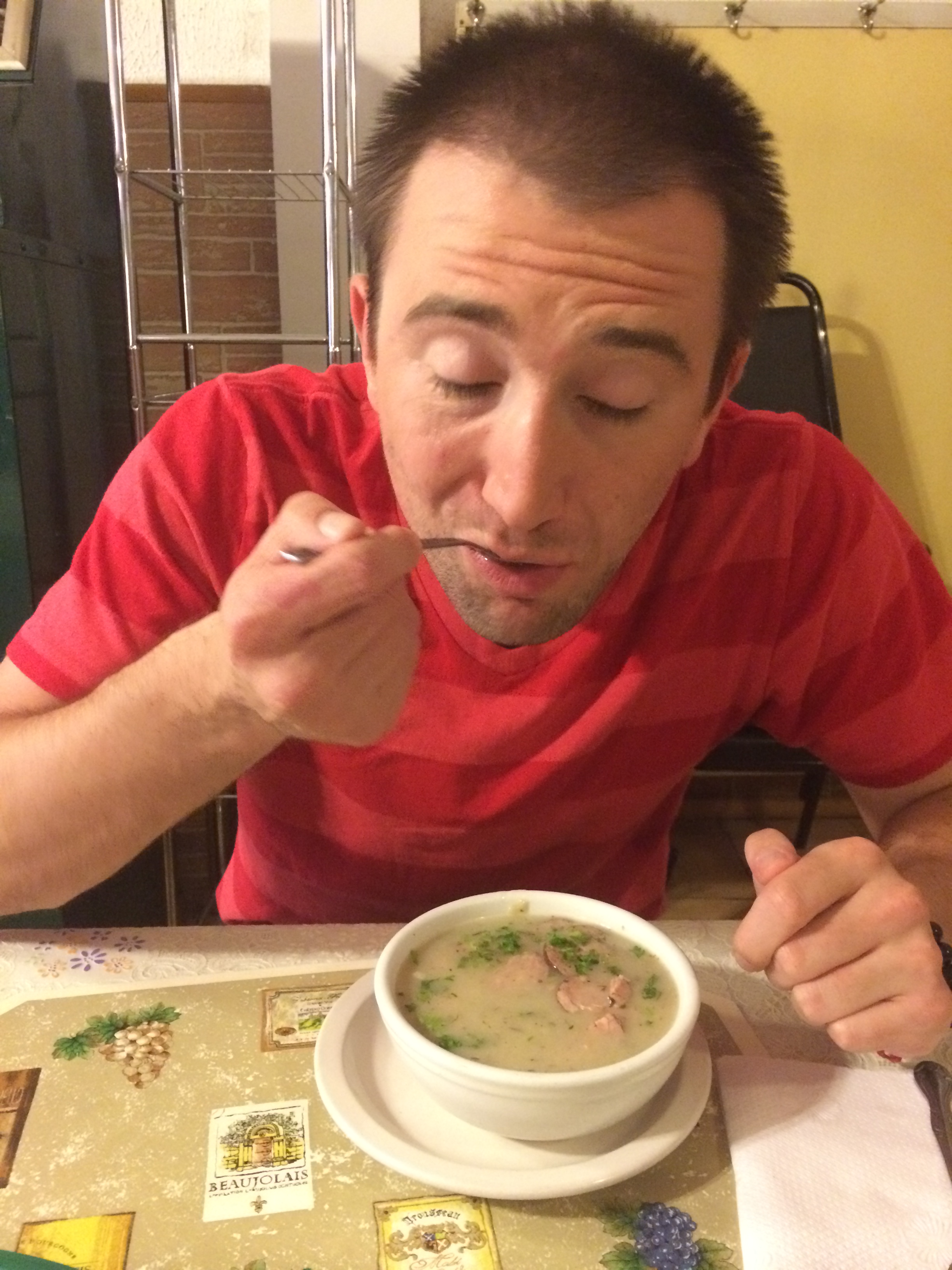


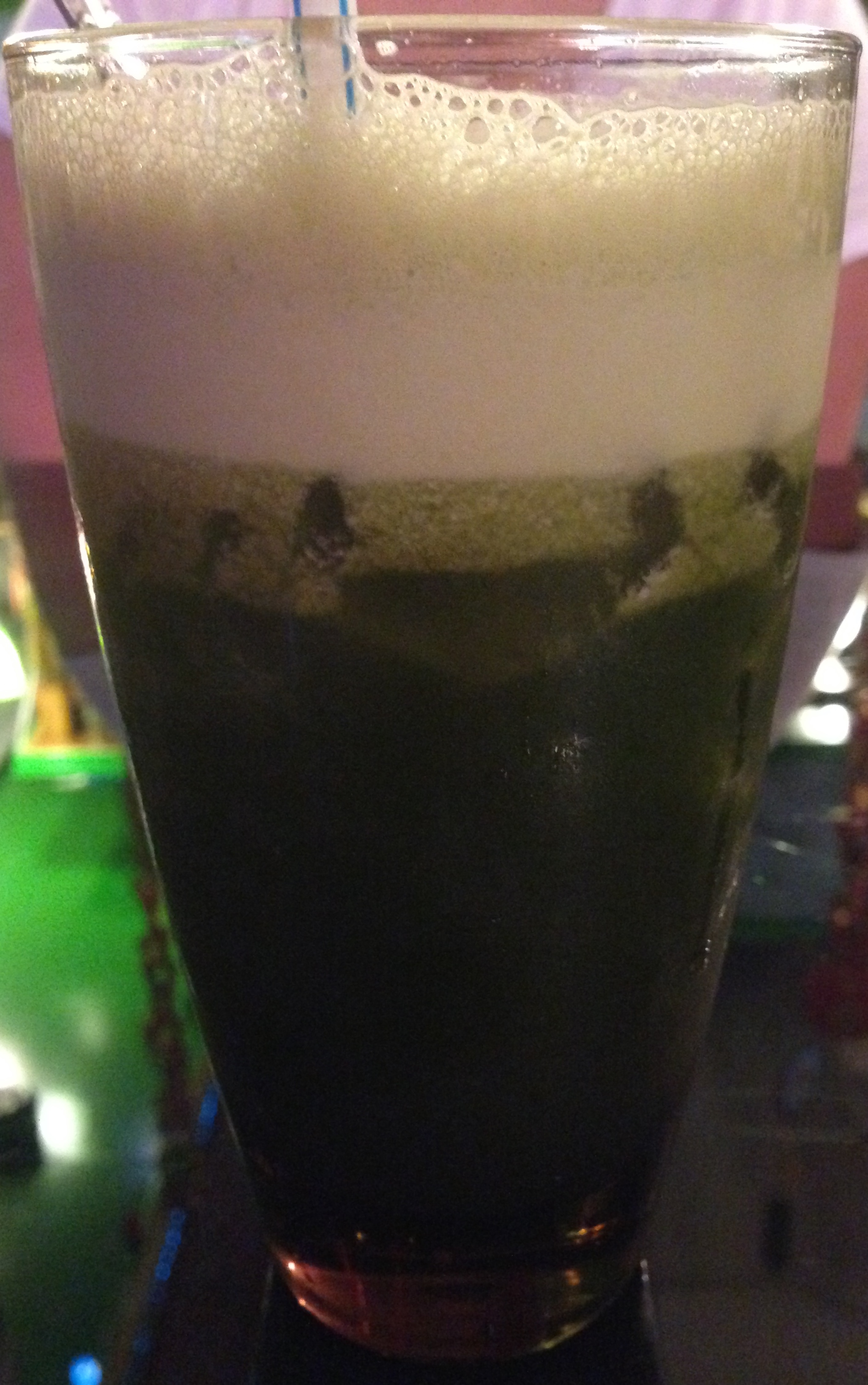
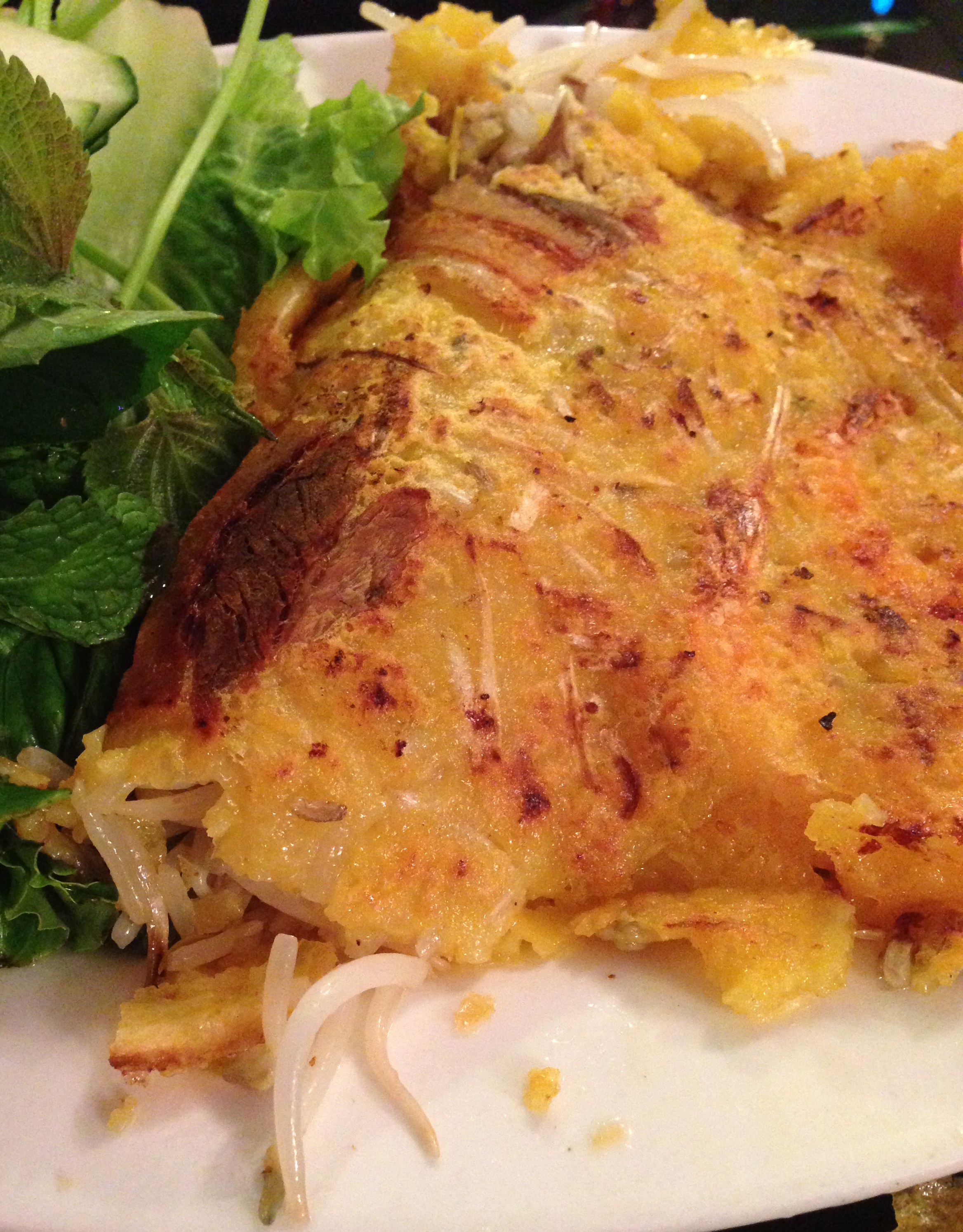
 I appreciated how cold it was compliments of the ice, but the taste was complex and semi-indescribable. It had some grassy notes yet a herbal, semi-spicy after taste that could be likened to cilantro almost. It was a glass of funk that set the stage for my appetizer: the bánh xèo or “sizzling cake” ($7.95). Our waiter was incredulous that I ordered it just for myself since he said it was for two people, and he was right in terms of the size.















 Mastication Monologues