For those who get the Santana reference in the title, you’re welcome. To the rest of y’all, get ready for some more funky food that Beijing has to offer along with a couple normal plates for those who are a bit averse to the adventurous eating route I normally take. First, there are the somewhat odd platters I sampled for a late lunch after returning from North Korea. I was feeling full of life after a near brush with the North Korean authorities, so I felt like going for the gusto with my food and beverage choices. First, I noticed that other people were drinking large carafes of a steaming white liquid, so I got one of those on the side to then accompany my black chicken and stuffed lotus root with sweet rice. The random drink came out first along with a plate of sugar.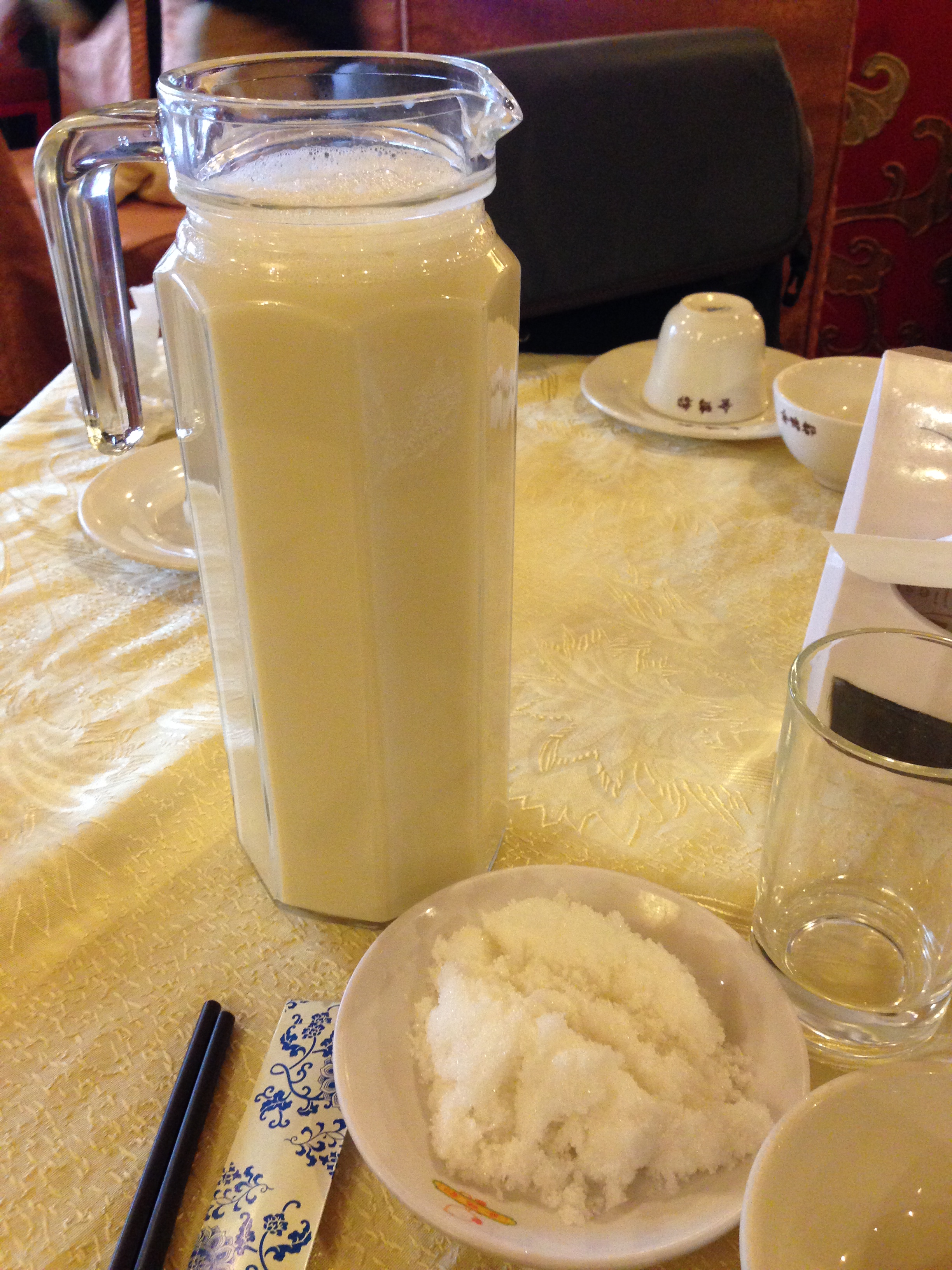 I first sampled the libation without the sugar, and it turned out to be very fresh soy milk with no sweetener. Good think they gave me the sugar because there was no way I was going to drink all of it without a little some-something to boost the old flavor profile. After a couple lumps, the milk tasted like a soy milk that is commercially sold in the USA with a bit more of a grassy taste to it. Eventually, my black chicken and lotus root came out.
 The biggest surprise for me that came with both of these dishes was the fact that they were both served cold. Now, I don’t know if that’s how they’re traditionally served or if it was going in line with the Chinese medicinal concept that can be likened to the Western 4 humors concept in early medicine. It is the same in Korea where many people believe that in order to keep your personal energy in line with the weather, you have to eat hot food when it hot outside and cold food for colder climes. Doesn’t make sense to Western logic where one would imagine to eat warm food while it’s cold and cold food to cool off in the heat, but I’m not here to discuss medicine. Food time. So, first there was the black chicken. When I say black chicken, I don’t mean it’s just blackened from a seasoning or charring. The entire chicken, from its skin to its bones, is completely black compliments of selective breeding back in Ancient China.
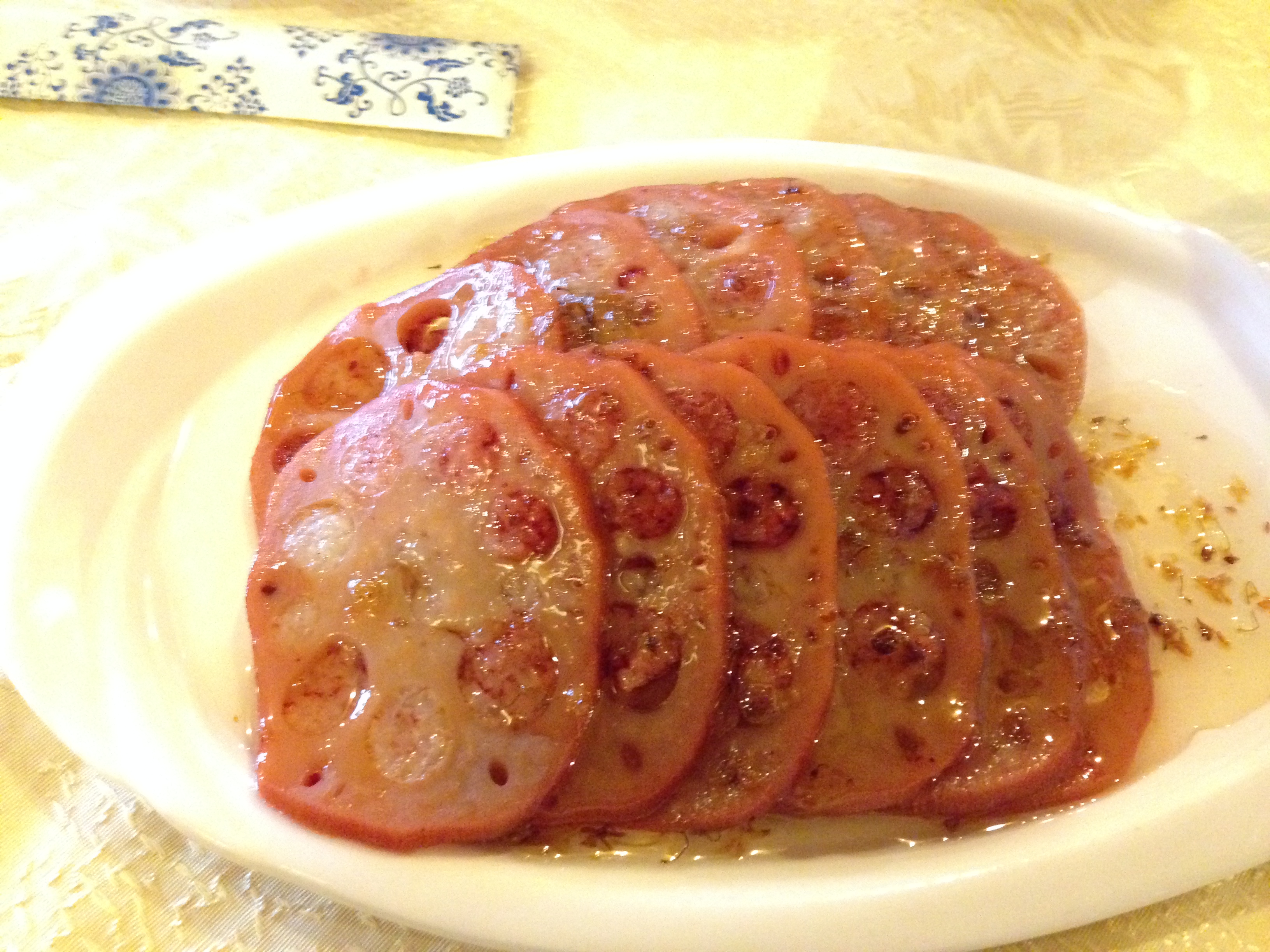
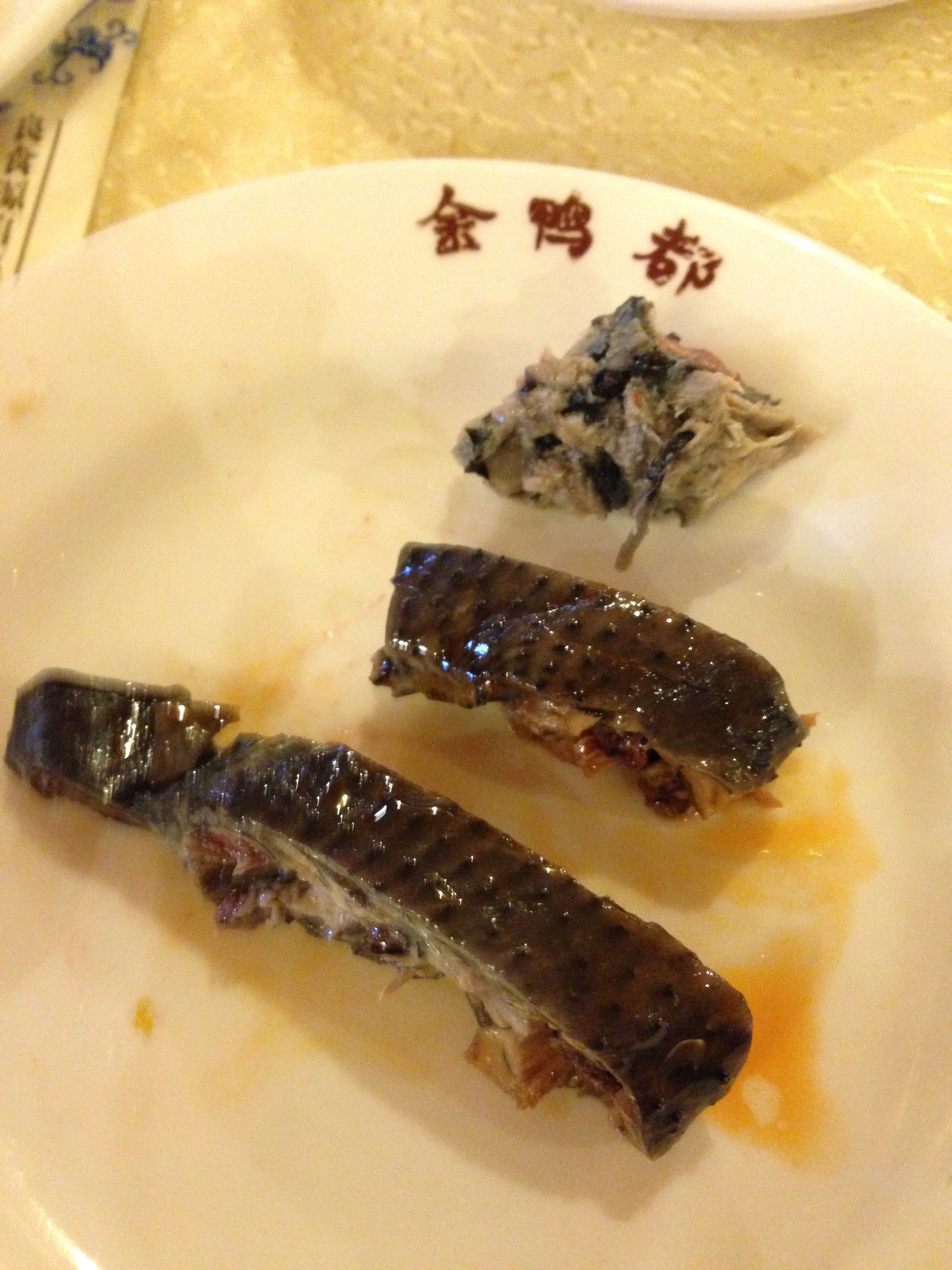 They’re called Silkies, and Marco Polo even mentions the very same “furry chickens” in his travelogues. Therefore, it was going back in a culinary time machine where I consumed a piece of the past, and it tasted like a heap of coriander with a hint of Sichuan pepper that numbed my tongue ever so slightly. The downside of the preparation, as with many places in Asia, it was filled with tiny bones which took away from me actually enjoying what little meat there was on the beast. However, I did enjoy it a lot more than my lotus root dish which also was served at room temperature. Now, I love my fried lotus root, but this raw version did not sit well with me because of the limp texture and the odd, sweet ketchup-esque sauce.
  It wasn’t a highlight on my visit to Beijing. However, the following day was great in so many ways. First, there was my visit to the breathtaking Great Wall of China at the Mutianyu section that was occasionally blighted by hawkers trying to sell you food, drinks, and terrible souvenirs. This wasn’t even at the most touristy part of the wall! After hiking for about three hours up and down some knee-crackingly high stairs, I zoomed down the mountain on a self-regulated toboggan which was one of the most exhilarating things I’ve ever done in my life. The lunch we had at the foot of the mountain really wasn’t anything of note, but the dinner I had after going to the national circus was noteworthy with how cheap and flavorful it was. While I was trying to find a place open in my neighborhood by my hostel on a Sunday night, which was proving a bit harder to do than I thought, I stumbled on this 24 hour eatery (or at least that’s what I figured from the 24 on the sign).
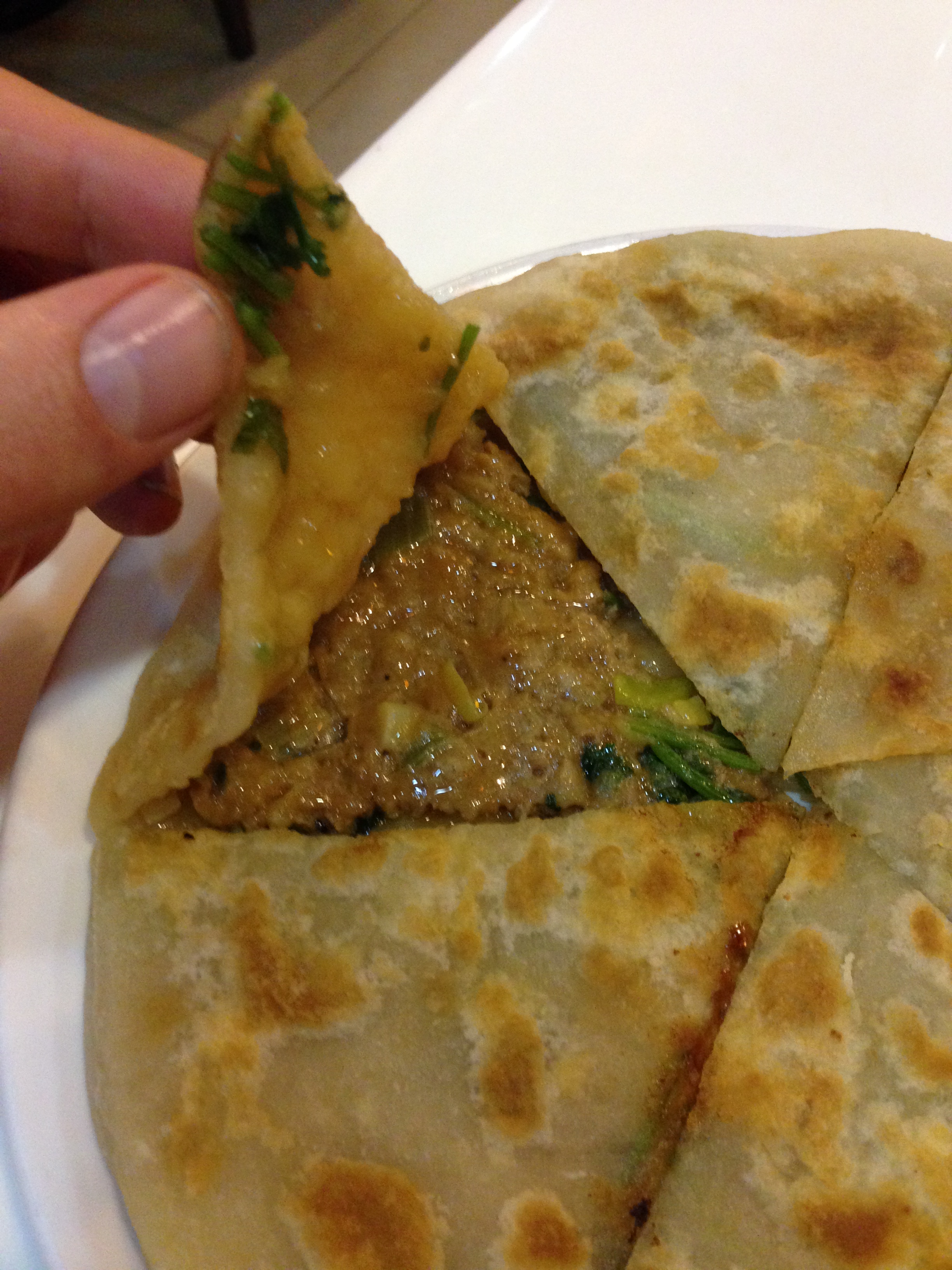
 I walked in much to the surprise of the staff, but I was quickly seated and supplied with a huge menu. I’ve noticed all the menus in China have 10 billion things on them which is refreshing compared to Korea, yet so intimidating at the same time. All I have to say is thank God for picture menus. I ended up getting the pork stuffed green scallion pancakes along with the cumin seared beef. For the equivalent of 10 bucks, I got a huge skillet of quality cuts of beef rubbed with a great chili and cumin rub all topped off with a huge mountain of cilantro.
  The side of fried pancake was wonderful as well.
 It was a bit greasy but not too much, and the minced pork mixed with the tangy green onions and pliable, golden brown dough was a combo made in heaven.
  So those are some more notable eats I have sampled during my trip to Beijing, and I will be wrapping it up in the next post with my final day in the Chinese capital. Until then, readers and eaters!
Beijing (Day 3 and 4)- I Got a Black Magic Chicken
Beijing (Day 2)- Go Duck Yourself!
Welcome to another installation of Mastication Monologues where today I will be bringing you day two of my food adventures in Beijing! It was quite a happening day complete with a visit to the Forbidden City, and let me tell you that the only thing that is forbidden there is sitting down for a rest. It was an immense sight to see, so we worked up quite an appetite by the time we found an exit. Nearby, there was a large stretch of shopping malls and restaurants, so we decided to take a gander at what they had to offer. We eventually ended up at this Muslim/Uyghur restaurant. China, being the gargantuan country that it already is, encompasses a multitude of cultures and ethnic groups. The Uyghur people are one of the most distinct groups in the mix as they mainly inhabit the far western part of the country, and a majority are Muslim instead of Buddist or Taoist. In terms of food, you can definitely tell that they are not like the Han majority as they consume a lot more mutton, flatbreads, yogurt, and kebabs. A little Middle East meets the Far East flavor for ya. We were the only non-Asian people in this eatery, so the local clientele were very surprised to see us. Upon sitting down, they insisted on covering our seat backs with protective covers and the table cover with an extra layer of plastic. This was a signal that our meal was most likely going to be like Sea-World, i.e. the first three rows are going to get wet. We plumped for the lunch special for two which involved a Beijing hotpot that was quite novel. I say novel in the sense that the actual cooking device didn’t look like a typical pot used for this type of cuisine. It looked more like the progeny that would arise 9 months later if a lava lamp, a smokestack, a fire pit, and a castle moat got together during one crazy weekend in Jamaica.
 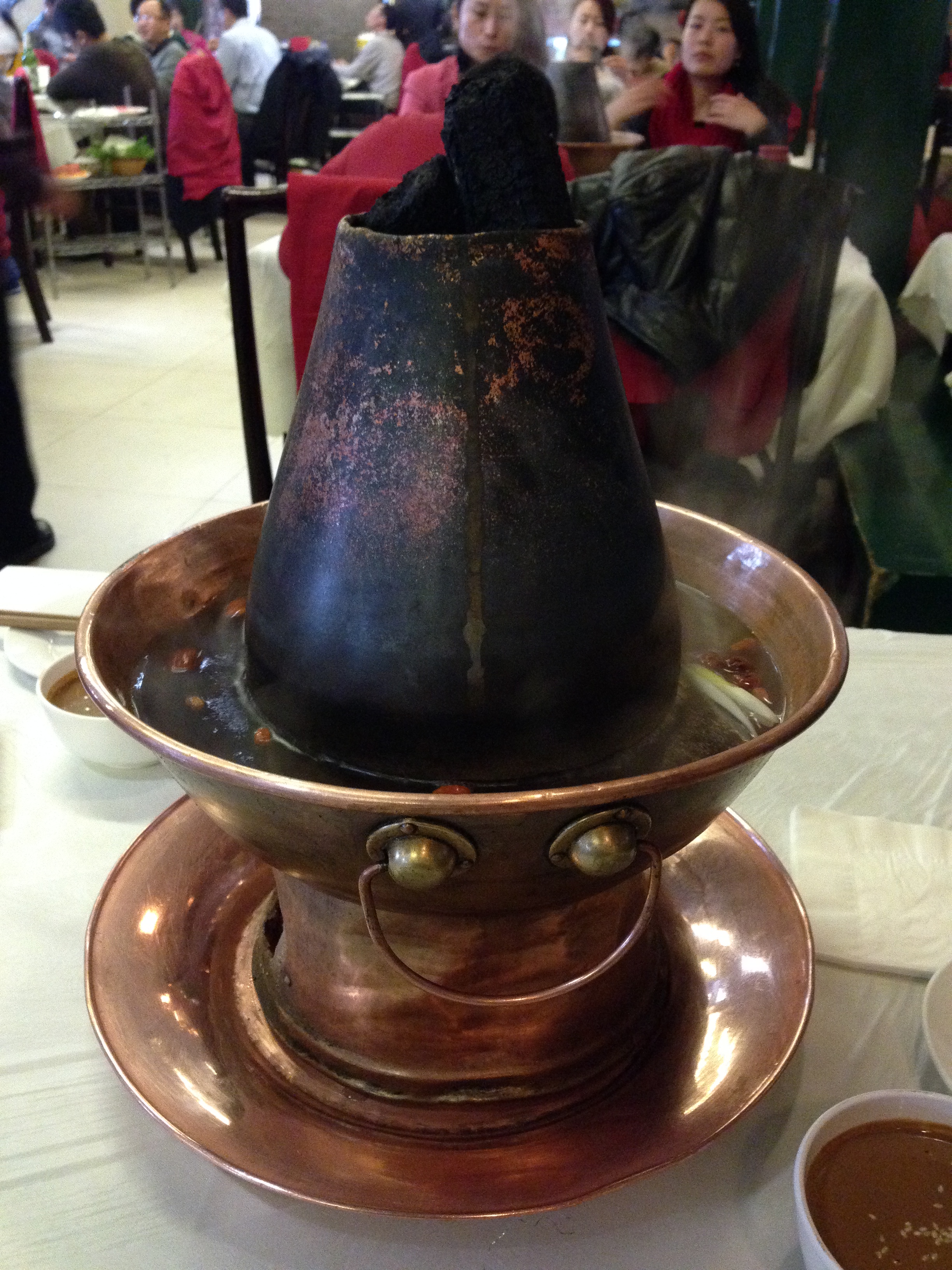 Inanimate object freakiness aside, the rolls of thinly sliced lamb had my mouth watering.
 They also had scarlet bales of beef with plenty of vermicelli and wheat noodles on the side.
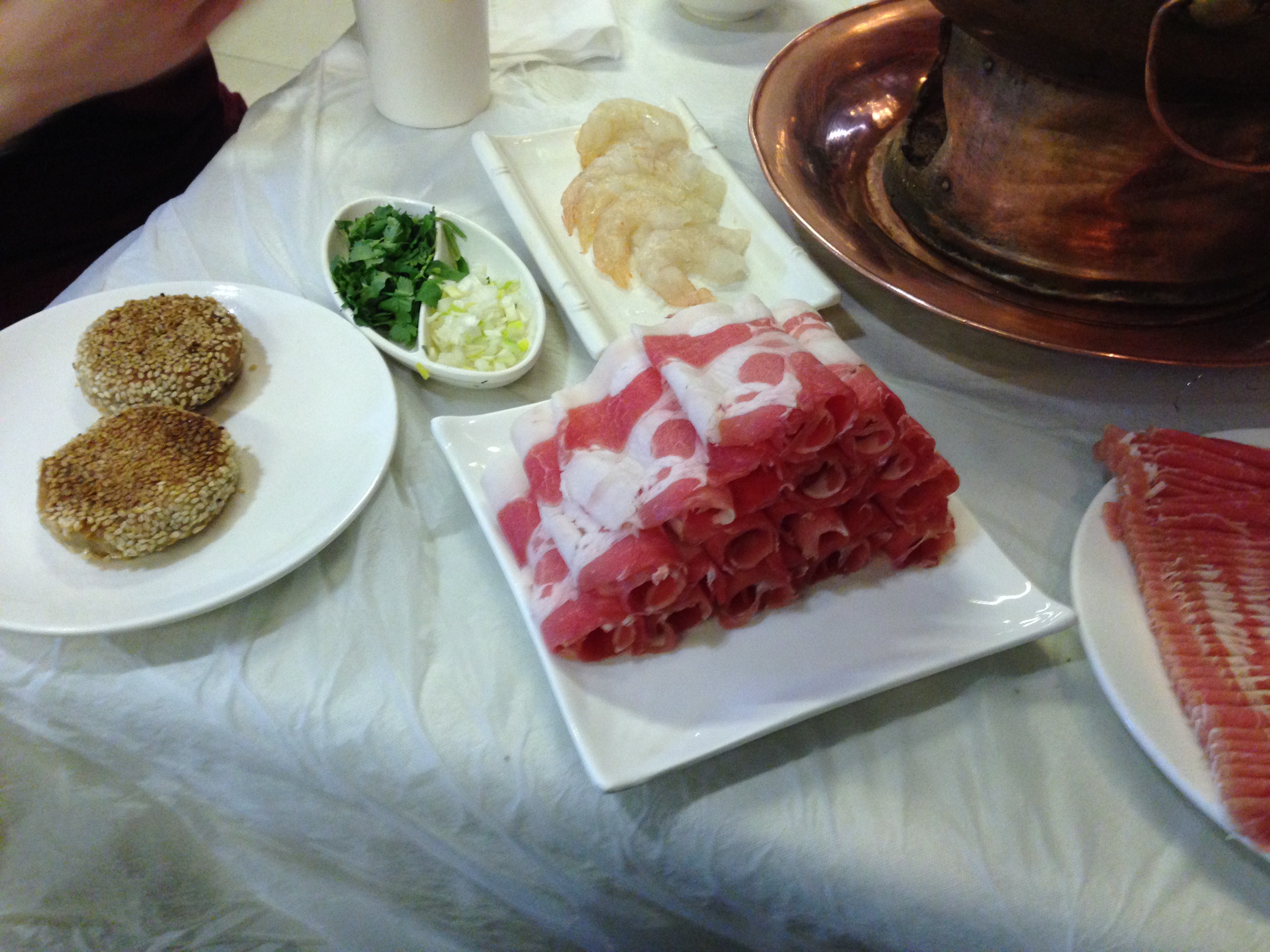 While the meat was delectable, I think that it was a bit of a disappointment with how much of it was boiled off in the water. The shrimp were quite useless since they were frozen together in a clump to the plate the entire time…talk about fresh. If you’re a veggie head, there was plenty of tofu, fungi, lettuce, cilantro, and onions to satisfy your cravings.
 One of the more interesting dishes of ingredients we could throw into the boiling water were these cheese-filled, sea scallop balls and the mystery black balls.
 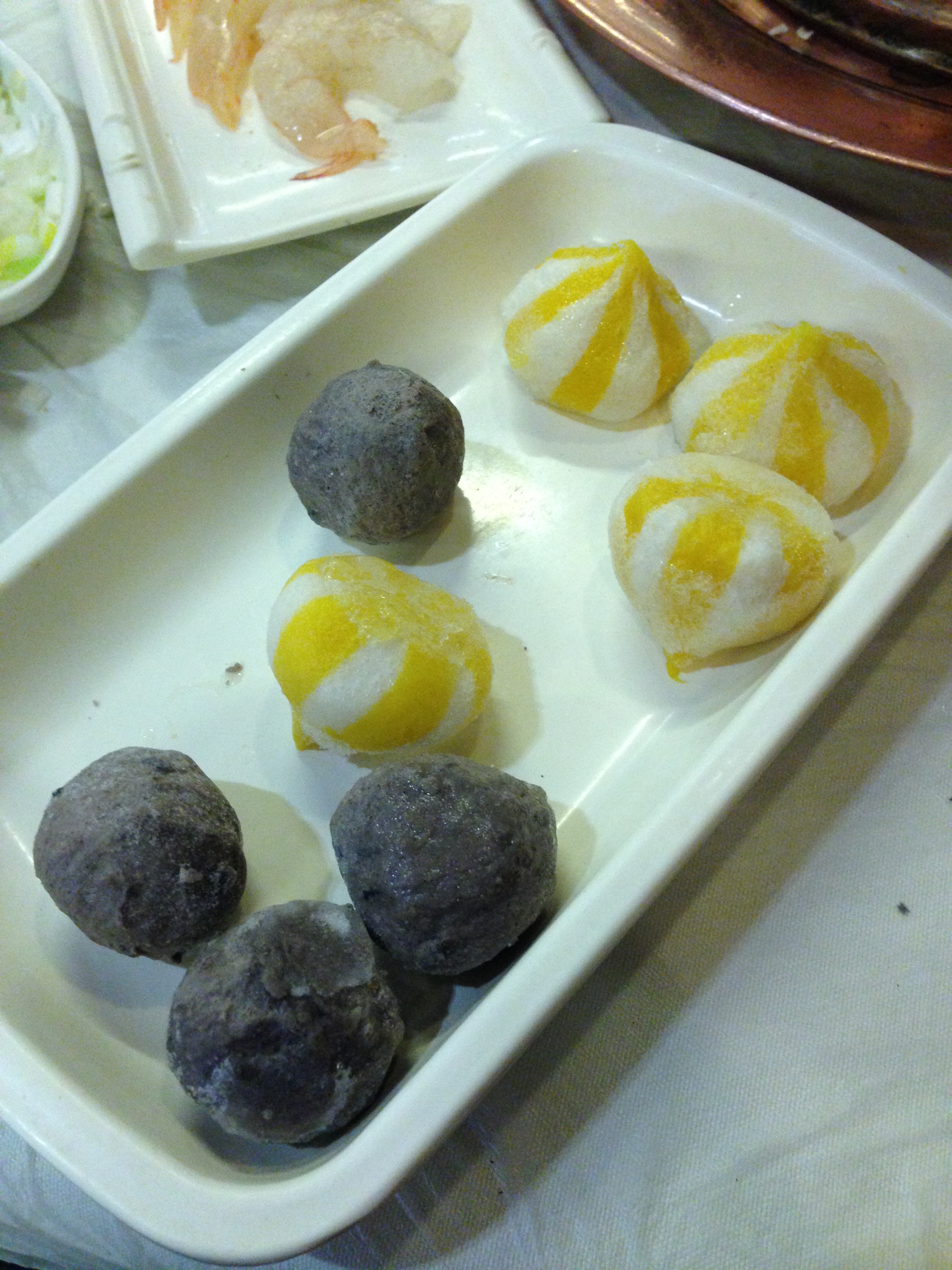 The former were quite funky in a good way with their playful striped exteriors and piping hot cheese and seafood sauce innards. The latter were a bit more unsettling since I couldn’t really tell what sort of meat I was eating, and it seemed like each meat orb had a piece of string in it. I don’t know if that came from the preparation, but it didn’t bother me terribly. All throughout the meal, I enjoyed watching the wait staff watch us eat since we were so proficient with chopsticks. They were probably thanking the heavens they didn’t have to search for a fork. It was an ok dining experience, but I prefer my previous Sichuan or Taiwanese hot pot dinners. If my taste buds were snoozing on me after that lunch, I would give them a jolt they would never forget as we made our way to Wangfujing Snack Street (王府井小吃街; Wángfǔjǐngxiǎochī Jiē).
 It was a lot more crowded than Donghuamen market, and it seemed more like a local place to get snack food which also meant the prices were a bit more reasonable.
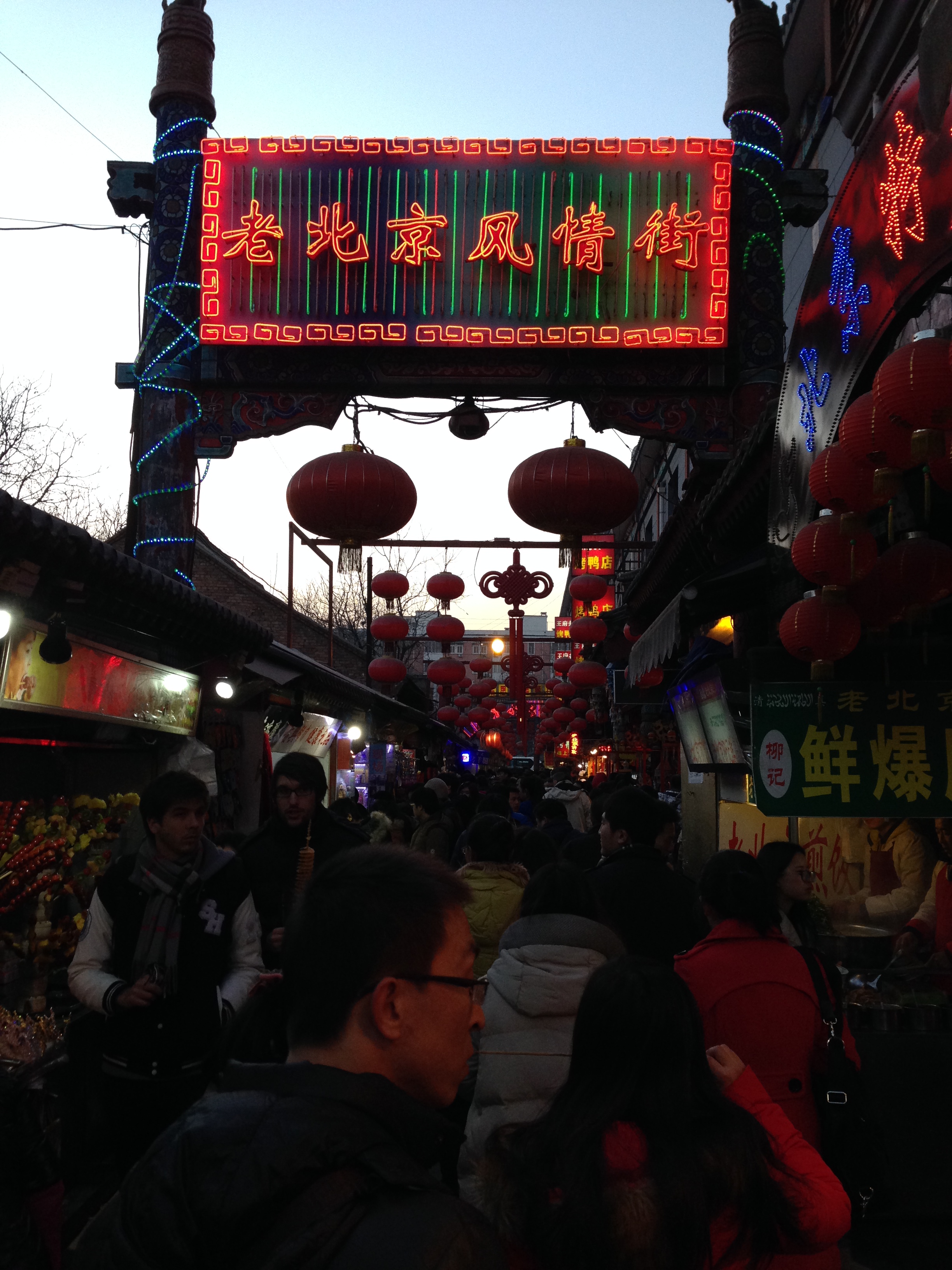 I saw a lot of the usual weird food that they also had at Donghuamen, but one of the sticks was really calling my name: the scorpions.
 I don’t know if it’s just the fact that they are poisonous, or that they were still alive and squirming on the stick that made me want to eat them. I got a stick, and it was the best bizarre food I tried in Beijing with the spider running a close second.
 I’d have to say that it was a mix of the chef’s spicy dry rub, and him knowing not to burn the arachnids while frying. Those two elements combined to create a snack that was crispy, piquant, with a bit of meat that didn’t taste like anything. It seems that insects will taste like whatever you season them with, so I consider them the tofu of cheap proteins. Another fun part of the experience was having other western tourists walk by with their Chinese friends and reel back in horror as I took down the creepy crawlies with no trepidation. Naturally, the Chinese broke out the classic praise phrase in English, “You’re strong!” while their Western friends insisted on a raincheck when I offered them one. Quick note on Asian cuisine I’ve noticed while traveling, the weirder it seems to Western palates, more often than not it can somehow increase strength (read: male libido) in some fashion like dog soup in Korea. Long story short, I’d eat the scorpions again if I had the chance, and I recommend you try them as well. However, my day didn’t end there. All of these brief excursions culminated at dinner where I had the signature dish of Beijing: Peking duck. While New York has its delis and Chicago its deep dish pizza, you would have to be a fool to go to Beijing and not try one of these succulent fowls. The place we went to was called Lao Zhai Yuan 老宅院.
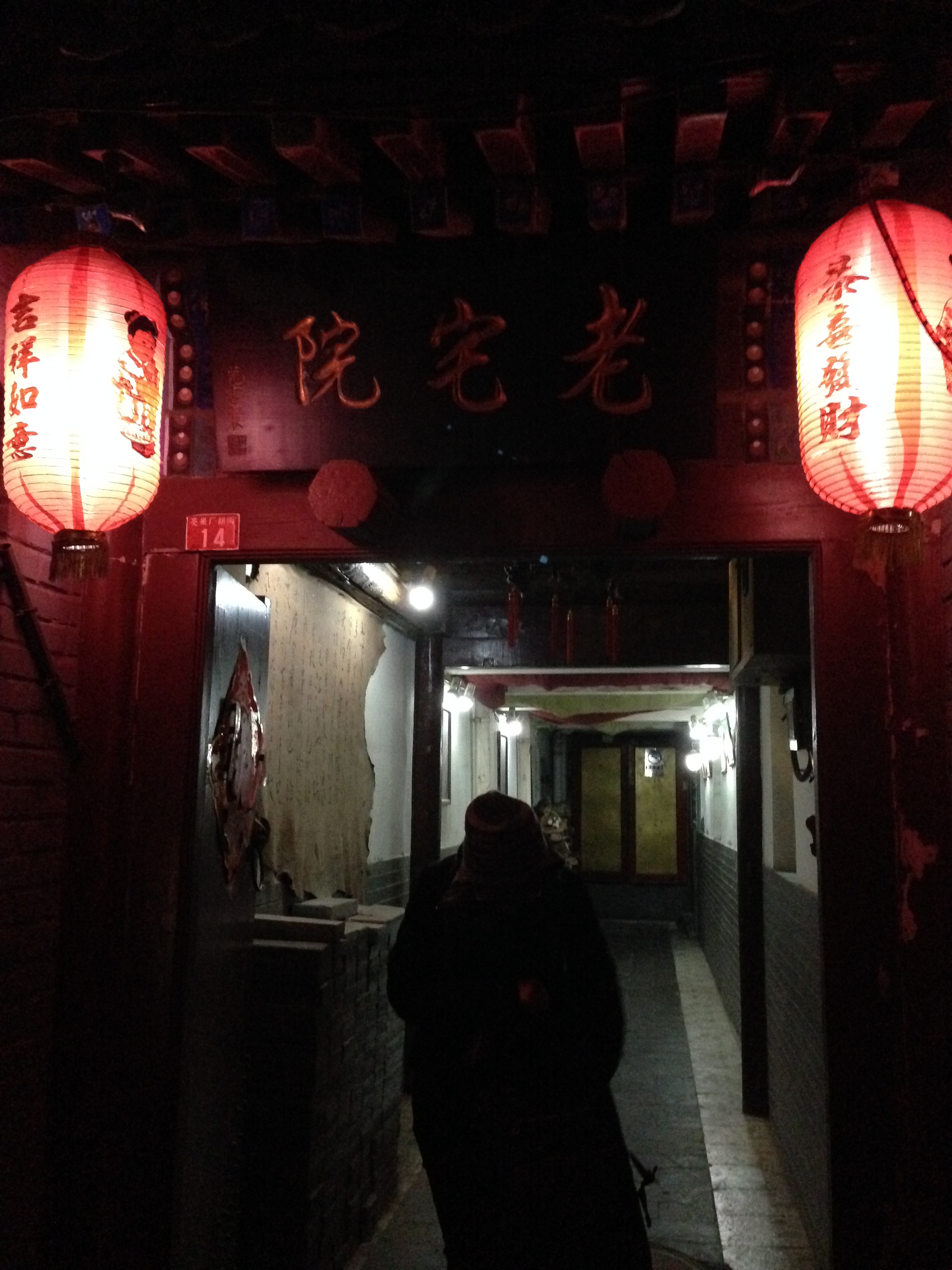 It was in a really small hutong or neighborhood and gave me the impression that I wasn’t at some touristy clip joint. We ate in one of their courtyards which thankfully had plenty of heat lamps, but it just further added to the ambiance of it all.
 We also enjoyed the menu descriptions of some of the items they had to offer, and the prices were extremely reasonable. Our entire meal probably cost 10 bucks.
  While we were waiting for our duck to be prepared, I got a bottle of baiju 白酒 which is like China’s version of Korea’s soju. However, the difference is in the alcohol content.
  While soju only has around 20% alcohol, baiju has a 40% minimum, so it’s more like vodka in that aspect. I definitely felt that way when I took a small sip of it straight, but it got more interesting when I mixed it with Sprite. It didn’t blend very well with the Sprite like vodka would, but it added a strangely pleasing berry twist to the citrus Sprite.
  In the distance, I could smell a sweet fragrance wafting our way, and I saw our chef going to work on our duck with brain surgeon-like precision.
  His craftsmanship showed with each plate they brought to our table of just the meat, the golden brown skin, and the meat with strands of the skin still attached with a thin layer of fat between both tissues. It was hands down the best meal I had in Beijing.
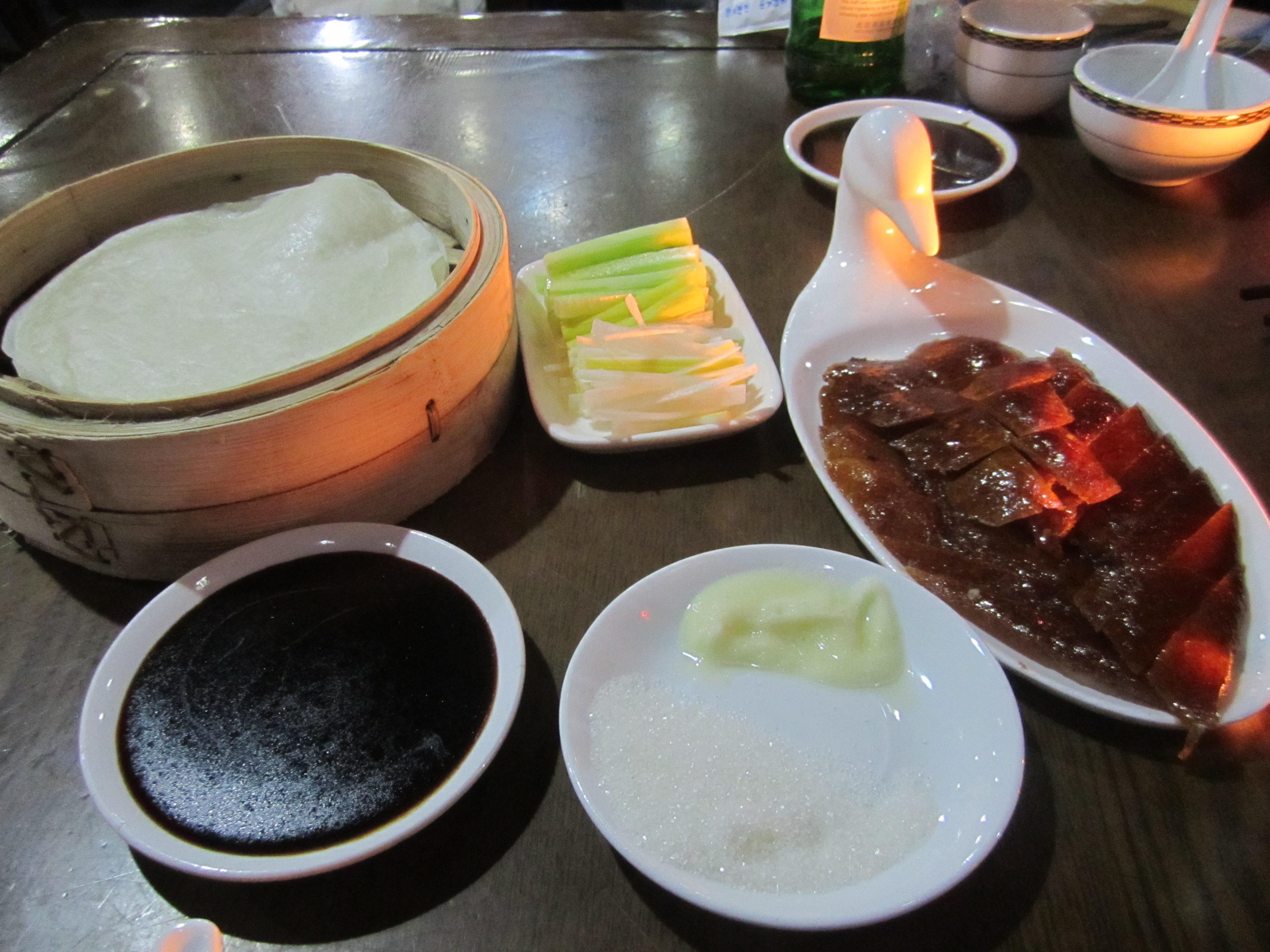
Heaven in one meal.
The skin was not only crispy but had dulcet tones to every bite while the meat was tender and rich. It doesn’t take a mathamagician to put one and one together to imagine how great the skin and meat bits were. The meal was only further enhanced with the delivery method of the duck to your mouth which took the form of utilizing a paper thin pancake and smearing the plum sauce all over it first. Then, you could either put horseradish, sugar, cucumber sticks, or onions before loading up on your duck. Once you have it all piled up, you roll it taco style and enjoy. It was a great combination of sweet, savory, and tangy to create the ultimate dining experience in Beijing. The plat de résistance was the duck head that they served to us as the very last item. It was cleaved in half still with everything inside like the brains, tongue, and eyeballs. 
 Naturally, my dining companion didn’t think I was going to eat it, but I ended up consuming it nevertheless much to her disgust. It was worth it though, and not my first time doing so since I had it in Taiwan. There wasn’t a lot of meat on it, but I’ll always say that the eyes are the best part since they have a buttery quality to them. All’s well that end’s well as I went to sleep that night with a very happy stomach. Long story short, find this restaurant, and you will not regret it.
Beijing (Day 1)- A Bug’s Life
Things have taken a turn for the amazing for my blog as I’m quickly approaching the 130 post mark, and more and more of people are liking Mastication Monologues as I get the good word about different types of food out to the world. Thanks to everyone for your support, and keep on viewing, commenting, and liking! Today will be no different as I continue my recap of my vacation mastication adventures. This series will be talking about all the wonderful things I tried while staying in Beijing, China.
Now, I’ve had my fair share of Chinese food which ranges from hot pot to some delicious dim sum to even tongue-numbing Sichuan cooking, but mainland China definitely knew how to push my buttons and boundaries as the daring gourmand that I am. My first food experiences started, oddly, with a trip to McDonalds. Now, I know what you’re thinking, ‘Mark, why would you want to go to a worldwide chain that has been slowly eroding local eating customs since 1955?’ Well, dear readers, while I do like my McDonalds back in the USA, I also like to try it in different countries to see what sort of unique options they offer that cater to the tastes of the local population. At this Beijing branch they had most of the standard burgers, but I was drawn to the beef or chicken rice wrap. I got one of those along with a taro pie for dessert. The beef wrap was delicious since the meat was flavorful along with some good, not great, fried rice. 

 I was more partial to the taro pie.
 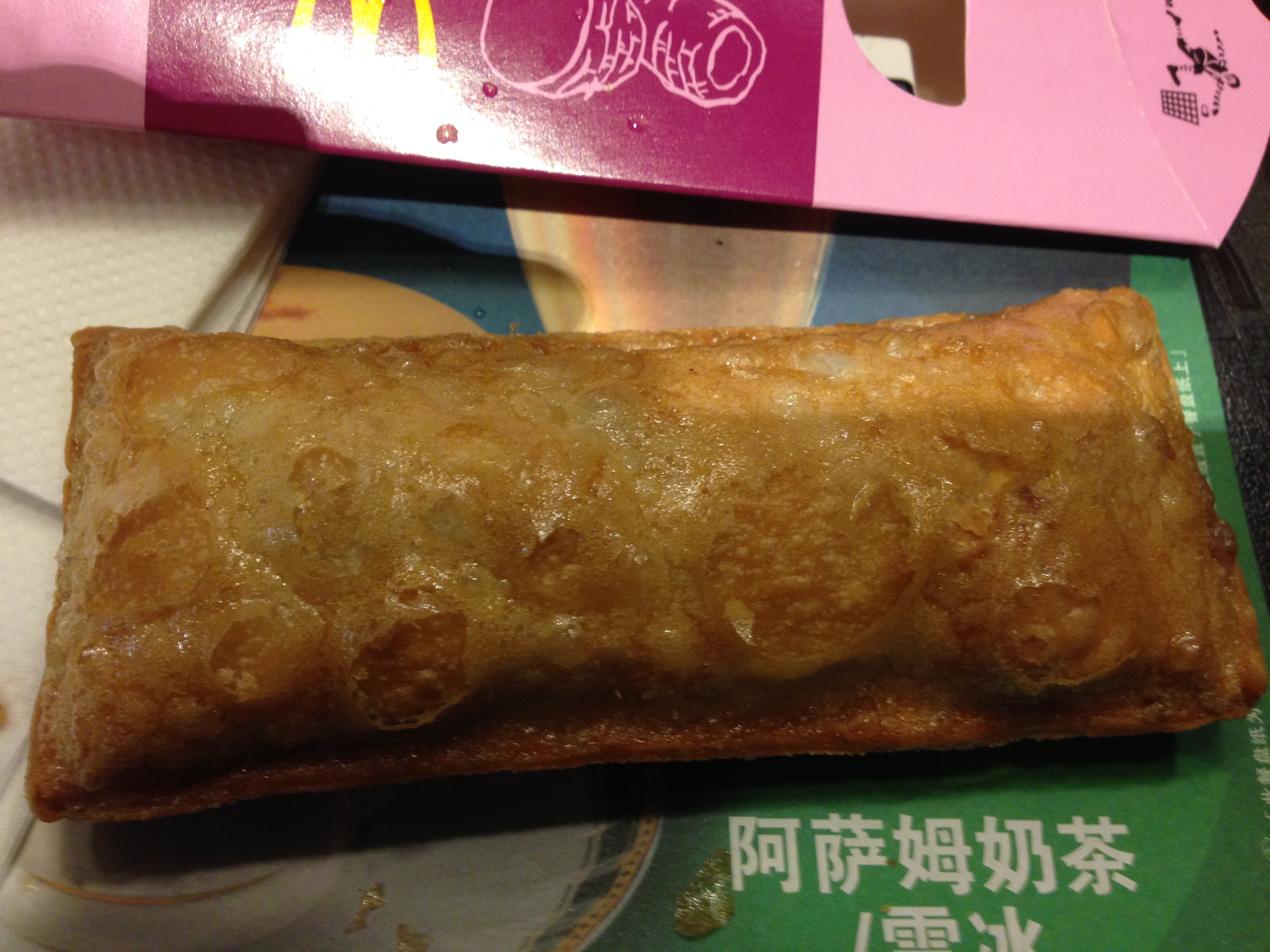 Think your classic McDonalds apple pie, but beneath the cinnamon-sugar encrusted dough there are sweet, steaming pieces of purple taro inside.
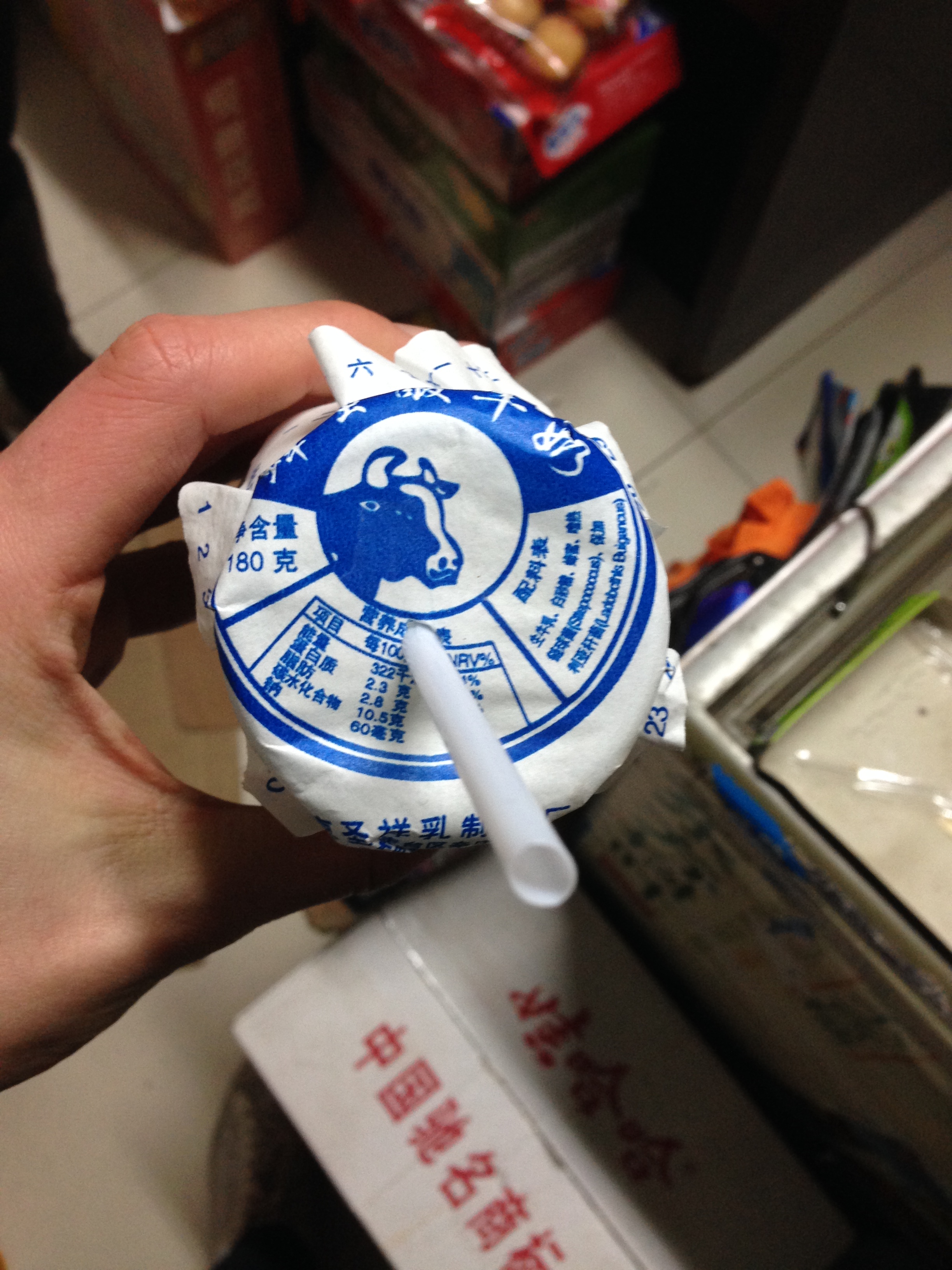
  It’s going on the list of foods they need to bring to the US along with the chicken tikka sandwich from Subway shops in England. Once we figured out where to go, we decided to visit the Donghuamen (东华门) night market . It was a bit hard to find, but it’s by Wangfujing metro station. We stopped for a traditional Beijing beverage/food called nai lao. It’s basically Chinese yogurt you can drink through a straw out of these small porcelain jugs.
 They’re everywhere, and you pay about 80 cents to stand there and drink it. We were in a tiny convenience store that could have doubled as a closet, but the old couple that ran it were very friendly while we were standing there and slurping the sweet yogurt.
 After some wanderings, we eventually found the market.
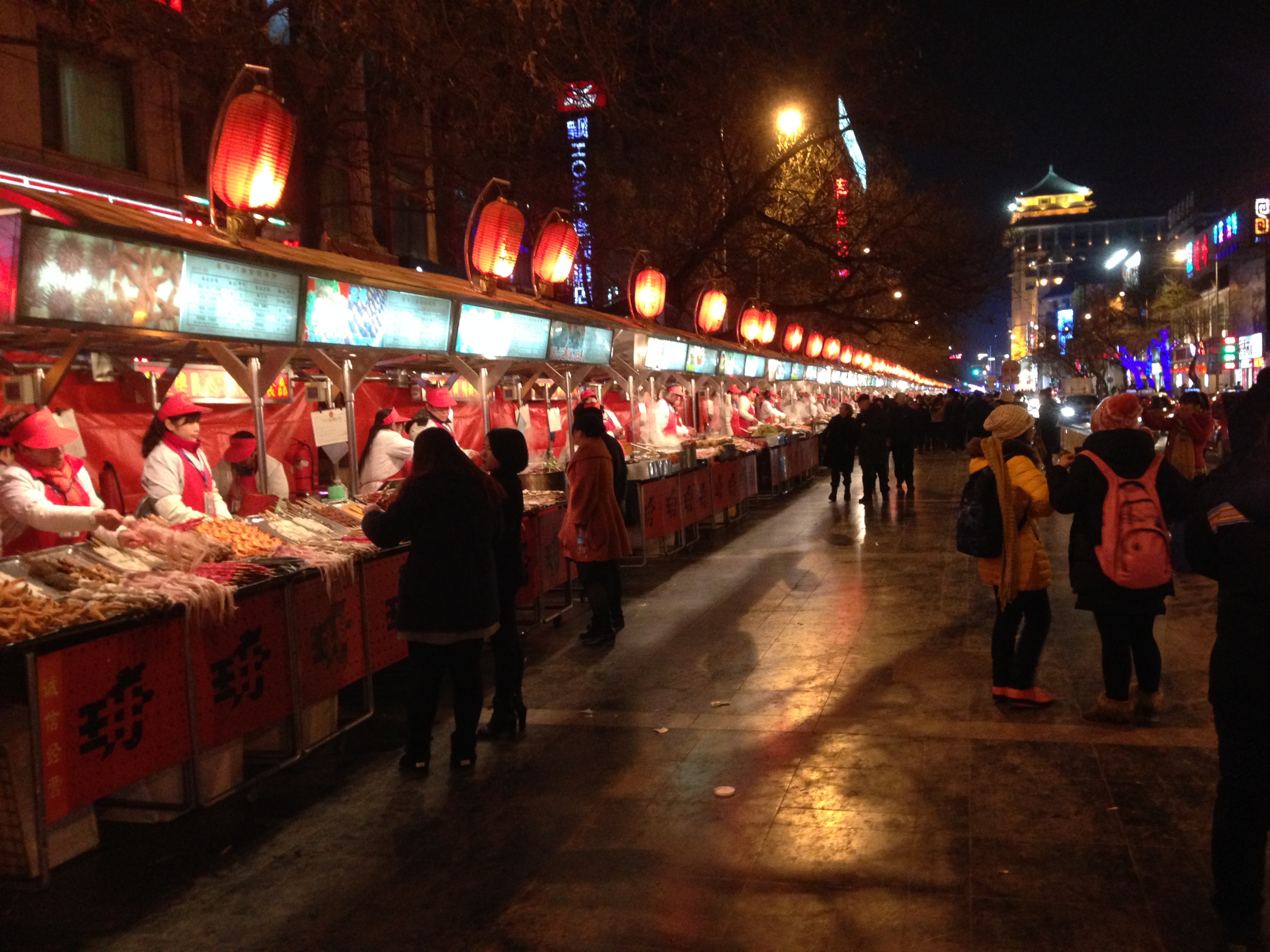
My own Elysian fields
You can’t miss it with it’s red lanterns and seemingly endless array of bizarre foods such as scorpions, snakes, lizards, testicles, starfish, goat penis, and spiders to name a few.
 There are also more normal options like dumplings (amazing designs as shown below), corn dogs, and even fried ice cream!
 I, however, went for the gusto immediately with a starfish.
 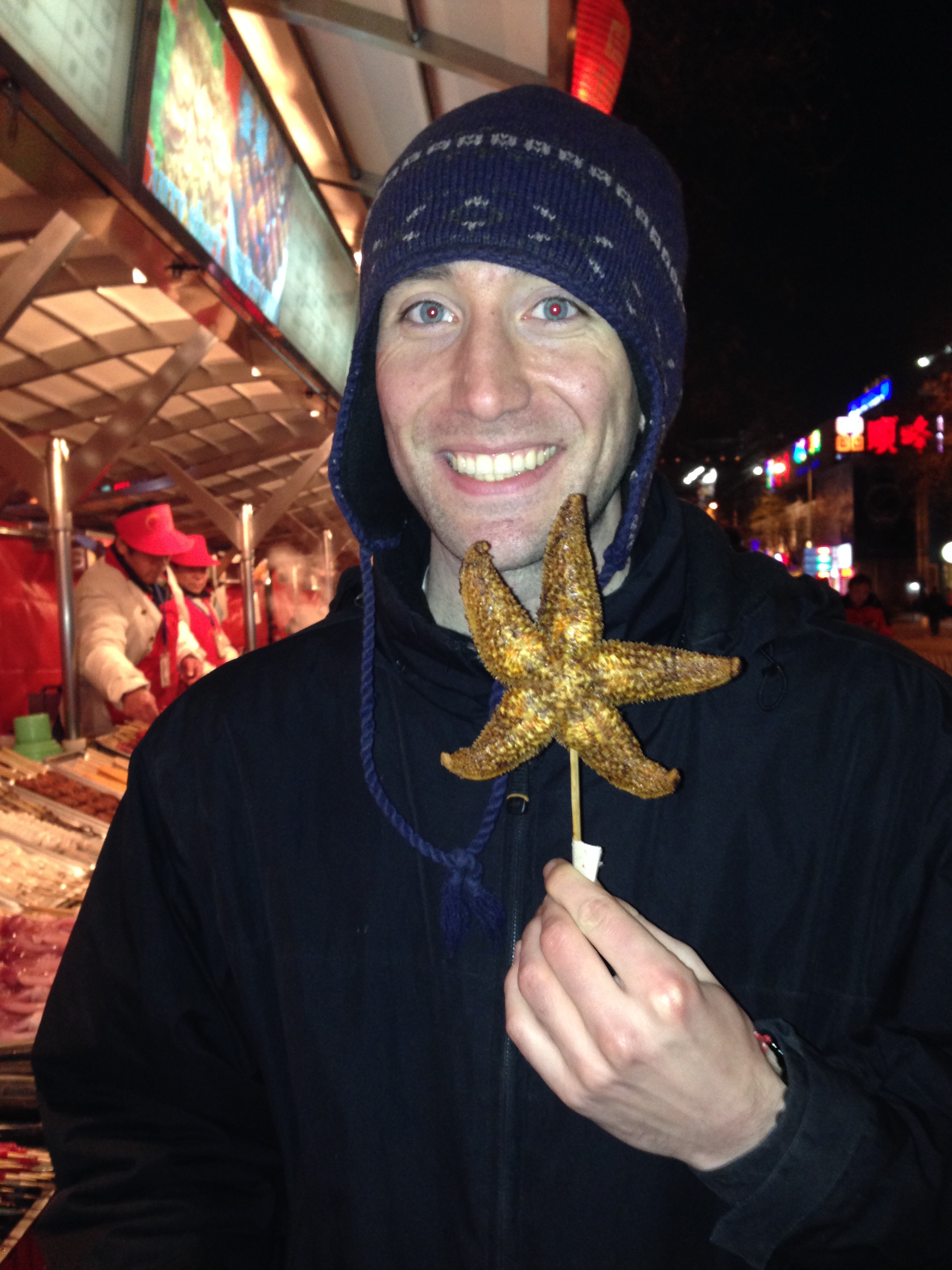 It was absolutely terrible. Imagine taking food, burning it to a crisp, shaping it into a star, and serving it on a stick. I ate about 3/4ths of it before I gave up. It was gross through and through. I moved on to a much more appetizing prospect in the form of a spider.
 This was a million times better than the starfish. I don’t know if it was the savory seasoning he put on it, or the fact there was a bit of meat to the spider after crunching through the exoskeleton.
 Either way, I followed it up with a giant centipede which immediately fell into the same category as the starfish. It was just as bad, but I think the guy over-salted it after frying it.
  So it tasted like I was chugging a salt shaker while eating a lot of crunchy legs and gooey body segments. If you haven’t vomited all over your computer at this point, I don’t eat anything else weird in this post. I instead got something a bit sweeter that is another Beijing staple: 糖葫芦 or tanghulu. At first, I was looking at the fruit a bit sideways because it looked like they were all frozen in ice.
 I naturally assumed that since my hands were quickly becoming ice blocks compliments of the lovely northern Chinese winter. I was sorely mistaken though as it turns out the ice is actually a hardened sugar coating that the vendors dip the skewers of apples, kiwi slices, pineapple bits, and grapes in before serving. I went with a Chinese grape skewer, and it was the opposite of my extreme foods.
  It was insanely sweet to the point of it almost hurting my teeth. I think if I got the apples or the intriguing sesame seed stuffed apples, it would have been better. I’d recommend trying at least one skewer though since they’re literally everywhere much like the yogurt bottles. I have to add a slight caveat to Donghuamen Market though. It seemed like a bit of a tourist trap. I found there were other more local markets serving the same fare for slightly lower prices. Just my two cents. After all of that strenuous eating and walking for miles, we went to a Belgian beer bar called Beer Mania. It was a cozy little party place that had a vast array of Belgian beers that almost made me think I was back in Brussels kicking it in the Delirium Tremens bar. The only downside was the live music was ear-splittingly loud. Thankfully they gave up playing after ten minutes of being ignored, so we could enjoy our beer in peace. I went with a Guillotine which ended up being a pretty bold pale ale from Belgium.
 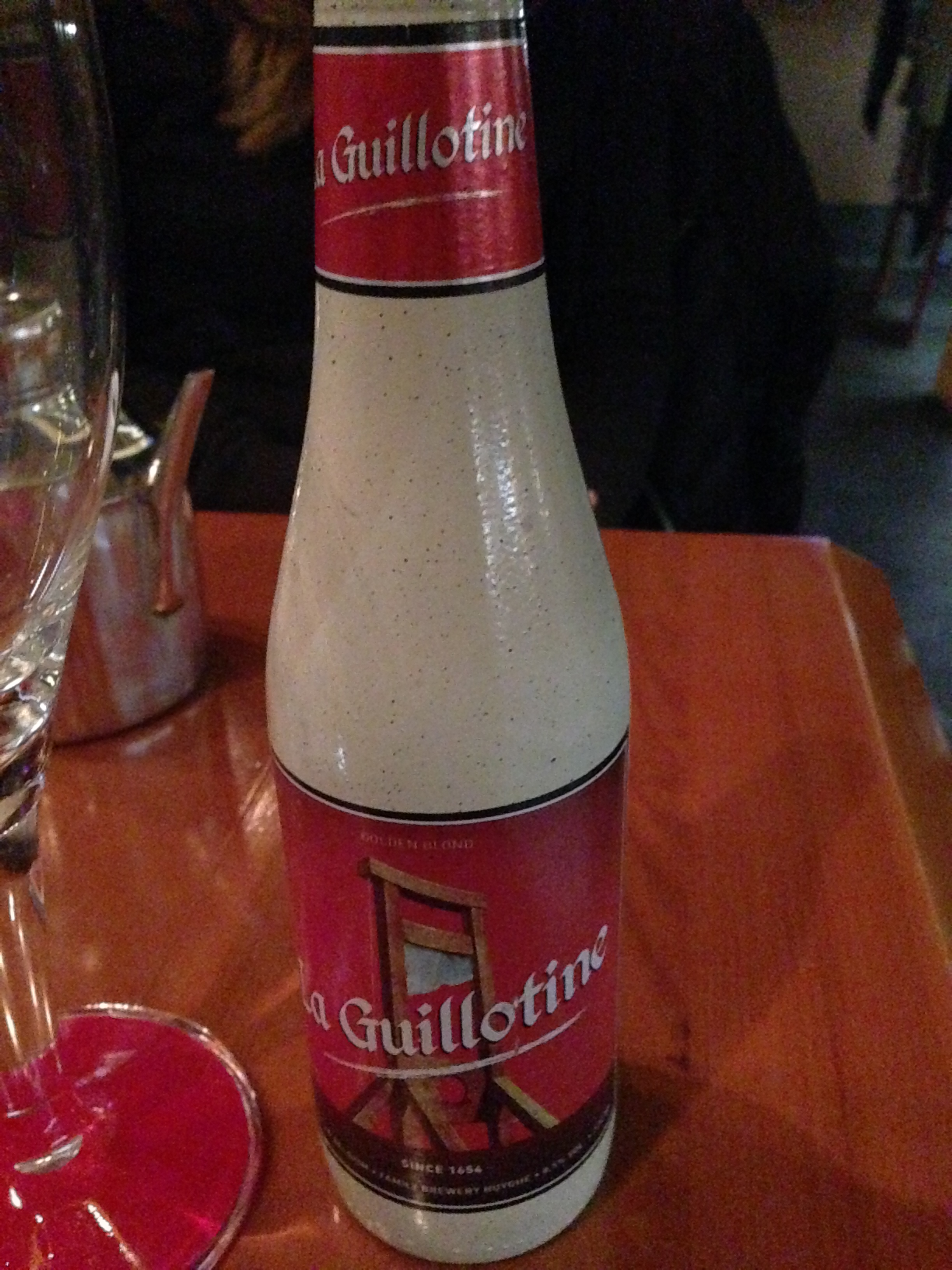 It had a slightly apple aroma which then transitioned into a sweet introductory taste that packed a bitter aftertaste punch right in the tastebuds. After that one brew, we were both pretty tired after walking around all day, so we called it a night. I was quite satisfied with the night since I could knock off so many food challenges by just moving from left to right about 15 feet. What a country!
My Glorious Food Revolution- Day 3 and 4 in N. Korea
Hello to everyone out there in cyberspace! I can tell that you have been enjoying my posts that have been offering you a brief glimpse into the mysterious land that is North Korea. Today’s post is going to be a double feature since Day 3 really didn’t offer anything that spectacular in terms of food and drink yet my last day was filled with memorable meals. So, I’ll begin with January 2nd (our third day).
Breakfast started off like any other even though they also had some delicious donkatsu (breaded pork cutlet) that actually had more of the texture of breaded sawdust along with the taste. After hitting up some memorable sites like the Party Foundation Monument and took a ride on the Pyongyang metro, we ended up at another hokey foreigners-only restaurant in another anonymous building in the city. The only highlights of lunch were plates of fried food along with a rather bland bibimbap with limp vegetables.
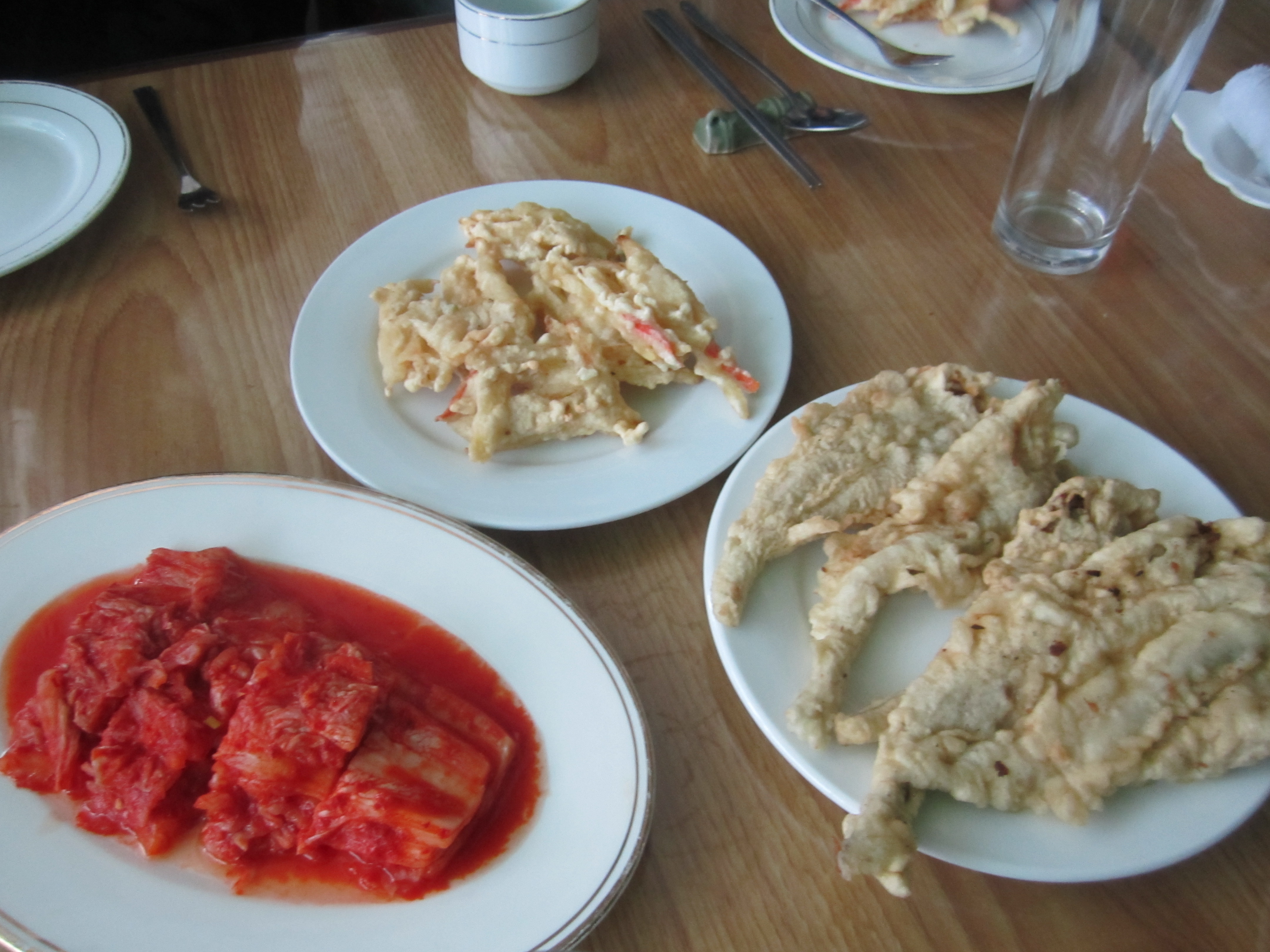
A lot of meh
 Weak sauce, North Korea (they didn’t even have enough gochujang or chili sauce for everyone). However, I tried a new beer called Bonghak or 봉학멕주. It was a little worse than the Taedonggang or perhaps on par with the common South Korean beers, i.e. an extremely watered-down lager.
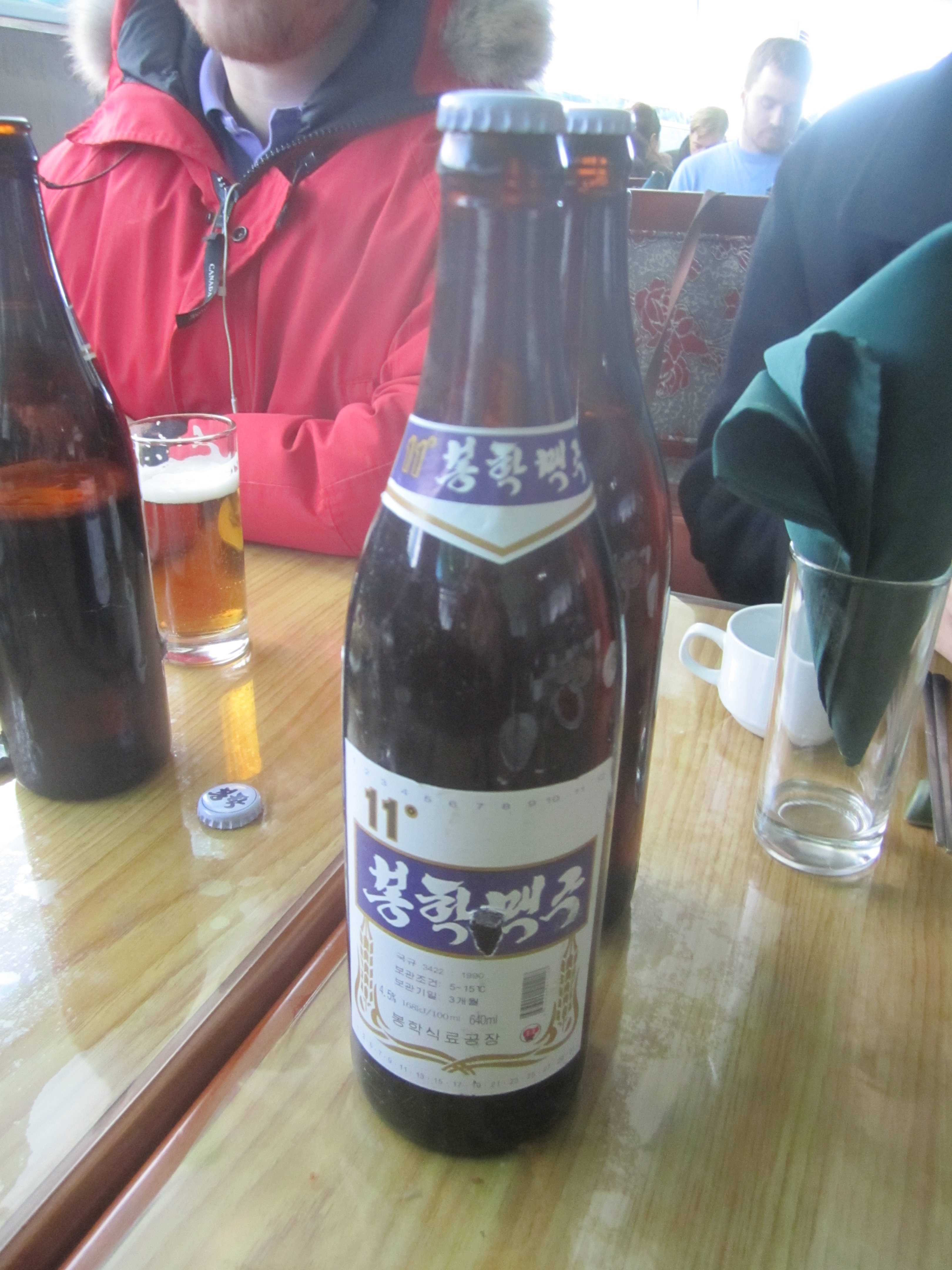 That was about it for day 3 which was kind of depressing from a culinary perspective, but day 4 more than made up for it.
Day 4 was the same old song and dance with breakfast, but it was going to be a unique day as we would head to the North Korean side of the DMZ along with visiting the city of Kaesong. After a long bumpy ride through breathtaking mountain passes, we were introduced to the Korean soldier-guides at Panmumjeon, and we saw South Korea from the Joint Security Area. Their armistice museums were quite eye-opening as well, but I’ll save that for my travel blog. We rolled into Kaesong after the DMZ, and it was more like what I was expecting from North Korea in terms of a gloomy atmosphere. However, this wouldn’t translate to the food as we were served a royal meal in a gaggle of small golden bowls with each container containing a new nugget of nom. 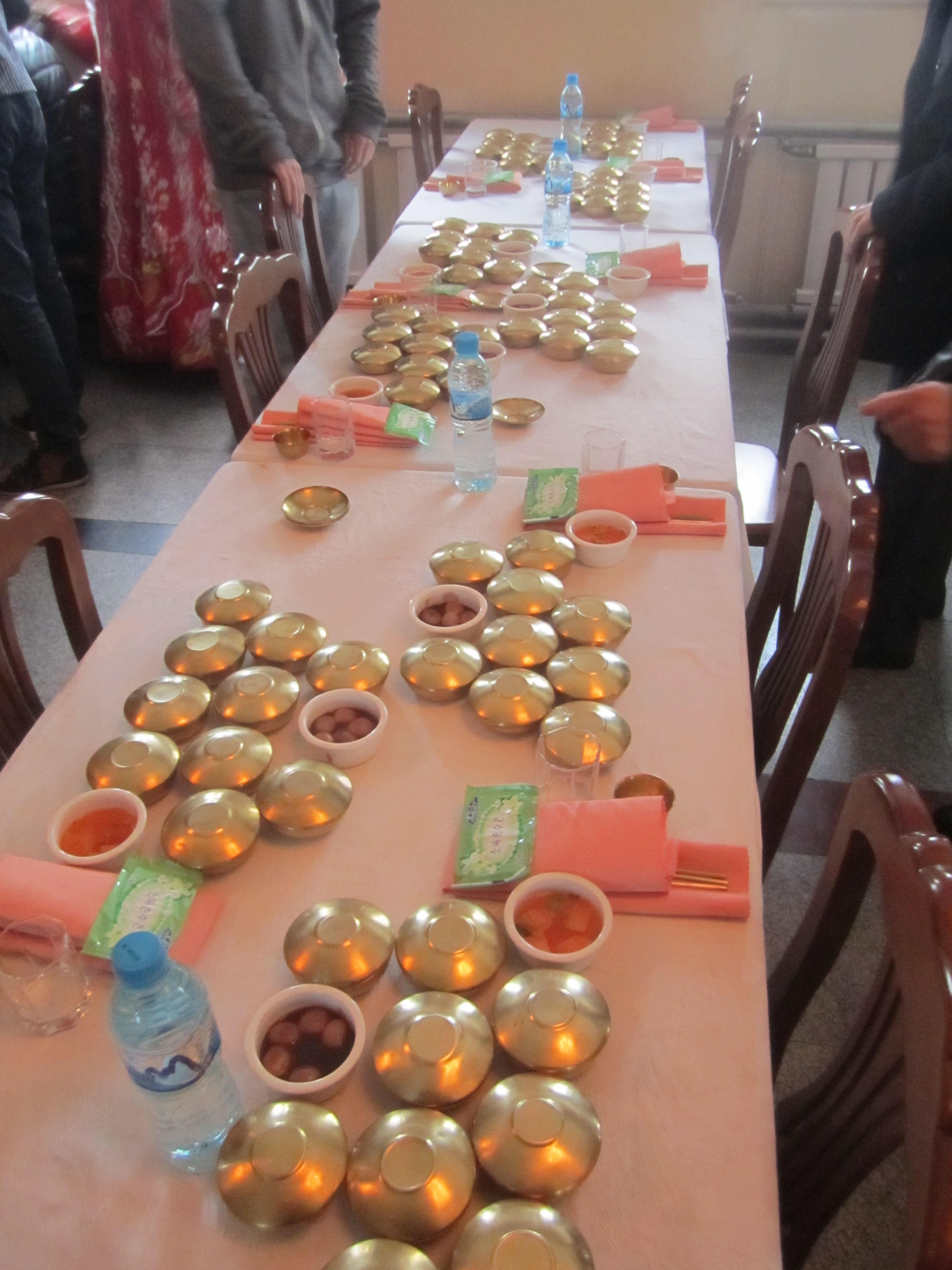 I didn’t know where to start once I un-capped all of the tiny basins.
However, most of the elements were not new to me since they have the same dishes in South Korean cuisine. Go figure. I’ll break down the picture above for those not in the know. In the upper left hand corner, we have the dark green strips of dried and salted seaweed paper with a hint of sesame which makes the perfect encasement for making sushi rolls. To the right in the white bowl are balls of tteok or sticky rice cake in a sweet red bean sauce. I’m not the biggest fan of either red bean or rice cake due to the savory flavor and lack of flavor, respectively, but these two together somehow managed to pass my taste test. Moving to the upper right hand corner is a simple piece of fried tofu. No fuss no muss. In the second row starting on the left, there is a bowl of random gelatinized eggs that were pedestrian in terms of taste, but the greens to the right of them were delectable and can be found in any bibimbap. The same goes for the bean sprouts right next to them. The last bowl in the second row is a bit different. It’s filled with green bean cake which was kind of disgusting. I don’t know why they feel the need to make regular and jelly versions of every food. The last three bowls were a bit more normal with the stewed potato strands on the left and salted baby fish in the middle. They’re very chewy and salty. The last bowl is a meat and potato melange. All of this was the backdrop to the star of the show: bosingtang or dog soup.  I’ve had dog soup before in South Korea, so I wanted to see who could do it better. In the end, the North won this battle because not only did they have more meat in the soup, but it was spicier which is a key element for me when it comes to savoring a great dish. It definitely beat the cold that pervaded almost everywhere we went since effective indoor heating doesn’t really exist in either of the Koreas. After leaving Kaesong, we ended up at the Taedonggang brewery bar which was extremely modern in decor, and could have been found in any major Western metropolis minus the wonderful Eastern European pop videos on the tvs from the 1990s.
  They offered seven varieties of beer from 1 to 7.
 1 being the most like an English bitter and 6 and 7 being like Guiness. Everything between that was a terrible mix of rice and barley. I decided to go with a 6 since they were out of 7, and I did not regret my choice.
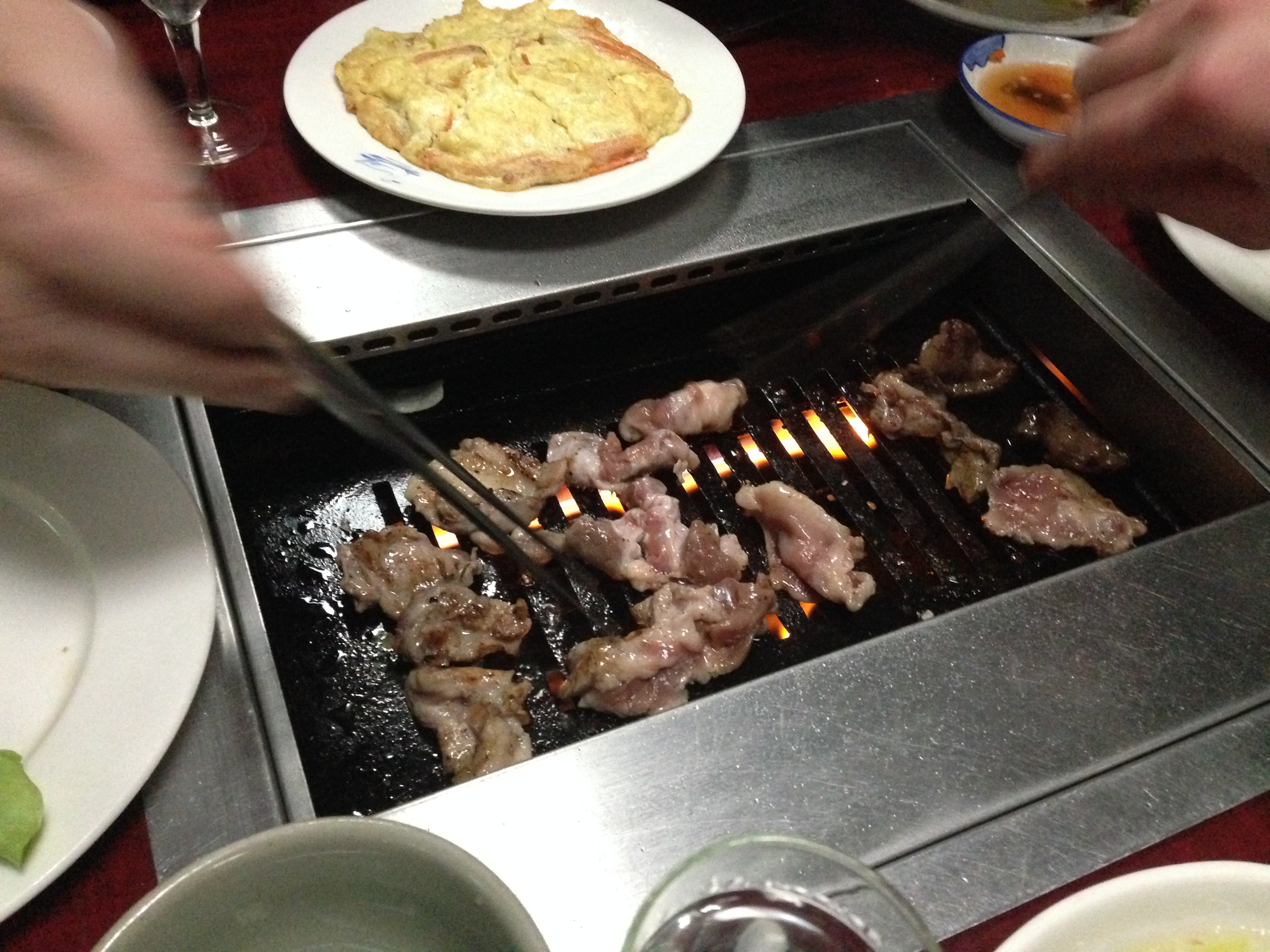
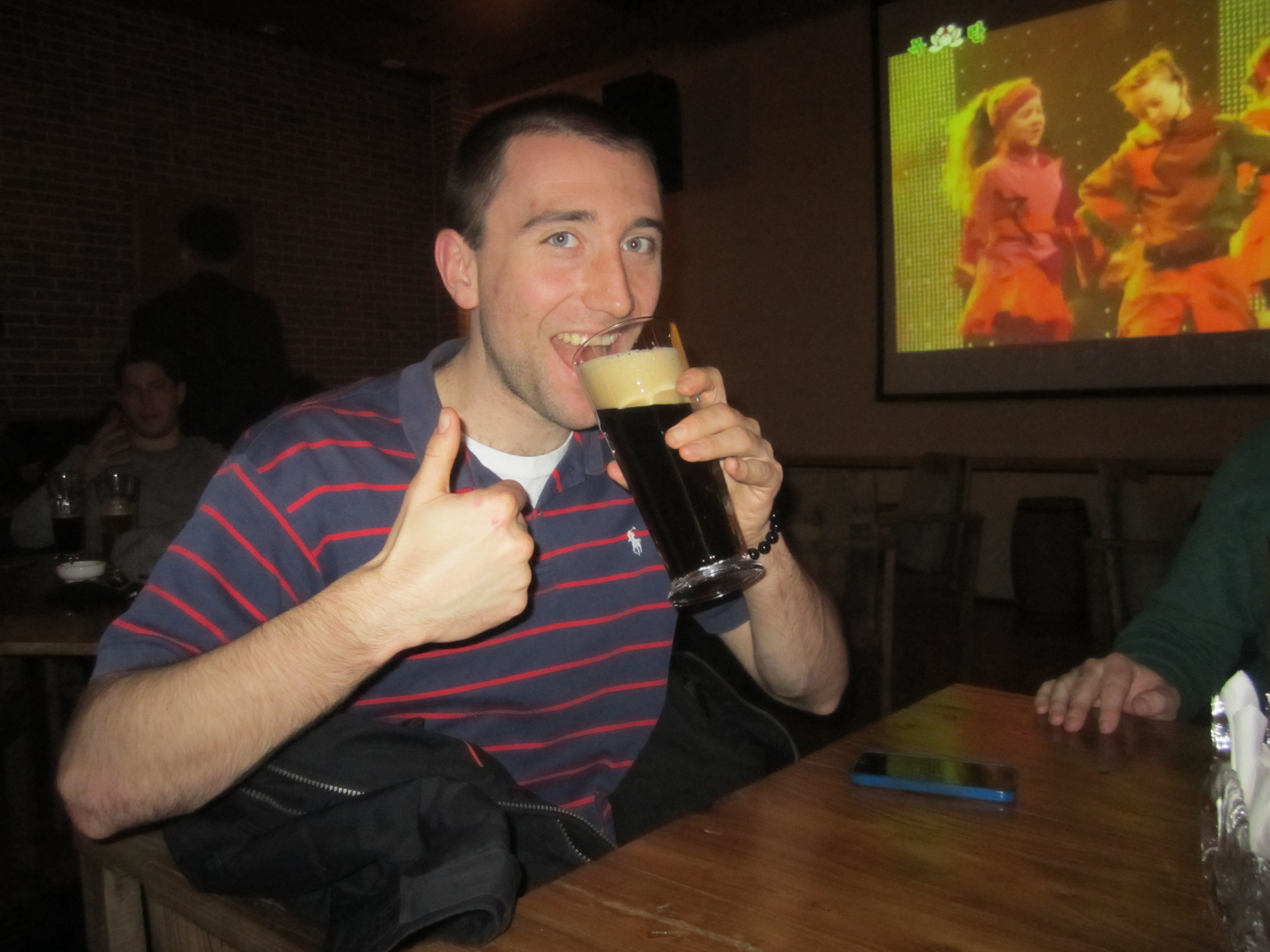 For only two bucks I got a legitimate brew that would cost six times as much back in Seoul. There were other North Koreans coming in to drink with us, and I could tell that they were higher-ups in the party based off their nicer clothes and shiny new Juche pins. After downing our pints, we headed to our final dinner together. They sent us off in style with duck bbq Korean style.
 As with most other Korean barbecue, there was not much to it in terms of seasonings or anything like that. Just throw meat on a grill and eat along with the usual pickled side dishes.
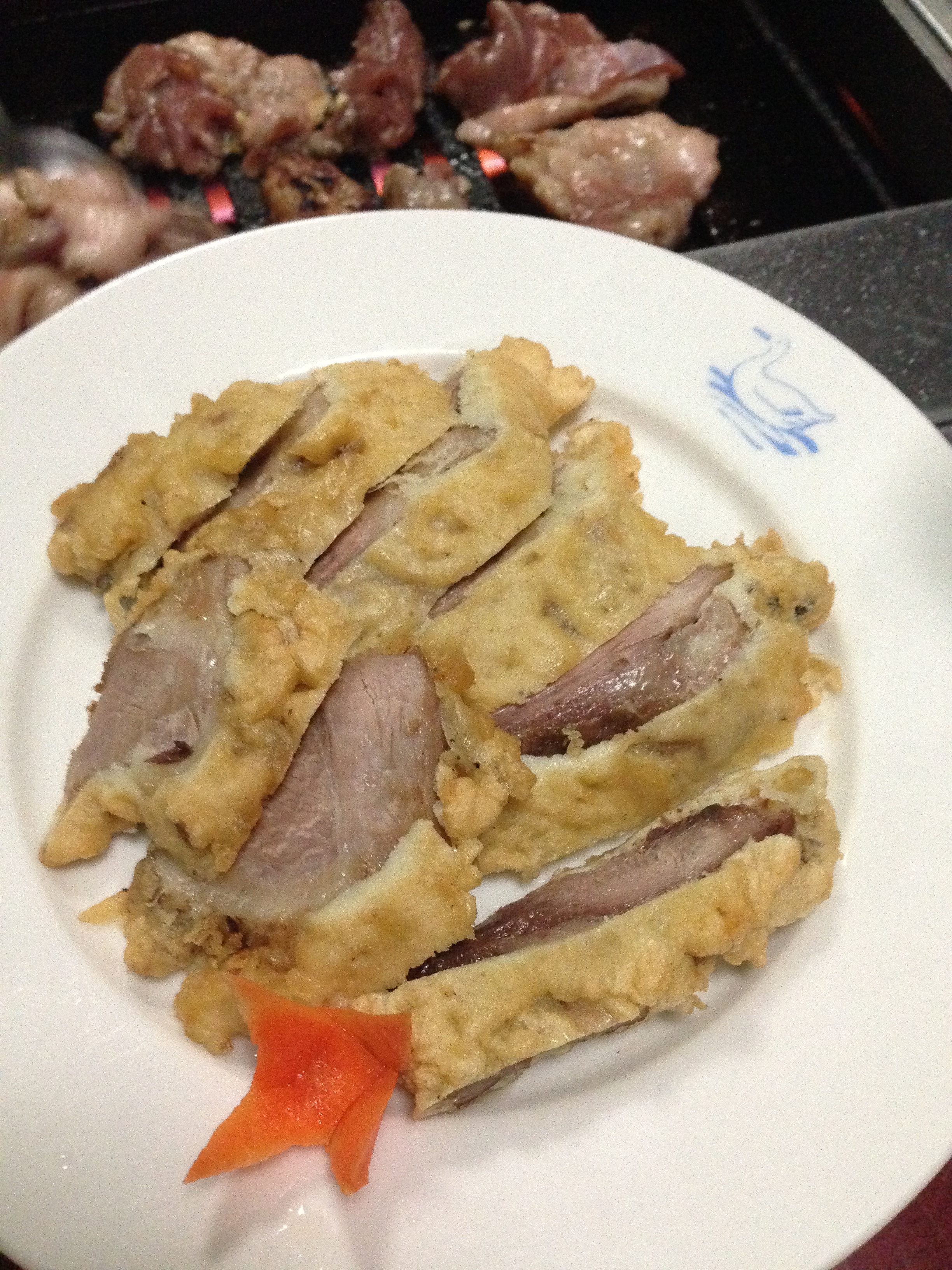
  I did like their duck donkatsu which was a welcome change from the typical pork cutlet.
  Their dumpling soup was pretty scrumptious as well.
  ‘Twas a fitting meal and an excellent end to a wonderful trip to the most magical police state on earth. Stay tuned for my Beijing eating adventures that involve me consuming some interesting animals and parts of animals.
My Glorious Food Revolution- Day 2 in N. Korea
Wow, I can’t believe I’ve made it past the 125 post mark, but what better way to push on than with my second day of traveling and eating through North Korea. New Years Day was godawful since we had to wake up at 7 am to get breakfast and then get out of the hotel to start touring at 8 am. The actual breakfast was quite run-of-the-mill in terms of what was offered for both Korean and Western tastes. There were random breads and cakes for Western palates along with the stewed shoestring potatoes and some pickled radish soup. I did enjoy the unnaturally verdant green apple soda they were serving though.

The leaders are also there to make sure you’re still on a diet.
We eventually made our way to the mausoleum of both Kim Jong Il and Kim Il Sung. It was quite impressive as waves of soldiers filed passed us with their chests gleaming with medals. Very Soviet Union a la Brezhnev.
For lunch, we were going to a restaurant that specialized in 냉면 a.k.a. naengmyeon or cold noodles.

Not set up for foreigners at all…
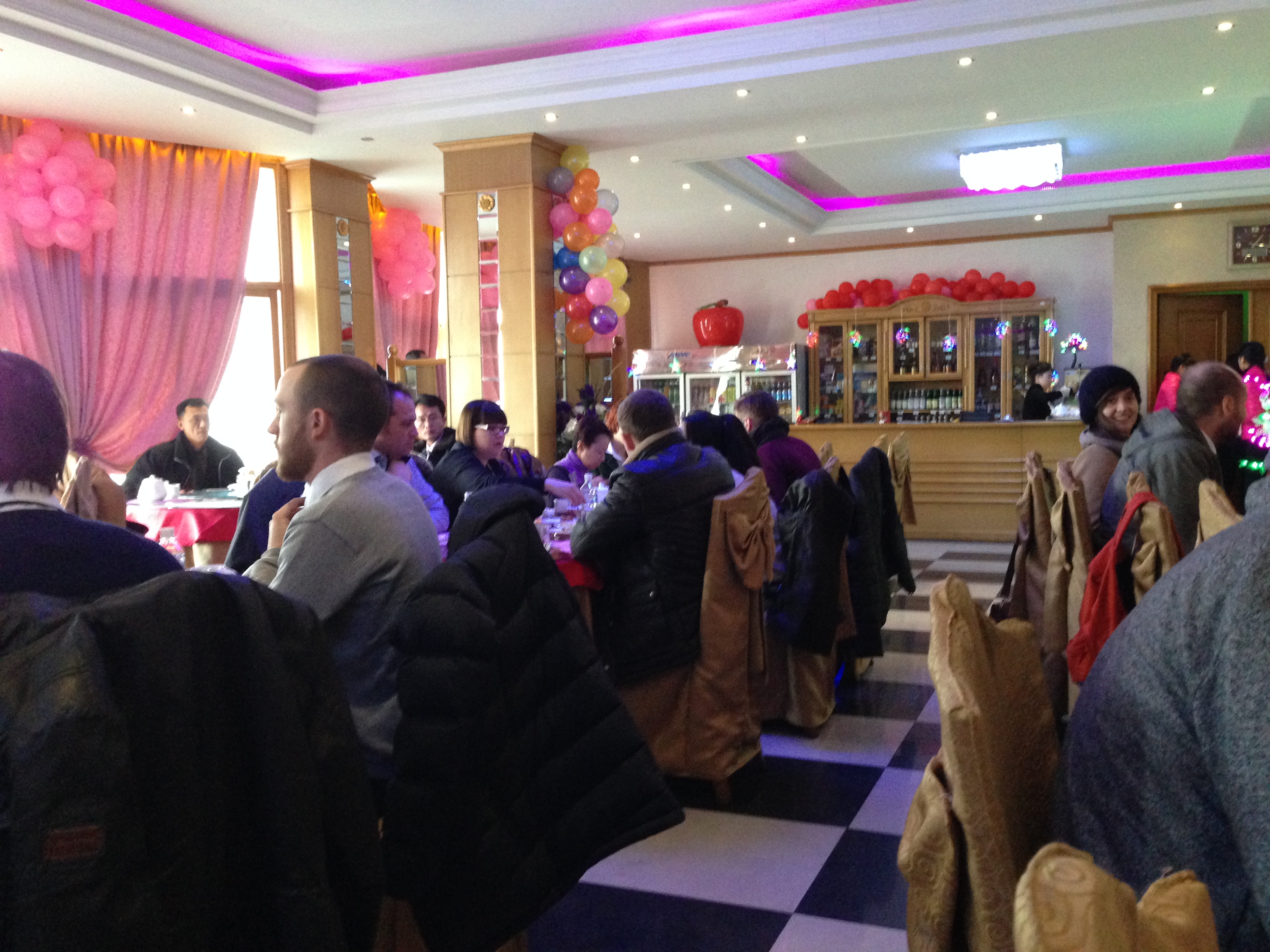 They brought out other side dishes that are also common to South Korea like pork mandu or dumplings along with spicy kimchi.

Donkatsu or pork cutlet
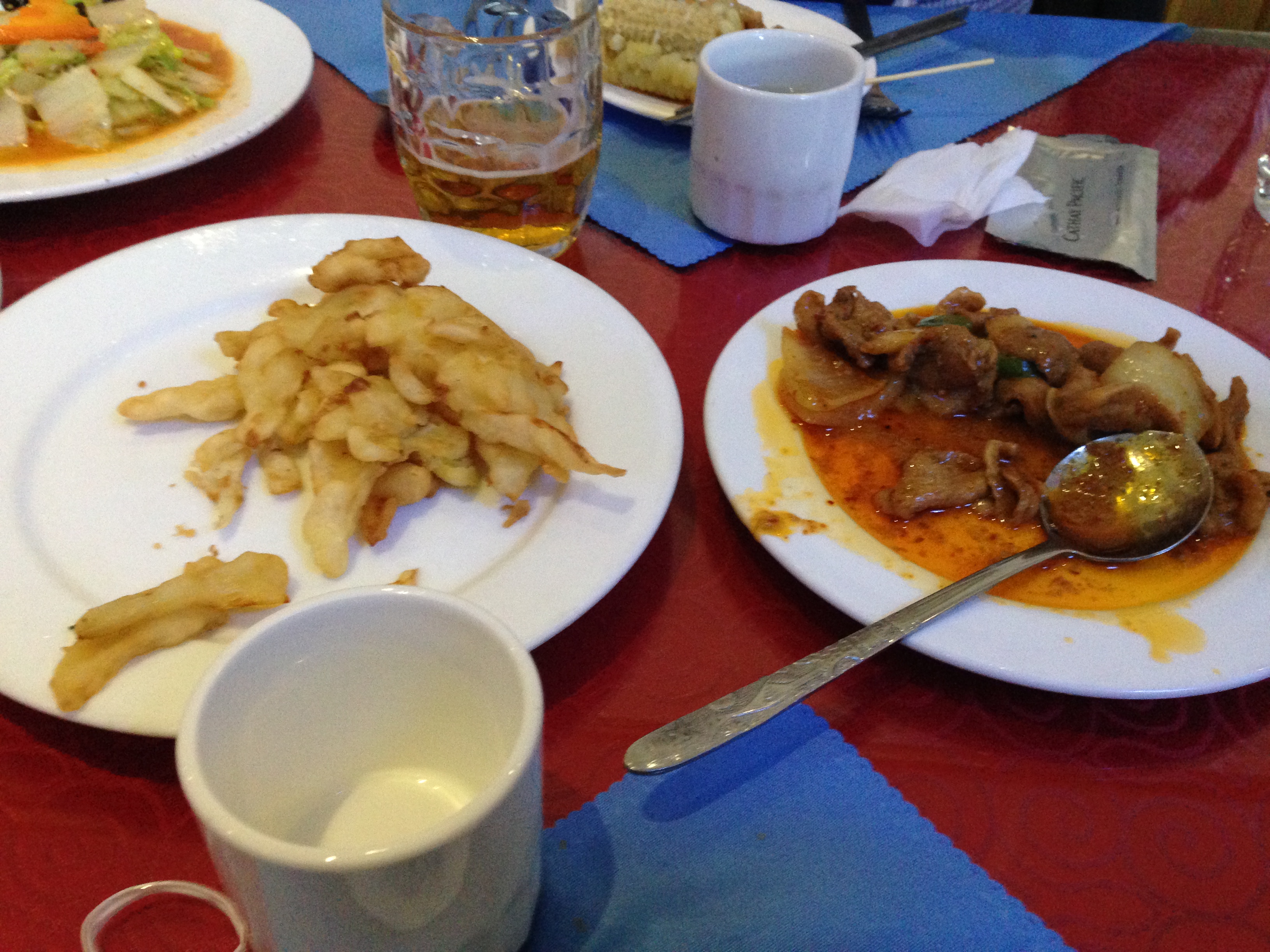 The cold noodles were pretty tasty even though none of us were feeling too hot. I liked that the waitresses also provided us with spicy mustard and vinegar to really liven up the dish with a little sour and sinus scorching kick.

The famous Pyongyang cold noodles.
However, the oddest part of the meal was the one I was the most familiar with…or so I thought. They provided us with plates of hotdogs alongside our Korean food, but when I took a bite of one, I was in another dimension of gastronomy.
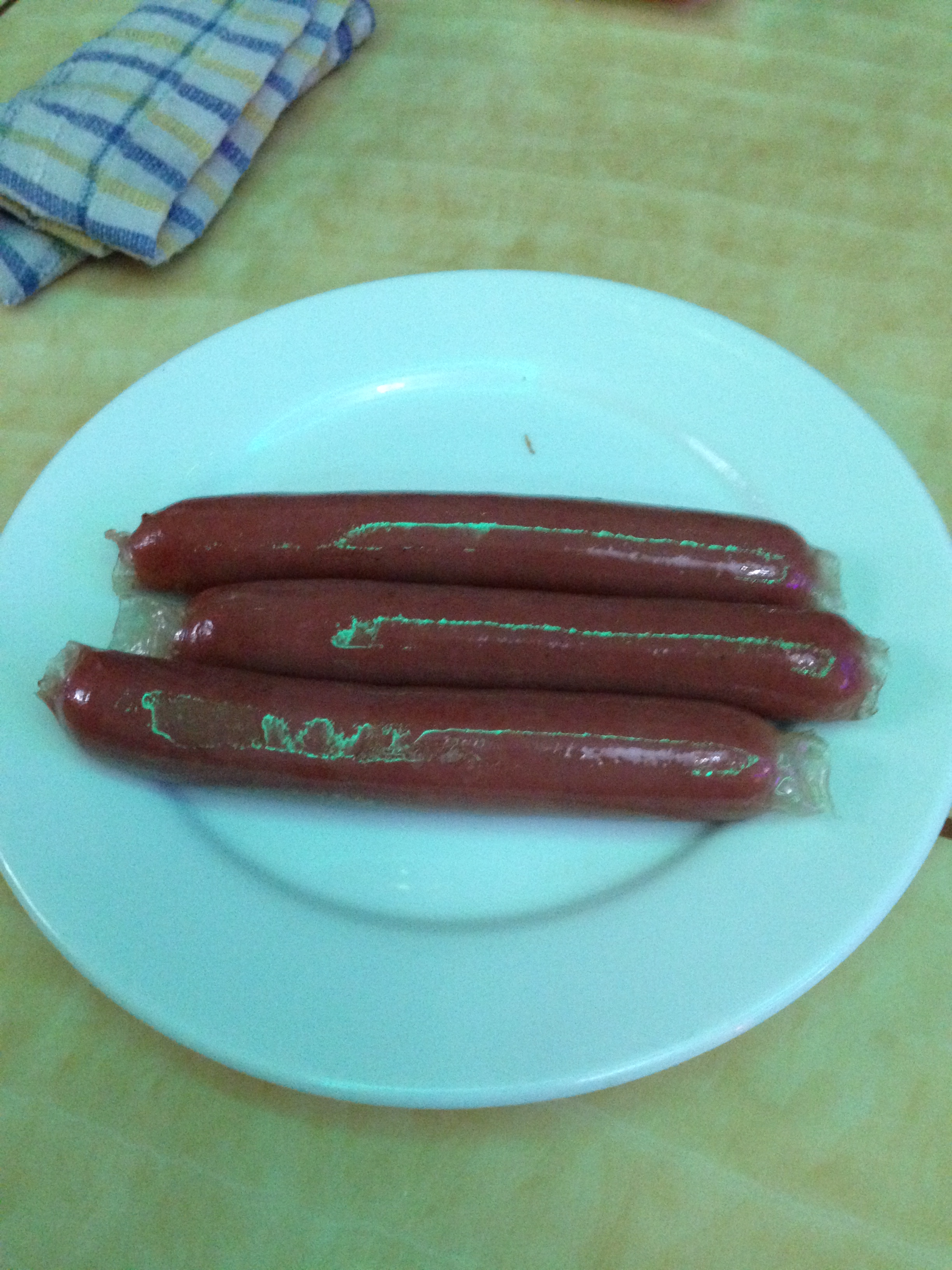
Nothing like some oddly plastic hotdogs.
Texture-wise it was like any other tube steak, but the taste was unnerving because it literally tasted like cotton candy. I don’t know if that is because they share the same love for sweet things like their Southern brethren, or if it was made from people. Either way, it redefined the idea of sweet meats. I left lunch with a very satisfied stomach after the naengmyeon but with the most peculiar taste in my mouth after those hot dogs. For dinner, we had a version of hot pot that I never had before. Normally, a hot pot dinner involves literally a large heated pot in the middle of the table that everyone shares while their food cooks within the smoldering cauldron as show in a few of my other posts (1, 2, Taiwan). In North Korea, they put aside the collectivism for once and gave us our own pots.
 They ignited the gas underneath each pot, and then we could throw our ingredients (pork, bean sprouts, peppers, lettuce, etc.) into the boiling water.
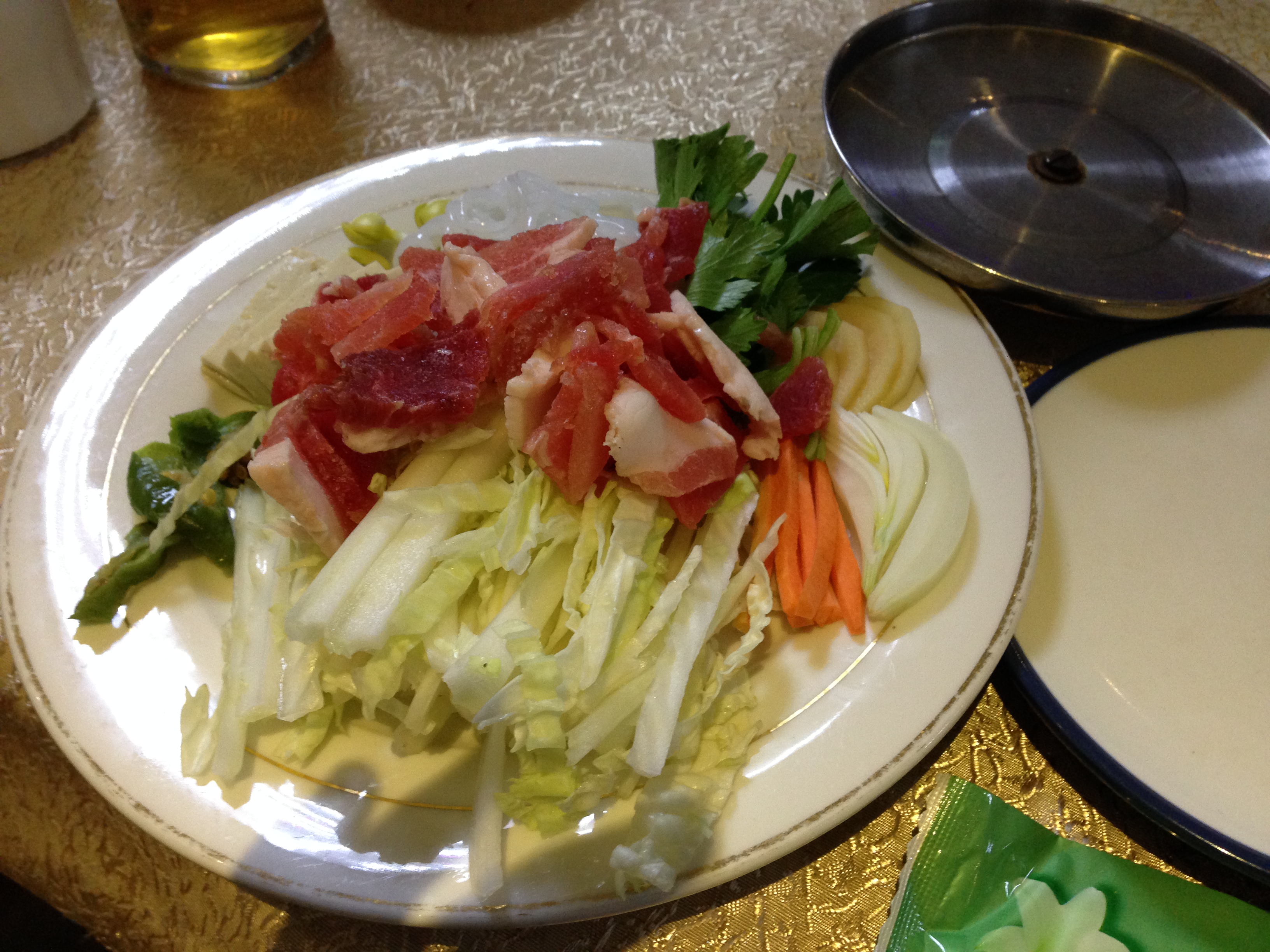
There were also various spices and seasonings we could use like chili pepper, black pepper, salt, and even MSG. Naturally, I decimated the chili powder cask which gave me just the right spice level that I enjoy while still savoring the stewed meat and vegetables.
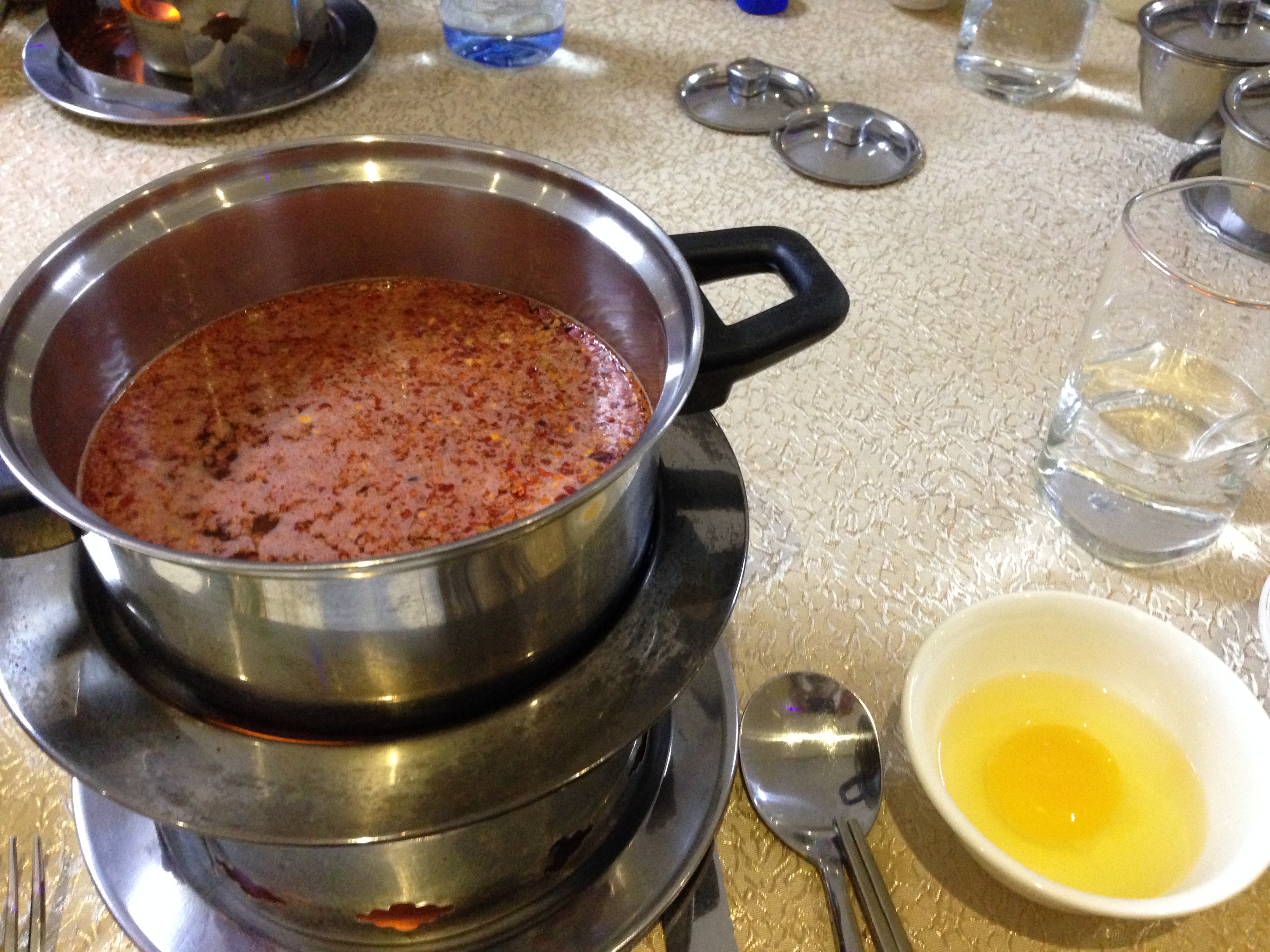
Just a little spice with a raw egg to cook at the very end.
There was also a raw egg on the side that you plopped in right before you were about to eat it in order to fry it instantly.

That’s one fine lookin’ jjigae.
Day 2 was a day of more traditional Korean food that I really enjoyed along with the occasional bizarre element like the hot dogs. They left me wondering what they were going to throw at me for day 3.
My Glorious Food Revolution- Day 1 in N. Korea
Happy New Year to everyone out there! Sorry for the long hiatus between posts, but I just returned from an insane vacation through North Korea and China. I’m going to start off with North Korea since it is the more mysterious of the two countries, but if one is familiar with Korean food beyond the ubiquitous barbecue that everyone and their 엄마 (momma) loves, then you’ll see that my food adventures in the Hermit Kingdom really aren’t as exotic as one would think. I’m going to do a day-by-day installation of the various foodstuffs and stuff they passed off as food whilst we were ushered throughout Pyongyang and Kaesong which is a city close to the DMZ. I knew I was in for a doozy of a trip when I had my first encounter with North Korean food on the airplane.
Sadly, we were not riding on a Cold War era Russian plane en route to the Glorious Fatherland; then again, it’s not sad since I greatly value my life. However, I questioned the safety of my G.I. tract when I was face to face with what I’d like to call the “enigma burger.” I got a beer on the side since I was in a festive mood, and they seemed to have more of that than water.  It looked like a normal burger of sorts when wrapped, but after unwrapping it slowly I took a peak under its uniform top bun to find some sort of organic matter with some scraps of lettuce.

Your guess is as good as mine.
I assumed it was chicken, but when I bit into it I was greeted with an oddly creamy texture that kind of tasted like tuna yet had yellow flecks of what seemed like eggs. Yet between my befuddled bites, it had tinges of chicken which made me somewhat relieved that my theory was correct…sorta. It was a microcosm of one of the most isolated countries on earth: nothing is really what it seems. Overall, it wasn’t too bad, but it may have been overshadowed by my ravenous appetite.
When we landed in Pyongyang, we made history as the first tour group to ever been in North Korea during the New Year festivities, so even our guides were leading us into uncharted territory. All of which obviously led to an even heightened sense of excitement when we started the night off right with some classic Taedonggang North Korean beer. Taedonggang in Korean means “Taedong River” which is where we had our New Year’s Eve cruise through the middle of Pyongyang. The story behind the beer is quite interesting. A British beer company, Ushers, went bankrupt, so the North Korean government bought the factory. They brought it over to Pyongyang, and now are churning out bottles of this delectable brew. My first bottle was like heaven after months of drinking the dreadful triumvirate of Hite, Cass, and OB in South Korea. It was a full bodied lager with a slightly bitter aftertaste which nicely complimented the eats at our little shindig. It wouldn’t be my last time tangling with Taedonggang though during the trip. The first food at dinner that I never saw before was this julienned potato dish that was delicious. It was served slightly warm, and each starchy strand was soaked in a peppery vinaigrette that supplied my palate with a piquant punch with every chopstick clasp. The other element of the meal that really caught my eye and tastebuds was actually a garnish to our main meal of fried rice: a thousand year old egg. Obviously, these eggs aren’t really a thousand years old, but they have been around for centuries in Chinese cuisine where they are known as 皮蛋 or pidan. They are prepared by taking eggs and storing them in clay, ash, quicklime, and salt for months at a time. What ends up happening is the whites turn a deep amber color almost bordering on black, and the yolk becomes a grey almost light green/yellow color which you can see in the photo.

Everyone was egging me on to eat it. Yolks on them.
I saw them before in Taiwan, but I never got around to buying one while chilling in the 7-11. So now I found myself on a boat in the middle of Pyongyang for NYE= YOLO. I was the only one brave enough to pop the gelatinous slices in my mouth, and it really wasn’t that bad. It just tasted like a hard boiled egg that got a brand new paint job, and they certainly didn’t taste as bad as the German cookies they were selling on the boat for snacks. It was a great celebration where everyone enjoyed each others company in a unique environment. However, the main thought in the back of my head the entire time was how much food we were being served while millions of people have died from famine in the very same country. It added a somewhat sombre tinge to my perusing of Pyongyang’s culinary entries, but it was a sad truth that further added to the odd atmosphere that would continue in day two.
I Believe I Can Fry
Hey, everybody! Welcome to another edition of Mastication Monologues which is my early Christmas present to the world. Today I’ll be talking about a restaurant that Santa himself would love to dine at in place of downing his traditional fare of milk and cookies. The place in question is called Gongdeok Town (공덕전타운) which is located at Gongdeok station going straight out exit 5. Walk for about 8-9 minutes, and you’ll see it on your left amongst many narrow and claustrophobic alleyways including one that specializes in jokbal or pigs’ feet. What should you be looking for? Fried food as far as the eye can see. You can smell it coming from a mile away that’s how intense this dining experience is. So let’s begin at the start of the adventure.
First off, I would have never found this place had it not been for the luck of my friend, Steph, who found this fried food heaven on the internet. Naturally, she shares my same sense of culinary curiosity, so we made plans to go there after a very long work week. After going out exit five and going left, we were quite lost. I looked to my right in the distance, and I could see an alley that seemed to be more bustling than the others, and we were greeted by incredulous looks by the restaurant owners at the fact that two waygookins (foreigners) were in this labyrinth of produce and meat. After walking past a few eateries, I could see plates piled high with pork knuckle and no fried food. They sent us further down the main road, and we finally saw the promised land. They had a mind-boggling variety of tasty morsels to try that ranged in price from 500-5,000 W per piece. 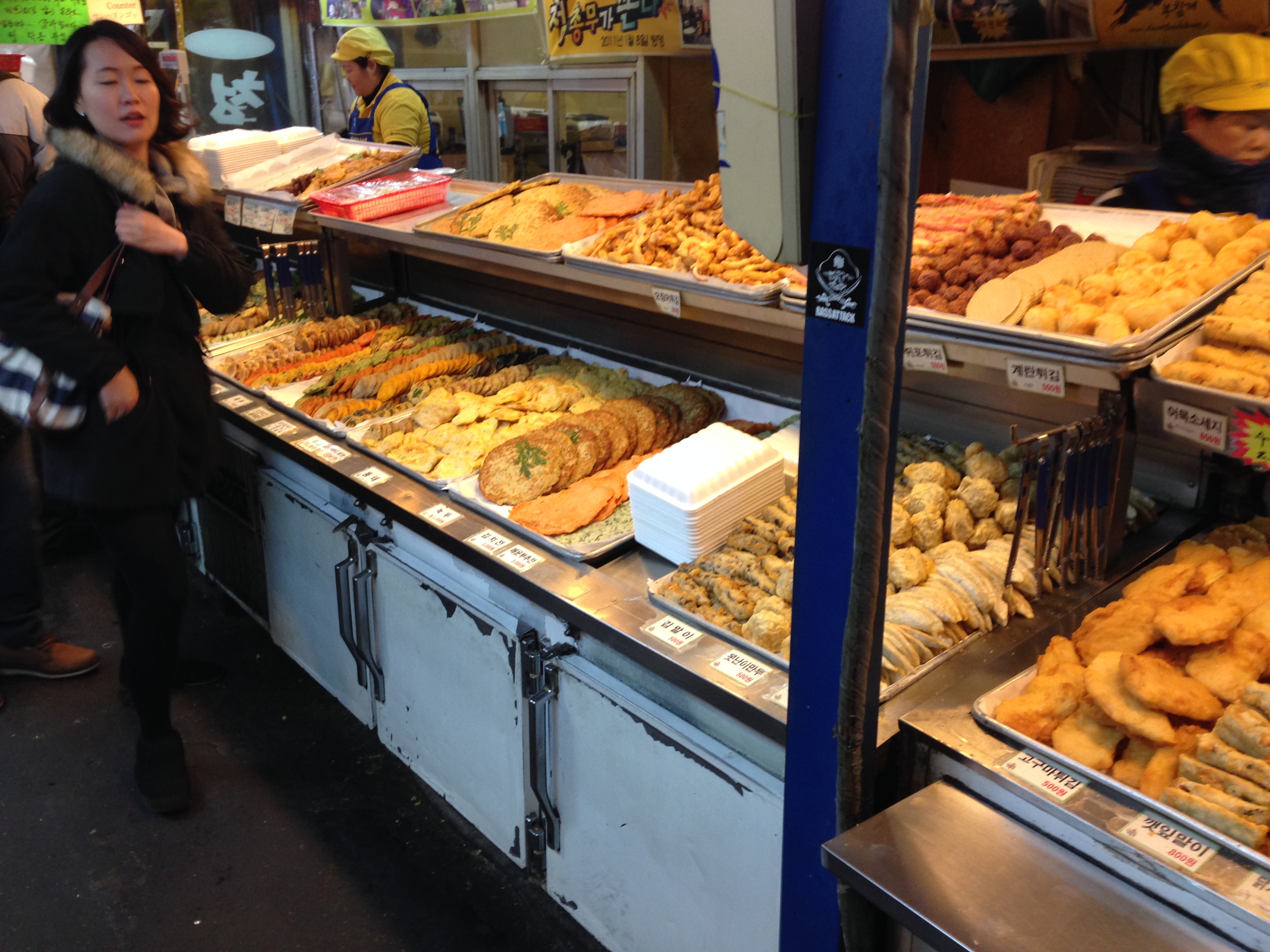


Mmm shrimp
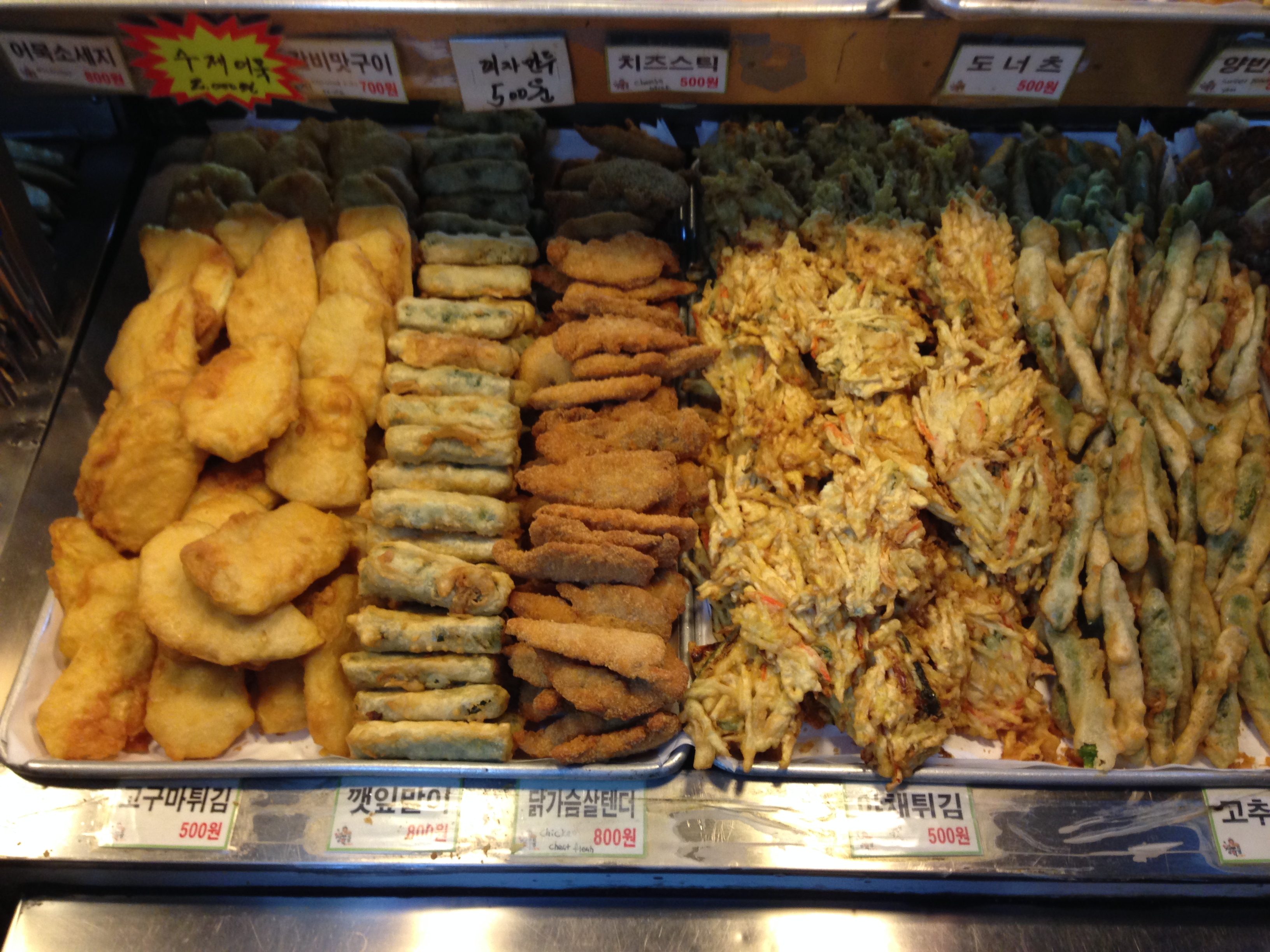
Lots of fried sweet potatoes, kimbap, and vegetables (left to right)

Some of the pajeon or Korean pancakes of egg or kimchi
How it works is they hand you a wicker basket along with a set of tongs, and you just work your way down like a Supermarket Sweep of sorts. Some of the labels were a bit hard to follow due to the imperfect translations and others were just very vague.
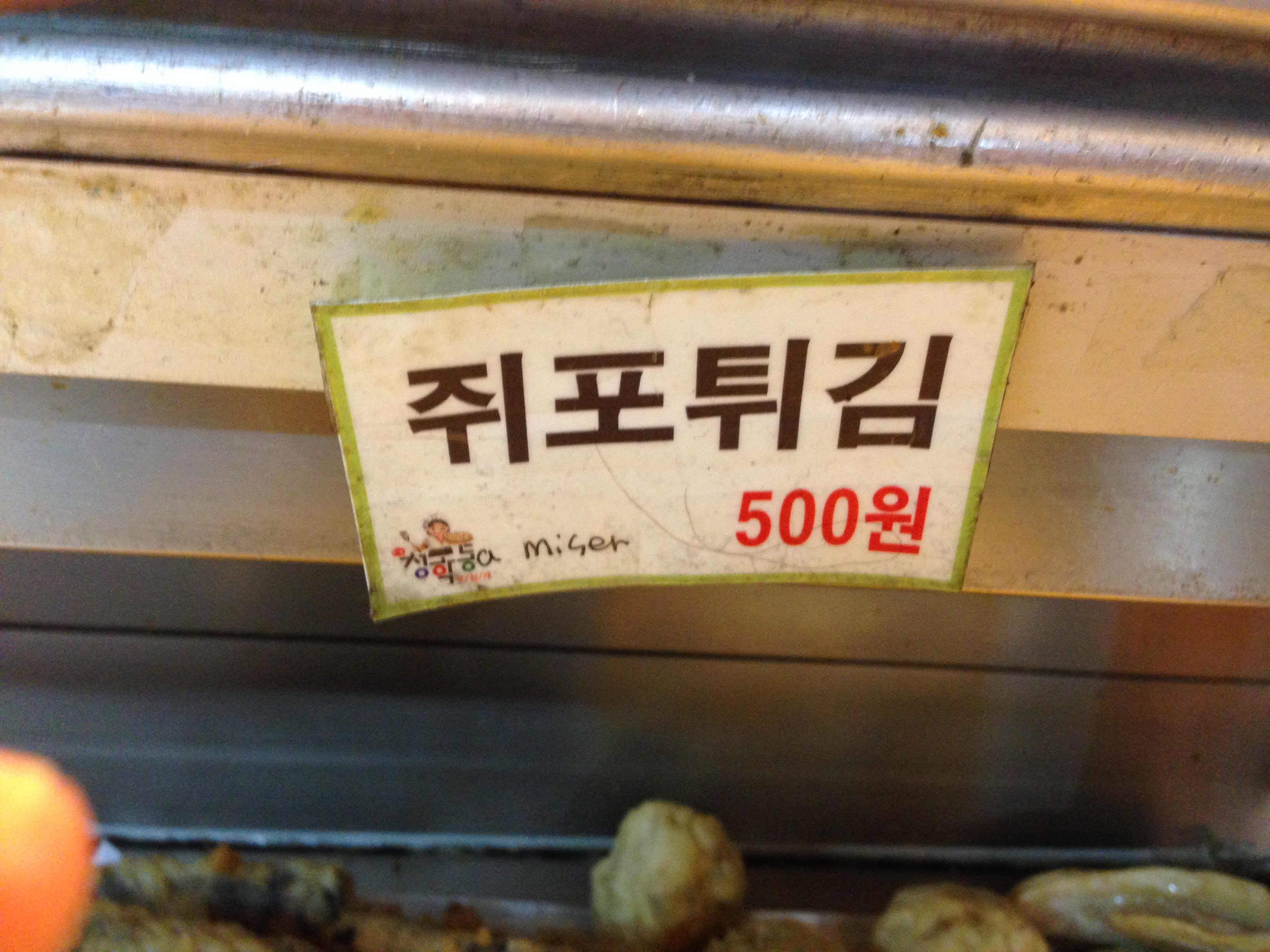
Skinflints for only 500W? What a deal!

Something looks a little fishy…
Nevertheless, we soldiered ahead and took a little bit everything. Once we had our baskets filled to the brim, we brought them to the end of the line where a lady weighed our food and gave us a number. We were then ushered inside where we found out that the smoking section is downstairs and the upper level is non-smoking and much larger and warmer.  Eventually they brought us our plate of food along with the bill. For this mountain of food, it was 8,000 W between the two of us.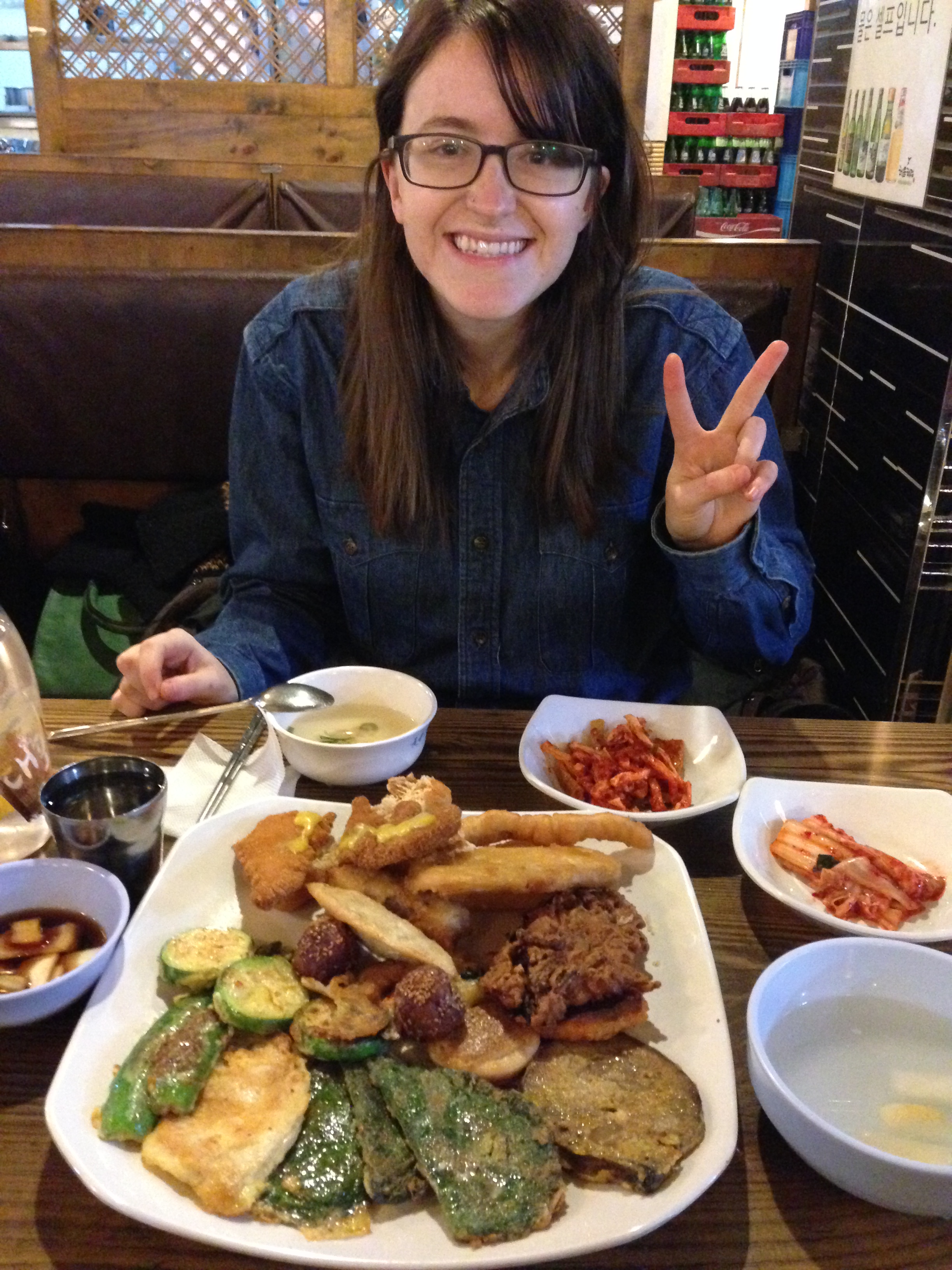
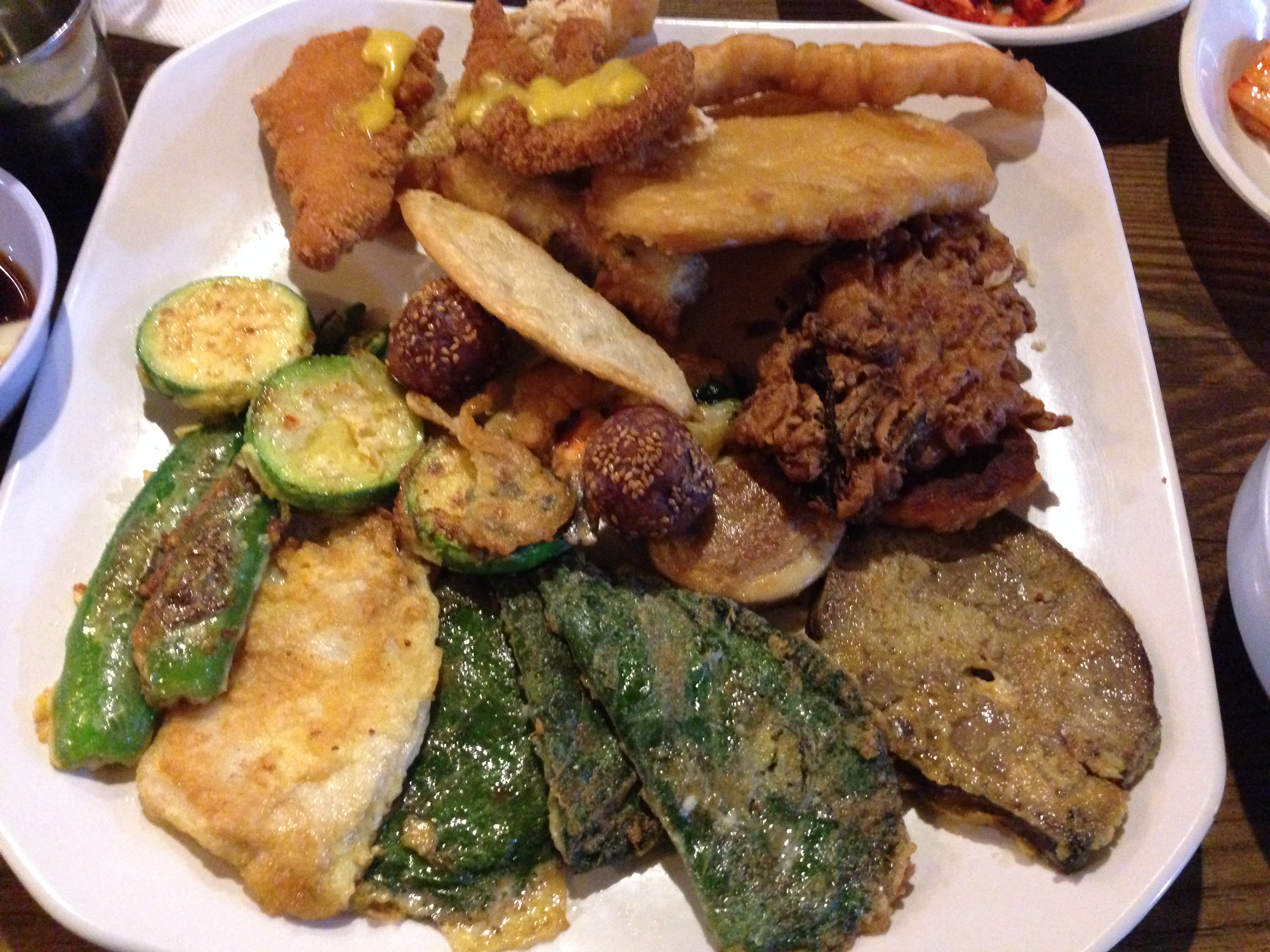 Within our fried cornucopia that lied on our table just beckoning us with its golden-hued breading, we had more conventional foods like gooey Western style cheese sticks and crunchy chicken tenders that came with a complimentary drizzling of honey mustard. Then there were pieces that were more Korean like the squid tentacles, kimchi pajeon, and various forms of sweet potato which I was semi-averse to since I prefer regular potatoes. It still was a nice contrast to the savory, semi-greasy breading. An interesting selection in the mix was the fried beef liver. Texture-wise, it was quite firm, and it had a rich beefy flavor with plenty of body. I greatly enjoyed the fried cucumbers, chilies, and pork stuffed perilla leaves as well. Plus, they had plenty of different forms of taro root like the purple sesame seed coated balls you see on the first plate. So for all you vegans out there, there is plenty of selection for you too aside from that last one. There was also a mystery nugget that I chose because it looked like it had a strip of bacon in it, and I loves me some bacon.

My mystery nugget and I.
When I finally tried it, it was quite bizarre since it didn’t taste bacon or anything else for that matter.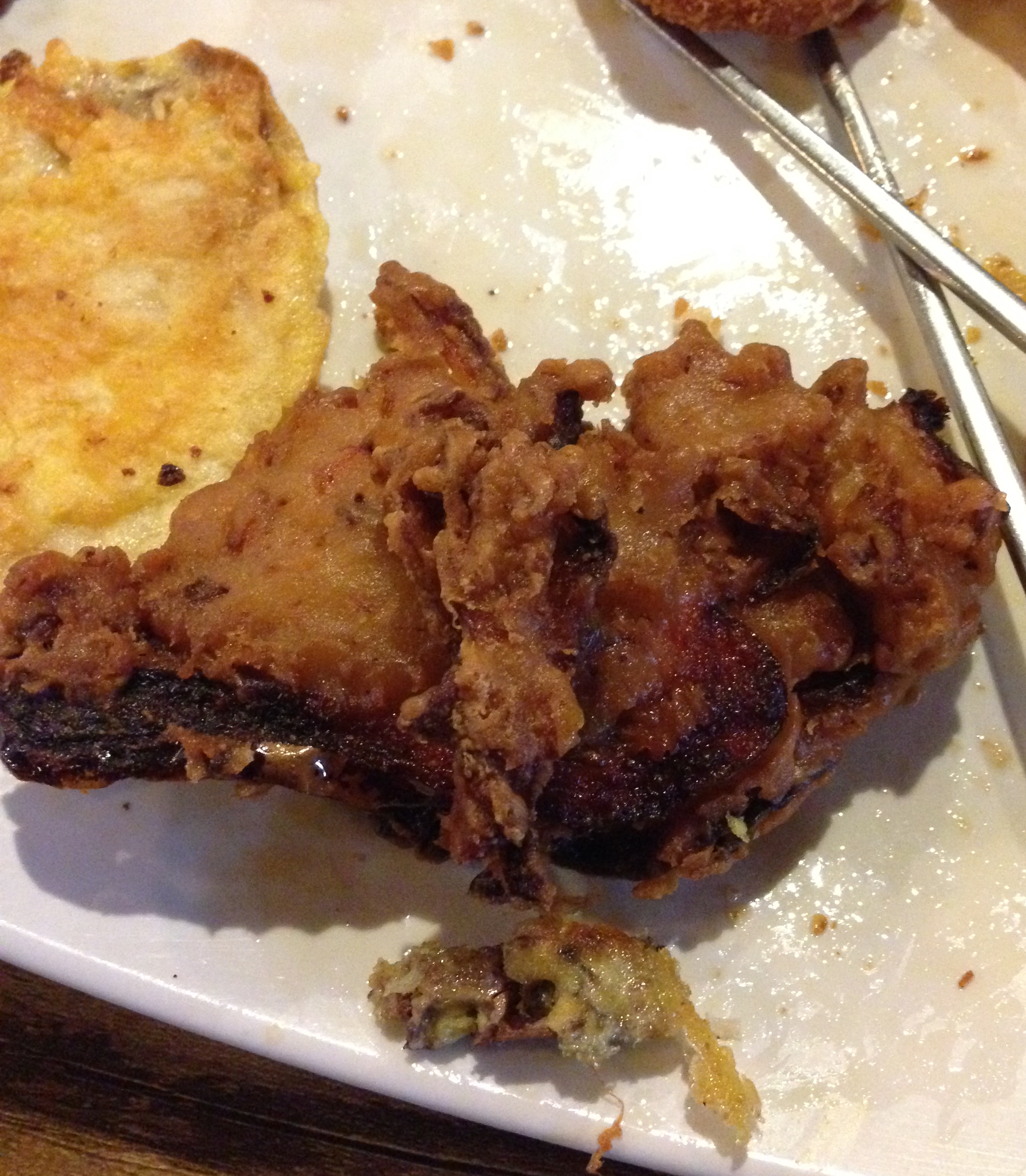 It had a generic flavor of meatvegetablesbreading?? that left me generally confused along with the imposter “bacon” strip that just tasted like burned matter. It was quite the letdown. Once we finished our first plate, I had to go back for a second helping since I still was hungry.

Round 2 (starting lower left corner and going clockwise): scallop, oyster, taro ball, cheese sticks, potato bread, chilies, millet cakes.
The scallop was quite delectable as it was rich and buttery like breading that enveloped it, and the oyster was quite good aside from a rubbery texture that might put off some diners. The potato bread was a bit of a mystery to me at first since I was anticipating it to be stuffed most likely with pork, but it just ended up being a ball of fried dough. Last and definitely the least favorite of all the food I tried there were the millet cakes. They looked almost like mini-red velvet cakes minus the cream cheese frosting, but they were the opposite of the tantalizing dessert. Not only did it taste quite musty, but it was filled with red bean paste! Arrghhh, my Korean culinary arch-nemesis. Foiled once again from having a completely fantastic dinner. That minor bump aside, we ended up eating a ton of food for about 12,000 W each which is a bargain any way you slice it.
So if you’re looking for a warmer way to eat street food in the winter or perhaps need to layer up on some blubber for winter hibernation, go to Gongdeok town for some greasy good times.
Un Tapateo Muy Feo (A Very Ugly Tapas Dinner)
Ever since living and studying in Barcelona during my undergrad years, I’ve always had a soft spot in my heart for the peninsular nation. I don’t know if it was the warm people (especially the andaluces), the lovely historical sights, or the fantastic food, but I miss living there. Back in the States, I would always try to find new places to get tapas to see how they measured up to the ones back in Spain, and I was generally pleased (See Tapa 1, 2, Patatas). Perhaps when I’m finished with my time here in Korea, I might make a return to the land of jamon and Don Simon. However, since I’m still in Korea, I thought I had found a slice of Espana in the form of Que Tal Tapas which is located in Bupyeong in Incheon. In order to get there you have to go to Bupyeong Market exit 2 and walk for about ten minutes until you look down a side street on your left. Here’s the front of the restaurant to get an idea of what to look out for:
So I had originally thought of going to this place for my birthday since I love Spanish food, but instead I ended up going to the wonderful Action Grill. Therefore, I vowed to one day try this taperia before I left the Land of the Morning Calm. I finally made the sojourn yesterday with a fellow KOTESOL member after attending the smallest teaching conference ever with a whopping total of three people including me. The interior had some nice, kooky drawings along with various types Spanish paraphernalia hanging on the wall. That’s about where everything “Spanish” about this place ended. First, there was the menu. It took me flipping through five pages of pizza, spaghetti, and risotto dishes to finally get to the tapas. While Spain and Italy might occupy the same language family and are both ballin’ peninsulas, a Spanish restaurant should not have more types of pizza than tapas. I did see that they had paella as well, but it was well tucked away like the tapas. The tapas that they offered ranged from 4,000-6,000 W, and they were quite uninspired creations. Not only were they almost all seafood creations, but somehow bruschetta made it on the menu. I sincerely hope they were referring to pan amb tomaquet or else the owners need a serious culinary geography lesson. My friend and I decided to get the pizza set for 35,000 W which was a great deal since we got the following: either a Margherita or verde pizza, two 4,000 W tapas, one 6,000 W tapa, and two drinks which could be soda, coffee, house wine, or an ade. For our combo, we got the verde pizza, tortilla espanola, cooked mushrooms, roasted shrimp, and two glasses of the house wine.The first items that came out were the mushrooms along with the two glasses of wine.
 I found the wine to be quite pedestrian as it was of the dry red variety, but it was fine since the mushrooms were quite vivacious in terms of flavor. They seemed to be sauteed with some type of beef stock infused with pepper and had a slight woody aftertaste.
  These hongos were garnished with a fried egg on the side which they told us to dip the pieces into, and there were some fresh dandelion greens on top along with some savory purple olives I enjoyed. Unfortunately, this was the only plate that wowed us, so it was somewhat depressing in hindsight to know that we reached the apex of the meal after one tapa. After the mushrooms came my nemesis in Spanish cuisine: la tortilla. Now, when most people hear the word, “tortilla” they automatically think that I was just munching on some flatbread instead of making a taco like a normal person. Of course I would hate it if I did that, but a tortilla in Spain is actually more like an omelet with potatoes inside. When I lived in Barcelona, I thought it was flavorless and nothing special. Que Tal tapas managed to recreate this signature blandness even more so by having a higher potato:egg ratio in comparison to the real thing.
 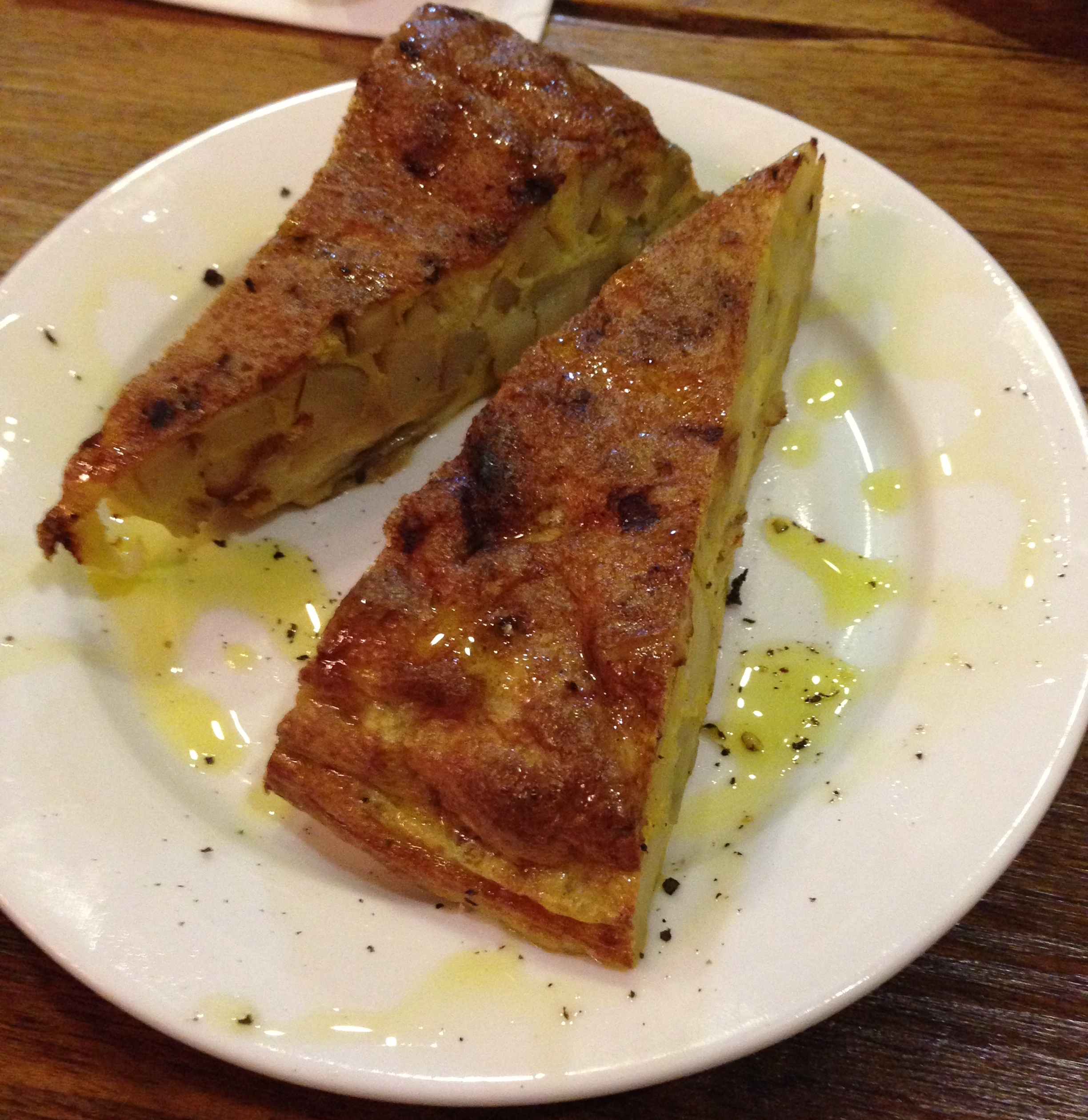 Why they would serve us such a demure tasting plate after the bold mushrooms is beyond me. The penultimate entry in this pageant of mediocrity was the grilled shrimp. Here I was thinking, “Que bien! Me encantan gambas al ajillo!” (Oh good! I love grilled shrimp!), but I was in for a rude awakening.
 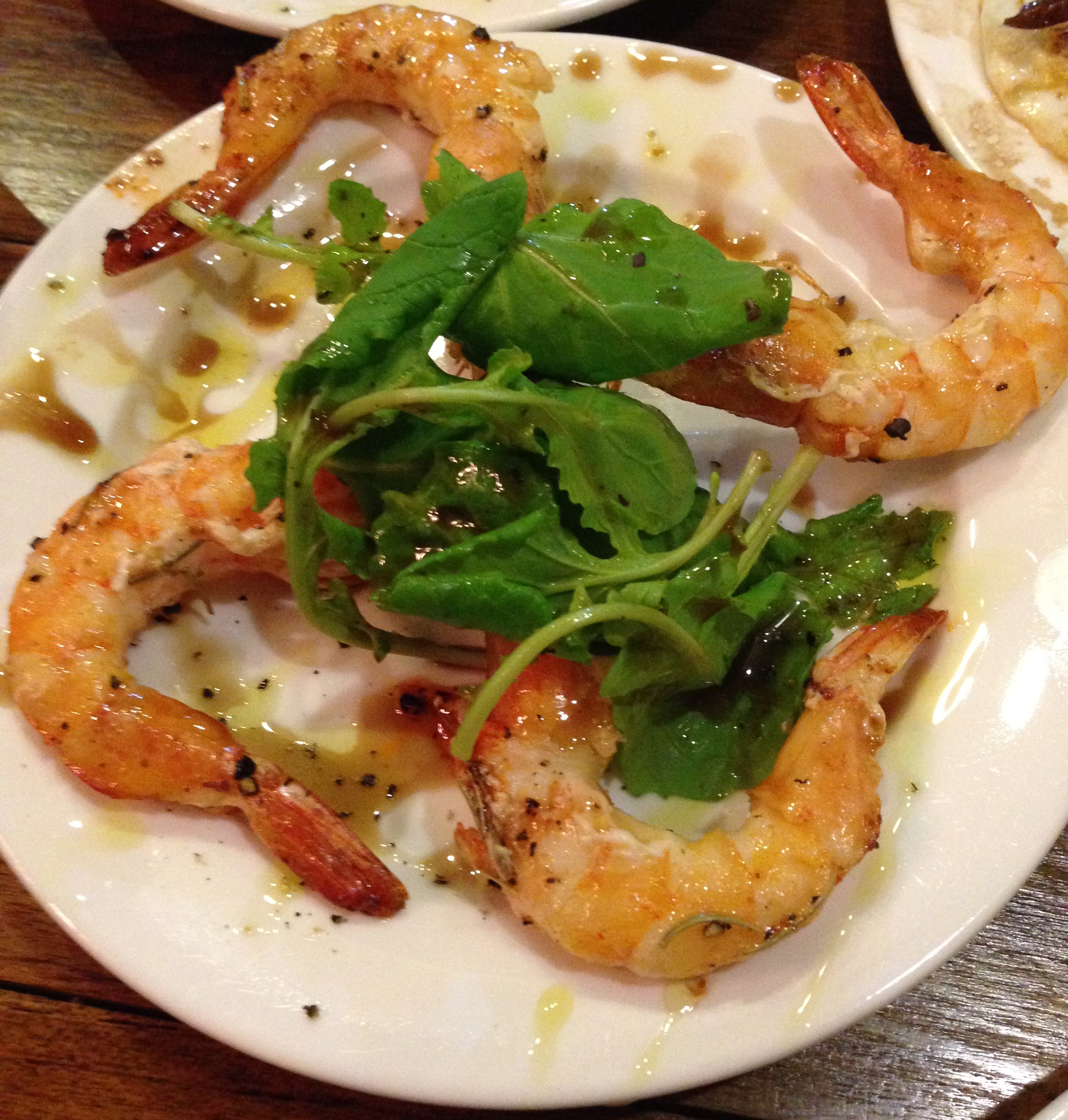 While I admired their presentation, I don’t think I’ve ever consumed such terrible shrimp in my life. Not only was the texture of the meat extremely chewy to an unsettling degree, but they had an almost chemical-esque flavor to them. I tried another shrimp after the first just to see if I had picked a bad one. Nope. Basura (garbage). As if this train wreck of a dinner couldn’t get any more interesting, they brought out our verde pizza. I wondered what made it “verde” (green) when ordering it, and I could see it got its moniker from the mini-garden that was chilling out on top of the actual pizza.
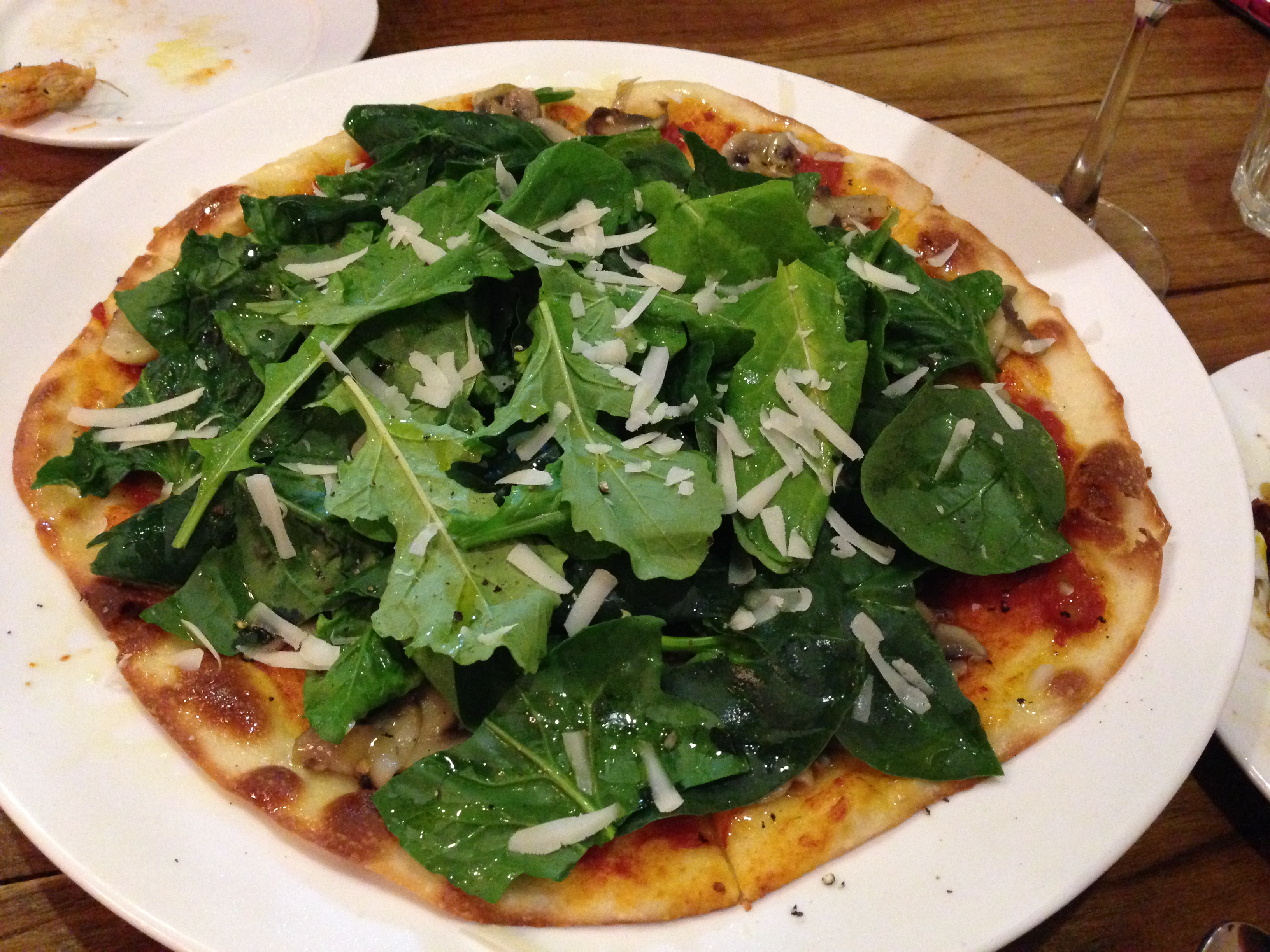
Step 1: Find out if you got a salad or a pizza.
Our waitress then said to us, “Roll” while gesticulating towards the pizza. This was very disconcerting since I’ve never heard anyone tell me to roll my pizza. I could see why she said this when I went for a piece. It was incredibly thin, had no cheese, and was just mushrooms and the greens.
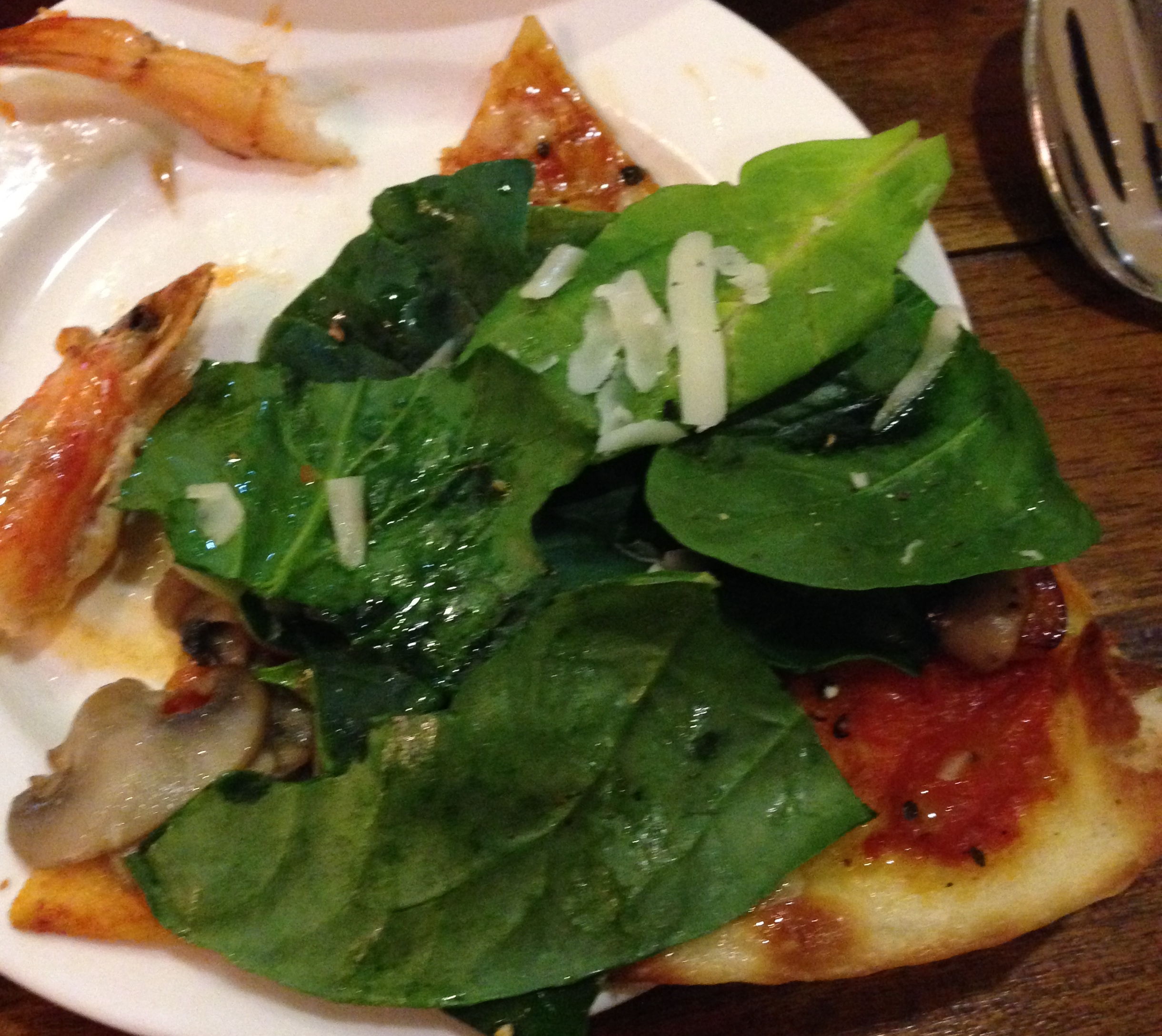
Step 2: Attempt to find a method of eating said salad/pizza.
The only way you could eat it without getting half the contents on your pants was like a taco. I know you fold NYC-style pizza in order to eat it better, but this pizza was just ridiculous.

Step 3: Why?…Just why?
The taste didn’t even justify its unique consumption style. While I always appreciate an opportunity to up my fresh vegetable intake, the mushrooms were tasteless and the dough was a non-factor. This pizza was the equivalent of “that” drunk person at the holiday office party. The pizza looked like it would be a good time initially, but after spilling itself all over my hands and being really annoying to eat, I never wanted to see it again.
In the end, don’t go to Que Tal Tapas if you’re looking for a real tapas experience. It’s the culinary equivalent of Don Quijote fighting the windmills. It tries really hard but fails every time.
Passed with Flying Flavors
Finally, Korean winter is here complete with chilly winds that were noticeably absent during the sweltering summer along with the occasional snow storm. It’s still not as bad as back home in Chicago, and I’m glad that I grew up in the crucible of Chicago winters it since it seems like a piece of cake in Korea so far. However, I don’t mind going to new restaurants that make me forget about the cold and instead feel all warm and fuzzy inside. This is how I could describe my dining experience at the Flying Pan in Itaewon in Seoul. It’s quite easy to get there. You just go to the Itaewon metro stop and go out exit two. Walk out straight until you see the Ctrl A on your left hand side. Make a left on that street, and after walking straight for a minute, you’ll see the Flying Pan’s stairway leading down to the entrance.
First off, I knew was going to have a great time there simply based off the name of the establishment because it’s a linguistic pun. With many Far East Asian languages like Japanese, Chinese, and Korean, it is difficult for native speakers to differentiate between the letters “L” and “R” while pronouncing words. Therefore, the logo of the restaurant is a flying frying pan. I don’t know if they did that on purpose or not, but I think it’s genius. As for the decor, it’s a cozy little dining nook that could almost double as someone’s living room complete with couches, pillows, and decorative vases.

A culinary sanctuary from the cold
I took it all in along with the gigantic menu while waiting for my friend, Bora.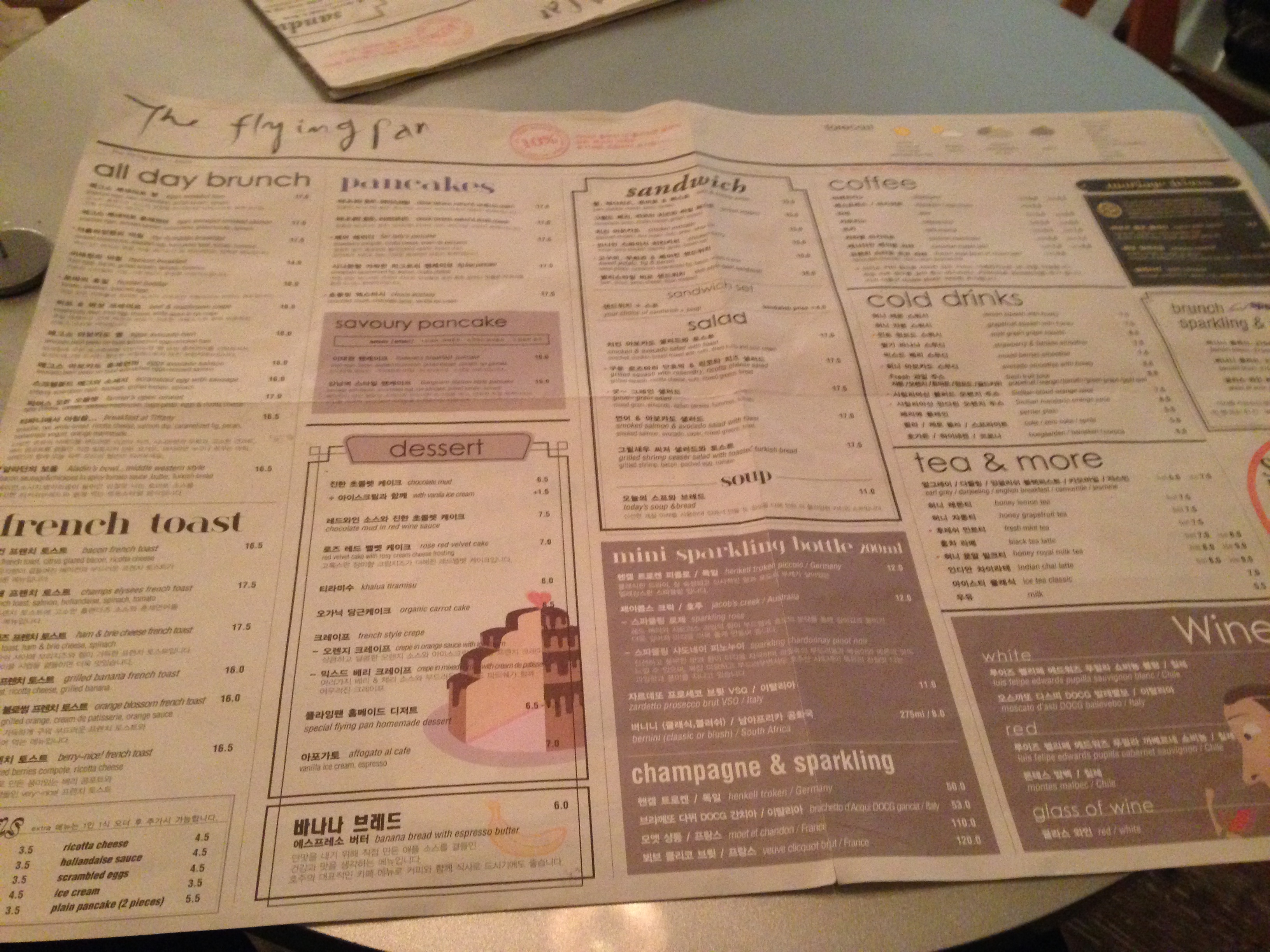 I could see that they had brunch options all day along with French toast, pancakes, omelets, and sandwiches. It’s not cheap which is typical for foreign fare in Korea with a range of prices from 14,000 W to 25,000 W. Eventually, Bora joined me, and we made our choices. I went with the bacon French toast (15,000 W), and she got the farmer omelet (17,000 W).
Mine came out first, and I thought they could have done a bit better on the presentation instead of the slapdash creation that lay in front of me.
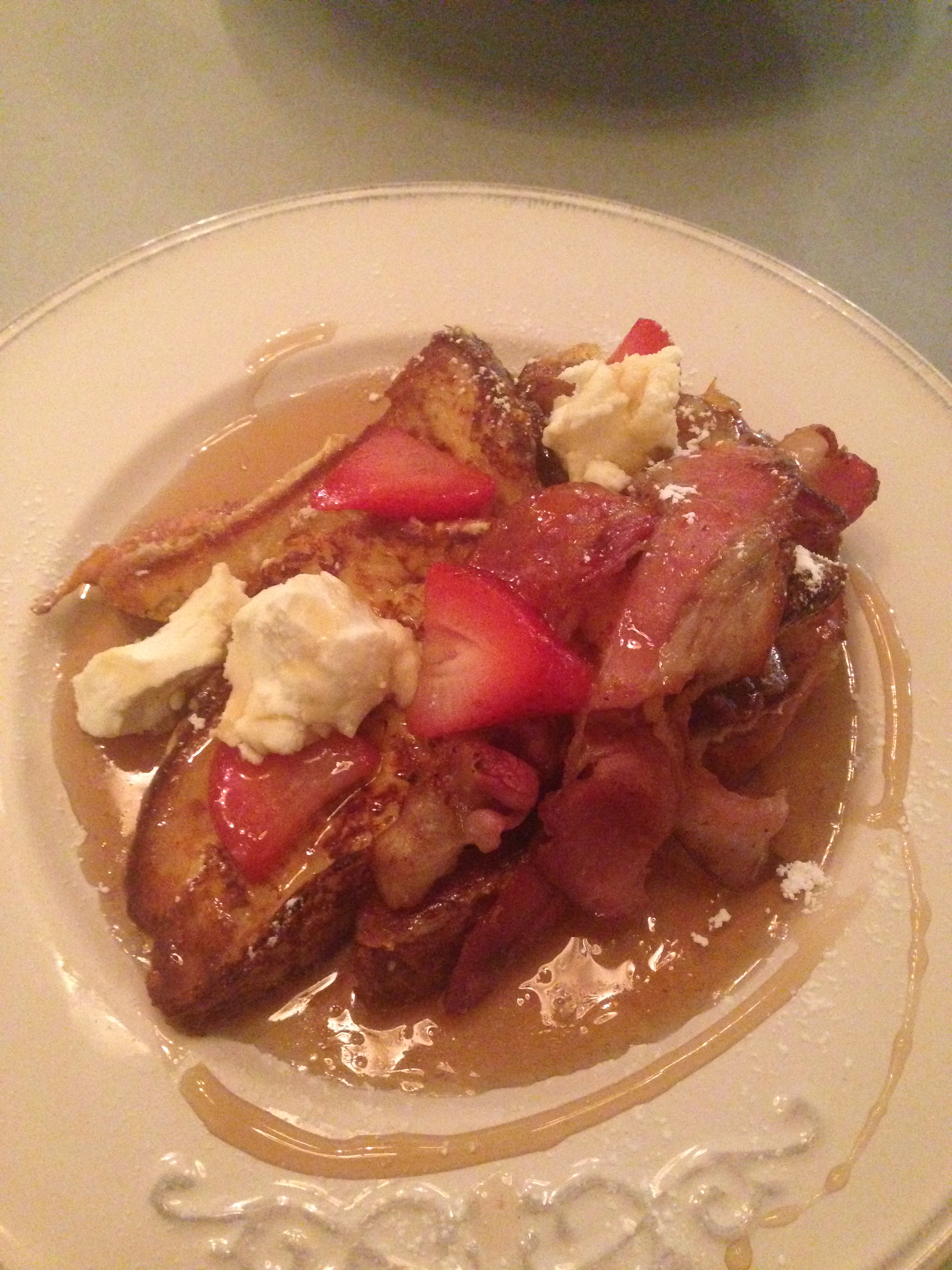
Ah ma cherie!
Then again, I could really care less what it looks like as long as it’s delectable, and boy oh boy was this French toast tres magnifique. Most people associate French with being the language of love, and I think I needed a private moment with this mademoiselle. Not only did it have a soft, brioche battered body, but it was further enhanced with some non-crispy bacon that was flung about its shoulders like some form of pork boa sans feathers. The syrup was standard maple syrup, but one big surprise was the hunks of pale yellow spread that I originally thought were globs of butter. I’m not a big fan of butter on my pancakes or French toast, but I tried some of it just to be sure. Good thing I didn’t neglect them because they turned out to be nuggets of cream cheese. What’s more French than putting some delicious cheese on some quality, fried bread? The other big surprise was the secret stash of apricot marmalade that was lurking between the folds of the toast which went quite well with the smooth sweetness of the syrup and eggy-goodness of the French toast. The strawberries were fresh and slightly tart and were the proverbial cherries on top of the masterpiece. As for Bora’s omelet, I tried a couple bites and then a couple more as she put more on my plate since I was still hungry/she’s a sweetheart.  The eggs were fluffy and seemingly infused with a slightly strong tasting white cheese possibly an aged Camembert. It was eggcellent with the grilled greens on top along with the sauteed mushrooms and roasted cherry tomatoes. We left the restaurant for some adult libations, but my pain perdu would not be lost on me. Definitely in the pantheon of top three best breakfast meals I’ve ever eaten…for dinner.
So, if you’re looking for some wonderful breakfast that doesn’t really have the greasy spoon prices but plenty of quality flavors, jet on down to the Flying Pan. You’ll be over the moon once you’ve tried it.
Live and Let Fry
‘ello everyone! I’m writing about British food today, so forgive the terrible accent I’m trying to convey through my lovely prose. Anyway, national stereotypes aside (Warning: I will use a lot of random British slang, so keep calm and carry on), welcome to another edition of Mastication Monologues! As I just mentioned, today I will be talking about Battered Sole, an import all the way from Old Blighty that somehow landed in Seoul. It’s located at Changcheon-dong, Seodaemun-gu, Seoul, South Korea. It’s pretty easy to get there. Go to Sinchon station on the metro and come out exit 2. Walk straight up the main street you see to your left until you see a McDonalds on your left hand side. Make a left down that street and then walk straight until you see the restaurant on your left on the second floor. You also can’t miss it with the Union Jacks fluttering over their walkway. Here’s their website.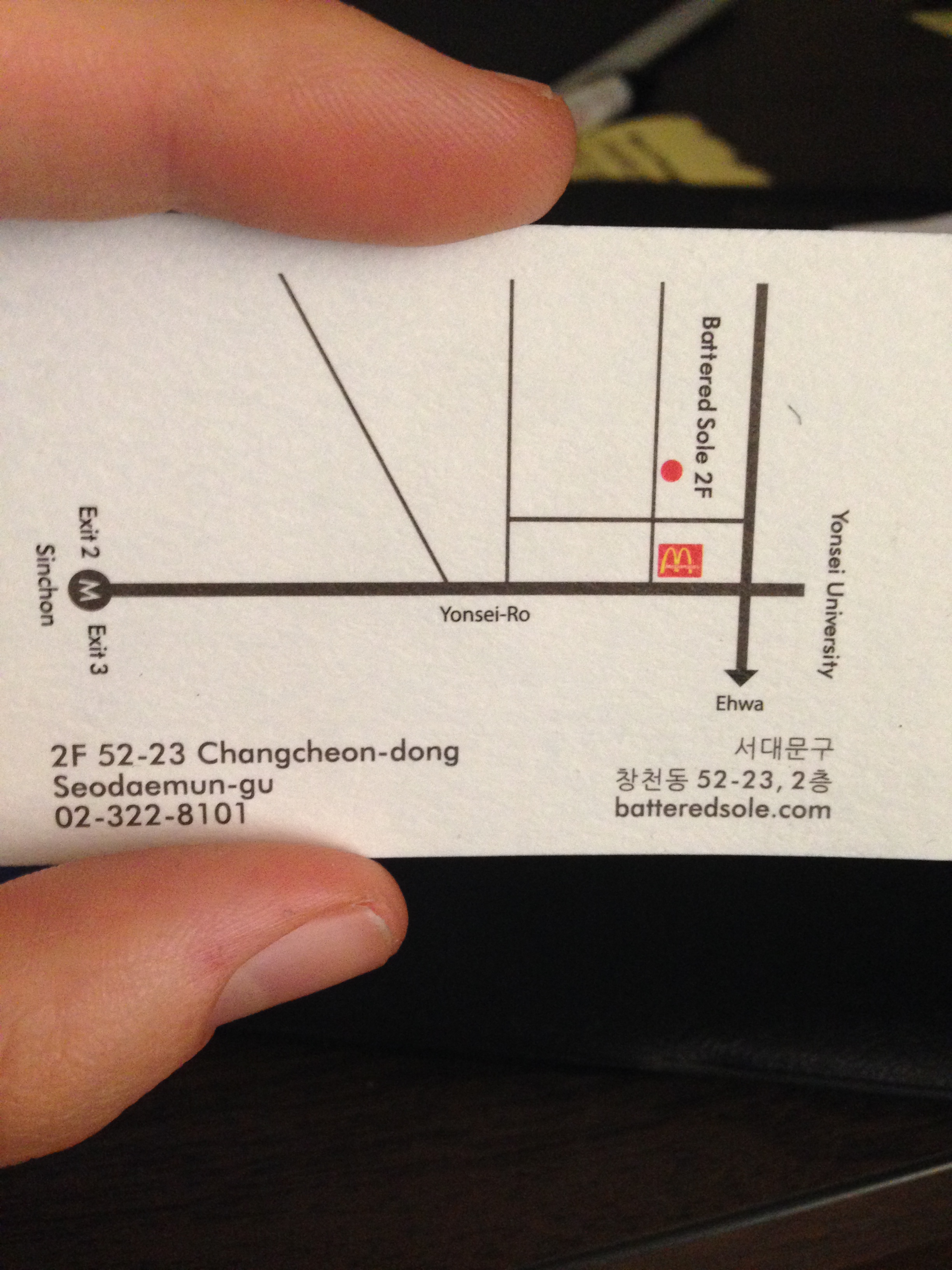

So I’ve been wanting to try this place for the longest time after hearing rave reviews from my British (both Scottish and English) friends over here. If there’s one thing the Scots know, it’s the quality of deep fried goods. Plus, I have spent my fair share of time on the tea-drinking side of the Atlantic to sample some really good fish and chips or trying it stateside in New York City. So it seemed only natural that I would enjoy a belated birthday celebration there. Before we even walked into the place, we were greeted outside by one of the employees who introduced himself and asked us for memorable quotes for his welcome board.

Where the witty banter went down.
I liked this place already just for the very English welcome of being very polite yet awkward yet fixated on witty wordplay. Wonderful. We walked in around 7 pm, and we had the place to ourselves more or less. The decor was very kitchy in some senses with the Rolling Stones and Union Jacks everywhere, but it wasn’t overkill. 
 Looking at the prices, it was average prices for foreign fare in Korea. Meredith and I got the battered cod and chips (or French fries for Amurkans) for 11,000 W. I also threw caution to the wind and got a London Pride for 11,000 W which naturally jacked up for being an import. They also have chicken wings, sausage and chips, and various sides if fish isn’t your bag. The beer came out first, and as I expected it was a slightly hearty brown ale like many English beers.
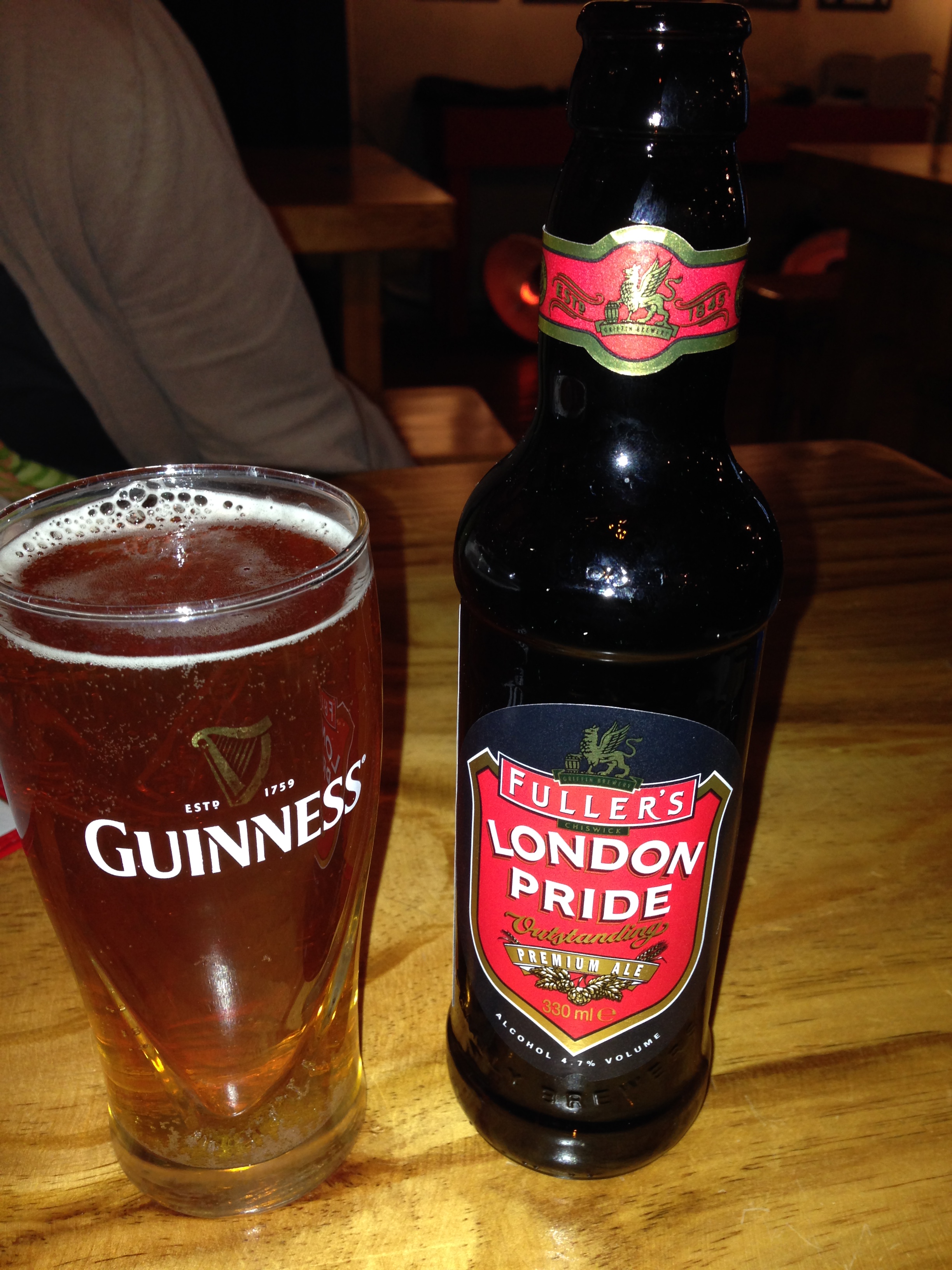 It had slight caramel notes along with some bitter tastes throughout with a crisp aftertaste. On a scale from pure rubbish to a ledge, it would probably be jolly good. Finally the star of the show made its appearance in front of me.
 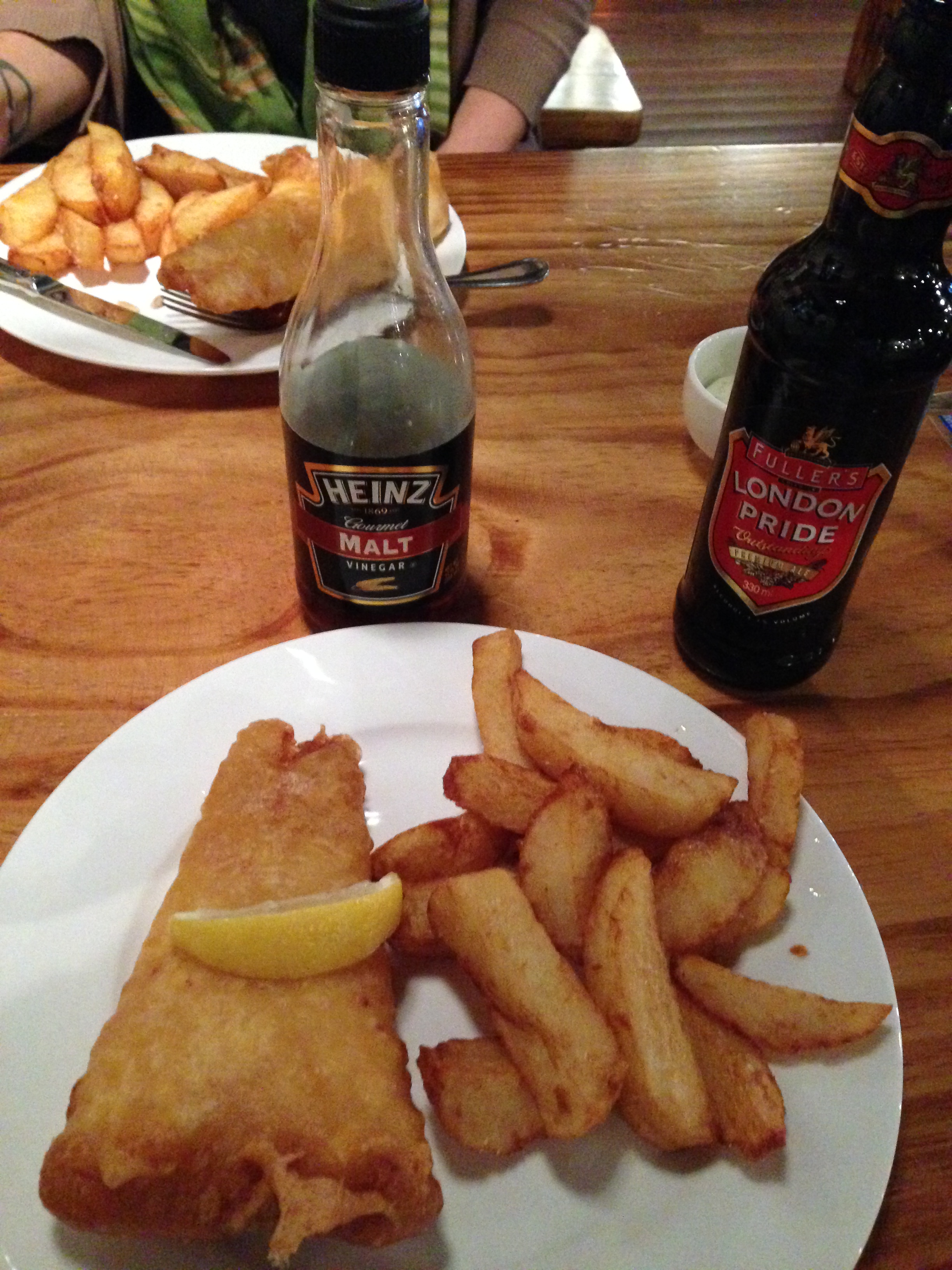 It was a substantial piece of fish that looked exquisite along with some freshly made chips nestled right next to it. The fish portion of the duet was in harmony with my palate. From its flaky white flesh to the thick and buttery breading, I was brought back to the East End in London the first time I had fish and chips in the homeland. I also appreciated the lemon wedge, tartar sauce, and malt vinegar. The tartar sauce was quite creamy but not as tangy as I’d like. As for the chips, they were not super crispy but more savory and filled with the fry oil that I really enjoyed. It wasn’t the most filling meal in the world since I have a big appetite, but it was extremely satisfying and worth it.
So if you’re looking to catch a great meal, Battered Sole is the place for you.

Sir Winston looks a little fishy…


 Mastication Monologues