Tag Archives: sweet

Too Much Flavor to Savor

Posted on

Hey hey, everybody!  Summer is finally here, and Mastication Monologues has another new restaurant review hot off the presses.  While it seems like I’ve been focusing a lot on fried chicken joints and burger stands lately, today’s post takes a turn for the more genteel in the form of brunch at  M.  Henry.

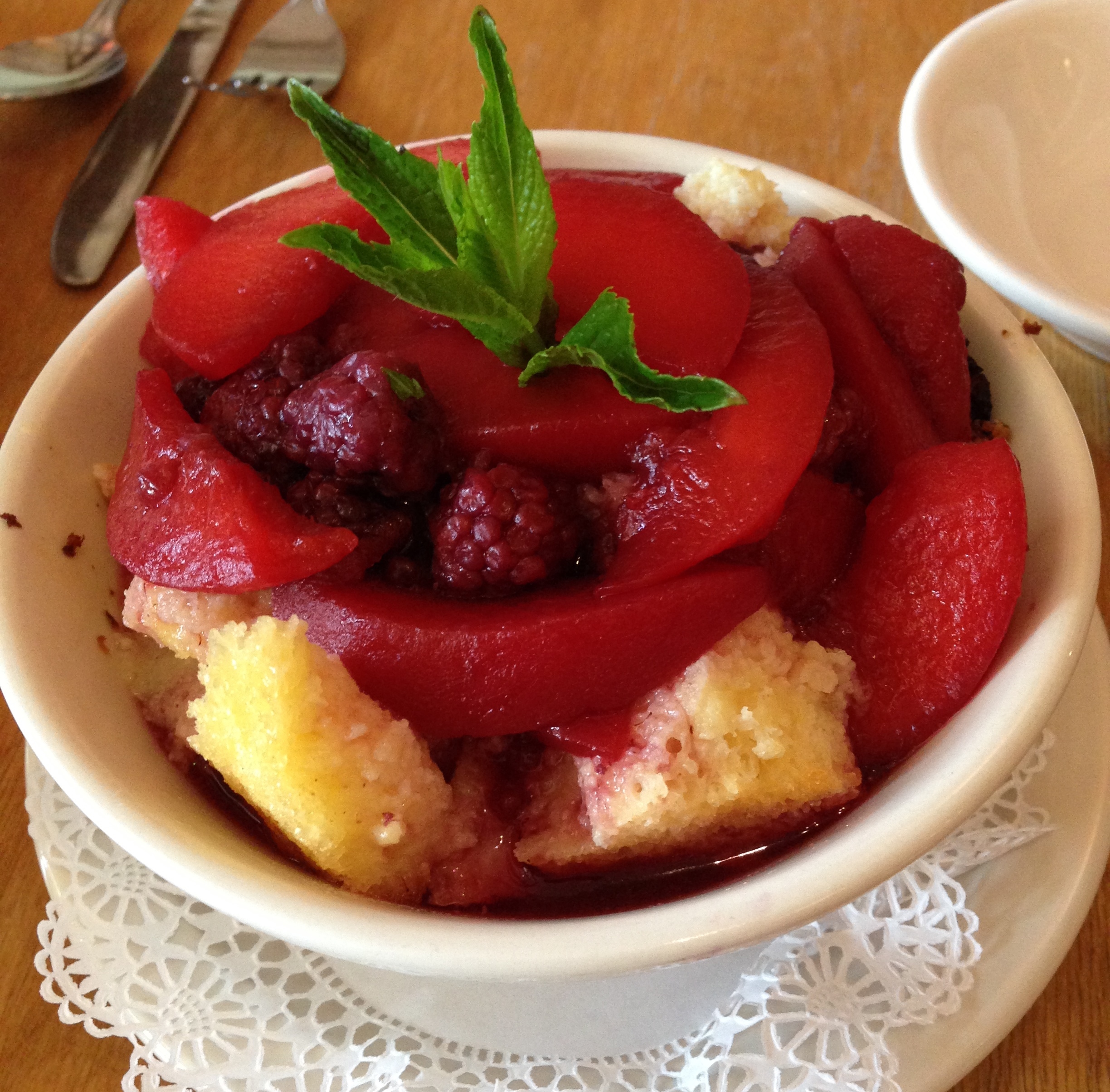
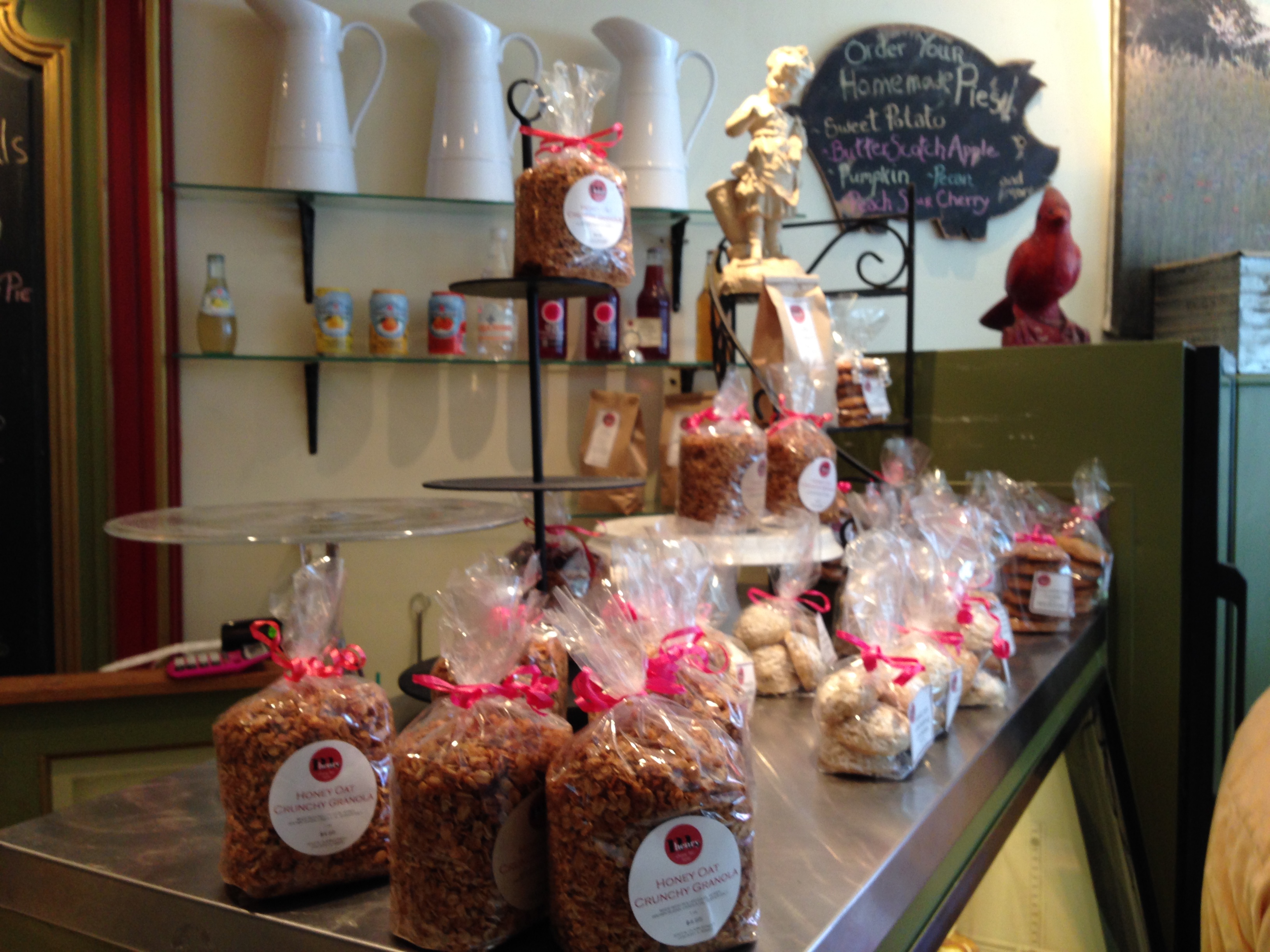
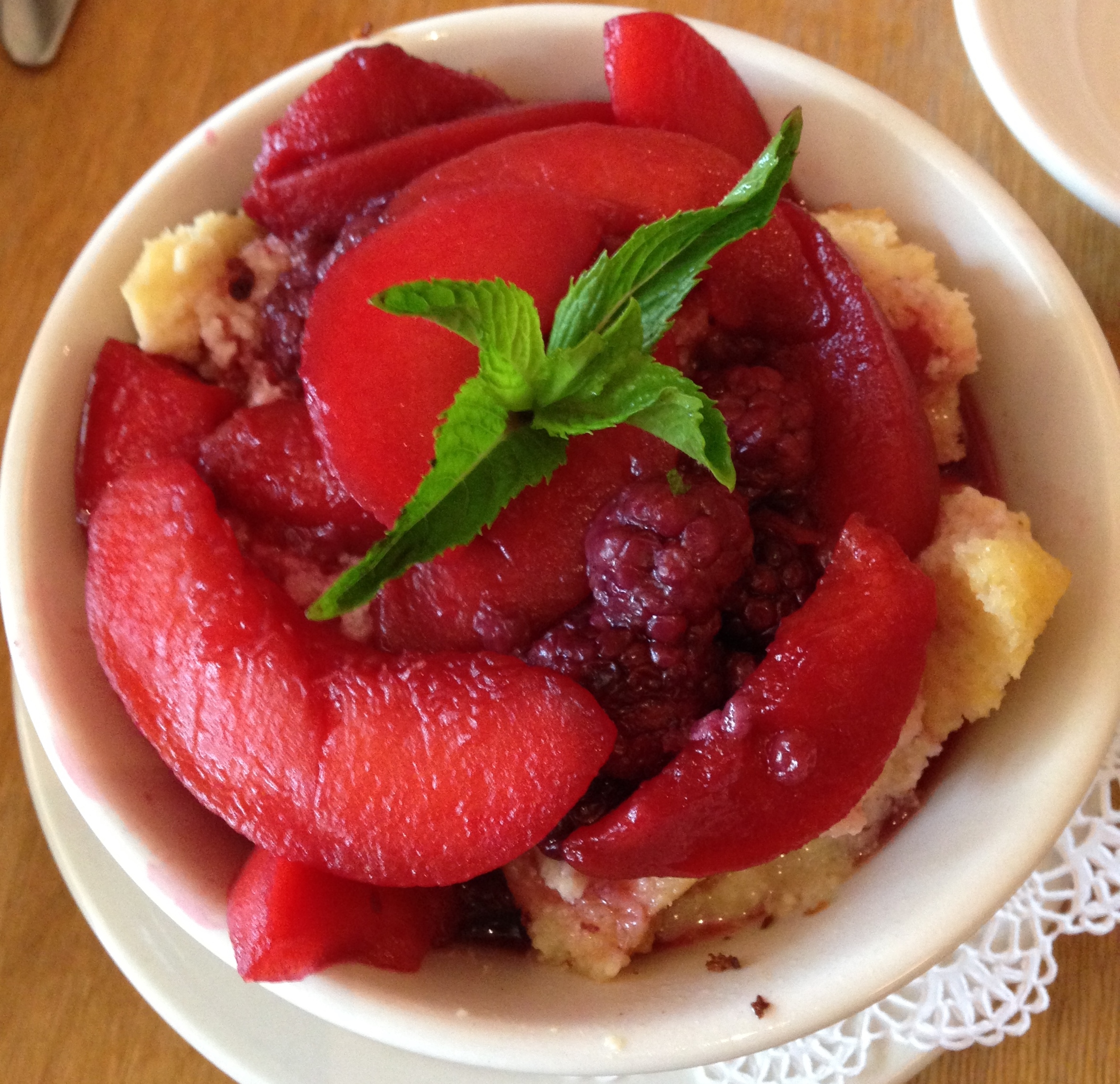
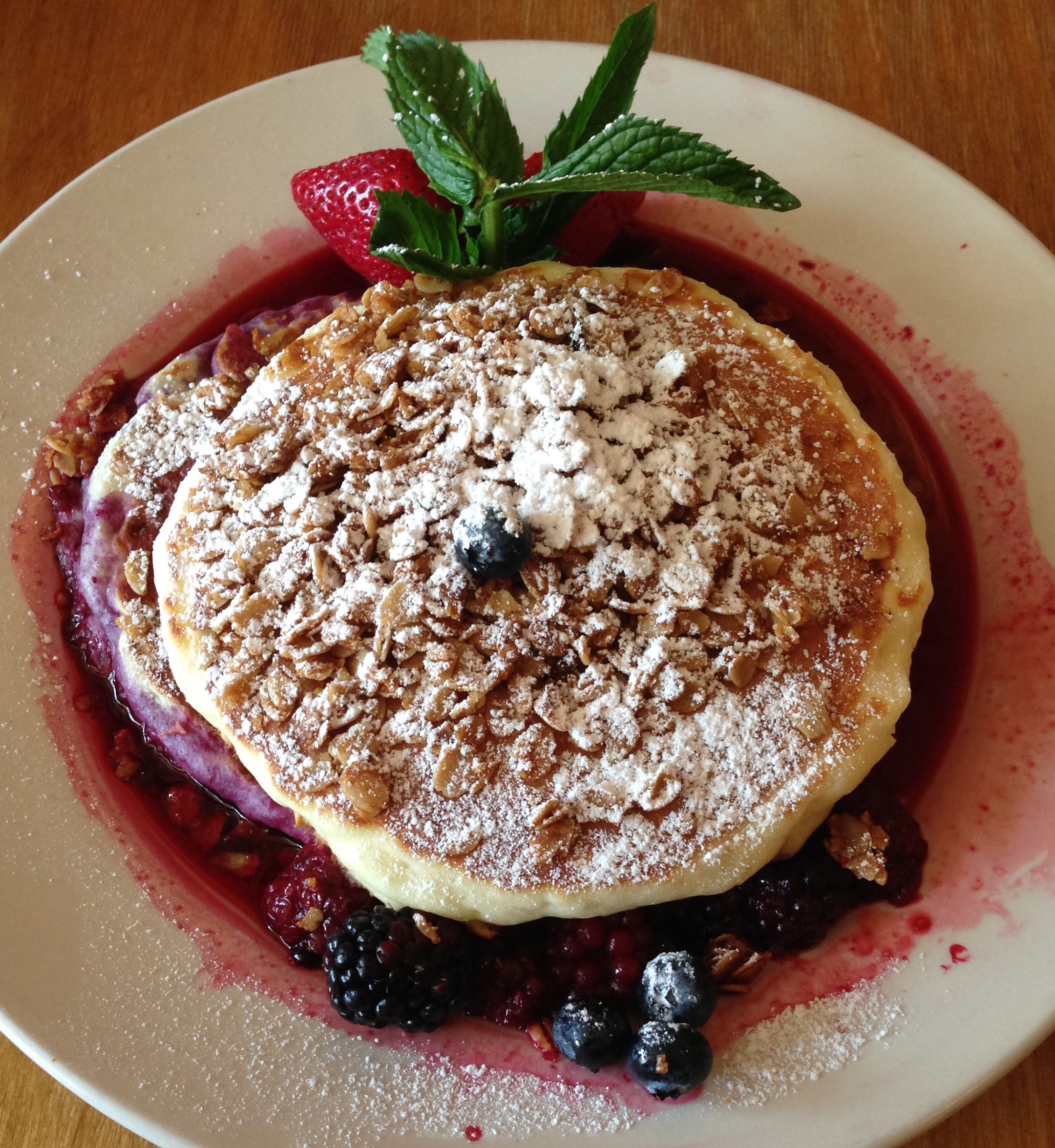
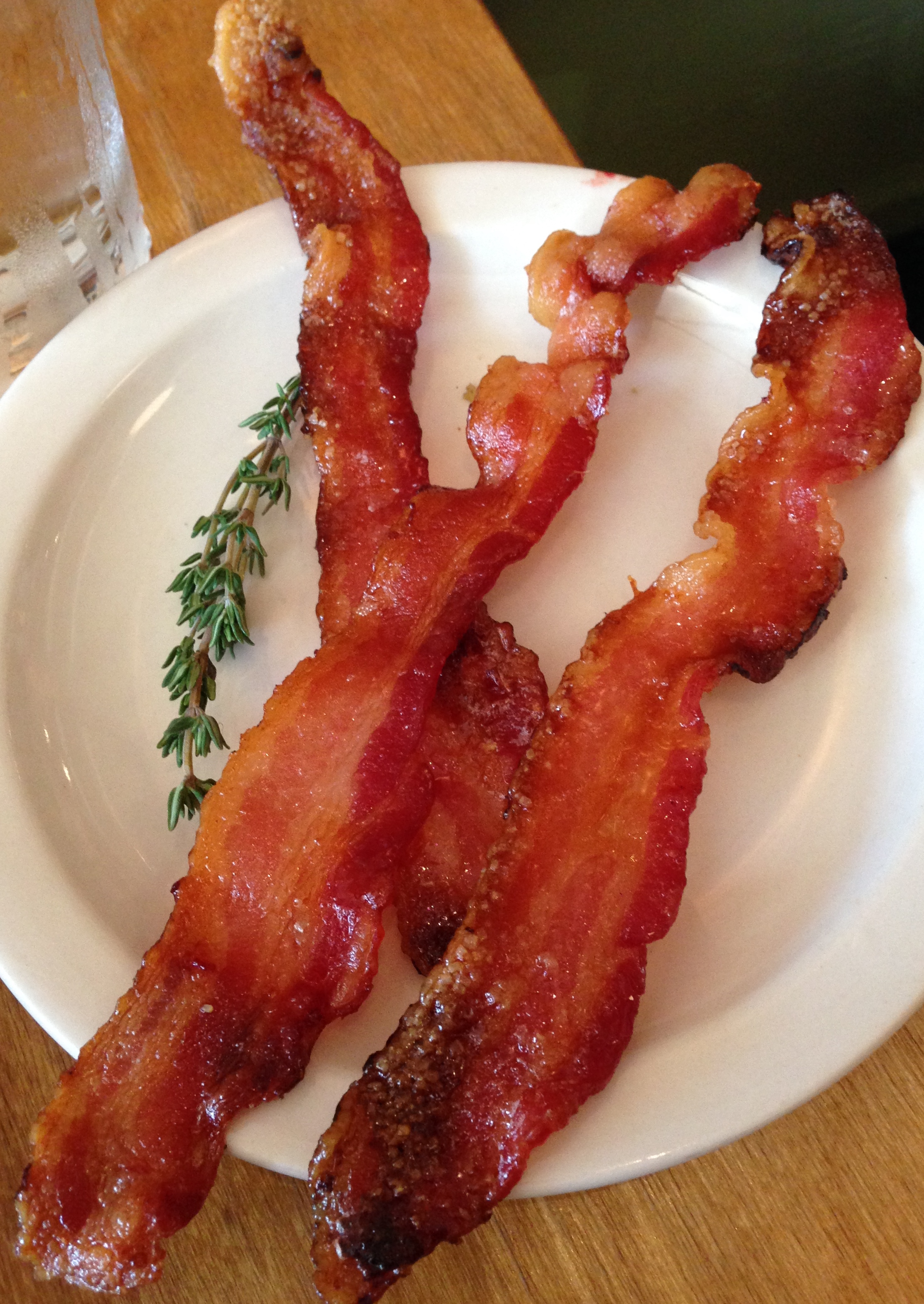
There are plenty of words that have entered the English language in the form of portmanteaus such as spork, frienemy, and the never-ending parade of celebrity couples like Brangelina, Kimye, and TomKat.  However, “brunch” has been around a bit longer than these limelight hoggers, and frankly I think it has offered a lot more to the world than they have.  Case in point, Punch magazine in England in 1895 first coined the term as a “Sunday meal for Saturday night carousers” that “Puts yourself in a good temper, it makes you satisfied with yourself and your fellow human beings, it sweeps away the worries and cobwebs of the week.”  Truer words have never been spoken, so I was led to M. Henry by Janice to see if their amazing brunch could do all of the above.IMG_3298  It seemed like it could based on the 20 minute wait we had to endure to finally get a table in the back room.  The interior of the establishment was tastefully decorated along with a full bakery section that greeted us complete with homemade granola, pies, and sweet rolls.IMG_3285IMG_3283IMG_3284  So we sat down in the bustling backroom, and I got acquainted with the menu. IMG_3297 If you love breakfast/brunch as much as I do, then you’ll need plenty of time to pour over the selection of mouth-watering options ranging from different egg dishes, bread based dishes, and tons of sides and vegan-friendly noms.  We started our meal off with a half order of the out of this world bread pudding ($5.75 half/$6.95 full).  Janice was over the moon about it, so I was curious to see if I’d be in orbit as well.  It came out, and it looked unlike any bread pudding I’ve seen. IMG_3286IMG_3288 The actual pudding was buried underneath a mountain of blood-red peach slices and plump raspberries.  So I took a few spoonfuls of the fruit and some chunks of the vanilla brioche pudding.  Upon eating it, I was greeted with a blast of rich vanilla flavor of the bread pudding along with the semi-sweet notes of the peaches.  The raspberries also were fresh and slightly tart that provided a nice contrast to the mellow pudding, but the seeds were a bit of a pain.  Although the ingredients were good, the presentation brought the entire dish down.  The main sticking point for me was the fruit juice that all of the ingredients were swimming in.  This caused the already soft bread pudding to become soggy.  I don’t know if we went there for the senior early bird special since they were trying to soften up our food for our dentures, but I personally prefer my bread pudding to have a bit more fortitude than the delicious but mushy pudding they served us.  If they served it on a plate with just a drizzling of the fruit juices, similar to other bread pudding recipes I’ve tried and seen, instead of a biblical flood, then it would be considerably better.  Once finished,  the waiter was back to take our order.  After much deliberation, I settled for their acclaimed bliss cakes ($9.95) with a side of candied applewood bacon ($3.75), and Janice got the black bean cakes and huevos borrachos ($9.95).  I was looking around at people eating bliss cakes in the dining room, and they looked like they were enjoying them greatly.  So I was quite excited to tuck into them when they were finally placed in front of me.  It looked like a plate out of Martha Stewart’s kitchen, and the first bite was delectable. IMG_3291 The top hotcake had a crust of brown sugar and oats for a sweet crunch for a great flavor and texture contrast to the fruity and fluffy pancakes.  After that first bite, I delved further into my meal, and my initial excitement gave way to a similar ennui that I experienced with the bread pudding.  Once again, M. Henry believed that stewing bread products in its own juices would somehow improve the quality of the meal.  This destroyed the bottom flapjack, and the creamy mascarpone cheese between the pancakes didn’t help.  I’m sure it was a good idea on the drawing board, but they should cool it with the fruit juices.  I definitely wasn’t crestfallen when I tried and subsequently destroyed my candied bacon.IMG_3294  Normally, I’m not a crispy bacon kind of guy, but these monster-sized strips were special.  M. Henry took a basic bacon strip and combined the salty, smoky flavor profile with a perfect coating of sugar to redeem an otherwise disappointing meal.IMG_3296  I tried some of Janice’s dish, mainly the huevos borrachos or “drunk eggs”, and I really should have ordered those.IMG_3293  Not only was the tortillas homemade, fresh, and thick, but the adobo mixed with the chorizo, sour cream, and avocado was a thick, south-of-the-border fiesta that couldn’t be any more at home in my mouth.  Que rico!  
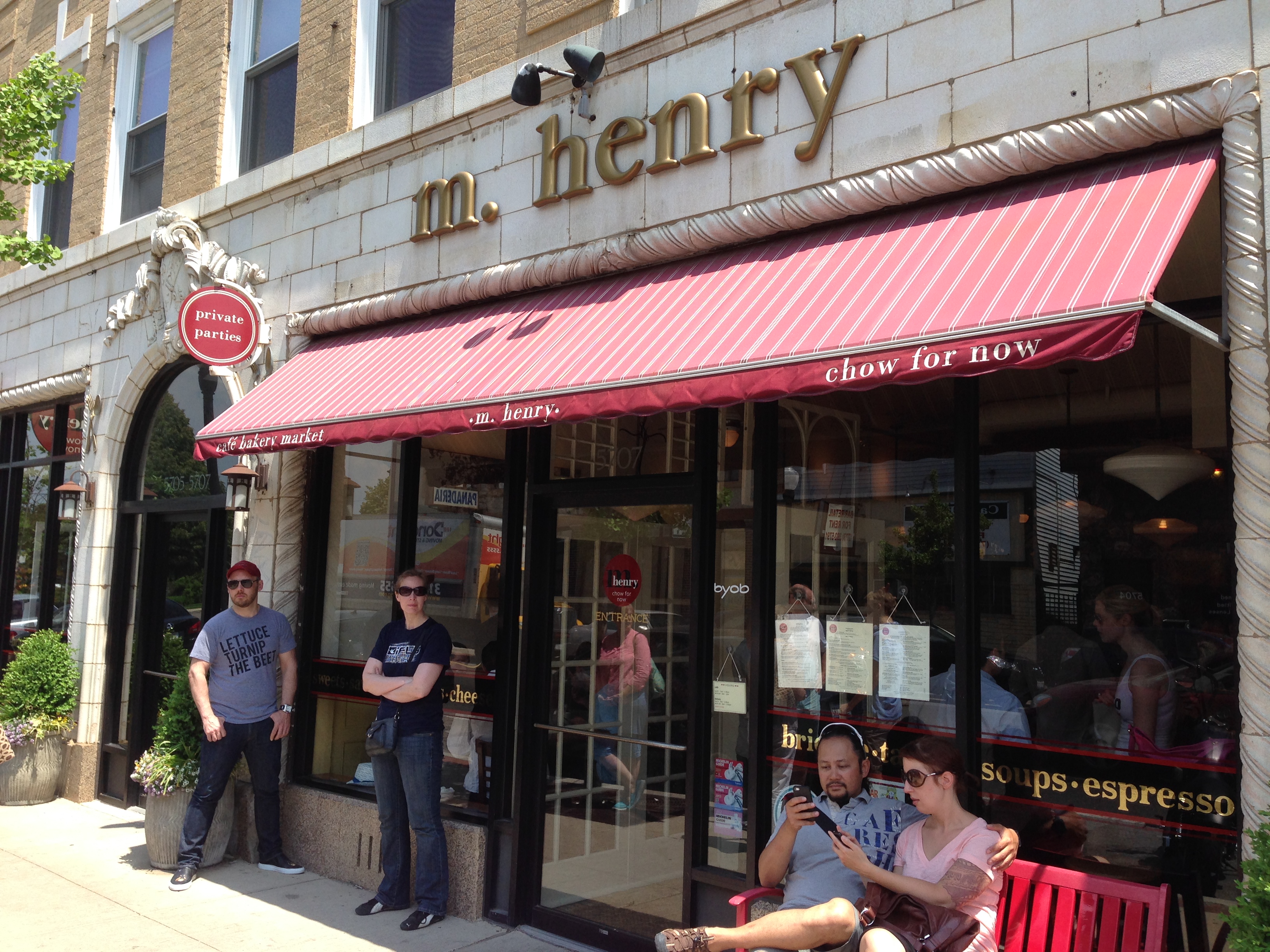
By the end of the meal, I was indifferent to my experience at M. Henry.  I think I just chose incorrectly, but they do care a lot about the quality of the ingredients that they use.  That is for certain.  I’m sure there are other places in Andersonville that serve brunch, like Lady Gregory’s, but I wouldn’t say to completely avoid M. Henry’s.  It’s worth a shot.

M. Henry on Urbanspoon

In the Garden of Eatin’

Posted on

What’s beef? Beef is when you make your enemies start your Jeep
Beef is when you roll no less than thirty deep
Beef is when I see you guaranteed to be a ICU, check it”
-Notorious B.I.G.

While my gangster friend, Biggie, had other ideas about what “beef” meant to him in a serious context, today’s Mastication Monologues post is much more lighthearted.  While I could be considered a culinary hitman who is hired for his discerning palate and ruthless ability to deal with difficult dining experiences, I was working pro-buona at this latest establishment, Buona Beef that is.

While Philly has their cheesesteak and NYC has their monstrous pastrami sammiches, Chicago’s sandwich is one that was born out of poverty.  When Italian immigrants used to work in the Union stockyards of Chicago, they would bring home the lower quality, tougher pieces of meat.  So what would be the easiest way to stretch these meager resources for a meal?  Easy.  First, they wet roasted it in a beef broth seasoned with garlic, oregano, and other spices.  Then, they’d slice the meat extra thin to feed the most amount of mouths with the least waste possible.  These paper-thin pieces of meat were thrown back into the broth to soak up all of the flavor from the roasting period for maximum deliciousness.  From there, the Italian immigrants put the beef on Italian bread loaves, and thus the Chicago Italian beef sandwich was born.  While the times and customers have changed, the cooking process has stayed the same.  Enter Buona Beef.  This franchise started back in 1981 by the Buonavolanto family who brought Neopolitan family recipes to the mainland and brought them to the American public.  Buona Beefs can be found all throughout the Chicagoland area but nowhere else in America.  I went with my parents to the location in Darien, IL, and it was a pleasant dining experience. darien The service was quick, and the prices are reasonable.  The menu ranges from pizza, salads, pasta, and of course, da beef sandwiches!  I got the regular 7″ sandwich ($5.50), but they also have piccolo (small) and maggiore (large) sizes.  While most sandwich restaurants ask if you want everything on it, ordering an Italian beef sandwich could almost sound like a script Ron Jeremy could read.  One can be asked if they want it juicy/dipped (dipped in the beef broth), dry (sans broth), hot (with hot giardiniera on top), or sweet (with sweet peppers on top).  While my mom went for the more subdued sweet, dipped sandwich, I kicked it up a notch by getting a hot dip.  This is definitely where I parked my car. While Buona Beef offers various desserts like cannoli, brownies, gelato, and lemon knots, I knew I had to try their new maple bacon shake ($3.25) which apparently diners have been scared to try.  Since I was the first to do so, the manager was overjoyed that I ordered it.  With our orders in, we took our number, and waited for them to bring us our food.

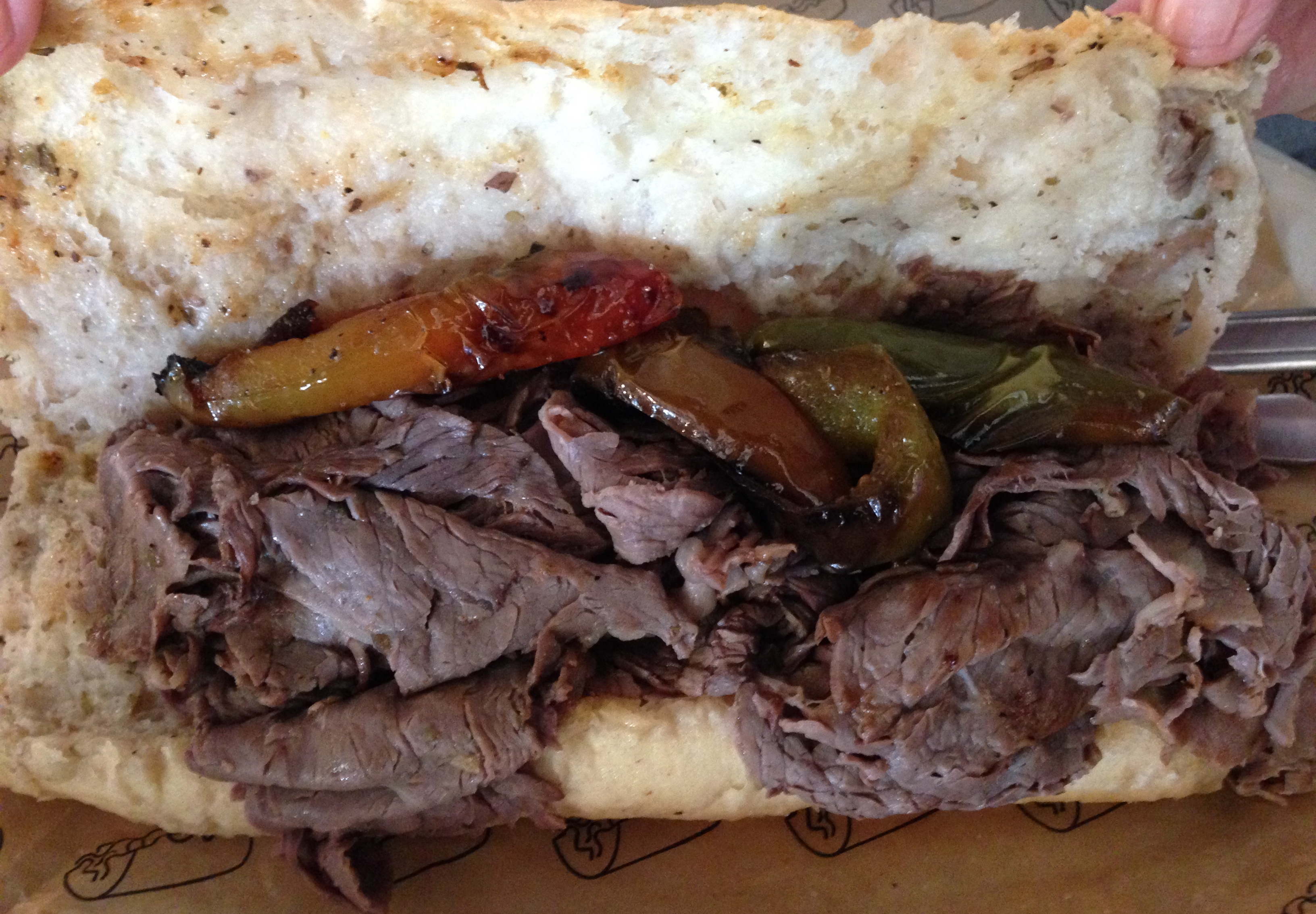
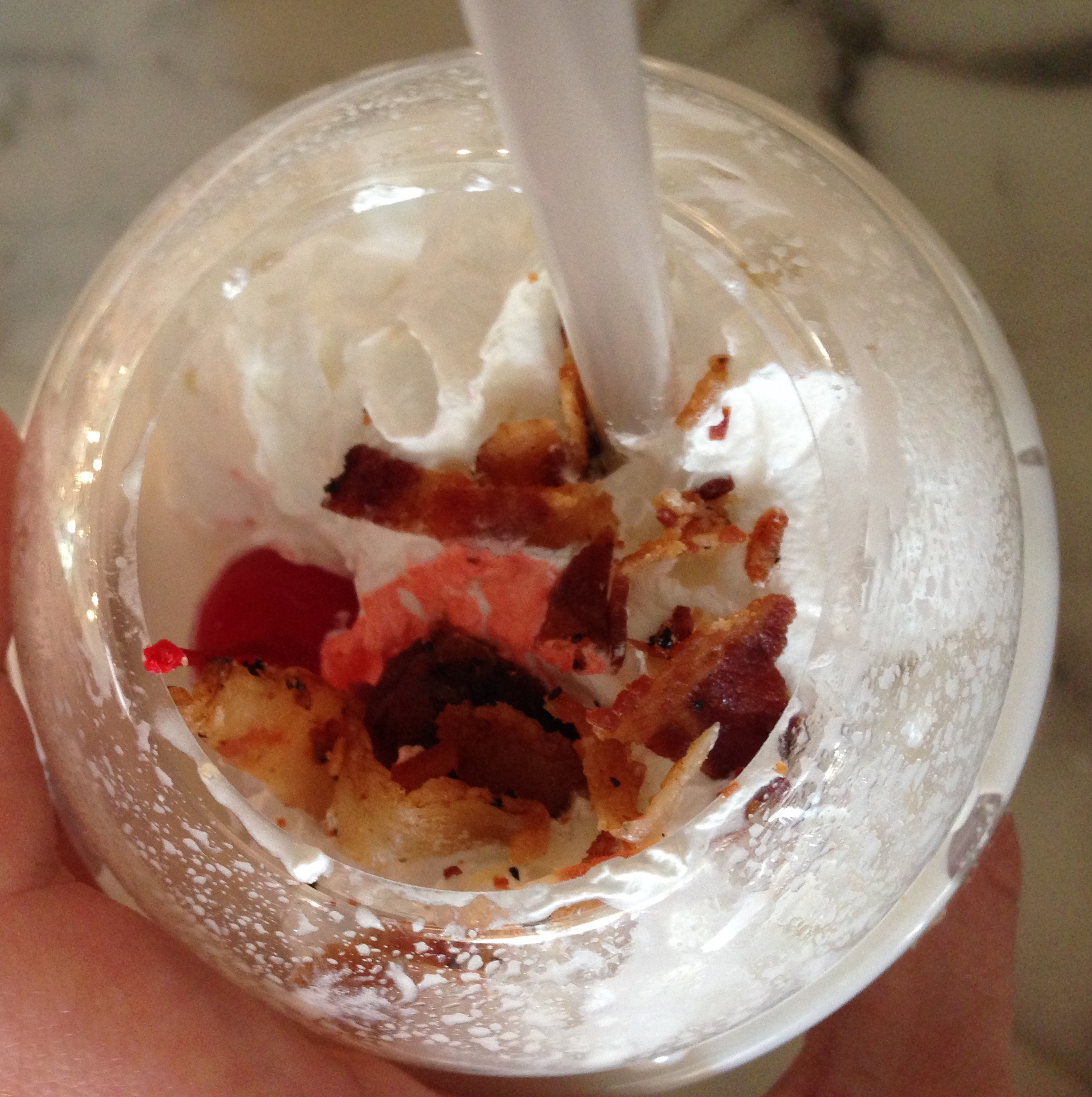
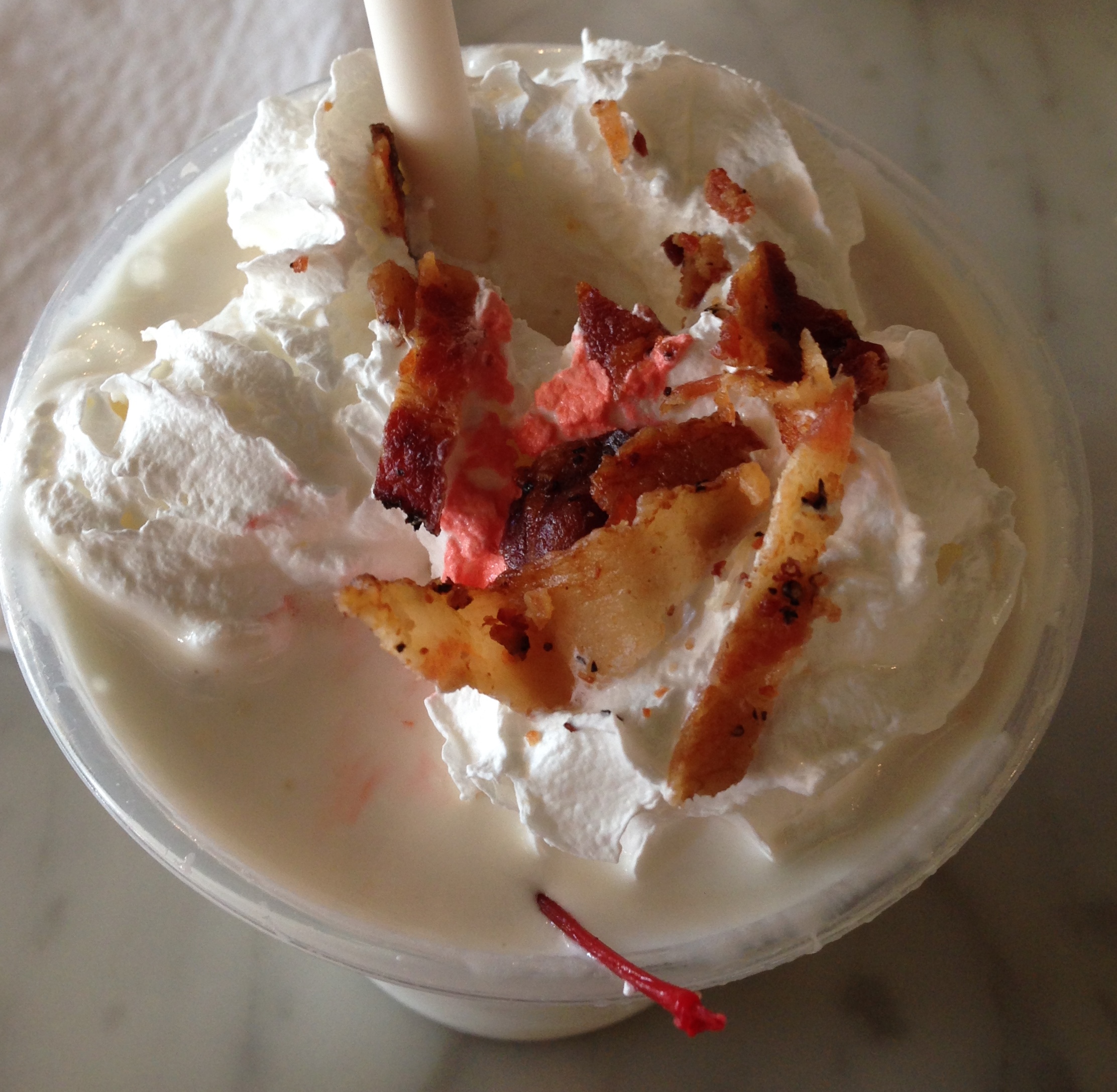
After a brief wait, our sandwiches came out along with the shakes.  I hadn’t had one of these bad boys since coming back to America, and when I laid my eyes on it, I could remember why I missed this small, meat-laden piece of home.  While I prefer the spicy over the mild, my mom’s sandwich still looked pretty good. I think they could have given her more of the roasted, sweet peppers though. IMG_3205 As for my sandwich, it was a thing of absolute beauty.  The bread was fresh yet glistening slightly with the juice of its beefy bathtub in the back.  Plus, the vegetables, or giardiniera (jar-din-air, Chicago pronunciation), looked fantastic.  Giardiniera means comes from the word in Italian for “garden” but actually means “pickled vegetables”.  That’s why the version in Italy is called “sotto aceti” or “under vinegar”.  However, there are slightly different takes on giardiniera depending on where you are.  The West Coast version is closer to its Italian roots with just using vinegar, but here in Chicago we use olive oil.  I’ve asked friends from across the US if they’ve heard of giardiniera, but it seems to be chiefly a Chicago thang.  Typically, one can find a cornucopia of vegetables in the mild or spicy oil such as carrots, celery, olives, pimentos, cauliflower, and bell peppers.  Everyone has their own favorite blend and brand like Greco’s for me.IMG_3216  Even though they’re soaking in oil, the vegetables still maintain their crispy texture.  compliments of the pickling process.  After appreciating the beefy Botticelli in front of me,  I finally took the first bite.IMG_3211  Not only is the Italian beef sandwich unique in terms of ingredients and being a culinary representative of Chicago, but one must eat it in a certain way known as “the stance”.  I’ll let the owner of  Al’s beef, the mothership of Italian beef sandwiches in Chicago since 1938 in Little Italy, and Adam Richman explain it.  Much like Mr. Richman, I was overwhelmed by the soft, juicy bread that encased the delicate pieces of garlic and oregano-laced beef.  The giardiniera provided a much needed crunch and spice to offset the soggy sandwich.  Naturally, my basket by the end of the meal looked like a sloppy slip-n’-slide, but it hit the spot.  As for my shake, it was thick and topped with a few morsels of bacon. IMG_3208IMG_3209 Upon sipping the ivory-hued beverage, I was immediately greeted with a wave of excruciatingly sweet maple flavor that dominated the shake for the most part until I reached the latter half.IMG_3213Once I finally dove deep enough, I could find and sample the crispy creatures hiding beneath the whipped cream.  The smoky and salty flavor of the bacon combined well with the sweetness of the maple riffs, but it proved to be a bit overwhelming as I sampled the dregs.  By the end, I feel like I drank a bottle of sugar syrup which didn’t settle well with me.  I think if  Buona Beef lightened up on the syrup and evenly distributed the bacon in a smaller portion size, they’d have a real hit on their hands.
So if you want to try a unique piece of Chicago’s culinary history without having to make the trek downtown to Little Italy, try Buona Beef!

Buona Beef on Urbanspoon

Goooooooood Afternoon, Vietnam! (Portland, Part 5)

Posted on

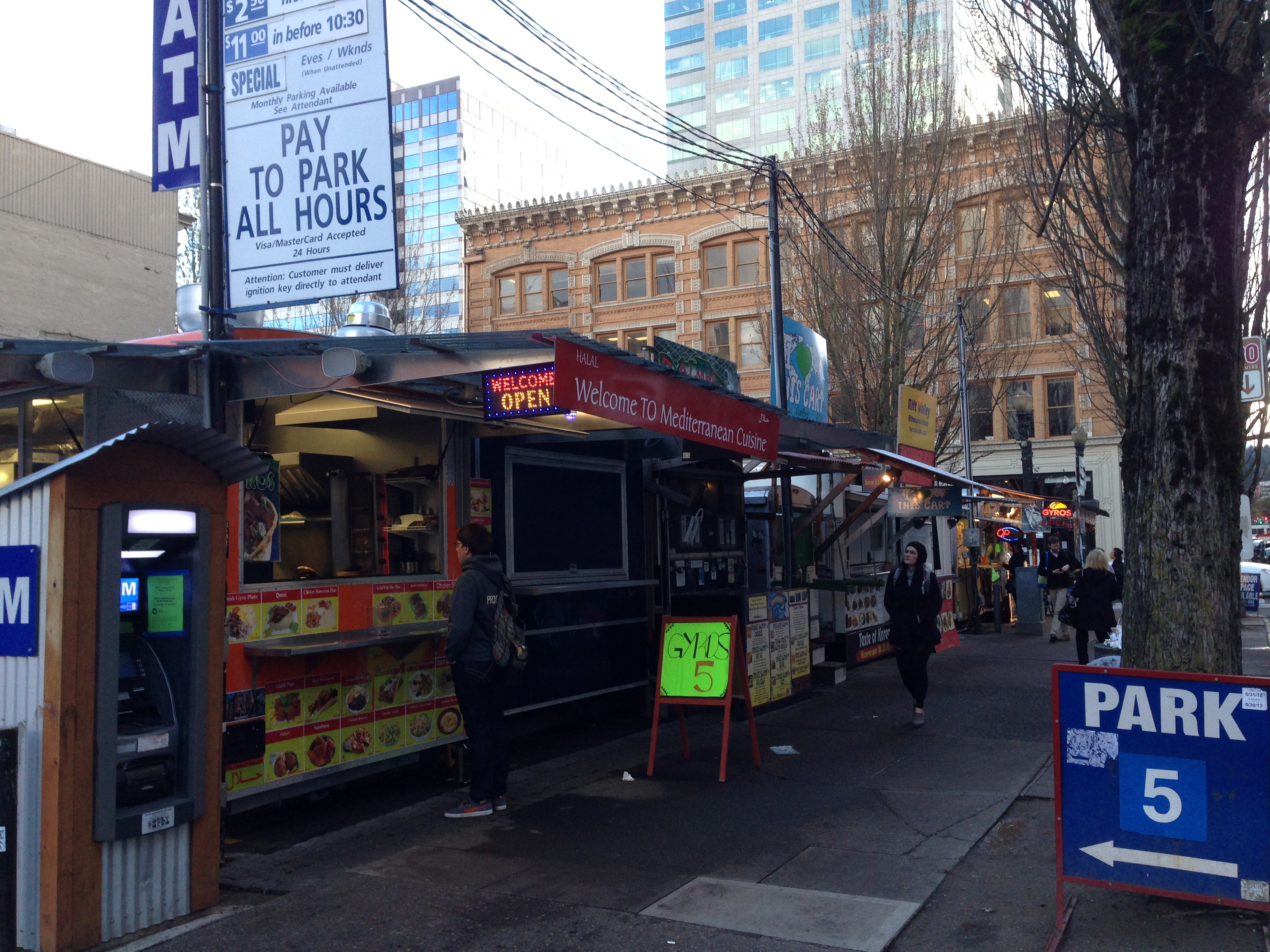
So today’s post is going to be short and savory like the meal I will be entailing.  While I decided to have one of my spooky baked treats from Voodoo Doughnuts for breakfast on Friday morning, I decided that lunch would take place at one of the many food cart villages that can be found throughout Portland.  The concierge told me when I checked in to check out Alberta Street’s food carts, but it was a bit too far out of the way for my liking.  So, I remembered that I passed by a large pod of carts when going down SW 5th Ave. to the Pioneer Square stop in the heart of downtown Portland.  Even though it was raining, it didn’t put a damper on my experience.

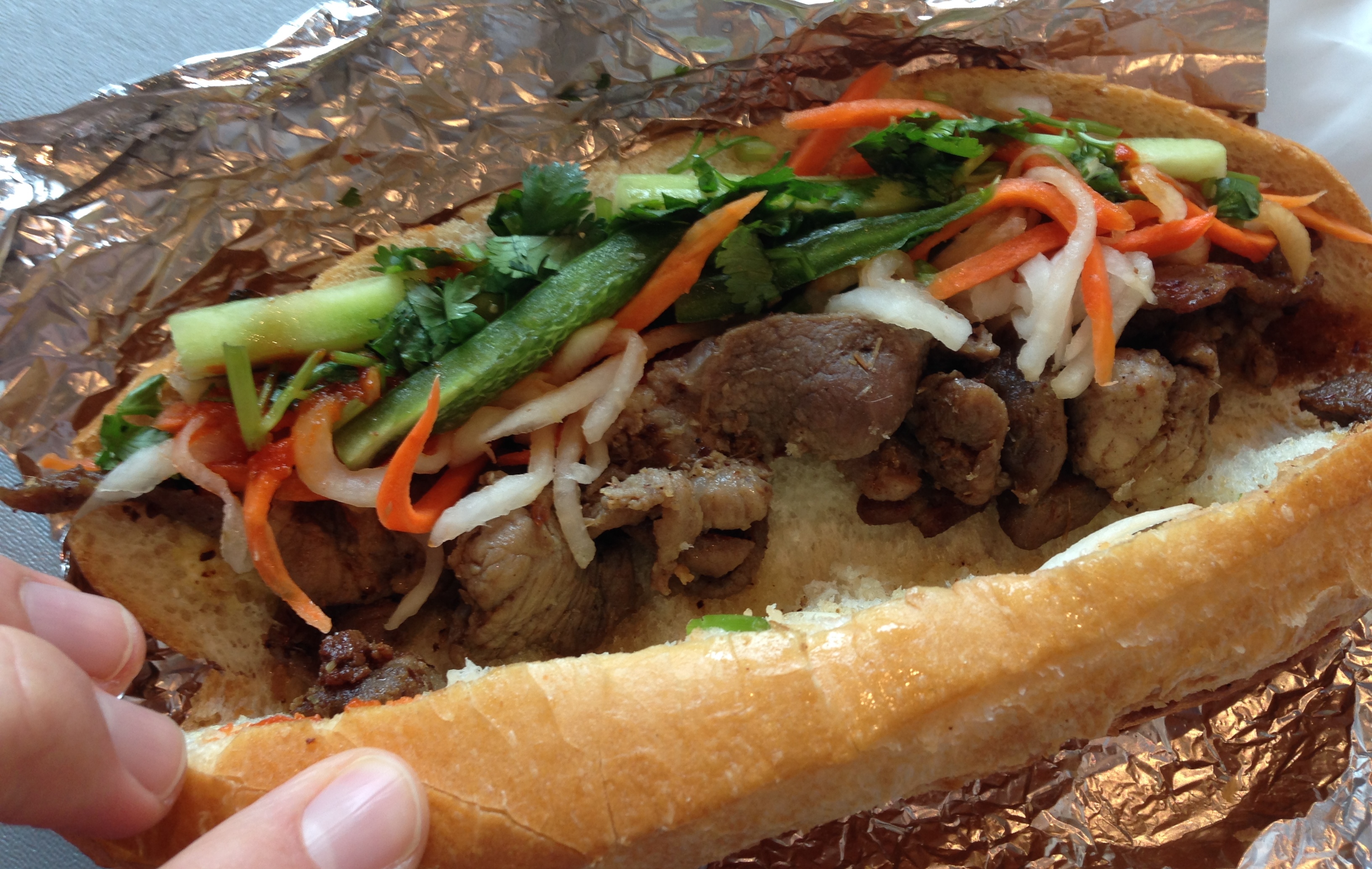
As I made my way down the block long and deep hamlet of food hawkers, there was so much affordable food diversity it made me want to fall to my knees and praise the sustenance gods.  After living in a monoculture for a year like Korea, you really appreciate the diversity of the USA. IMG_2655 However, Korea was represented with two carts that seemed to push both fusion and traditional Korean cuisine.IMG_2659IMG_2658  Along with noms from the Land of the Morning Calm, they had Indian, Mexican, Greek, Iraqi, Italian, Chinese, American, Thai, and Vietnamese eateries.IMG_2589 IMG_2588 The last option would end up being my lunch for the day as I finally chalked off a basic foodie necessity in the great book of “Food You Must Try”:  banh mi.  For those who are new to Vietnamese cuisine, a banh mi is essentially a Vietnamese sandwich, but it is much more than a sliced piece of bread stuffed with a plethora of mouth-watering ingredients.  It was born out of Vietnamese subjugation by the French during the Age of Colonialism.  When two very different cultures come in contact, you can be certain if anything will be exchanged, it will be different types of food and drink.  While the Vietnamese introduced the French to indigenous specialties like pho, the French brought their wizardry with baked goods to the people of Vietnam.  The ubiquitous French baguette quickly became integrated into the Vietnamese food landscape in the form of banh mi.  The locals took the baguette recipe, compliments of their European overlords, and tweaked it to have a slightly lighter consistency than the ones found back in La Patrie (France).  After that, the Vietnamese people filled these baguettes with Vietnamese ingredients to give birth to one of the most famous examples of fusion food before it became a buzzword coined by Mr. Puck.  I had never tried it before much to the dismay of some of my friends, so when I saw the very unassuming Vietnamese cart that didn’t even have a sign up, I knew I had to try it.IMG_2661  If they didn’t have to advertise, they must be good.  The head cook beckoned me over with a hello and a smile, and after looking over the large list of banh mi, spring rolls, and pho, I got the grilled pork banh mi ($3).  As soon as I finished my transaction, I turned around to see a crowd behind me, so perhaps I either beat the lunch rush or led the charge to try something new.  It eventually was handed to me, and it looked absolutely beautiful. IMG_2664 It tasted just as sublime as well.  First, I crunched my way through the crispy crust of the baguette to the chewy white interior which really did taste airier than a French baguette.  I then reached the promised land of juicy grilled pork, onions, verdant peppers, pickled carrots, and plenty of cilantro for an herbal punch right in the taste buds. All of this, combined with the sweet and spicy Sriracha sauce, left me greatly satisfied and ready to take on the rest of the day.  I highly recommend banh mi and checking out Portland’s food cart scene.

Last K-Days (Part 2)- Life’s a Beach

Posted on

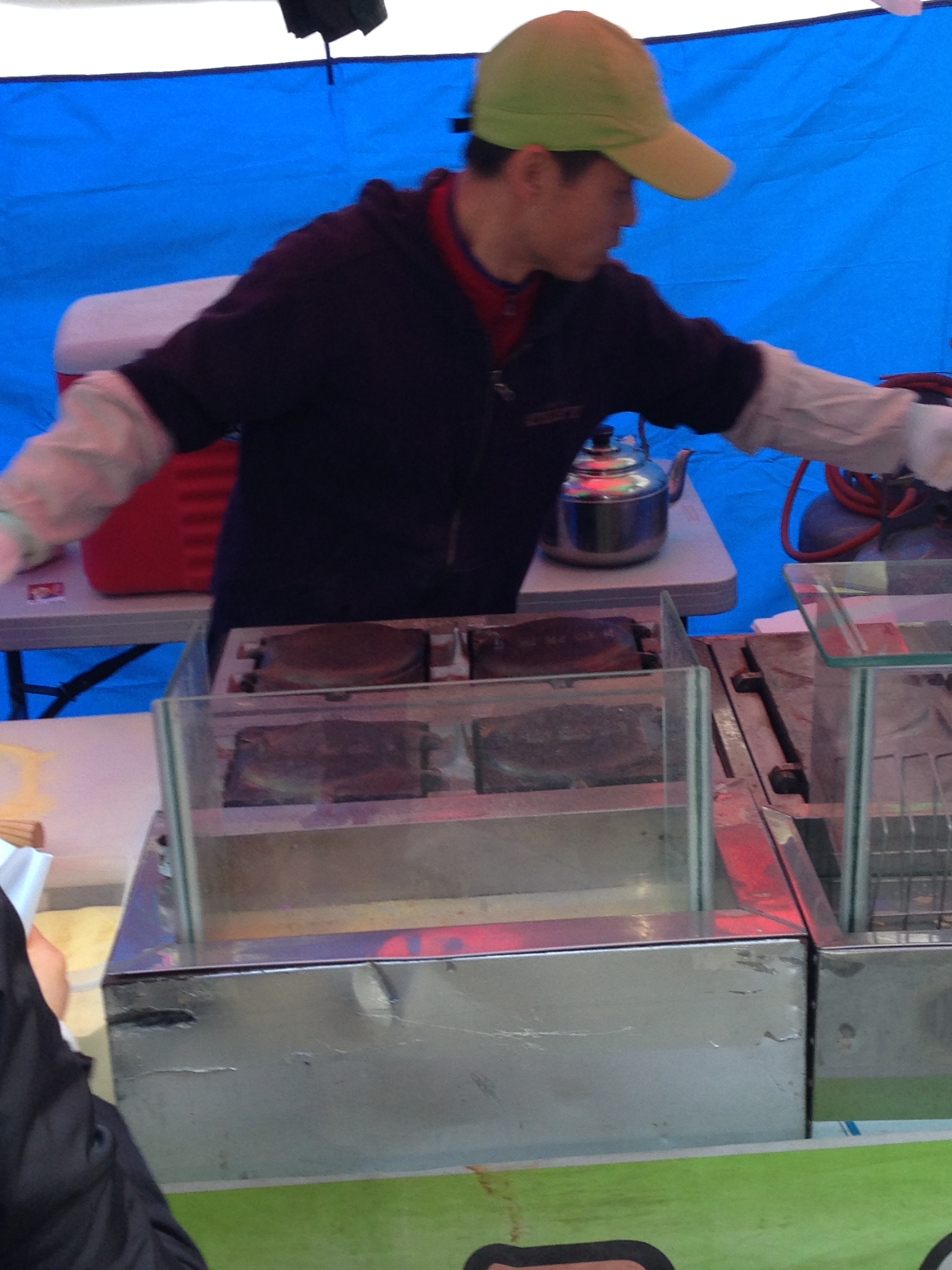
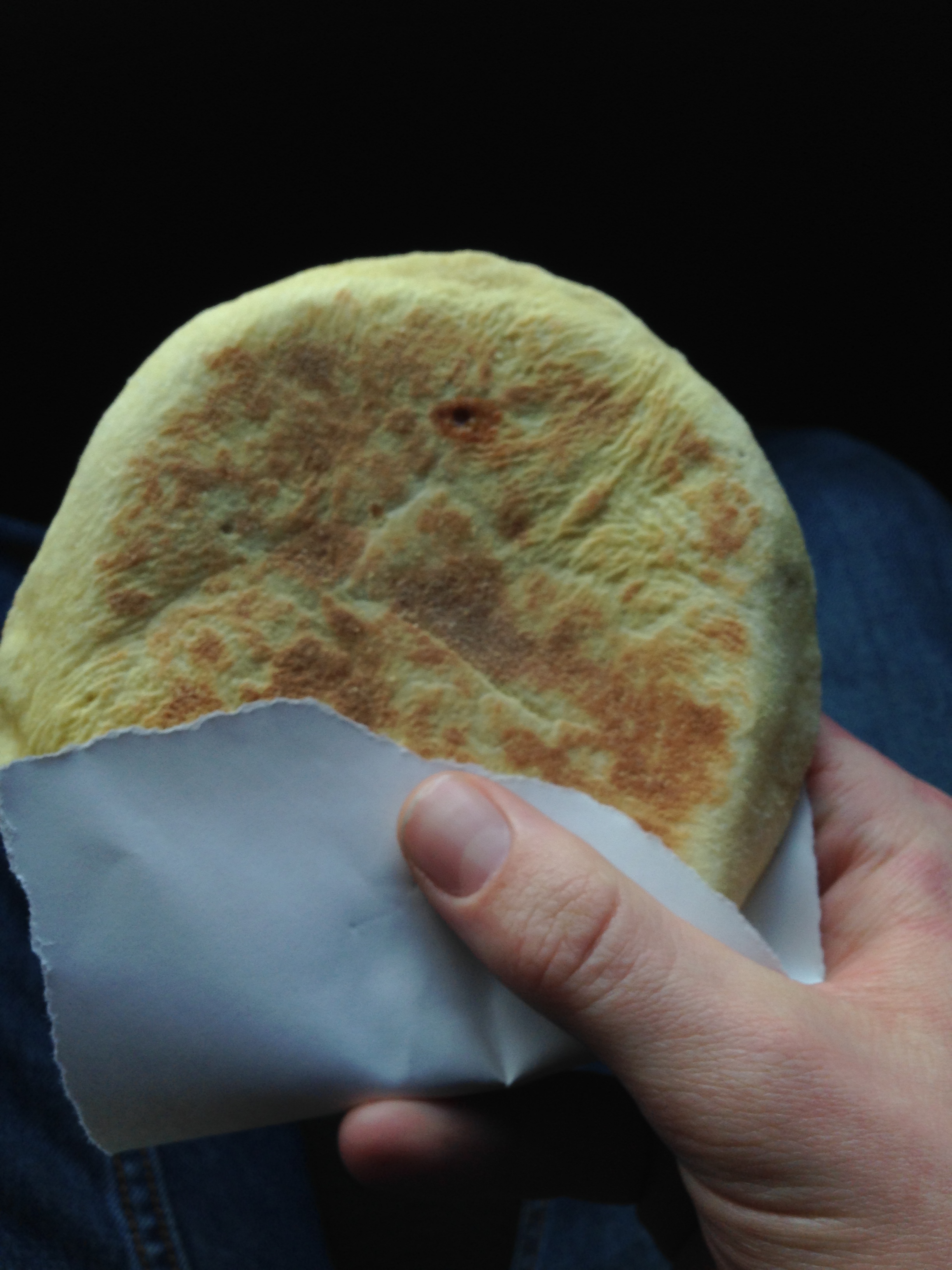
My second day in Ulsan wasn’t as action packed as the first day, but I did manage to have some McDonalds and pay a visit to neighboring Gyeongju.  The only real food highlight of the day was when I managed to try a new type of 호떡 or hotteok which is like a sweet pancake.  Normally, they are fried and filled with a sticky, sweet syrup, but the variant in Ulsan I found to be more pleasant.IMG_2088  First, instead of being soaked in cooking oil, they were baked in a small oven.  Second, inside the hotteok there were more sesame seeds and honey instead of syrup which led to a more interesting and varied taste. IMG_2089 Plus, it wasn’t as messy as the original hotteok I tried in Myeongdong in Seoul.  Lord knows I don’t like to have half of my food still on my hands when I finish eating.  I made it to the seaside town of Busan.  I had visited the city before where I tried some deadly fish soup and had a “sexual” encounter in the Jagalchi fish market, but this time we were going to explore the art village on the other side of the harbor.

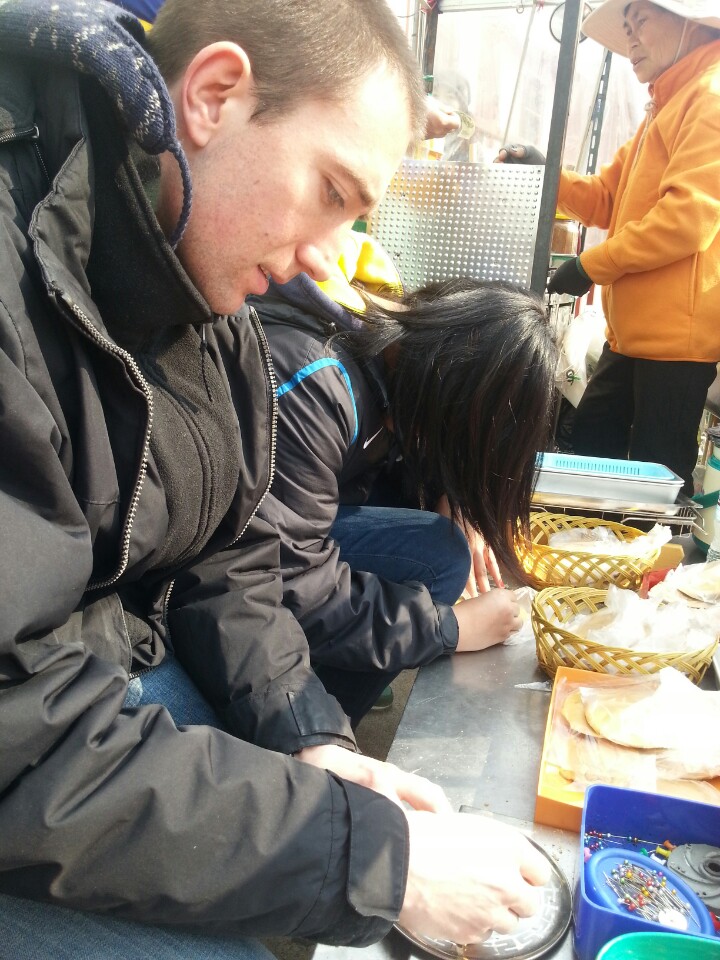
The first food I tried in Busan when we got to the art village was this Dalgona cookie that smelled pretty good from far away.  However, this was no ordinary snack.  I saw people fiddling about with their cookies on metal plates for some reason, so I learned hat you can cut out the shape imprinted in the cookie with a needle as a type of challenge.  If you cut it out perfectly without cracking the shape, then you get a free one.  Dalgona cookies seemed to be a simple treat to make since it was only made of sugar and baking soda that was heated to a high temperature before being spread on a small griddle where it cooled.

IMG_2099 You then got your choice of shape you could press into it.  I decided to do a gingerbread man shape since it looked pretty easy…or so I thought.  I took my seat next to the other kids at the table and proceeded to get to work. IMG_2166 It was harder than it looked because the cookie was wafer thin yet extremely brittle which required the steady hands of a brain surgeon with the needle.  I was making great progress as I cracked parts off around the upper torso, but a random fault line erupted as I rounded the crotch.  All my hard work was for naught, and my Korean audience was disappointed after watching my splendid progress.  I vowed to come back and try it again. IMG_2163 Even though the cookie was extremely sweet and crunchy, there was a burnt, bitter aftertaste that may have been caused by either the singed sugar or my defeat.

 I highly recommend a trip to the art village as it’s very quirky but tasteful if you like random artwork integrated into a mountainside community.  On the way back to the car, I got another Dalgona cookie with a fish this time in honor of the seafood hub that is Busan.  This time around, I cut the shape out with four quick jabs with the needle.  I was satisfied with overcoming the challenge.IMG_2159  However, these snacks were a mere prelude to the food extravaganza that would soon follow in the city as I went to Gukje Market.

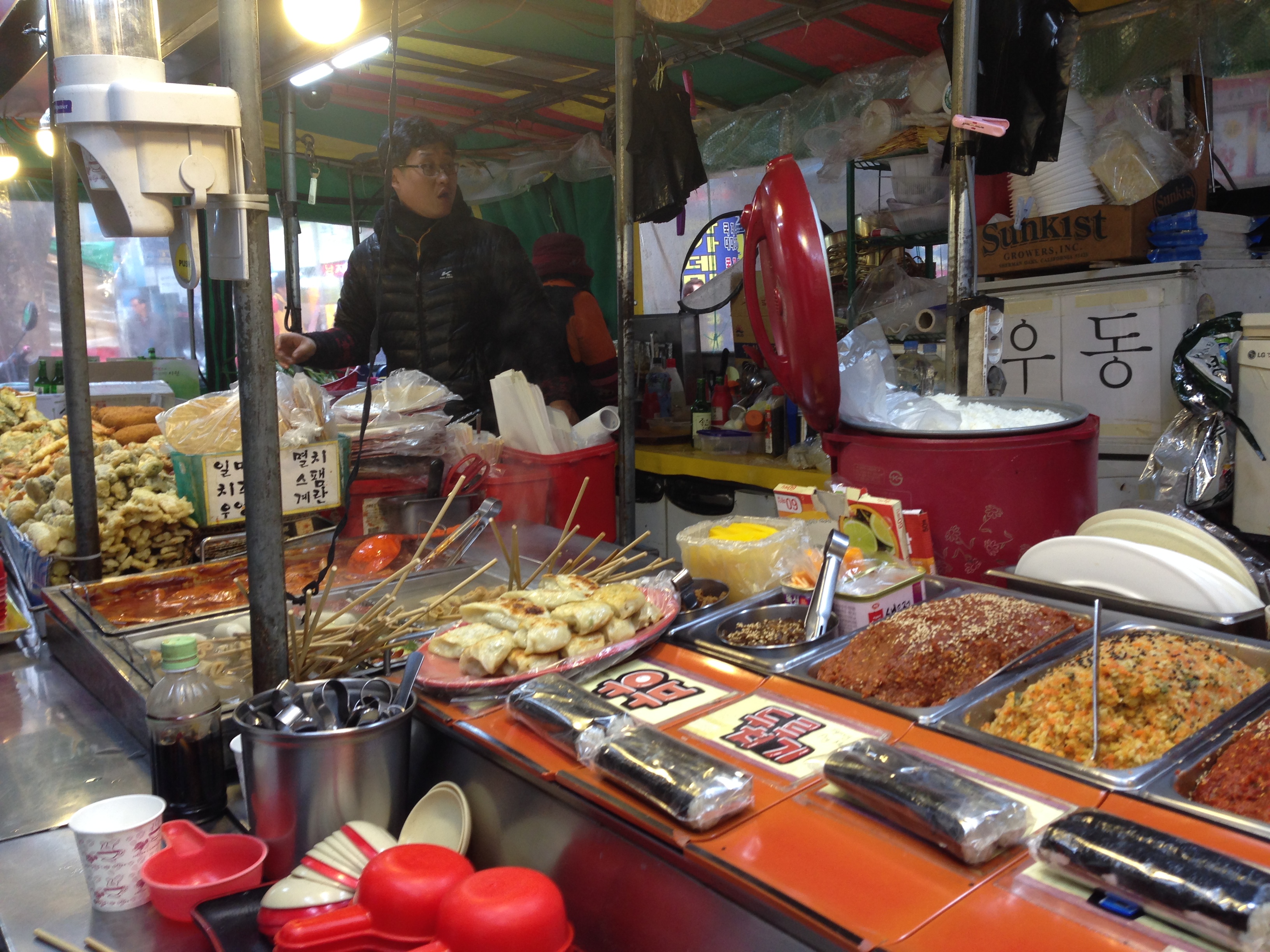
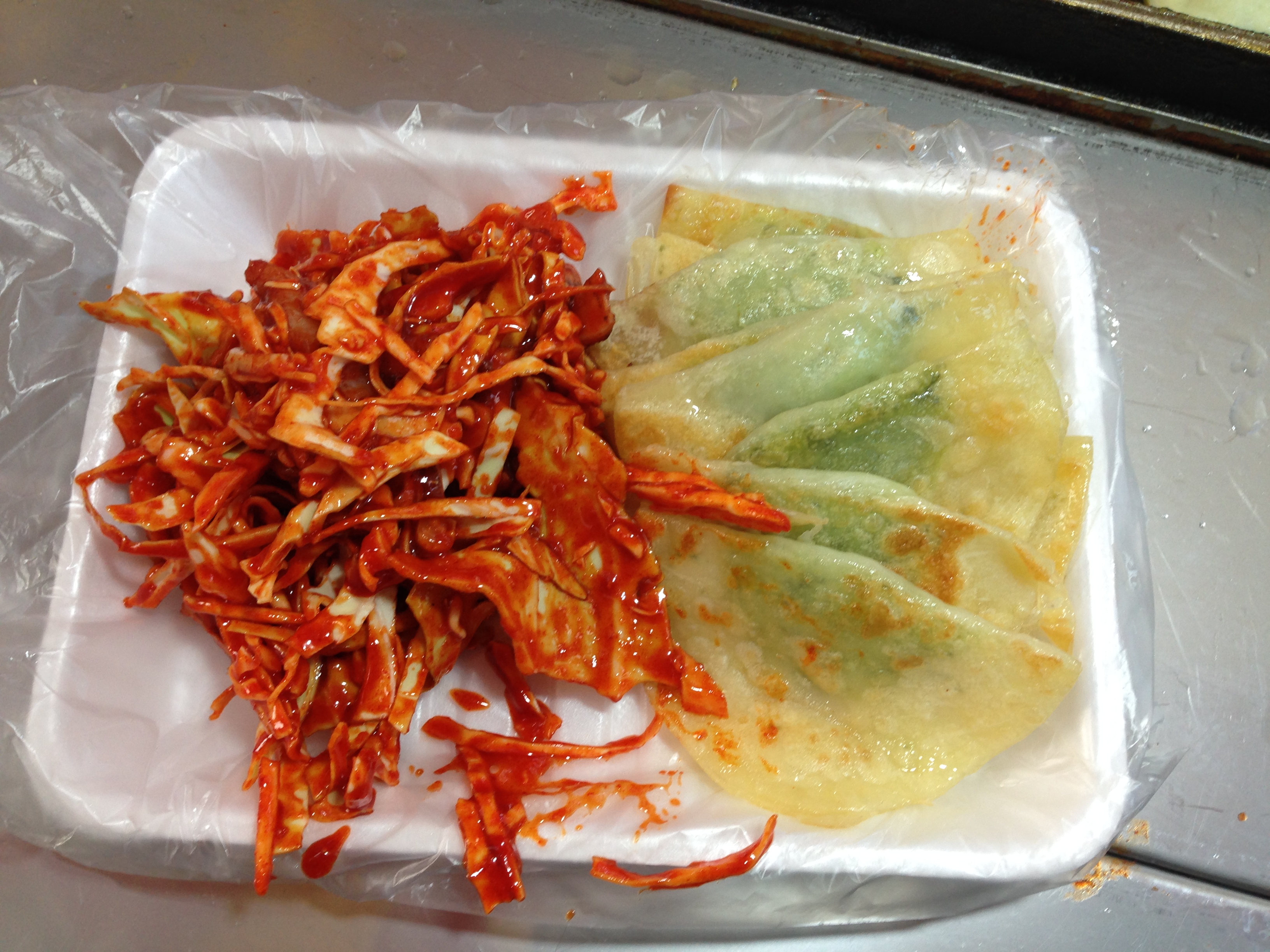
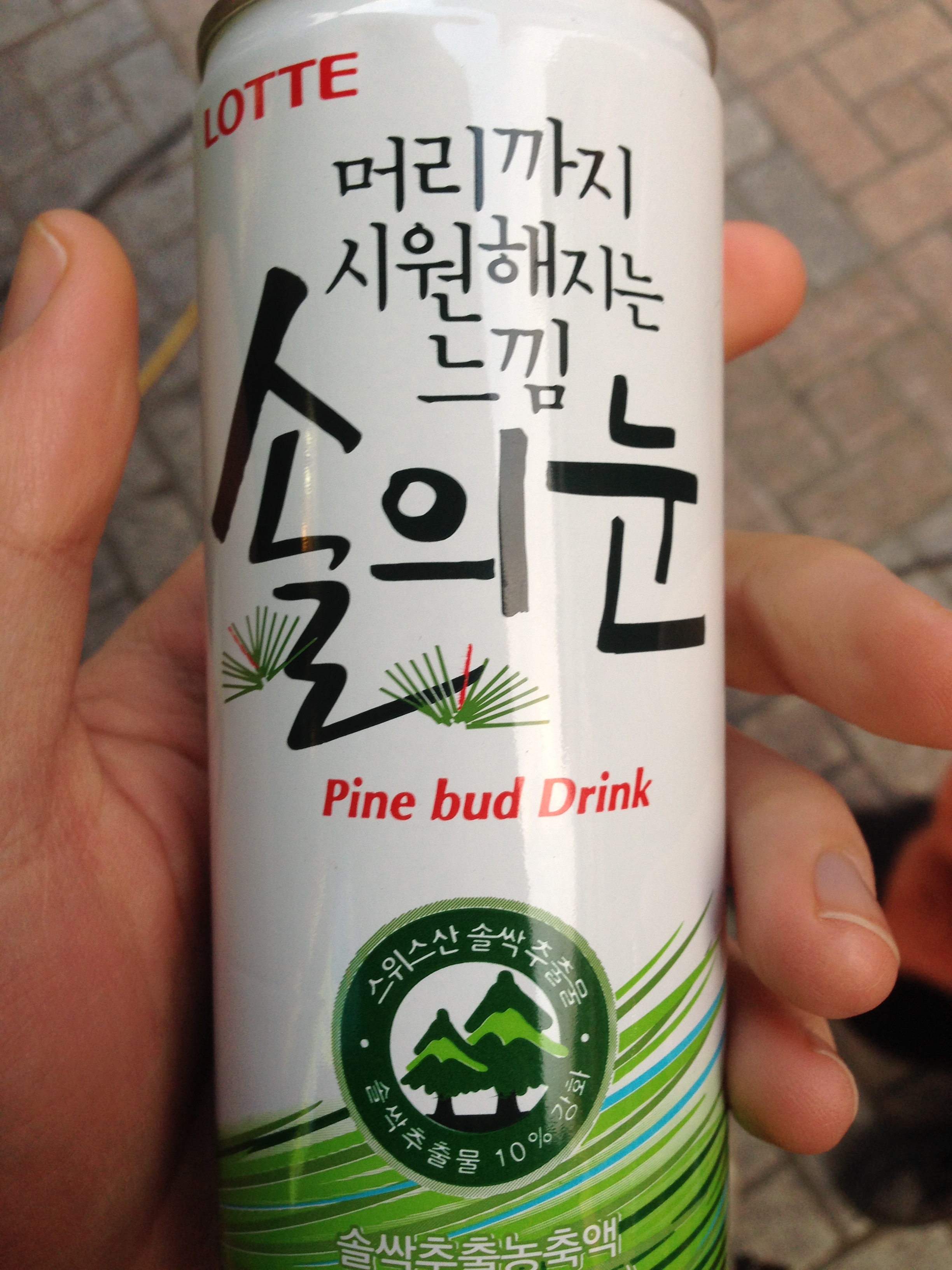
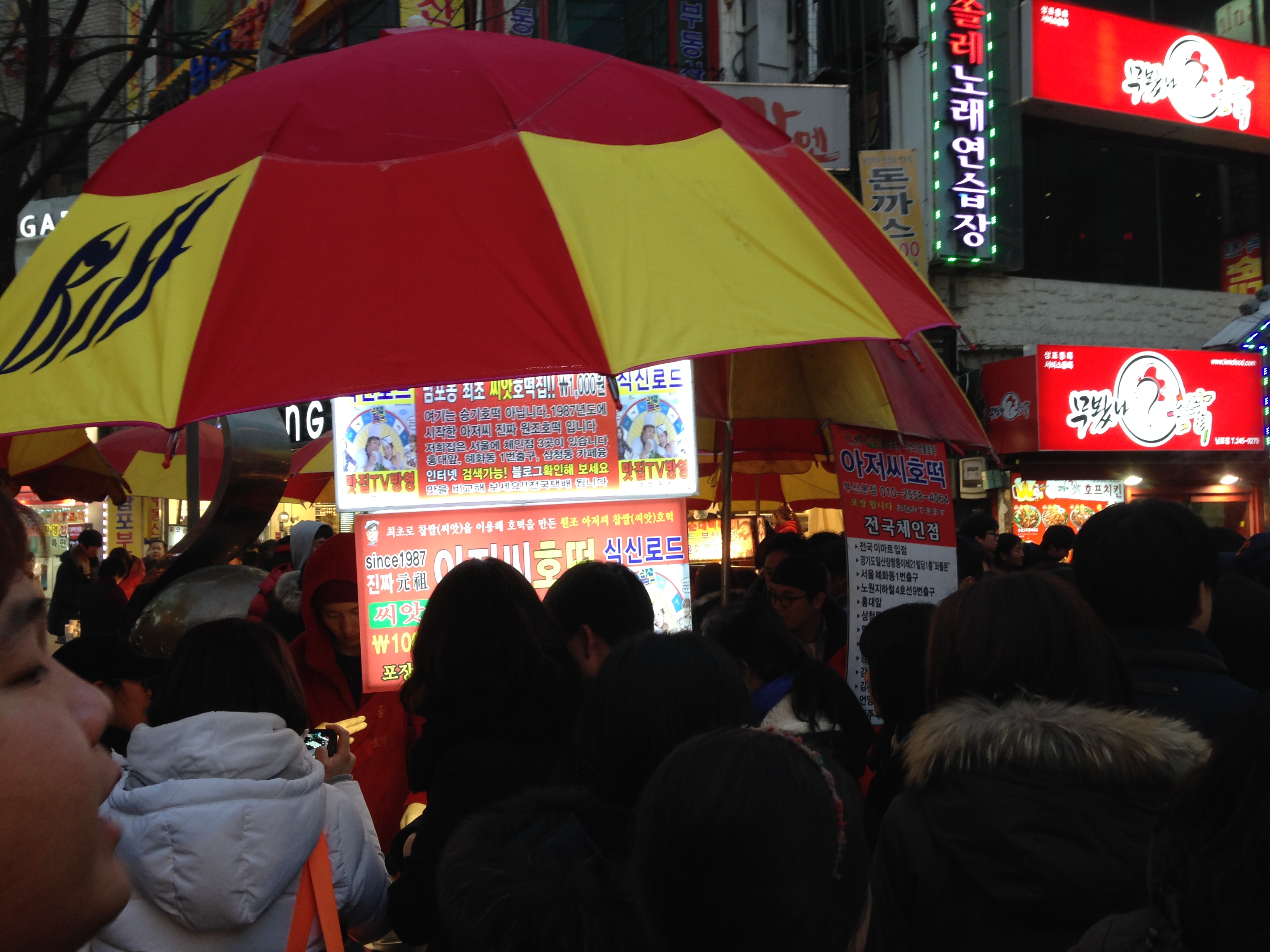
When we got there, it seemed like the entire world was out and crowded around these food carts.  I would come back to these carts later, but first we had to try some of Busan’s famous mini kimbap (think California sushi rolls with different fillings).  We went to a food tent that specialized in these mini kimbap, and there was plenty of variety in terms of ingredients we could choose. IMG_2101 You ordered by placing plastic kimbap on each flavor tag, and then the woman behind the counter would whip them up in a jiffy. IMG_2102IMG_2103 I was starving at that point, so we ordered almost all of the flavors.   I saved myself for the parade of little rolls that made their way onto our plate which included the following flavors:  spicy pepper, flying fish eggs, anchovy, spicy tuna, spicy pork, spicy beef, kimchi, and dried squid.IMG_2104IMG_2107  I loved nearly all of them, but the spicy pork and spicy beef were the most disappointing.  It was more like eating liquified, overly salty mystery meat puree in a sushi roll.  Not my kind of dining experience.  I really enjoyed the spicy pepper kimbap since they were spicy but filled with lots of pepper flavor.  The flying fish egg kimbap were surprisingly good since the eggs brought a different texture to the rolls as I enjoyed popping the little orbs between my teeth.  I eventually slowed down, but the food crawl didn’t end there.  We then moved down the main pedestrian area of Gukje Market to get 납작만두 or napjak mandu which are essentially flat dumplings or potstickers that came with a side of 오징어무침 or ojingeo muchim which is strips of squid and vegetables in a chili sauce.IMG_3616  It was one of the many food carts that had a mob of people around it jostling for position to taste some of the wonderfully grilled dumplings, and I quickly made a hole in the crowd for us to stand.  It seemed like people would put the vibrant red strips of squid and vegetables in the dumplings and then fold them like tacos to eat with chopsticks.    Overall, I would have enjoyed them more if I wasn’t so full of kimbap, but they were delicious.  The dumplings were crispy around the edges, and the dough had a buttery taste that gave way to seasoned vegetables inside.IMG_2110  Combined with the semi-sweet and spicy squid and vegetables melange, my palate was fully satisfied.  As we made our way back to where we entered, I stopped for a quick drink at the convenience store.  I saw a drink that was called “pine bud drink”, so I got it. IMG_2108 It apparently was made from pine tree needles, and the taste isn’t good.  I took a big swig and was intrigued by the taste. IMG_2158 It kind of tasted like Gatorade at first, but then I was blasted with a shot of a flavor I could only describe as pine tree mixed with menthol.  Strangely, I enjoyed it for some reason I couldn’t quite put my finger on.  Then again I like green tea flavored products while my other foreign friends can’t stand it.  Try it at your own risk.  Finally, there was the 씨앗호떡 or ssiat hotteok or seed hotteok.  We could only get it at the severely crowded entrance where we were quickly ushered in line by a guy working for the food cart.IMG_2116

Apparently this is the original food cart that started serving the hotteok.

Apparently this is the original food cart that started serving the hotteok.

It snaked around as more eaters rushed around us, and we eventually reached the front of the cart where the entire order and buying process took maybe 30 seconds tops.

The batter

The batter

Pre and post fry

Pre and post fry

IMG_2115

I’m nuts for it!

These hotteoks were fried like the ones in Seoul, but they were stuffed with honey, sunflower seeds, and pumpkin seeds.  It was the best hotteok out of the ones I have tried.  Not only was the dough chewy and rich, but the seeds made it taste like peanut butter when combined with the honey.  Plus, I loved the crunchiness that served as a counterpoint to a mostly soft dessert.

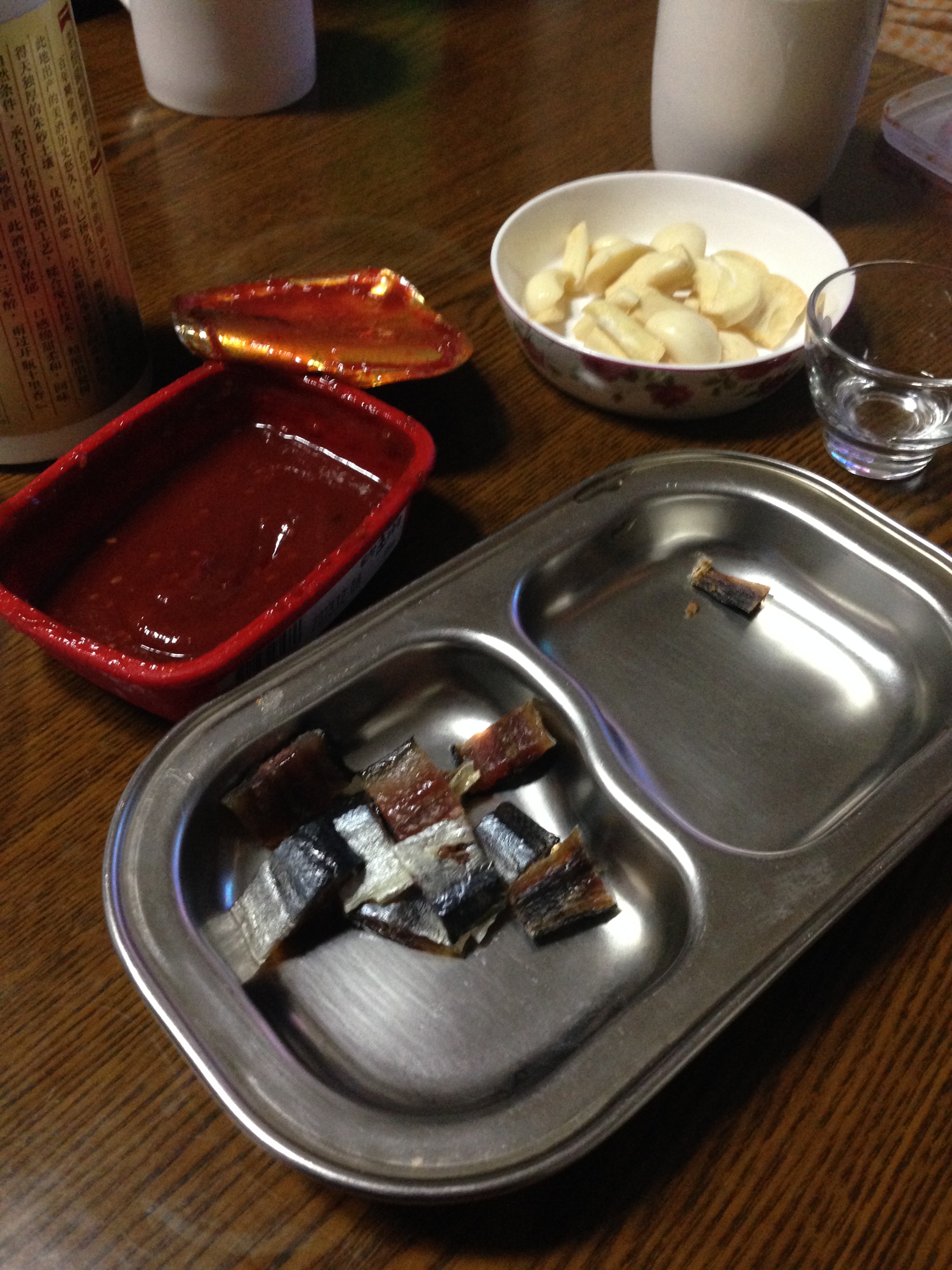
After getting back from Busan around 11pm, we tried some gwamegi or dried herring which is normally served with lots of side dishes to cut through the salty flavor, but we only really had chili sauce, garlic cloves, and some wonderfully strong and berry flavored Chinese baiju liquor.IMG_2123IMG_2122  It was ok, but I did enjoy the smoky elements of the snack and the fruity aftertaste of the baiju which reminded me of my time in Beijing.  We soon headed out for a late night snack of mayak jjimdak or drug chicken soup.IMG_2126  Now don’t order this dish expecting to find some magic herbs and spices given the name.  The “drug” element comes from the idea that the soup is so incredibly tasty that it’s addictive like a drug.IMG_2127  I would have to agree with them as the fiery red broth was thicker than a normal Korean jjigae or soup, and there were plenty of pieces of juicy chicken throughout the meal.  I would have to check into rehab if there was a drug chicken soup spot by my house back home.  With that spicy and “illicit” meal behind us, my third day in Ulsan drew to a close.

Beijing (Day 1)- A Bug’s Life

Posted on

Things have taken a turn for the amazing for my blog as I’m quickly approaching the 130 post mark, and more and more of people are liking Mastication Monologues as I get the good word about different types of food out to the world.  Thanks to everyone for your support, and keep on viewing, commenting, and liking!  Today will be no different as I continue my recap of my vacation mastication adventures.  This series will be talking about all the wonderful things I tried while staying in Beijing, China.

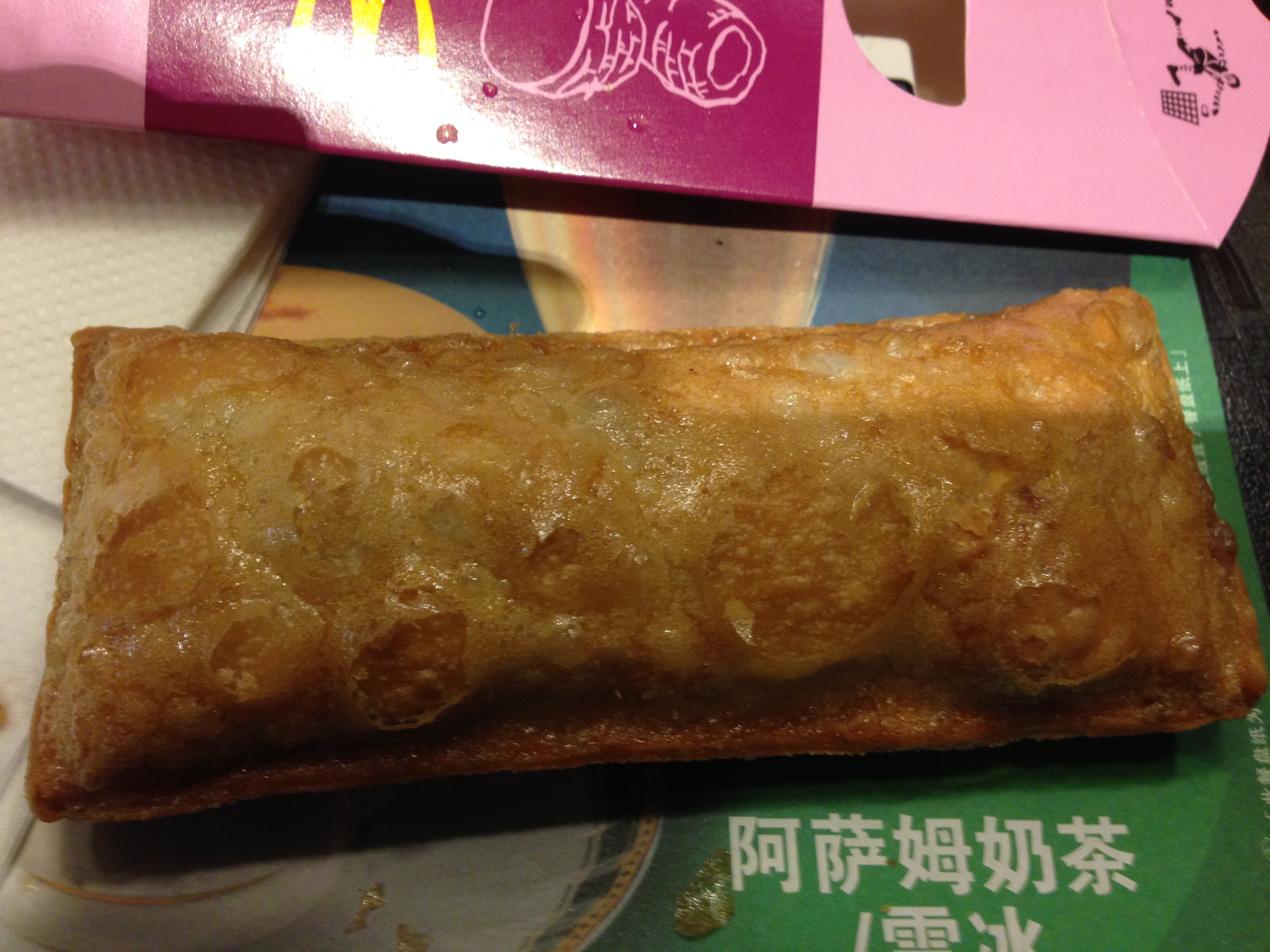
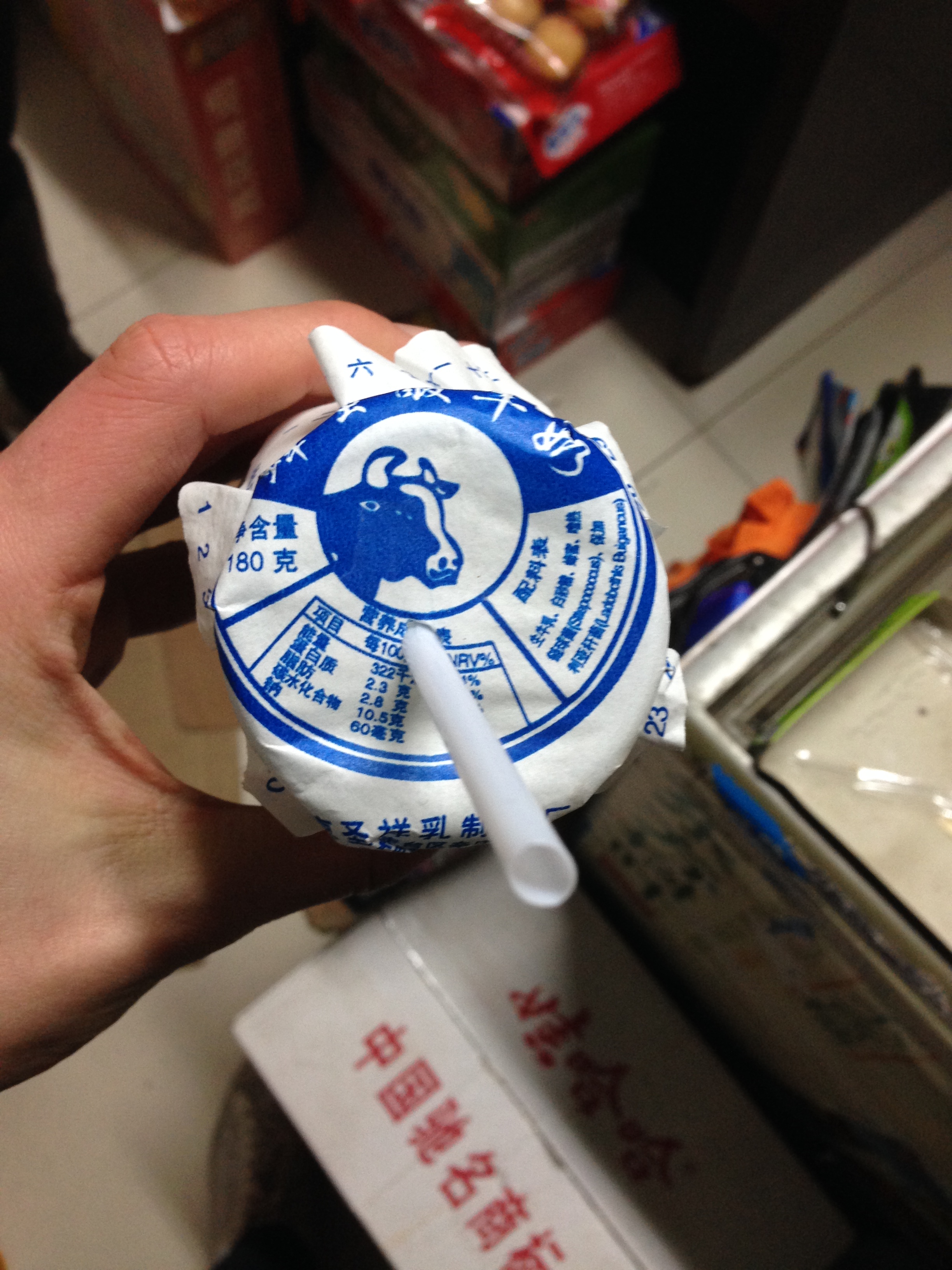
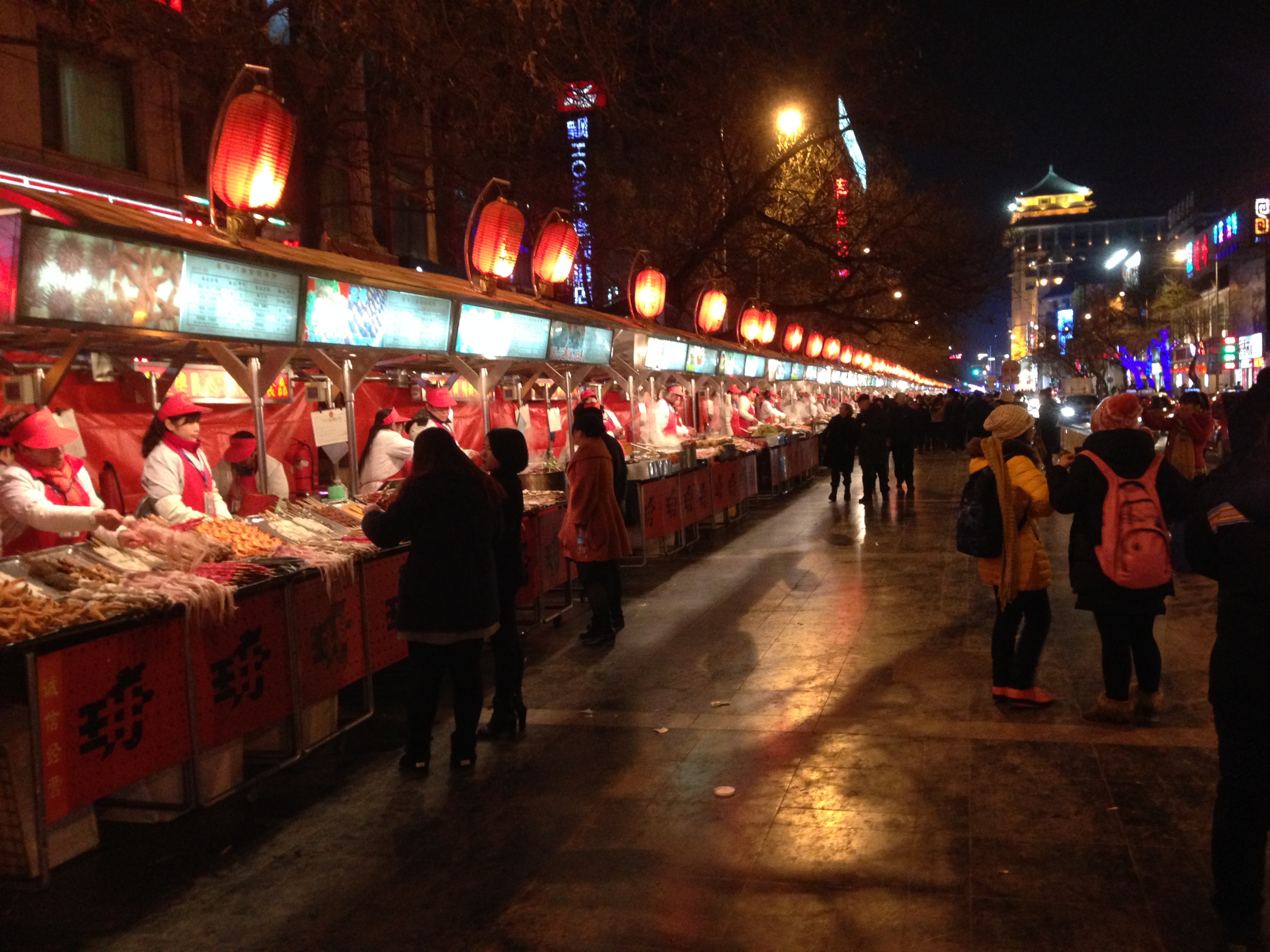
Now, I’ve had my fair share of Chinese food which ranges from hot pot to some delicious dim sum to even tongue-numbing Sichuan cooking, but mainland China definitely knew how to push my buttons and boundaries as the daring gourmand that I am.  My first food experiences started, oddly, with a trip to McDonalds.  Now, I know what you’re thinking, ‘Mark, why would you want to go to a worldwide chain that has been slowly eroding local eating customs since 1955?’  Well, dear readers, while I do like my McDonalds back in the USA, I also like to try it in different countries to see what sort of unique options they offer that cater to the tastes of the local population.   At this Beijing branch they had most of the standard burgers, but I was drawn to the beef or chicken rice wrap.  I got one of those along with a taro pie for dessert.  The beef wrap was delicious since the meat was flavorful along with some good, not great, fried rice. IMG_1456IMG_1457IMG_1458 I was more partial to the taro pie.  IMG_1459Think your classic McDonalds apple pie, but beneath the cinnamon-sugar encrusted dough there are sweet, steaming pieces of purple taro inside.  IMG_1461It’s going on the list of foods they need to bring to the US along with the chicken tikka sandwich from Subway shops in England.  Once we figured out where to go, we decided to visit the Donghuamen (东华门) night market .  It was a bit hard to find, but it’s by Wangfujing metro station.  We stopped for a traditional Beijing beverage/food called nai lao.  It’s basically Chinese yogurt you can drink through a straw out of these small porcelain jugs.IMG_1463  They’re everywhere, and you pay about 80 cents to stand there and drink it.  We were in a tiny convenience store that could have doubled as a closet, but the old couple that ran it were very friendly while we were standing there and slurping the sweet yogurt.IMG_1462   After some wanderings, we eventually found the market.IMG_1465

My own Elysian fields

My own Elysian fields

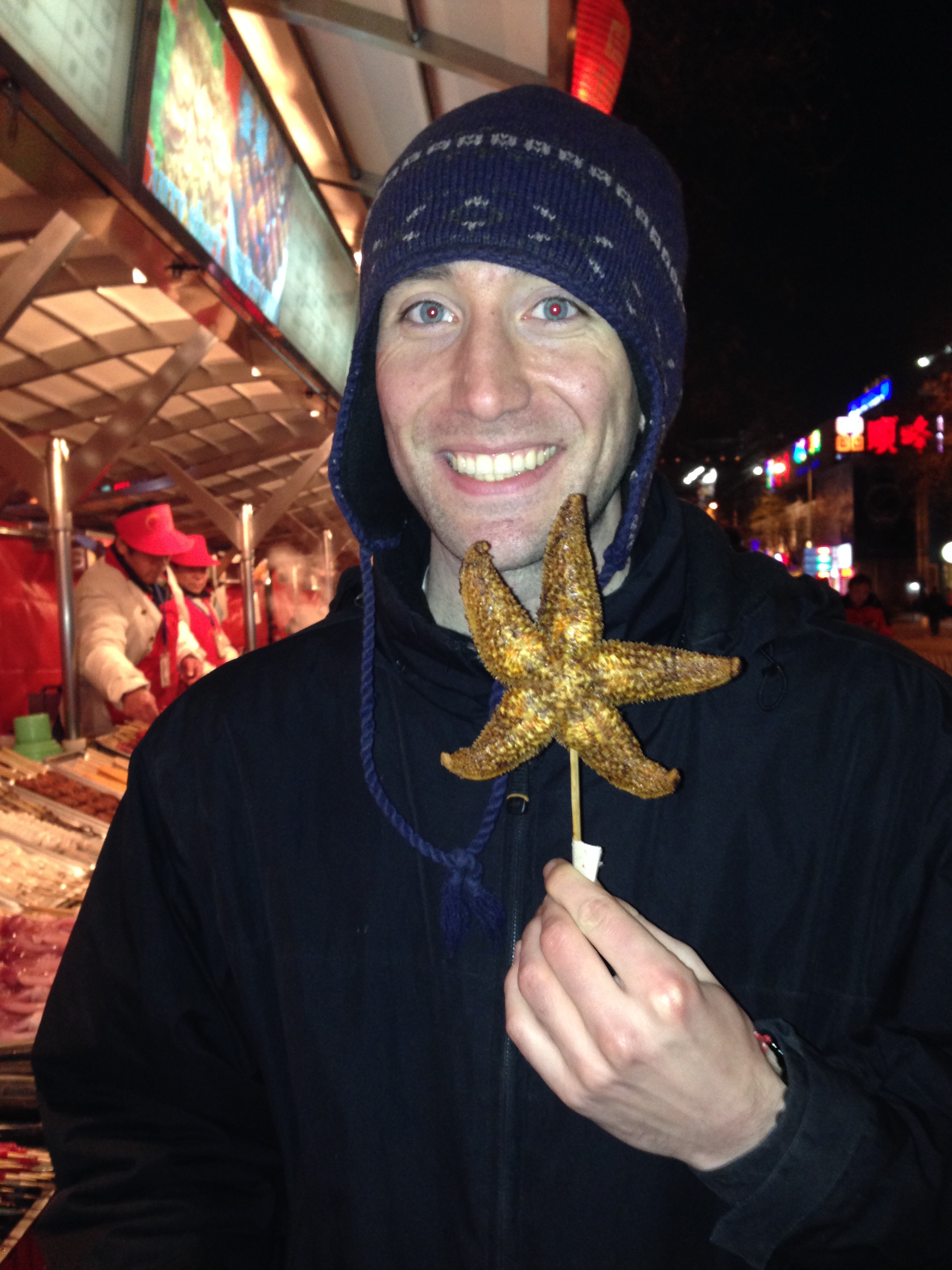
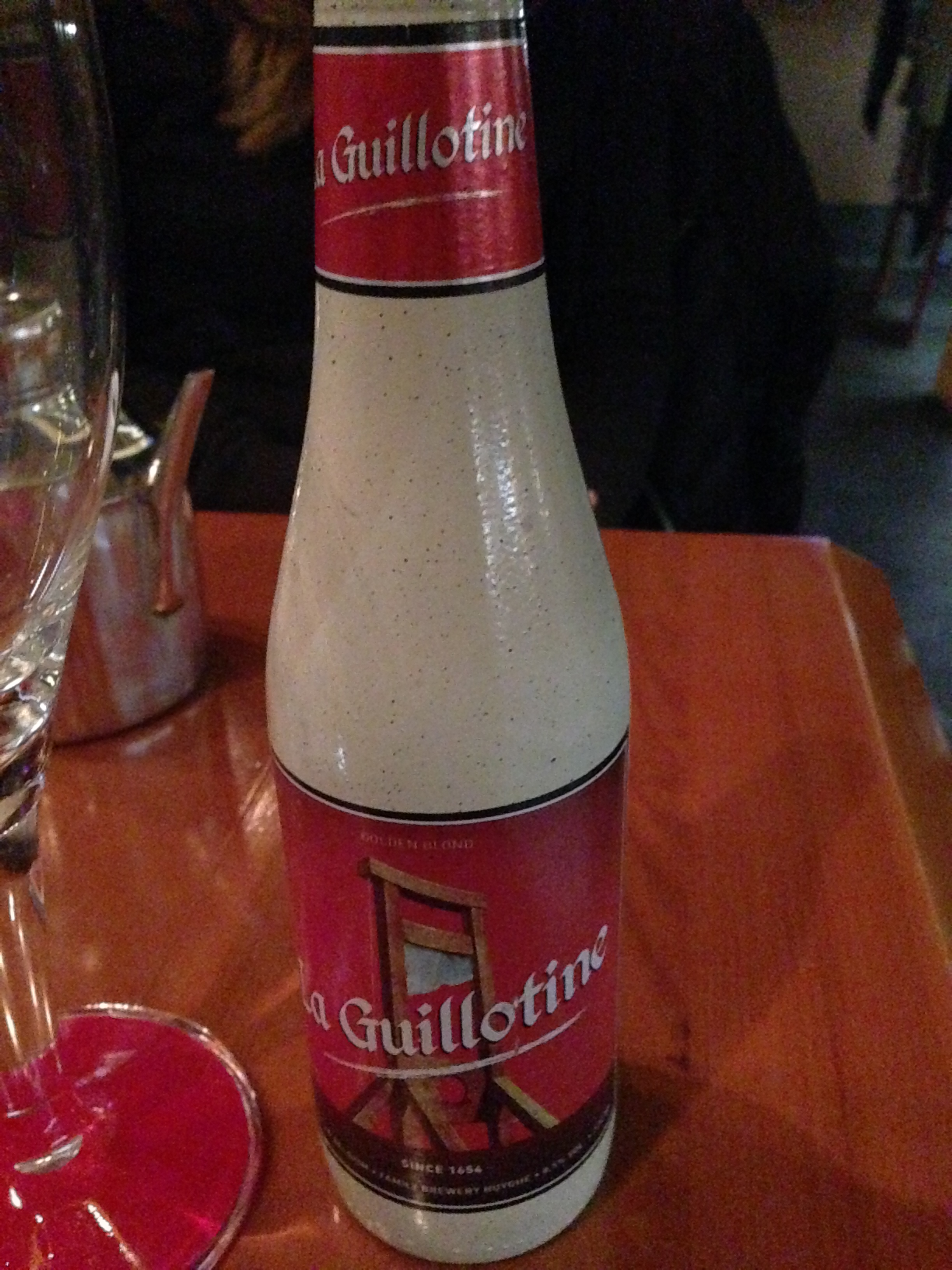
You can’t miss it with it’s red lanterns and seemingly endless array of bizarre foods such as scorpions, snakes, lizards, testicles, starfish, goat penis, and spiders to name a few.IMG_1467IMG_1470  There are also more normal options like dumplings (amazing designs as shown below), corn dogs, and even fried ice cream!IMG_1486IMG_1485  I, however, went for the gusto immediately with a starfish.  IMG_1469It was absolutely terrible.  Imagine taking food, burning it to a crisp, shaping it into a star, and serving it on a stick.  I ate about 3/4ths of it before I gave up.  It was gross through and through.  I moved on to a much more appetizing prospect in the form of a spider.IMG_1471  This was a million times better than the starfish.  I don’t know if it was the savory seasoning he put on it, or the fact there was a bit of meat to the spider after crunching through the exoskeleton.IMG_1472  Either way, I followed it up with a giant centipede which immediately fell into the same category as the starfish.  It was just as bad, but I think the guy over-salted it after frying it. IMG_1475 So it tasted like I was chugging a salt shaker while eating a lot of crunchy legs and gooey body segments.  If you haven’t vomited all over your computer at this point, I don’t eat anything else weird in this post.  I instead got something a bit sweeter that is another Beijing staple:  糖葫芦 or tanghulu.  At first, I was looking at the fruit a bit sideways because it looked like they were all frozen in ice. IMG_1483IMG_1481 I naturally assumed that since my hands were quickly becoming ice blocks compliments of the lovely northern Chinese winter.  I was sorely mistaken though as it turns out the ice is actually a hardened sugar coating that the vendors dip the skewers of apples, kiwi slices, pineapple bits, and grapes in before serving.  I went with a Chinese grape skewer, and it was the opposite of my extreme foods. IMG_1482 It was insanely sweet to the point of it almost hurting my teeth.  I think if I got the apples or the intriguing sesame seed stuffed apples, it would have been better.  I’d recommend trying at least one skewer though since they’re literally everywhere much like the yogurt bottles.  I have to add a slight caveat to Donghuamen Market though.  It seemed like a bit of a tourist trap.  I found there were other more local markets serving the same fare for slightly lower prices.  Just my two cents.   After all of that strenuous eating and walking for miles, we went to a Belgian beer bar called Beer Mania.  It was a cozy little party place that had a vast array of Belgian beers that almost made me think I was back in Brussels kicking it in the Delirium Tremens bar.  The only downside was the live music was ear-splittingly loud.  Thankfully they gave up playing after ten minutes of being ignored, so we could enjoy our beer in peace.  I went with a Guillotine which ended up being a pretty bold pale ale from Belgium.  IMG_1489It had a slightly apple aroma which then transitioned into a sweet introductory taste that packed a bitter aftertaste punch right in the tastebuds.  After that one brew, we were both pretty tired after walking around all day, so we called it a night.  I was quite satisfied with the night since I could knock off so many food challenges by just moving from left to right about 15 feet.  What a country!

On Top of Mt. Everest, All Covered With Cheese….

Posted on

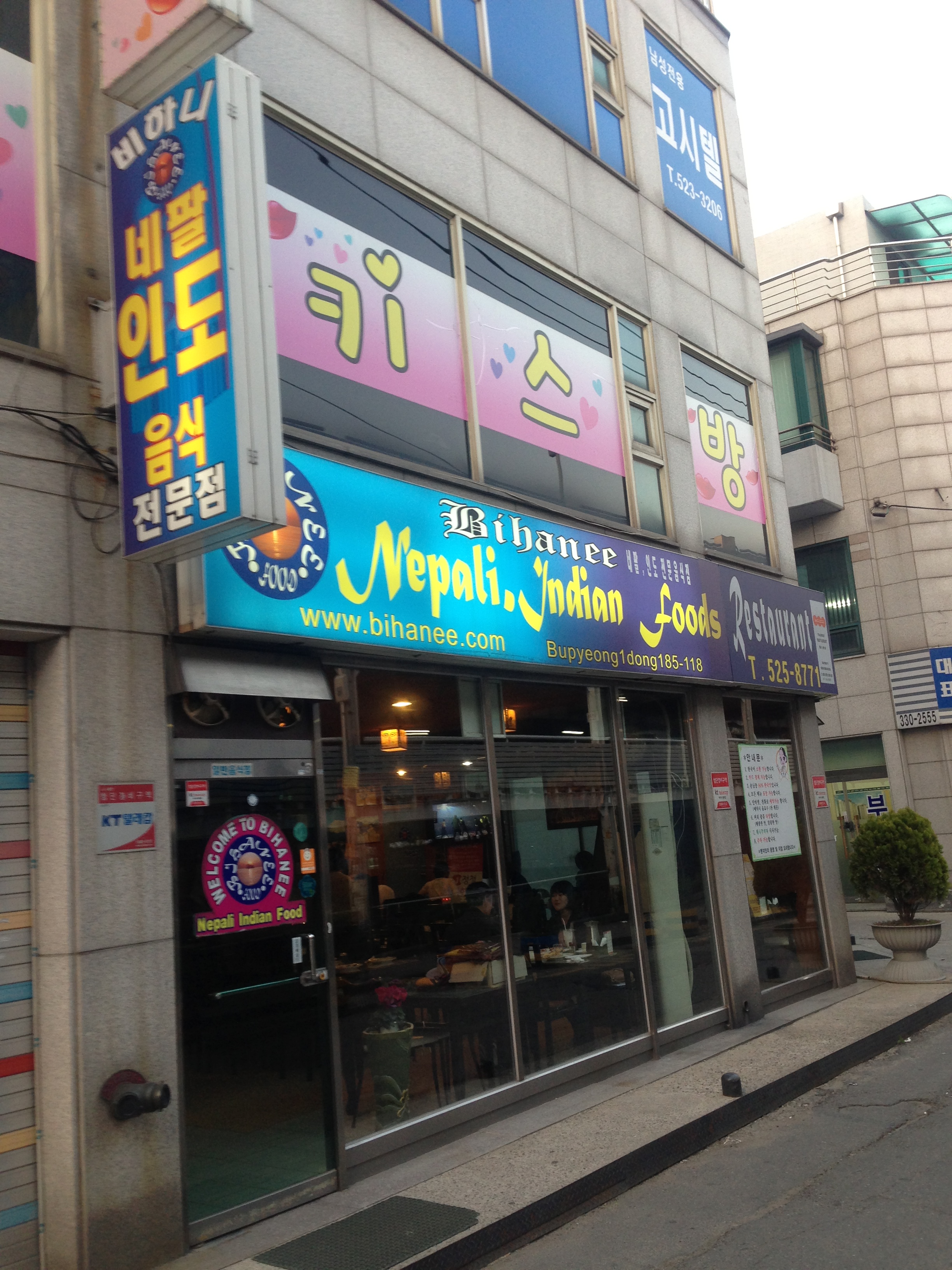
Hello everyone to another edition of Mastication Monologues!  Even though the weather in Korea doesn’t know how to make up its mind, today was a beautiful day.  So I went out for a mini-adventure in Incheon.  I also wanted to  find an interesting restaurant on the internet in Incheon, and eventually I landed on a cuisine that I never had before:  Nepalese.  The only things I really know about Nepal is its proximity to India, being home to the mysterious Yeti, and of course, Mt. Everest.  The food?  No clue.  So after making my way to a local point of interest and hiking a mountain, I made my way to Bihanee Restaurant located right by Bupyeong Station in Incheon.IMG_0068

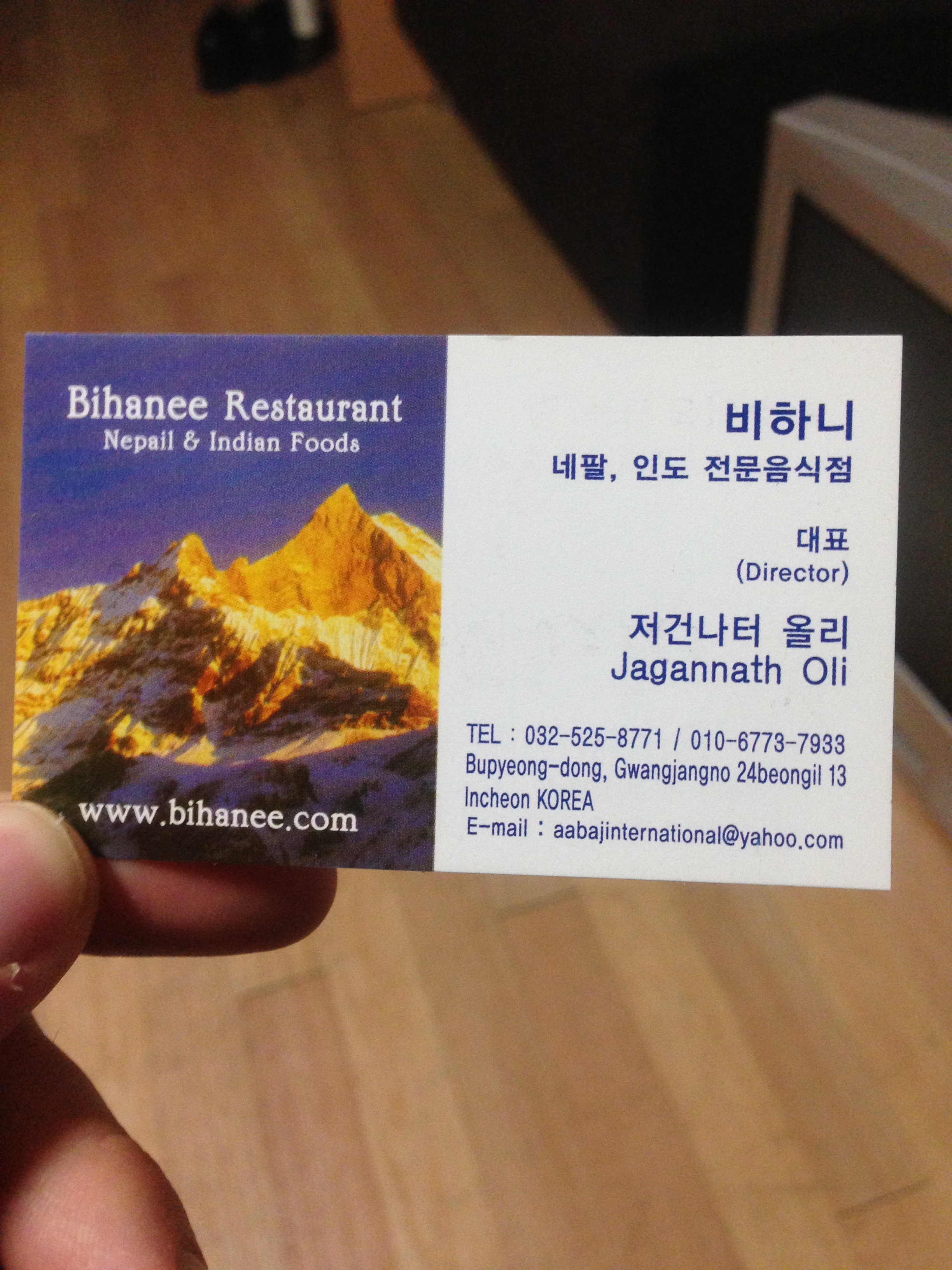
Upon entering, I was greeted by a Korean hostess/waitress which made me a bit nervous since I’ve seen what Koreans do with pizzas (mustard and shrimp, anyone?), so I was curious as to why they would specialize in Nepalese and Indian food.  After sitting down for a bit, all of my questions were answered when a man, who I assumed was the owner, came up to me and asked me how I was doing.  He seemed to be of Indian descent, and I saw his cook who looked Nepalese.  So much for the Korean smokescreen at the door.  Anyway, I ordered the Murg Malai Kebab (10,000 W) and a side of Himali naan (4,000 W).  I also appreciated the gigantic carafe of free, ice-cold water that really quenched my thirst after trucking up the mountain.  After patiently waiting, my food finally came out.IMG_0066  It was arranged in a very tasteful manner, and the owner explained what the sauces were that came with it without even being prompted.  So I started on the kebab which looked scrumptious, and the actual taste did not disappoint.  According to the menu, the boneless pieces of chicken are roasted in a Tandoori oven with cheese, cream, cashews, and spices.  All of these elements came together to form a harmonious flavor profile.  It was on the milder side compared to other Indian dishes, but the chicken was succulent with nutty undertones that were accented with some charred notes from the intense heat of the oven.  The sauces, one green chutney infused with cilantro and one sweet red chili sauce, definitely kept the dish from becoming too boring.  On the side, there was a fresh cabbage salad with some of the same red chili sauce on it, but I preferred the cooked, chili coated onions.  They were not spicy, but I enjoyed employing them in a tag-team of intense flavors with the green chutney when eating the chicken.  Just when I thought my appetite was down for the count, I turned my attention to the Himali naan. IMG_0067 The three enormous pieces of warm flatbread looked very enticing because they were coated in pieces of apples and cherries.  Normally, I’ve had savory naan with garlic or peas, so this Nepali twist allowed me to indulge my sweet tooth.  From the first bite, I knew that I made the right choice.  The bread was warm, soft, and pliable with just the right amount of crispiness on the surface.  In terms of flavor, it was a fitting dessert as the buttery foundation of the bread served as the canvas for the broad strokes of smooth apple and the tart, staccato cherry accents.  By the time I finished, I was thoroughly satisfied and felt it was a worthy trophy meal after such an active day.   Upon leaving, the owner asked me where I was from, and thanked me for coming in and gave me his business card.IMG_0070Just another fleeting moment of great service during my dining experience.  So if you want to try a cuisine that is as rare as the abominable snowman and more satisfying than climbing Mount Everest (individual experiences may vary), then head on over to Bihanee and Mr. Oli will treat you to a fantastic meal.

Bacon, Potatoes, and Pinapples Oh My!

Posted on

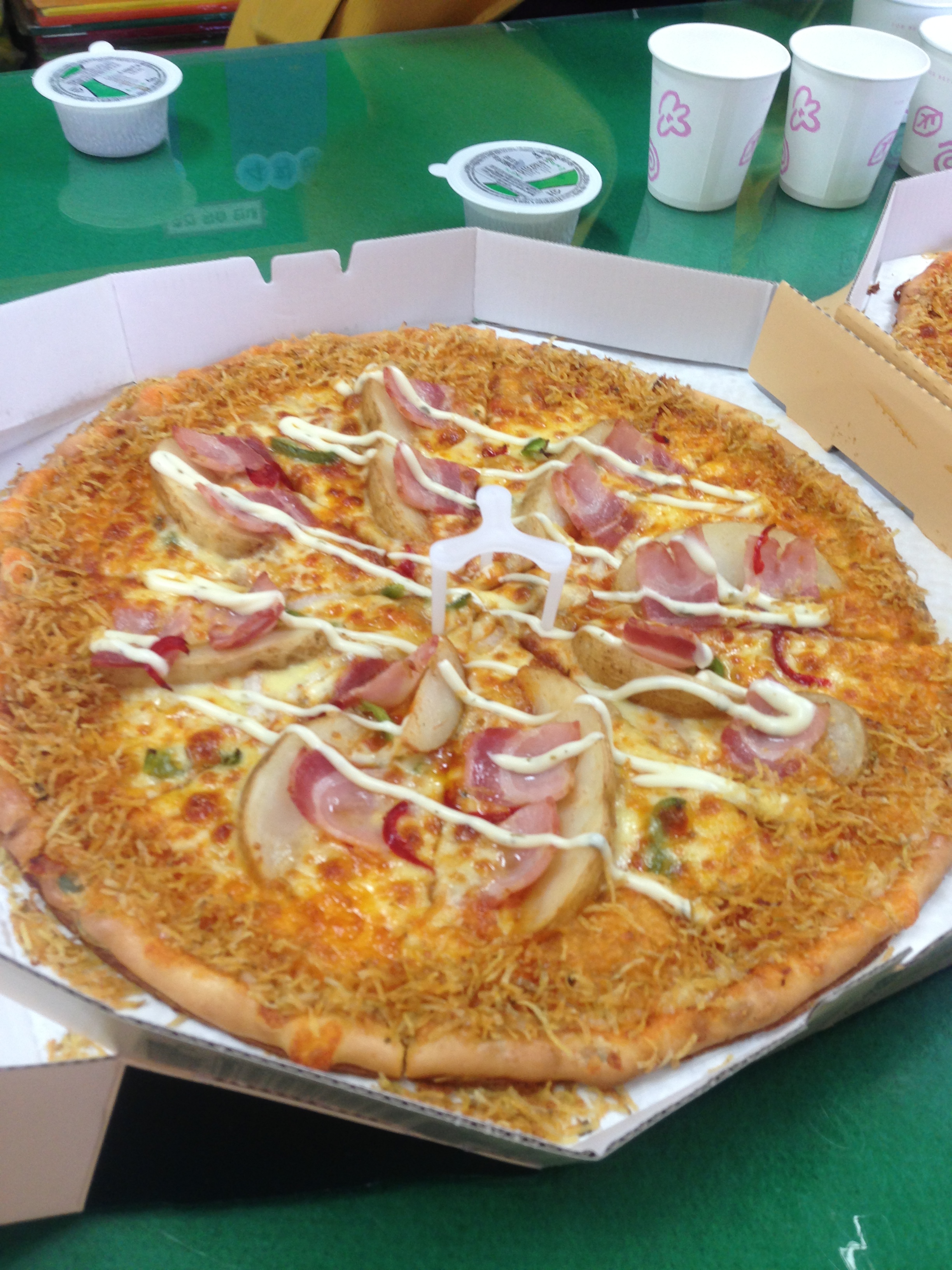
Hello everyone and welcome to another installment of Mastication Monologues!  So I’ve officially been in Korea for one month, and it seems like it has flown by even though every day felt like it was moving as slow as molasses.  When it comes to culinary adventures, however, it has been quite a whirlwind tour.  I’ve had a plethora of Korean specialties and so many different types of rice cake that they could probably fill a phone book.  However, today I will be relating my experience of trying Korean pizza for a second time.  In comparison to the first time trying Korea pizza from Pizza Maru in my previous post, “A Slice of the East”, the pizza from Pizza Etang was delicious yet peculiar in wonderful way.IMG_0002

First, there were the circumstances in which I consumed said meal.  I had just finished a day of teaching 5th grade, and everything went quite well aside from witnessing some intimidating Korean teacher discipline after the bell rang in one class.  After eating a large Korean lunch of random rice dishes and a soy sesame sauce that was way too salty for its own good, a delivery man came into our teacher room in with a bottle of Coke.  I went back to work in my cubicle thinking nothing of it, but next thing I know, I’m being invited over for a group meal of pizza and Coke with my co-teachers.  Turns out my 5th grade teacher ordered it to celebrate my first month in Korea and because she was angry at students (I think that was lost in translation haha).  Anyway, the first pizza I tried was the potato and bacon pie.  It was very decadent since it combined fatty meat, starches, and a ranch sauce.  The bacon was on the chewier side and had little to no seasoning (neither smoking nor encrustments).  Crunchy bacon lovers look elsewhere if you’re getting this pizza.  It was like having a loaded baked potato sans sour cream on a pizza because there wasn’t the traditional layer of tomato sauce underneath the cheese.  I’ll comment on the crust at the end since it’s unlike anything I’ve ever had.IMG_0003

The second pizza consisted of the same crust and was sporting not just cheese but zucchini, sausage, and pineapple.  The cheese and lack of sauce was similar to the previous pie, but the other toppings were surprisingly tasty together.  Now I, along with one of my heroes, Anthony Bourdain, think that Hawaiian pizza is one of the worst creations in the world.  I mean, who puts ham and pineapple on a pizza?  Blasphemy, I say, but with this Pizza Etang pinapple pizza, it somehow changed my mind in regard to pineapple’s status in the hierarchy of pizza toppings.  I think that it helped that the sausage crumbles it was paired with had slight bacon and herbal tones to lessen the saccharine overtones of the pineapple pieces.  The zucchini also managed to contribute a complimentary, earthy springboard from which the previously mentioned flavors could fully express themselves on my palate.  As the first pizza had a drizzling of ranch dressing in a spiral pattern, this pineapple pizza had barbecue sauce.  This savory element with the pork sausage and pineapple made it taste like I was at some sort of Hawaiian luau.  Take notes American pizza chains!  Now to the oddest part of the pizza:  the crust.

Coming from Chicago, I’ve seen my fair share of pizza crusts from the worst frozen cardboard disks to deep dish wonders of flour and buttery perfection.  Now that I’m in Korea, some of the creations I have tried have been complete game-changers.  Pizza Maru promoted their healthy dough that contained green rice and black Korean rice, but Pizza Etang went in their own direction with the actual construction of the crust that seemed to be flour based (I wouldn’t be surprised if it was rice-based, though).  Right after the cheese/toppings ended on the slice, I entered an area that was somewhat amorphous with the actual crust handle of the slice.  It was dusted with minuscule, toasted potato shavings and beneath it was an extremely thin layer of Korean sweet potato baked into the crust.  I had to closely inspect a slice to see what was causing the crust to taste so scrumptious, and when I found the lurking tubers, it made sense why the crusts provided the perfect semi-sweet flourish to each slice.

So if you’re looking to try some pizza with a unique crust and fresh toppings in Incheon and probably Seoul, try Pizza Etang!

I See A Bowl of Noodles, I Want To Paint It Black

Posted on

Hello to everyone out there in cyberspace.  Today on Mastication Monologues, I am going to tell you about a Korean dish that I heard about very briefly in reference to Black Day in Korea where single people come together to hangout (kind of like an antithesis to the much commercialized Valentine’s/White Day) and eat a meal called jajangmyeon.

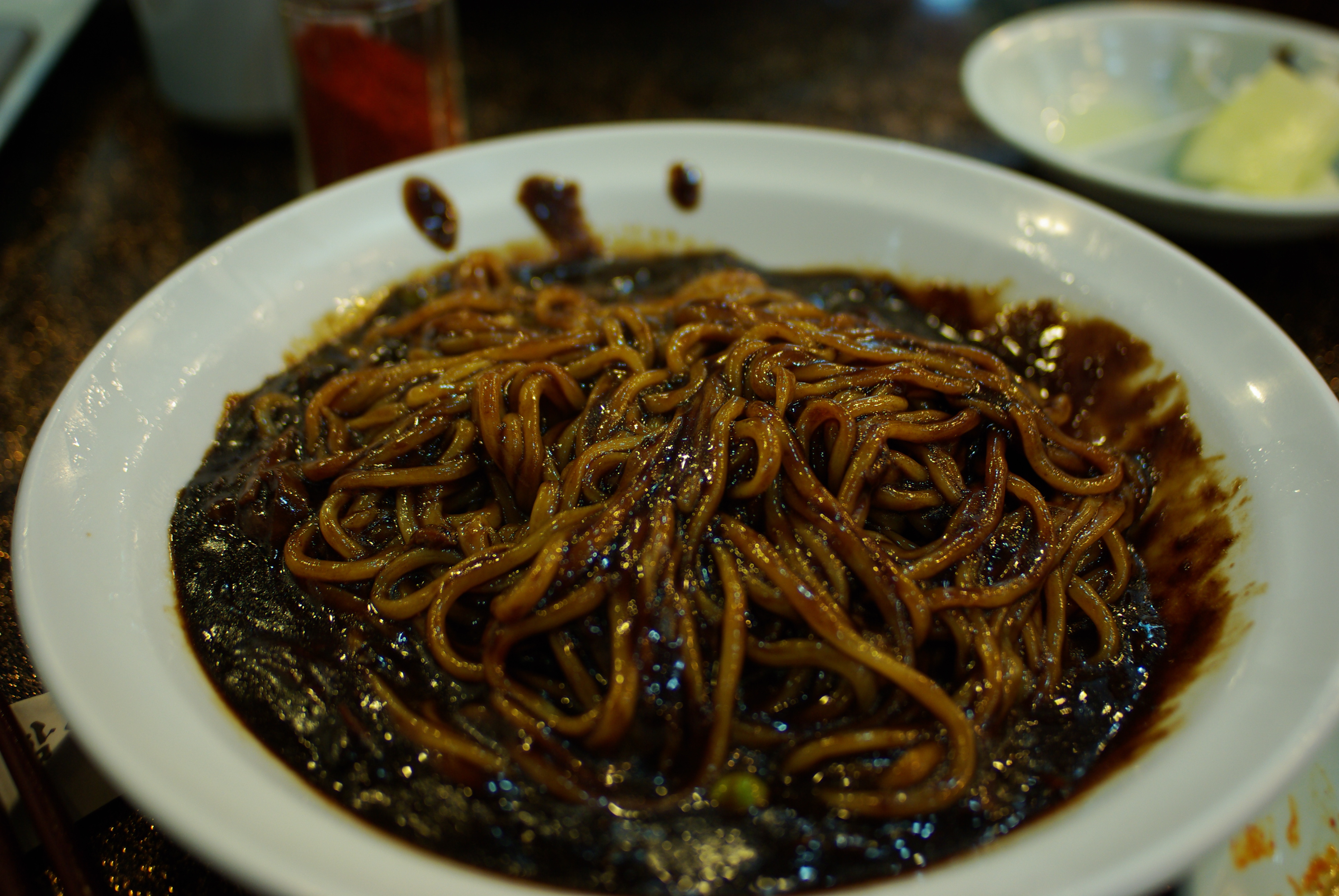
I actually had it today for lunch with my coteachers at my new elementary school.  They initially told me they were going to be ordering “Korean Chinese” food.  I knew that Incheon had the largest Chinatown in Korea, but I didn’t know what exactly they meant by this fusion term.  I asked for clarification, and they said, “You can get fried rice or black noodles.”  Done.  I was going to get the bizzare sounding black noodles.  Originally I was thinking that they were going to be black due to the addition of squid’s ink, but what faced me was very different.Jajangmyeon_1_by_eggnara  It was a massive mound of wheat noodles staring back at me in a dark dark brown sauce.  I found out that it is nearly identical to the Chinese noodle dish zhajiangmian (fried sauce noodles) hence the teachers basically telling me it’s a Chinese dish that the Koreans adapted to claim it as their own. It wasn’t an ideal dish to eat with chopsticks, but I managed to eat it all.  It wasn’t the prettiest thing, but the savory taste of the noodles was spectacular.  It was semi-sweet in nature with a salty pork taste permeating every noodle laden mouthful.  There were also onions in the sauce that kind of gave it a nice zing on occasion.  On the side, there was the ever-present Kimchi, but I had some bright yellow, pickled radishes that I never had before.  It actually tasted like a pickled cucumber back home.  I didn’t touch the raw onion since I was at work, but the black fish sauce added a potent, semi-jarring element to the sweet noodle sauce.  I also sampled some Korean deep-fried dumplings that looked like Chinese pork empanadas.  They were fresh but semi-pedestrian.  Of course, I washed it all down with a cup of Coca Cola.  Hooray for globalization!  This was definitely a cool look into Chinese-Korean relations in regard to food, and I’d probably get these black noodles again.  Maybe I’ll do so during a trip to Incheon’s Chinatown.  To be continued…

Design a site like this with WordPress.com
Get started